


Imagine a world where digital information doesn’t live behind a screen but is seamlessly woven into the fabric of your daily life. Your car’s navigation arrows appear directly on the road ahead, a virtual mechanic guides you through a complex repair, and historical figures narrate the ruins you’re exploring. This is no longer the stuff of science fiction; it is the imminent future being built today by a vibrant and rapidly expanding ecosystem of companies developing augmented reality. This technological revolution is poised to transform how we work, learn, connect, and interact with the world around us, and it’s happening faster than most people realize.
Beyond the Novelty: The Strategic Pivot to Enterprise and Industry
The popular conception of augmented reality is often tied to consumer gaming and entertainment, a perception solidified by a certain global phenomenon in 2016. However, while that moment captured the public's imagination, the most profound and immediate impact is occurring far from the consumer playground. Companies developing augmented reality have made a strategic pivot towards enterprise and industrial applications, where the technology solves critical problems, improves efficiency, and delivers a clear return on investment.
This shift is driven by a simple calculus: in a factory, warehouse, or operating room, the value of having hands-free, contextual information overlayed onto the physical world is immense. It reduces error rates, accelerates complex procedures, and enhances safety. The enterprise market has become the primary engine for AR development, funding innovation that will eventually trickle down to mass consumer adoption.
The Industrial Metaverse: Augmenting the Workforce
One of the most significant arenas for companies developing augmented reality is modern manufacturing and field service. Here, AR is moving from a pilot project to a core component of the operational technology stack.
- Assembly and Manufacturing: Technicians on assembly lines use AR glasses to see digital work instructions, 3D models, and animations superimposed directly onto the machinery they are building. This eliminates constant referrals to paper manuals or computer screens, drastically reducing errors and training time for new employees. A complex wiring harness, for instance, can be visually guided, wire by wire, through the headset.
- Remote Expert Guidance: Perhaps the most powerful application today. When a specialized piece of equipment fails in a remote location, a local technician wearing AR glasses can connect with an expert situated anywhere in the world. The expert can see the technician's field of view, draw digital annotations into their environment (e.g., "turn this valve," "check this connection"), and guide them through the repair in real-time. This slashes travel costs, minimizes downtime, and leverages scarce expertise globally.
- Design and Prototyping: Engineers and designers use AR to visualize and interact with full-scale 3D models of products long before a physical prototype is built. They can walk around a virtual car engine, assess the ergonomics of a new kitchen appliance, or see how a new piece of furniture would look in a real room, enabling rapid iteration and collaboration.
- Logistics and Warehousing: In massive distribution centers, AR smart glasses can visually guide warehouse pickers along the most efficient route, displaying the exact item and quantity to grab, significantly improving picking speed and accuracy. They can also assist in loading trucks by optimizing space utilization.
Transforming Healthcare: The Augmented Surgeon and Practitioner
The healthcare sector represents another critical frontier for companies developing augmented reality, where the stakes are literally life and death. The technology is being deployed to enhance surgical precision, improve patient outcomes, and revolutionize medical training.
Surgeons are beginning to use AR headsets to overlay critical patient data—such as MRI or CT scans—directly onto their field of view during procedures. Instead of looking away at a monitor, a surgeon can see the precise location of a tumor or a major blood vessel through the patient's tissue, akin to having "X-ray vision." This enhances spatial awareness and can lead to smaller incisions, less blood loss, and shorter operation times. Medical students can practice complex surgeries on virtual patients, and nurses can use AR to locate veins more accurately for injections, improving the patient experience.
Retail Reimagined: Try Before You Buy, From Anywhere
The retail industry, battered by the rise of e-commerce and shifting consumer habits, is embracing AR as a powerful tool to bridge the gap between the digital and physical shopping experience. Companies developing augmented reality for retail are creating immersive and personalized experiences that were previously impossible.
Shoppers can now use their smartphones or AR mirrors to virtually try on clothes, accessories, and makeup without ever entering a fitting room. Furniture retailers allow customers to project true-to-scale 3D models of sofas, tables, and décor into their own living spaces to see how they fit and look before purchasing. Cosmetic brands enable users to test different shades of lipstick or eyeshadow on a live video feed of their face. This not only enhances customer engagement and reduces purchase hesitation but also significantly lowers return rates, a major pain point for online retailers.
The Architecture of Immersion: Hardware, Software, and the Cloud
The AR ecosystem is not monolithic. It comprises several layers of technology, each with specialized companies driving innovation forward. Success depends on the seamless integration of these components.
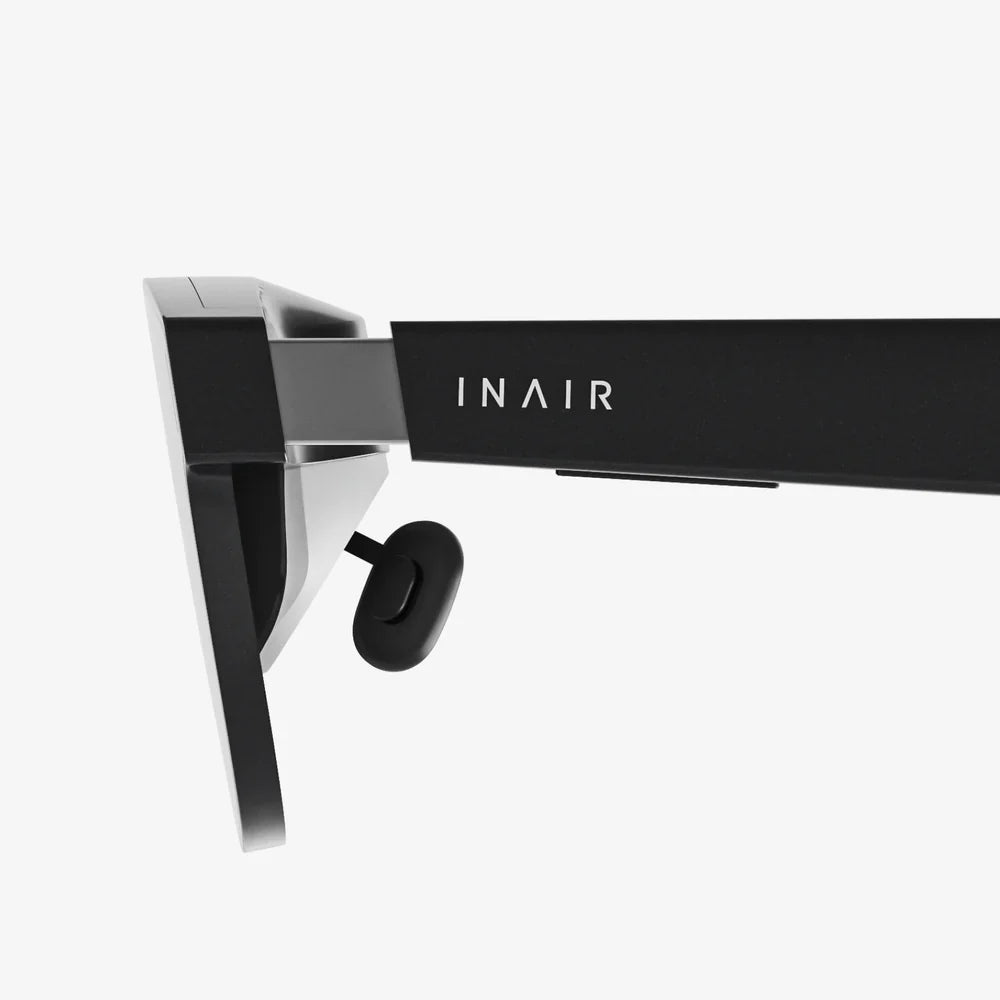
- Hardware: This is the gateway to the experience. The race is on to create the perfect device—one that is lightweight, socially acceptable, has all-day battery life, a wide field of view, and high-resolution displays. Form factors range from sleek smart glasses that resemble regular eyewear to more robust, feature-rich headsets designed for demanding industrial environments. The ultimate goal remains a pair of glasses that are indistinguishable from regular ones but pack the power of a supercomputer.
- Software and Platforms: The operating systems and development platforms are the brains of the operation. These software suites provide the essential tools for developers to create AR experiences. This includes powerful game engines for rendering 3D content, software development kits (SDKs) for spatial mapping and object recognition, and authoring tools that allow non-programmers to build simple AR workflows. Cloud-based platforms are also crucial for managing fleets of devices, deploying content, and analyzing usage data.
- Content and Applications: This is the layer the user directly interacts with. A thriving ecosystem of specialized software firms creates purpose-built applications for vertical markets—a custom app for guiding airplane mechanics, another for training medical students, and another for virtual interior design. The value of the entire hardware and software stack is ultimately realized through these targeted applications.
Navigating the Obstacle Course: Challenges on the Path to Adoption
Despite the tremendous progress, companies developing augmented reality face a series of significant hurdles that must be overcome to achieve ubiquitous adoption.
- The Hardware Conundrum: As mentioned, creating a device that is powerful, comfortable, affordable, and stylish remains the holy grail. Current devices often force a trade-off between capability and wearability.
- Connectivity and Latency: For truly seamless and complex AR experiences, especially those involving real-time remote collaboration, ultra-low latency and high-bandwidth connectivity (like that promised by 5G and future networks) are non-negotiable. Any lag or delay breaks the immersion and can be dangerous in industrial settings.
- User Experience (UX) Design: Interacting with a 3D, spatial interface is fundamentally different from using a 2D screen. Designing intuitive user interfaces that don't cause fatigue or confusion is a major challenge. How does one "click" in mid-air? How are menus organized in space? These are new paradigms that are still being invented.
- The Digital Divide and Privacy: The proliferation of always-on cameras and sensors raises serious questions about data privacy, security, and surveillance. Furthermore, the cost of advanced hardware risks creating a new digital divide, where only wealthy corporations or individuals have access to the full benefits of the technology.
The Future is Spatial: What Lies Ahead for AR Development
The trajectory for companies developing augmented reality points toward a more integrated, intuitive, and powerful future. We are moving toward a world where AR is not a distinct app you open, but a persistent layer of computing woven into our environment. Key trends include the convergence of AR with Artificial Intelligence, enabling even smarter object recognition and contextual information, and the blending of AR with Virtual Reality into what is often called Mixed Reality (MR) or the broader concept of the spatial web. In this future, the digital and physical will be inextricably linked, creating new economies, new forms of social interaction, and new ways of understanding our world.
The journey from clunky headsets to invisible, ambient computing will be long and iterative, but the direction is clear. The companies that are solving the hard problems today—the hardware limitations, the connectivity issues, the UX dilemmas—are not just building gadgets; they are building the foundational infrastructure for the next era of human-computer interaction. They are crafting the lens through which we will all someday see and interact with a world infinitely enriched by data, imagination, and connection.
We stand at the precipice of a fundamental shift in our relationship with technology, one where the boundary between our digital and physical realities will finally dissolve. The quiet, relentless work of these innovators is ensuring that when we step into that new world, it will be intuitive, empowering, and astonishingly real. The race to own this spatial layer of the internet is already underway, and its winners will not only define the next decade of tech but will fundamentally reshape the human experience itself.
Share:
Augmented Reality Marketing Examples That Are Redefining Consumer Engagement
Augmented Reality Software for PC: Unlocking a New Digital Dimension on Your Desktop