


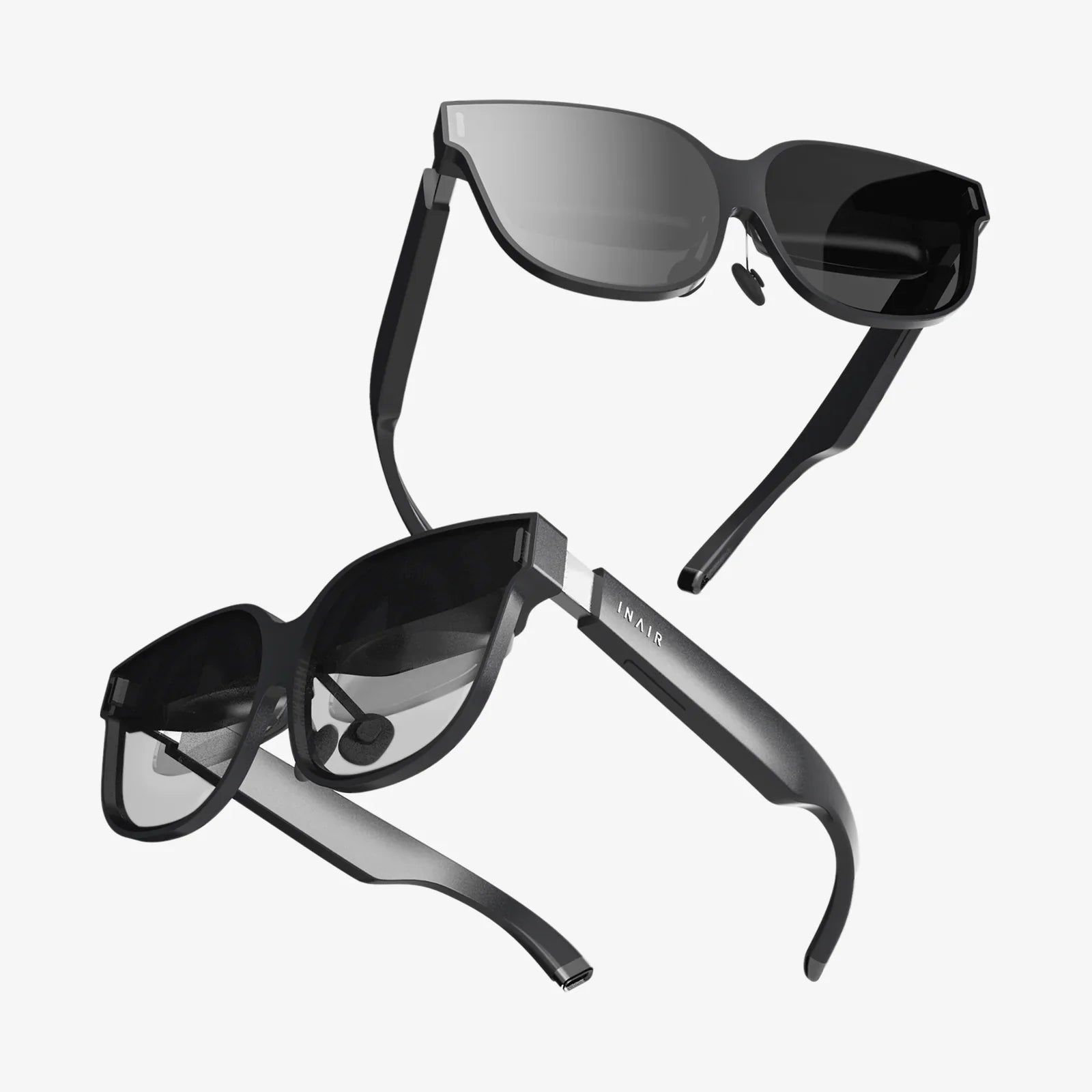
Imagine a world where digital information seamlessly blends with your physical reality, where instructions float over a complex machine you're repairing, or where a navigational arrow is painted onto the street in front of you. This is the promise of augmented reality, and it all starts with a single, crucial decision: choosing the right pair of AR glasses. The market is burgeoning with options, each promising a glimpse into the future. But to find the device that truly unlocks this potential for you, you need to know how to effectively compare AR glasses beyond the marketing hype.
Understanding the Core Technologies: The Engine Behind the Experience
Before diving into specific comparisons, it's essential to understand the fundamental technologies that differentiate one device from another. These core components dictate everything from the quality of the virtual image to how you interact with the digital world.
Display and Waveguide Systems: How Light Gets to Your Eyes
The method used to project digital images onto your field of view is arguably the most significant differentiator. There are two primary approaches:
- Optical See-Through (OST): This is the most common method in dedicated AR glasses. Light from the real world passes through a transparent lens, while a micro-display (like OLED or MicroLED) projects light into a combiner, often a "waveguide," which directs the image into your eye. This allows for a true AR experience where the real world remains perfectly clear and bright.
- Video See-Through (VST): Used primarily in some high-end headsets that blend VR and AR, this method employs outward-facing cameras to capture the real world and then displays it on an internal screen alongside digital elements. While this can allow for more vivid and perfectly occluded digital objects, it can sometimes suffer from latency or a reduced fidelity of the real world.
Within the OST category, waveguide technology itself has variations, such as diffractive waveguides (which can be thinner and more efficient) and reflective waveguides, each with its own trade-offs in terms of image quality, field of view, and manufacturing cost.
Field of View (FoV): The Size of Your Digital Window
When you compare AR glasses, the Field of View is a critical specification. It measures the angular size of the virtual display, essentially how much of your vision the digital content occupies. A small FoV (often compared to looking through a postage stamp or a small floating screen) can be sufficient for notifications and basic data. However, for immersive applications like gaming or complex 3D modeling, a larger FoV is necessary to make the digital content feel like a natural part of your environment. Currently, there is a constant trade-off between achieving a large FoV and keeping the device form factor small and socially acceptable.
Processing Power: Tethered, Standalone, or Smartphone-Driven?
How the glasses compute and render the AR experience is another key area for comparison. Devices generally fall into three categories:
- Tethered Glasses: These act as a display, connecting via a cable to a powerful external computer or console. This setup provides the highest level of graphical fidelity and processing power, enabling complex applications and games. The obvious downside is the lack of freedom and portability.
- Standalone Glasses: These have all the necessary computing components (CPU, GPU, battery) built directly into the frame. They offer complete wireless freedom but must balance performance with thermal management, battery life, and weight. This often results in less graphical power compared to tethered systems.
- Smartphone-Powered Glasses: These devices offload the processing and battery life to a smartphone that connects wirelessly or via a cable. This allows for a lighter, simpler, and often more affordable form factor for the glasses themselves, but the experience is entirely dependent on the capabilities of the connected phone.
Tracking and Interaction: How You Control the Digital Layer
A seamless AR experience requires precise understanding of the environment and the user. This is achieved through a suite of sensors:
- Inside-Out Tracking: Cameras and sensors on the glasses themselves map the physical space, tracking surfaces, objects, and their positions without the need for external beacons. The quality of this tracking determines how stable and locked-in digital objects appear.
- Eye Tracking: This advanced feature allows the system to know exactly where you are looking. It enables intuitive interface navigation (just look at a button to select it), creates more realistic depth of field effects, and can be used for dynamic foveated rendering—a technique that concentrates processing power only where you are looking to improve efficiency.
- Hand Tracking: The ability to use your bare hands as controllers is a hallmark of natural interaction. Advanced computer vision algorithms interpret hand gestures, allowing you to pinch, grab, and manipulate virtual objects directly.
Key Comparison Metrics: Building Your Checklist
Armed with an understanding of the underlying tech, you can now build a checklist of metrics to use when you compare AR glasses.
Form Factor and Design: Style vs. Substance
This is often the first thing people notice. Do the glasses prioritize a sleek, socially acceptable look that resembles traditional eyewear, or do they favor function with a larger, more robust design that accommodates advanced sensors and a larger battery? Consumer-focused devices often lean towards the former, while enterprise and developer kits may opt for the latter. Consider weight, comfort for extended wear, and adjustability.
Visual Performance: Seeing is Believing
Beyond just FoV, you must evaluate:
- Resolution and Brightness: A high-resolution display ensures text and graphics are sharp and legible. Brightness, measured in nits, is crucial for overcoming ambient light; without sufficient brightness, virtual content will appear washed out in well-lit environments.
- Contrast and Color Accuracy: Vital for content creation, design, and media consumption.
- Optical Quality: Look for terms like "ghosting" (faint duplicate images), "god rays" (unwanted visual artifacts around bright objects), and overall image distortion. A high-quality optical system minimizes these issues.
Battery Life and Thermal Management
For wireless devices, battery life is paramount. Manufacturer claims can vary widely based on usage, so look for real-world tests. How does the device handle heat? No one wants a warm forehead after 30 minutes of use. Efficient thermal design is a sign of mature engineering.
Audio: The Forgotten Half of the Experience
Immersive AR isn't just visual. Many glasses feature integrated spatial audio speakers that direct sound to your ears without headphones, allowing you to still hear the real world. Others may include or support headphones for private, high-fidelity listening. The quality of this audio system is a key part of the overall experience.
Software Ecosystem and Developer Support
The hardware is useless without software. Investigate the operating system and the available app store. Is there a robust library of applications for your intended use? Strong developer support and tools are indicators of a healthy platform that will continue to grow and improve.
Defining Your Use Case: The Ultimate Deciding Factor
The most important step in your comparison is to be ruthlessly honest about your primary use case. The "best" AR glasses do not exist in a vacuum; the best pair is the one that excels at what you need it to do.
The Enterprise and Professional User
For professionals in fields like manufacturing, logistics, medicine, or field service, the priorities are vastly different from a consumer. Key needs include:
- Ruggedized, durable design that can withstand industrial environments.
- Long battery life, often supported by hot-swappable batteries.
- Hands-free operation with robust voice commands and precise hand tracking while wearing gloves.
- Enterprise-grade software for remote assistance, digital work instructions, and asset tracking.
- Top-tier object occlusion and tracking for overlaying instructions on complex machinery.
For this user, a device with a larger form factor that delivers on reliability and specific professional features will be far superior to a sleek consumer model.
The Consumer and Everyday User
The average consumer is looking for a device that enhances daily life. Their checklist includes:
- A stylish, lightweight design that doesn't attract unwanted attention.
- Seamless integration with their existing smartphone ecosystem for notifications, messages, and calls.
- Strong media consumption capabilities for watching videos on a giant virtual screen.
- Fun, engaging apps for gaming, social interaction, and creative pursuits.
- An affordable price point.
Battery life is still important, but perhaps for a long flight rather than an entire work shift.
The Developer and Creator
Those building the next generation of AR experiences need a powerful canvas. Their demands are high:
- Maximum processing power and graphical capabilities, often making tethered devices the preferred choice.
- A wide field of view to test immersive applications.
- Advanced features like eye tracking and facial expression capture built-in for development and testing.
- Strong SDK support and an active developer community.
For a developer, the raw power and feature set of the device are the primary drivers, often outweighing concerns about cost or everyday wearability.
The Future on the Horizon: What to Look For Next
The technology behind AR glasses is advancing at a breathtaking pace. As you compare current offerings, keep an eye on the horizon for technologies that will define the next generation. MicroLED displays promise higher brightness and efficiency in smaller packages. Advances in photonics and metasurfaces could lead to waveguides that are cheaper to produce and offer a much wider field of view. Furthermore, the development of more powerful and efficient dedicated AR processors will enable more complex experiences in smaller, cooler, and longer-lasting form factors. The perfect blend of high performance and all-day wearable design is the ultimate goal, and each year brings us closer to that reality.
The journey to find your ideal augmented reality companion is a personal one, filled with exciting possibilities and important technical considerations. By moving beyond superficial specs and focusing on the core technologies, key metrics, and—most importantly—your own specific needs, you can cut through the noise. You are no longer just comparing specs on a page; you are evaluating a portal to a new way of working, creating, and connecting. The right pair of AR glasses won't just show you the future; it will actively help you build it.
Share:
Future Technology Predictions 2050: A Glimpse Into the Next Quarter-Century
Future Technology Predictions 2050: A Glimpse Into the Next Quarter-Century