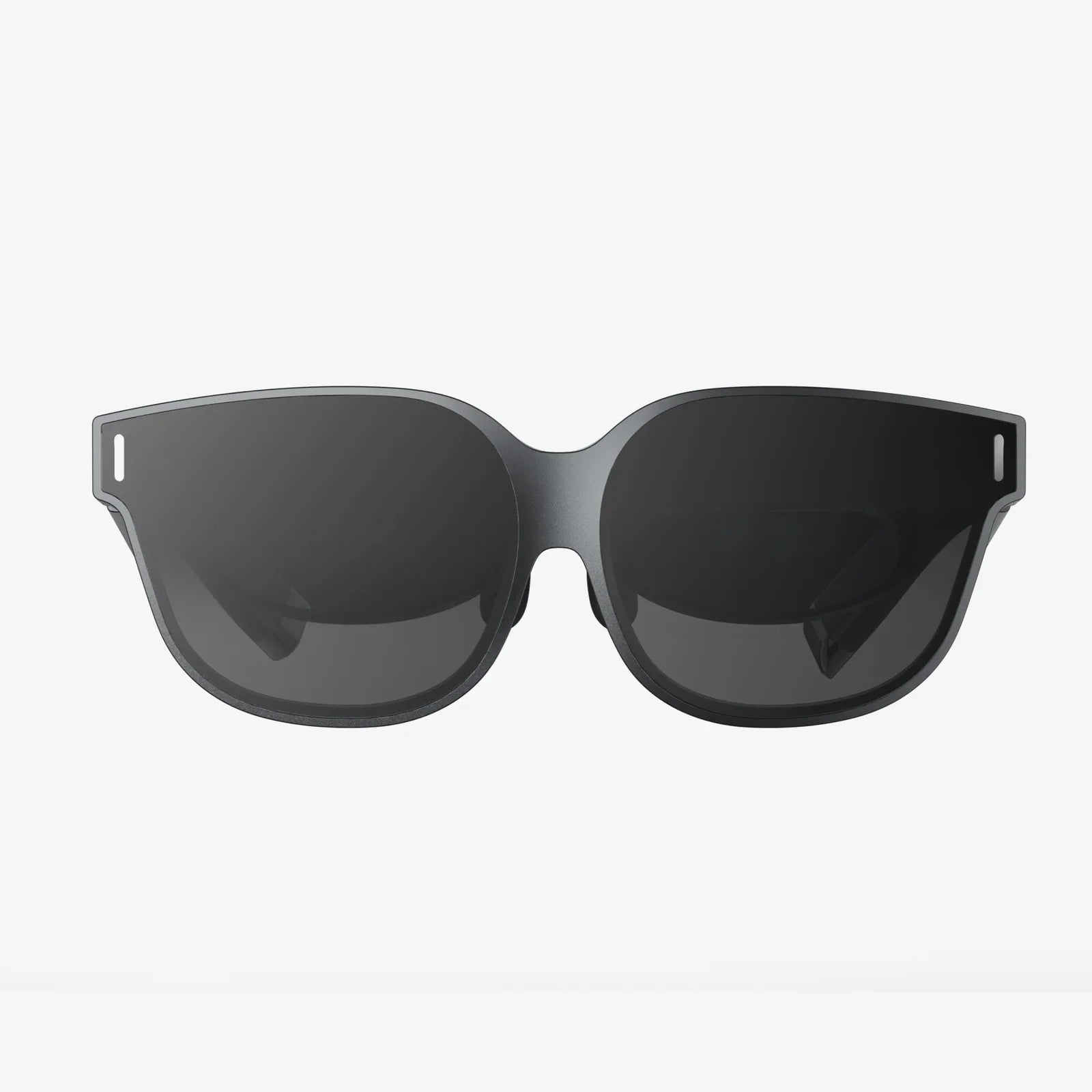
Imagine a world where your glasses translate foreign street signs in real-time, your ring monitors your heart health with every beat, and your jacket adjusts its temperature to your environment. This isn't science fiction; it's the burgeoning reality powered by the intricate, miniaturized components of wearable computers. These devices are more than just accessories; they are a digital second skin, a bridge between our biological selves and the vast digital realm. The magic isn't in a single chip or sensor but in the harmonious, complex symphony of their internal architecture. To understand the future on our wrists, in our ears, and on our faces, we must first dissect the very building blocks that make it all possible.
The Central Nervous System: Processing and Memory
At the core of every wearable computer lies its brain: the central processing unit (CPU). This isn't the sprawling silicon die found in a desktop computer; it's a marvel of miniaturization and efficiency. Wearable CPUs are typically based on ultra-low-power architectures, often System-on-a-Chip (SoC) designs. An SoC integrates not just the main processor cores but also the graphics processing unit (GPU), memory controllers, and other vital logic onto a single, tiny piece of silicon. This integration is crucial for saving space and reducing power consumption, the two most valuable commodities in wearable design.
Flanking the CPU is its immediate recall—the memory. This is divided into two primary types:
-
RAM (Random Access Memory): This is the device's short-term memory. It's used to hold the operating system and application data that are currently in use. When you ask your smartwatch to calculate your run's pace, the relevant app is loaded from storage into RAM for the CPU to access at lightning speed. Wearables use low-power volatile memory (LPDDR) that loses its data when power is off but consumes minimal energy.
-
Flash Storage (ROM): This is the long-term memory. It's non-volatile, meaning it retains data even when the device is powered down. Here resides the device's firmware, operating system, and all your stored data—from your favorite playlists to your historical health metrics. The capacity is often limited to a few gigabytes, prioritizing speed and efficiency over vast storage space.
This combination of a efficient SoC and tailored memory allows a wearable to perform complex tasks, from rendering animations on a display to running machine learning algorithms on sensor data, all while sipping battery life.
The Sensory Organs: A Suite of Sensors
If the processor is the brain, then the array of sensors are the device's eyes, ears, and sense of touch. These components are what transform an inert piece of technology into an interactive, context-aware computer. The sophistication of a wearable is directly proportional to the number and capability of its sensors.
-
Inertial Measurement Units (IMUs): This is often the workhorse sensor, a combination of an accelerometer and gyroscope (and sometimes a magnetometer). They track motion, orientation, and rotation. They count your steps, detect when you raise your wrist to look at the time, and enable gesture controls.
-
Optical Sensors: The most common example is the photoplethysmogram (PPG) sensor found on the underside of most smartwatches. By flashing green LED light onto the skin and measuring the amount of light reflected back by blood flow, it can estimate heart rate. More advanced versions can measure blood oxygen saturation (SpO2).
-
Bioimpedance Sensors: These sensors send a tiny, imperceptible electrical current through the body and measure the response. This can be used to estimate body composition metrics like fat percentage or, more commonly, to perform bioelectrical impedance analysis for measuring respiratory rate and even stress levels through skin conductance.
-
Global Navigation Satellite System (GNSS): GPS, GLONASS, Galileo—these chipsets receive signals from satellites to pinpoint the wearer's location with remarkable accuracy. This is essential for mapping runs, hikes, and cycles without being tethered to a smartphone.
-
Microphones and Speakers: These transducers allow for audio input and output, enabling voice assistant control, phone calls, and audio feedback. Advanced beamforming microphones are used to isolate the user's voice from ambient noise.
-
Environmental Sensors: These include barometers for measuring altitude and detecting weather changes, thermometers for ambient temperature, and ambient light sensors (ALS) to automatically adjust screen brightness.
This rich sensor data provides the raw material that the device's software intelligence uses to understand the user and their environment.
The Window to the Digital World: Displays and Optical Systems
For the user to interact with the data, a visual interface is paramount. The choice of display technology is a constant battle between readability, color fidelity, and power consumption.
-
Always-On Displays: Many modern wearables use low-temperature polycrystalline oxide (LTPO) displays. This technology allows the screen's refresh rate to dynamically drop to as low as 1Hz when static information is shown (like a watch face), drastically conserving power while remaining visible.
-
Transflective and Memory-in-Pixel (MIP) displays: Popular in fitness-focused devices, these displays are incredibly power-efficient and remain highly visible in direct sunlight, as they use ambient light to illuminate the pixels rather than a power-hungry backlight.
-
Micro-LED and OLED: These technologies offer superior contrast ratios and true blacks, as each pixel is individually lit. They are ideal for rich user interfaces but can be more demanding on battery, though advancements are closing this gap.
Beyond flat screens, wearables like smart glasses use more exotic optical systems:
-
Waveguides: These are tiny, transparent pieces of glass or plastic that sit within the lens of glasses. They use diffraction or reflection to pipe light from a micro-display on the arm of the glasses directly into the user's retina, overlaying digital information onto their view of the real world.
-
Light Engines: These are the tiny projectors (often using Laser Beam Scanning or micro-OLED technology) that generate the image that is then fed into the waveguide.
The Lifeline: Power and Battery Systems
All this technology is useless without power. The battery is arguably the most constraining component in wearable design. Engineers are forced to make difficult trade-offs between device size, performance, and battery life.
-
Lithium-Polymer (Li-Po) Batteries: This is the dominant chemistry due to its high energy density, flexibility in shape, and relatively good safety profile. They are thin, light, and can be molded to fit into the awkward, curved spaces inside a wearable device.
-
Power Management Integrated Circuits (PMICs): These are the unsung heroes. A PMIC is a sophisticated chip that manages the flow of power from the battery to every other component. It handles charging, regulates voltage, and ensures that power is distributed as efficiently as possible, putting unused subsystems to sleep to extend uptime.
Beyond better batteries, the industry is exploring alternative power sources:
-
Wireless Charging: Using inductive (Qi) or proprietary charging pucks to eliminate wear and tear on physical ports.
-
Solar Charging: Integrating transparent photovoltaic cells into display surfaces to trickle-charge the battery from ambient light.
-
Kinetic Energy Harvesting: Using the motion of the wearer's body to generate small amounts of electrical energy, a concept popularized by automatic watches.
-
Biometric Energy Harvesting: Early-stage research into generating power from body heat or even blood glucose, though this remains largely futuristic.
The Network of Nerves: Connectivity Modules
A wearable computer is rarely an island. Its value is multiplied by its ability to connect to other devices and networks.
-
Bluetooth Low Energy (BLE): The absolute standard for short-range connectivity. It allows the wearable to maintain a constant, low-power connection to a smartphone, syncing data and relaying notifications without draining either device's battery significantly.
-
Wi-Fi: Used for larger data transfers, like updating the operating system or streaming music directly to the device, bypassing the phone. It is typically activated only when needed to save power.
-
Cellular Connectivity: High-end wearables include an embedded LTE/5G modem and an eSIM. This allows them to make calls, stream music, and receive data completely independently of a smartphone, granting true freedom but at a significant cost to battery life.
-
Other Radios: NFC (Near-Field Communication) for contactless payments, and ultra-wideband (UWB) for precise spatial awareness and device-to-device interaction, are becoming more common.
The Physical Vessel: The Housing and Haptics
The external shell is more than just a fashion statement; it's a critical functional component.
-
Materials: Aerospace-grade aluminum, stainless steel, titanium, and advanced polymers like nylon and polycarbonate are common. The choice affects durability, weight, and signal transparency for the antennas housed within.
-
Haptics Engine: This is a small, high-precision linear resonant actuator that produces tactile feedback—vibrations. It's how your device silently taps your wrist for a notification. Advanced haptic systems can simulate the feeling of a button click or a spinning crown, creating a more immersive and intuitive interface.
-
Buttons and Crowns: Physical controls remain essential for quick, reliable actions without needing to look at the screen. The rotating digital crown, in particular, is a brilliant interface for scrolling through lists and zooming maps without obscuring the small display with a finger.
The Invisible Ingenuity: The Operating System and Firmware
Hardware is nothing without software. The operating system (OS) is the soul of the device, the master program that orchestrates all the components.
-
Real-Time Operating Systems (RTOS): Many simpler wearables run a lightweight RTOS designed for immediate response to sensor inputs and maximized battery efficiency. They prioritize critical tasks and have a small memory footprint.
-
Full-Featured Wearable OS: These are often derivatives of mobile operating systems, tailored for the constraints of a wearable. They support rich applications, complex animations, and deep ecosystem integration, but require more powerful hardware and energy.
-
Firmware and Machine Learning: The true intelligence is often embedded in low-level firmware. Tiny machine learning (TinyML) models are now baked directly into the sensor hubs. This allows the device to process sensor data locally—recognizing a specific workout or detecting a fall—without constantly waking the main CPU or streaming data to the cloud, preserving both power and privacy.
This incredible convergence of miniaturized hardware and intelligent software is what defines the modern wearable computer. It's a testament to human ingenuity, packing the computing power of a room-sized machine from a few decades ago into a device smaller than a postage stamp, all designed to work in harmony with the human body. The race is not just to add more features, but to integrate these components more seamlessly, efficiently, and unobtrusively than ever before.
The next time you glance at your wrist for a notification or ask your glasses for directions, take a moment to appreciate the hidden universe of technology making it happen. From the silent hum of the processor and the constant whisper of the sensors to the meticulous power management and the intelligent software, every component plays a vital role in weaving digital intelligence into the very fabric of our daily lives. The evolution of these components promises a future where technology doesn't just live on us, but understands and enhances our human experience in ways we are only beginning to imagine.