Imagine a world where your morning run is analyzed in real-time by a coach whispering in your ear, where a chronic illness is managed not by sporadic doctor visits but by a continuous, invisible guardian on your wrist, and where the digital and physical realms don't just interact but merge into a single, enhanced experience. This isn't a distant science fiction fantasy; it is the burgeoning reality being built today at the powerful intersection of computer science and wearable technology. This convergence is not merely about creating smaller gadgets but about orchestrating a fundamental shift in how we compute, communicate, and comprehend our own existence.
The Foundational Code: Core Computer Science Principles Powering Wearables
At its heart, every wearable device is a triumph of miniaturized computer science. These are not just simple electronics; they are sophisticated, resource-constrained computing systems that demand ingenious solutions to complex problems.
Hardware Architecture and Systems Design
The physical design of a wearable is a masterclass in systems engineering, balancing processing power, battery life, form factor, and thermal output. Computer scientists work with hardware engineers to design systems-on-a-chip (SoCs) that integrate a central processing unit (CPU), graphics processing unit (GPU), memory, and storage onto a single, tiny silicon die. This miniaturization is paramount, but it introduces significant challenges in heat dissipation and power management. Unlike a desktop computer with a robust cooling system and a constant power supply, a wearable must perform complex computations while being strapped to a warm body and running on a tiny battery. This has led to the rise of ultra-low-power processors and advanced power management algorithms that can intelligently shut down unused components in microseconds, a direct application of operating system principles.
Sensor Integration and Data Acquisition
Wearables are, by definition, sensor-rich platforms. They are equipped with accelerometers, gyroscopes, magnetometers, optical heart rate monitors, bio-impedance sensors, microphones, and global positioning system (GPS) receivers. The raw data from these sensors is chaotic, noisy, and voluminous. Computer science provides the framework for handling this data deluge. Device drivers, a fundamental concept in operating systems, act as the crucial software bridge between the physical hardware sensors and the higher-level applications. They standardize the communication, allowing an application to request “heart rate” without needing to know the specific electrical commands to send to a particular optical sensor.
Algorithms and Signal Processing
Raw sensor data is meaningless without interpretation. This is where algorithms—the core of computer science—come to life. A stream of numbers from an accelerometer must be transformed into recognizable human activity: walking, running, sleeping, or falling. This is achieved through sophisticated digital signal processing (DSP) and machine learning algorithms. For instance, detecting a fall involves analyzing the acceleration waveform for a specific signature of a sudden impact followed by inactivity. Similarly, optical heart rate monitoring uses algorithms like photoplethysmography (PPG) to filter out motion noise and isolate the subtle blood flow changes under the skin. These algorithms are computationally expensive, pushing the boundaries of what’s possible on low-power devices and often relying on a hybrid approach where data is pre-processed on the device before being sent to more powerful cloud servers for deeper analysis.
The Intelligence Layer: Machine Learning and Artificial Intelligence
While basic algorithms can detect predefined patterns, the true potential of wearables is unlocked by machine learning (ML) and artificial intelligence (AI). These technologies move beyond simple rule-based systems to creating adaptive, predictive, and personalized models.
On-Device vs. Cloud AI
A critical computer science decision in wearable design is the allocation of AI processing. Cloud-based AI leverages vast data centers to train incredibly complex models, such as those that can predict the onset of atrial fibrillation from heart rate variability data. However, this approach requires constant connectivity and raises latency and privacy concerns. Conversely, on-device AI processes data locally on the wearable itself. This is faster, more power-efficient for small tasks, and keeps sensitive health data private. The field of TinyML, which focuses on developing and deploying ML models on extremely resource-constrained devices, is a rapidly growing sub-discipline of computer science born from this need. It allows for real-time, private inference for tasks like keyword spotting (“Hey, assistant”) or basic activity classification without a network connection.
Personalization and Adaptive Systems
The most powerful AI models are those that learn from the individual user. Computer science enables systems that create a personalized baseline for each person. Your “normal” heart rate, sleep pattern, or activity level is unique. ML models can be trained on a user's own data to detect subtle deviations that may signal illness, stress, or overtraining. This moves wearables from being generic data loggers to proactive health guardians. Reinforcement learning, a type of AI where an algorithm learns optimal behavior through trial and error, could eventually power wearable coaches that adapt their advice based on your body’s real-time response, creating a closed-loop system for health and fitness optimization.
Connectivity and the Networked Body: The Internet of Things (IoT)
A wearable is rarely an island. Its value is often multiplied by its connection to other devices and networks, a domain governed by computer networking principles.
Protocols and Wireless Communication
Wearables are key nodes in the Internet of Things (IoT) ecosystem. They must communicate seamlessly with smartphones via Bluetooth Low Energy (BLE), with Wi-Fi networks, and sometimes directly with each other or with infrastructure via protocols like Zigbee or ultra-wideband (UWB). Computer scientists must design efficient communication stacks that, once again, prioritize minimal power consumption. BLE, for example, is designed to transmit small packets of data in short, infrequent bursts, allowing the radio to spend most of its time in a deep sleep state. Managing these connections, handling interference, and securely transmitting data are all core networking challenges.
Edge Computing and Fog Networks
The traditional cloud computing model, where data is sent to a distant server for processing, is not always suitable for wearables requiring rapid response. This has spurred interest in edge and fog computing. In this model, processing power is distributed closer to the data source. A smartphone or a home router acts as a “fog node,” performing immediate computation on data streamed from the wearable. This reduces latency, saves the wearable’s battery, and can provide functionality even when internet connectivity is lost. Designing these distributed systems, deciding which node handles which computation, and ensuring seamless handoffs between them is a complex computer science problem essential for creating a fluid wearable experience.
The Human-Computer Interface: Beyond the Touchscreen
Wearables, by their nature, demand new modes of interaction. Their small screens or lack of screens entirely have forced computer scientists and designers to reinvent human-computer interaction (HCI).
Tangible and Ubiquitous Computing
Wearables are a cornerstone of Mark Weiser’s vision of ubiquitous computing, where technology recedes into the background of everyday life. Interaction moves beyond deliberate typing and tapping to more passive and natural forms. Haptics, or tactile feedback, is a primary example. A gentle vibration on the wrist can convey a notification, provide navigation cues, or signal an abnormal heart rate reading—all without needing to look at a screen. This is a form of tangible computing, where information is communicated through physical sensations. Computer science research in this area focuses on developing sophisticated haptic languages and ensuring these notifications are effective without being annoying or overwhelming.
Context-Aware and Ambient Systems
Wearables are inherently context-aware. They know if you are moving, sleeping, or sitting still. This rich contextual data allows for ambient systems that provide information proactively and appropriately. An AI-powered wearable might suppress notifications during a deep sleep phase but allow an urgent call from a family member to come through. It might automatically log a workout when it detects you’ve been running for ten minutes, or suggest taking a walk after an hour of inactivity. This requires real-time sensor fusion—combining data from multiple sensors—and sophisticated context-recognition algorithms, all running continuously without draining the battery.
The Software Ecosystem: Operating Systems and Applications
The software that powers wearables is a specialized field. While some leverage modified versions of mobile operating systems, others are built from the ground up for ultra-low-power, always-on operation.
Real-Time Operating Systems (RTOS)
Many wearables rely on Real-Time Operating Systems (RTOS). Unlike general-purpose OSs that focus on throughput, an RTOS guarantees that critical tasks are processed within a strict time constraint. For a wearable, this is essential for tasks like sampling a heart rate sensor at exact intervals or processing an accelerometer signal to detect a fall immediately. The design of these OSs involves careful process scheduling, interrupt handling, and memory management to ensure reliability and responsiveness with minimal resource overhead.
Application Development and APIs
The vibrant ecosystem of apps is what makes a wearable platform truly powerful. Computer science provides the tools and frameworks for developers through software development kits (SDKs) and application programming interfaces (APIs). These APIs offer standardized, secure access to sensor data and device functions. For example, a fitness app doesn't need to know how to talk directly to the GPS chip; it simply calls the “location API” provided by the OS. This abstraction layer, a classic software engineering principle, accelerates innovation by allowing developers to focus on their unique application logic rather than the underlying hardware complexities.
Frontier Technologies: Augmented Reality and Neural Interfaces
The future of wearables points towards even deeper integration, pushing the boundaries of computer science into new realms.
Spatial Computing and Augmented Reality (AR)
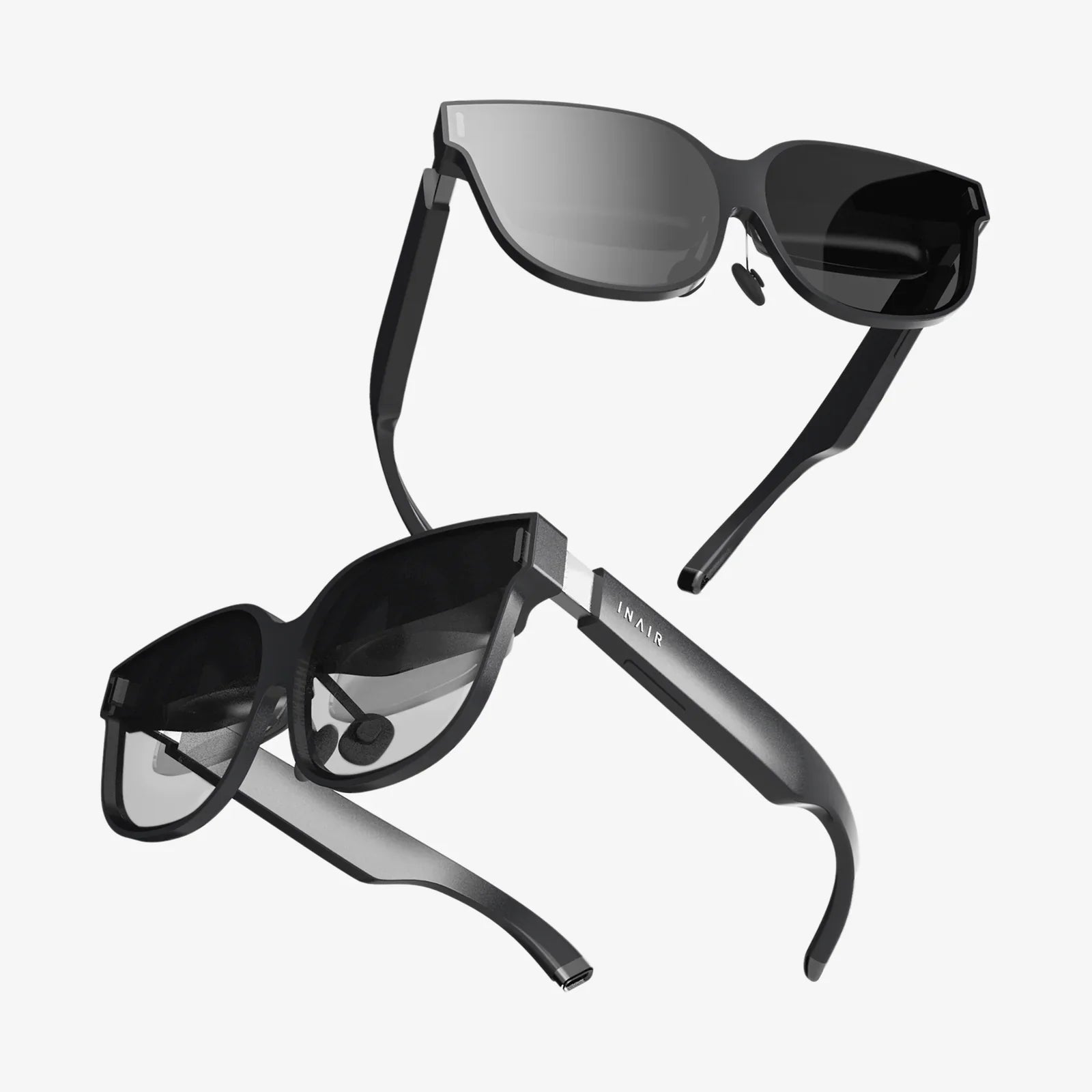
Smart glasses and AR headsets represent the next evolution of wearables, aiming to overlay digital information onto the physical world. This field, known as spatial computing, is one of the most computationally intensive challenges in computer science. It requires real-time computer vision to understand the 3D geometry of the environment, precise tracking of the user's head and eye movements, and realistic rendering of virtual objects that interact convincingly with real-world lighting and physics. Solving these problems involves advanced algorithms in simultaneous localization and mapping (SLAM), object recognition, and graphics rendering, all operating under extreme latency constraints to prevent user discomfort.
Brain-Computer Interfaces (BCIs)
Perhaps the ultimate wearable is one that interfaces directly with the human nervous system. Non-invasive BCIs, often in the form of headbands, use electroencephalography (EEG) to read brainwave patterns. The computer science challenges here are immense. EEG signals are incredibly faint and buried in noise. Extracting intent—such as moving a cursor on a screen or controlling a prosthetic limb—requires advanced pattern recognition and machine learning models trained on massive datasets of neural activity. This research sits at the intersection of computer science, neuroscience, and signal processing, and could ultimately redefine human-computer symbiosis.
Ethical Imperatives and Societal Responsibility
The power of computer science to create these intimate technologies comes with profound ethical responsibilities that the field must address.
Data Privacy and Security
Wearables collect the most intimate data imaginable: real-time location, health vitals, sleep patterns, and even audio snippets of a user’s life. This creates a treasure trove for hackers and a responsibility for companies. Computer science must lead in developing end-to-end encryption, robust authentication mechanisms (like biometrics), and differential privacy techniques that allow for aggregate data analysis without revealing individual identities. The principle of “privacy by design,” where data protection is integrated into the system architecture from the outset, is no longer optional; it is a fundamental requirement.
Algorithmic Bias and Fairness
ML models are only as good as the data they are trained on. If training data for a health algorithm is sourced primarily from a specific demographic (e.g., young, male athletes), the resulting model may be inaccurate or even harmful for other groups (e.g., older women). This is a serious issue of algorithmic bias. Computer science research is now heavily focused on developing techniques for fair, accountable, and transparent ML. This includes methods for detecting bias in datasets, creating algorithms that are robust across populations, and ensuring models are explainable so their decisions can be understood and audited.
The seamless fusion of computer science and wearable technology is quietly building a future where technology is less of a tool we use and more of a layer we inhabit. It promises a revolution in personalized healthcare, a new paradigm for ambient computing, and a deeper understanding of our own bodies and minds. The algorithms being written today are not just lines of code; they are the architects of this new reality, crafting a world where our technology understands us so profoundly that it can anticipate our needs, protect our health, and enhance our perception of the world around us, all from the background of our everyday lives.


Share:
Best AR Project Examples That Are Redefining Reality Today
Best AR Project Examples That Are Redefining Reality Today