


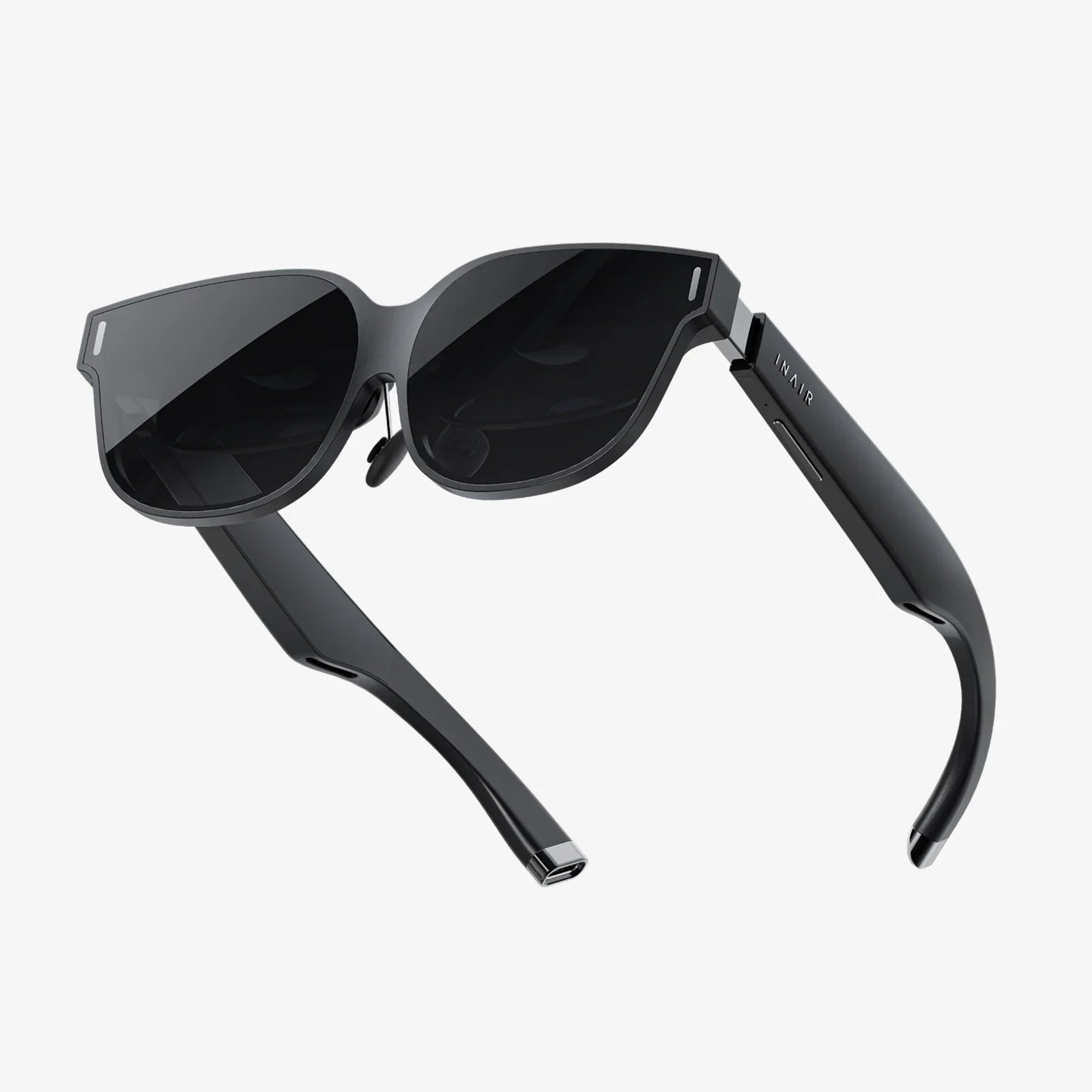
Imagine stepping through your screen, leaving the flat, two-dimensional world behind and entering a universe of depth, sound, and sensation. This is the promise held by the modern computer VR set, a technological marvel that has evolved from science fiction fantasy into a powerful, accessible portal to new realities. It’s an invitation to not just see a digital world, but to truly exist within it, and the journey it offers is reshaping our very conception of experience itself.
The Core Components: Deconstructing the Experience
At its heart, a computer VR set is a sophisticated system designed to trick the human brain into accepting a digital reality. This illusion, known as immersion, is achieved through a symphony of coordinated hardware and software.
The Head-Mounted Display (HMD): Your Window to Another World
The most recognizable component is the head-mounted display, or HMD. This is the helmet-like device that houses the crucial technology directly in front of your eyes. Its primary job is to present a stereoscopic 3D image, creating a convincing sense of depth. Modern HMDs utilize high-resolution displays, often one for each eye, with refresh rates exceeding 90Hz—and in premium models, 120Hz or even higher. This high refresh rate is critical for smooth, comfortable visuals; anything lower can induce latency, leading to motion sickness and breaking the fragile sense of presence.
Precision Tracking: Mapping Your Reality
For the experience to feel genuine, the virtual world must respond to your movements with perfect accuracy. This is achieved through advanced tracking systems.
Inside-Out Tracking
Many contemporary systems use inside-out tracking. Here, cameras and sensors are embedded on the HMD itself. These cameras constantly scan your physical environment, tracking the position of the controllers and mapping the room's geometry to understand your position in space without the need for external hardware. This method offers greater freedom and ease of setup.
Outside-In Tracking
The alternative, and traditionally more precise, method is outside-in tracking. This system uses external sensors or base stations placed around the play area. These devices emit lasers or infrared light that is picked up by sensors on the HMD and controllers, triangulating their exact position with exceptional accuracy. While it can require a more complex setup, it is often favored for professional applications and experiences where millimeter precision is required.
The Controllers: Extending Your Digital Hands
Your hands are your primary tool for interacting with the world, and VR controllers are their digital analogues. These are not simple remotes; they are complex input devices equipped with haptic feedback motors, capacitive touch sensors that can detect individual finger placement, and precise tracking. Advanced systems are now pushing towards controller-free hand tracking, using the HMD's cameras to directly map your real hands into the virtual space, offering an even more intuitive and natural interface.
The Audio: The Unseen Half of Presence
Visuals are only half the battle for immersion. Spatial, or 3D, audio is arguably just as important. By using head-related transfer functions (HRTF), a computer VR set can simulate sounds coming from specific directions and distances. The rustle of leaves behind you, the echo of footsteps in a vast cavern above you—this auditory landscape is crucial for selling the illusion that you are somewhere else. High-quality integrated headphones or dedicated audio solutions are therefore a key, though often overlooked, component of the system.
The Engine Room: Understanding System Requirements
A computer VR set is a demanding peripheral. It is not a standalone console but a high-performance monitor strapped to your face, often requiring the rendering of two high-resolution views at once at an exceptionally high frame rate. This places a significant burden on the host computer.
Graphics Processing Unit (GPU): The Heart of the Operation
The GPU is the single most important component for a smooth VR experience. It must render complex 3D environments twice—once for each eye—and do so fast enough to maintain the high frame rates essential for comfort. A underpowered GPU will result in dropped frames, stuttering, and increased latency, which is a primary cause of simulator sickness. Manufacturers provide minimum and recommended specifications, but for a truly premium experience, a high-end GPU is non-negotiable.
Central Processing Unit (CPU) and Memory
While the GPU does the heavy lifting for visuals, the CPU is responsible for the logic of the virtual world: physics calculations, artificial intelligence for characters, and processing input from all the tracking sensors and controllers. A modern, multi-core processor is essential to avoid bottlenecks. Similarly, sufficient system RAM is required to load the expansive environments and assets without hitches. For most modern VR titles, a healthy amount of fast RAM is a necessity.
Connectivity: The Data Lifeline
All the visual data from the computer to the HMD must travel through a cable—or, in newer systems, via a high-bandwidth wireless connection. Wired headsets typically use a high-speed protocol to ensure enough data can be transferred for those high-resolution, high-frame-rate images. Wireless adapters use dedicated technology to create a high-fidelity, low-latency link between the PC and the headset, freeing the user from cables but adding another component to the system equation.
A Universe of Applications: Beyond the Game
While gaming is the most famous and commercially successful application for computer VR, its potential extends far beyond entertainment. It is a tool for creation, connection, and understanding.
Revolutionizing Education and Training
VR offers an unparalleled medium for experiential learning. Medical students can practice complex surgical procedures on virtual patients without risk. History students can walk through ancient Rome. Mechanics can learn to repair a complex engine by taking apart a virtual copy. This "learning by doing" in a safe, repeatable, and cost-effective virtual environment is transforming pedagogical approaches across numerous fields.
Architectural Design and Real Estate
Architects and clients can step inside a 3D model of a building long before the foundation is poured. They can experience the scale of a room, the flow of light at different times of day, and make informed changes to the design. Similarly, real estate agents can offer virtual tours of properties anywhere in the world, allowing potential buyers to explore a space as if they were physically present.
Social Connection and Remote Collaboration
VR social platforms allow people to meet in virtual spaces as embodied avatars. They can watch movies together, attend concerts, play games, or simply chat around a virtual campfire. This sense of shared presence—of being in the same room with someone who is physically thousands of miles away—is a powerful step beyond traditional video calls. For businesses, it enables remote teams to collaborate on 3D models, hold meetings in virtual boardrooms, and foster a stronger sense of team cohesion.
Therapeutic and Healthcare Uses
Therapists are using VR for exposure therapy, carefully guiding patients through simulations of their fears (like heights, flying, or public speaking) in a controlled setting. It is also used for pain management, distracting burn victims during painful wound care procedures with immersive, calming experiences. Physical rehabilitation can be gamified, making repetitive exercises more engaging for patients recovering from injuries.
The Human Factor: Challenges and Considerations
Despite its incredible potential, the technology is not without its hurdles, both technical and human.
Comfort and Accessibility
Motion sickness, often termed VR fatigue or simulator sickness, remains a barrier for some users. It is primarily caused by a mismatch between what the eyes see (movement) and what the vestibular system in the inner ear feels ( stillness). While advancements in technology have drastically reduced its occurrence, it persists. Furthermore, the form factor of the HMD—its weight, heat, and the way it fits on different head shapes—is an area of continuous improvement. The industry is striving for lighter, cooler, and more comfortable devices that can be worn for extended periods.
The Tether of Cost and Space
A high-end computer VR set requires a significant investment. The cost of the headset itself is coupled with the need for a powerful, and therefore expensive, gaming computer. This creates a high barrier to entry for many consumers. Furthermore, room-scale VR requires a clear, safe play area, a luxury not available in every household.
Ethical and Social Implications
As these virtual worlds become more compelling and realistic, questions arise about prolonged use. What are the psychological effects of spending significant time in a virtual reality? How do we protect users from harassment in social VR spaces? And as the line between the real and virtual blurs, establishing clear ethical guidelines and social norms for this new medium will be one of the great challenges of the coming decade.
Gazing into the Crystal Ball: The Future of Immersive Computing
The computer VR set of today is a remarkable achievement, but it is merely a stepping stone. The trajectory of the technology points towards even more seamless and powerful experiences.
We are moving towards devices with vastly higher resolutions, approaching "retina" quality where the human eye can no longer discern individual pixels. The field of varifocal displays, which dynamically adjust focus to match where your eyes are looking, will solve the current conflict between convergence and accommodation, further enhancing visual comfort and realism. Haptic technology will evolve from simple controller vibrations to full-body suits and gloves that provide tactile feedback, allowing you to feel the texture of a virtual object. The ultimate goal is a combination of VR and AR—often referred to as Mixed Reality (MR)—where digital objects are convincingly anchored and interactive within our real world.
The potential is limitless. From revolutionizing how we work and learn to creating new forms of art and social connection, the computer VR set is more than just a gadget; it is the foundation for the next major computing platform. It represents a fundamental shift from observing information to inhabiting it. The door to these new worlds is now open, and the experiences waiting on the other side are limited only by our imagination.
Share:
Best Cheap Virtual Reality: Your Ultimate Guide to Affordable VR in 2024
Headphones Great for Glasses: The Ultimate Guide to Uncompromised Comfort and Audio