


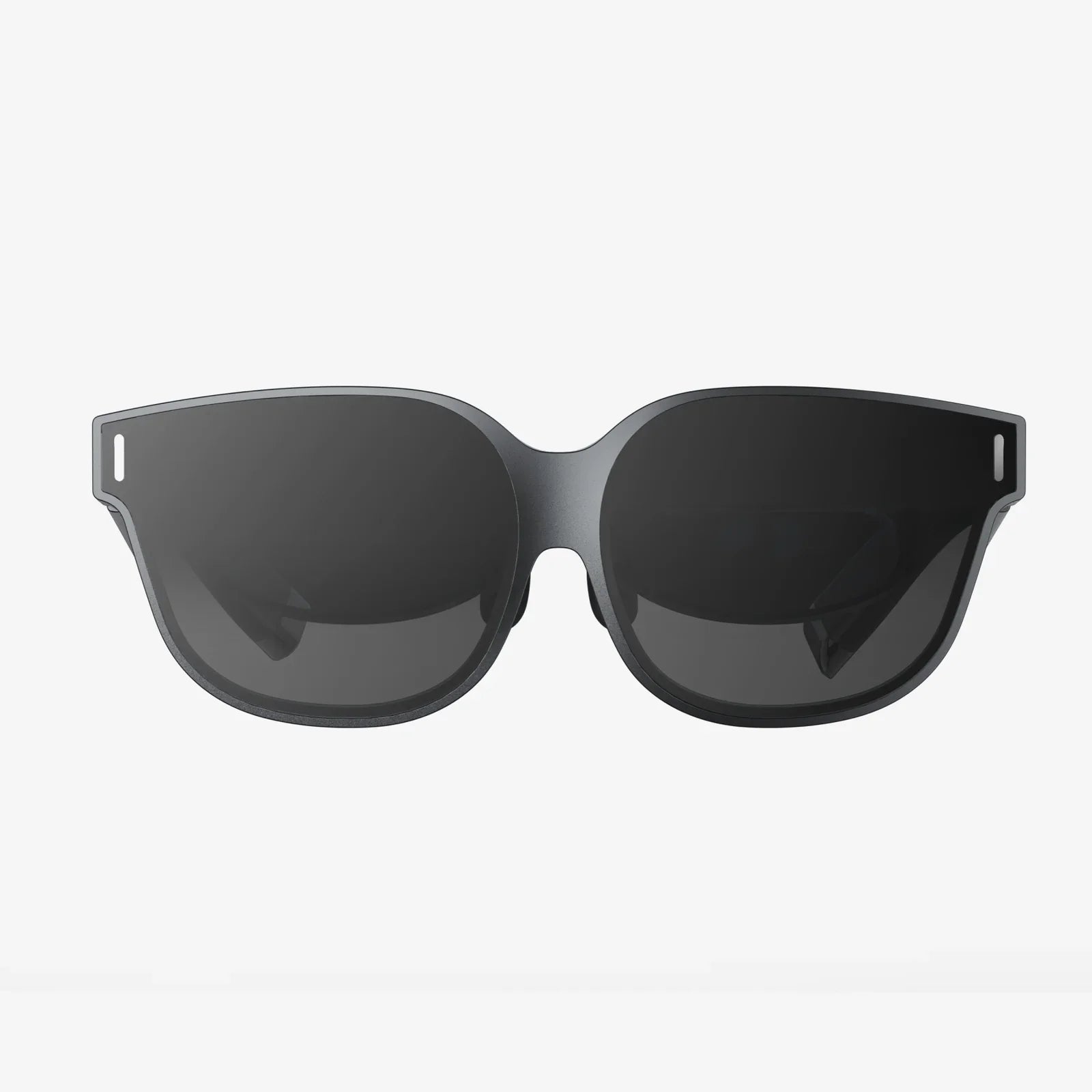
Imagine stepping into a breathtaking virtual world, not from a high-end gaming rig in a dedicated room, but from your living room couch, a park bench, or even an airplane seat. This is the promise and the reality of the computerless VR headset, a technological leap that is fundamentally democratizing virtual reality and severing the last physical tether to the outside world. This isn't just an incremental upgrade; it's a paradigm shift, moving VR from a niche enthusiast hobby to a mainstream-ready platform for entertainment, social connection, and productivity. The era of being shackled to a bulky desktop computer is over, and a new age of truly free and accessible immersion has begun.
The Architectural Leap: How a Standalone Headset Works
To understand the revolution, one must first appreciate the engineering marvel packed into a single, wearable device. Unlike their PC-dependent predecessors, computerless VR headsets are complete, self-contained computing systems.
The Silicon Heart: System-on-a-Chip (SoC)
At the core of every standalone headset is a highly integrated System-on-a-Chip. This miniature powerhouse combines a central processing unit (CPU), a graphics processing unit (GPU), memory, storage, and various other components onto a single chip. These are not the stripped-down processors found in everyday smartphones; they are often specially designed or optimized for the immense task of rendering two high-resolution displays at a buttery-smooth 72Hz, 90Hz, or even 120Hz frame rate. This relentless graphical computation is essential to maintaining immersion and preventing the motion sickness that plagued early VR. The efficiency of these chips is a constant battle against physics, as generating complex virtual worlds generates significant heat, all of which must be managed in a device mere centimeters from the user's face.
Spatial Intelligence: Inside-Out Tracking
Perhaps the most magical feature of a computerless headset is its ability to understand its environment without any external beacons, sensors, or cameras. This is achieved through inside-out tracking. A array of wide-angle cameras mounted on the headset's exterior constantly scans the surrounding room. Sophisticated computer vision algorithms analyze these video feeds in real-time to identify unique features—a painting on a wall, the edge of a coffee table, a bookshelf—and use them as fixed points to triangulate the headset's precise position and orientation in 3D space. This allows users to walk around, duck, dodge, and interact naturally within a virtual play area, or "guardian boundary," that they define themselves. This technology completely eliminates the cumbersome setup process of external sensors, making the entire VR experience instantly portable.
The Human Interface: Controllers and Interaction
Interaction is provided by wireless controllers that are themselves tracked by the headset's cameras. These controllers are equipped with inertial measurement units (IMUs)—sensors that track acceleration and rotation—which provide high-frequency data on their movement. This data is fused with the camera-based tracking to create a highly accurate and low-latency representation of the controllers in VR. More advanced systems are now incorporating hand-tracking technology, using the headset's cameras to directly model the user's fingers and hands, allowing for intuitive, controller-free interaction that feels incredibly natural.
Liberation by Design: The Core Advantages of Going Computerless
The shift to a standalone architecture unlocks a suite of benefits that extend far beyond mere convenience.
Unmatched Accessibility and Lower Barrier to Entry
The single greatest advantage is accessibility. Previously, entering the VR ecosystem required a investment of hundreds, if not thousands, of dollars on a capable gaming computer, on top of the cost of the headset itself. A computerless VR headset consolidates this entire cost into one product. There are no compatibility concerns, no driver updates for a graphics card, and no need to worry if a system meets the minimum specifications. This dramatically lowers the financial and technical barriers, opening the doors of VR to a vastly wider audience.
The Ultimate Freedom of Movement
Without a cable running from the headset to a computer, user movement is completely uninhibited. The fear of tripping over a wire or yanking a expensive desktop off a desk is eradicated. Users can spin 360 degrees, lay on the floor, or practice virtual tai chi without a single thought for their physical tether. This freedom is not just a safety feature; it is a profound enhancement to immersion. When the last physical connection to the real world is severed, the brain is more easily convinced that the virtual world is real.
Instant Portability and Shared Experiences
A computerless headset is a pick-up-and-play device. It can be taken to a friend's house for a party, used in a large open space like a community hall for a massive play area, or even enjoyed on a lunch break at the office. This portability makes VR a social catalyst rather than an isolating one. It transforms from a solitary experience locked in an office to a shared experience that can be easily demonstrated and enjoyed with others, accelerating its adoption and cultural acceptance.
Navigating the Trade-Offs: Performance and Processing Power
This new paradigm is not without its compromises. The primary challenge is the inherent limitation of mobile processing power.
The Graphical Fidelity Gap
A standalone headset's SoC, while impressive, cannot compete with the raw graphical horsepower of a top-tier desktop GPU rendering for a connected headset. This means that experiences on computerless systems often feature less complex lighting, simpler textures, and fewer on-screen objects than the most graphically intensive PC VR titles. Developers must be incredibly clever with their art design and optimization to create compelling and beautiful worlds within a much stricter thermal and power budget.
Thermal and Battery Constraints
All that processing generates heat, which must be dissipated quietly and efficiently to avoid discomfort. Furthermore, everything is powered by an onboard battery, typically offering two to three hours of use on a single charge. This creates a natural session length and necessitates planning for longer experiences. These constraints are the constant focus of engineering teams, who balance performance against battery life and thermal output, leading to a very different design philosophy than that of a plugged-in, actively-cooled PC.
A Universe in Your Headset: The Expansive Standalone Content Library
The success of any platform is dictated by its software, and the standalone ecosystem has exploded with content. The library is diverse, catering to all interests:
- Gaming: From rhythm games that have users sweating through a full workout to sprawling RPG adventures, puzzle games, and social hangouts, the depth and quality of standalone VR games have increased exponentially.
- Fitness: Computerless VR is the perfect platform for fitness applications. The freedom of movement allows for boxing, dancing, and other high-intensity workouts, all tracked and scored within the headset itself.
- Social & Entertainment: Platforms exist where users can watch movies on a giant virtual screen, attend live concerts with friends from around the world, or simply hang out and chat in imaginative virtual spaces.
- Productivity: With features like passthrough cameras (allowing users to see their real environment in black-and-white or color), these headsets are becoming tools for virtual desktops, remote collaboration, and 3D design review.
Gazing into the Crystal Ball: The Future of Untethered VR
The trajectory of computerless VR is pointing toward even greater integration and capability. We are on the cusp of seeing headsets with even more advanced SoCs built on smaller, more efficient manufacturing processes, delivering near PC-level graphics without the cable. The integration of full-color, high-resolution passthrough will blur the line between the virtual and the real, enabling compelling mixed reality experiences. This will allow digital objects to be anchored convincingly to your physical living room, creating new genres of games, interactive learning tools, and productivity applications. Furthermore, the development of more sophisticated haptic feedback, both in controllers and eventually in gloves, will deepen the sense of touch and presence within these untethered worlds.
The computerless VR headset is far more than a convenient alternative; it is the essential evolution that virtual reality needed to grow up. By cutting the cord, it has not limited our virtual horizons but has infinitely expanded the physical spaces where we can explore them. It has transformed VR from a complex simulation running on a distant machine to a personal portal—a window to other worlds that we can simply slip on and step through, anytime, anywhere. The revolution isn't coming; it's already on your face.
Share:
iPhone 5C VR Headset: The Unlikely Pioneer of Mobile Virtual Reality
VR Goggles That Work With iPhone: Your Ultimate Portal to Mobile Virtual Reality