


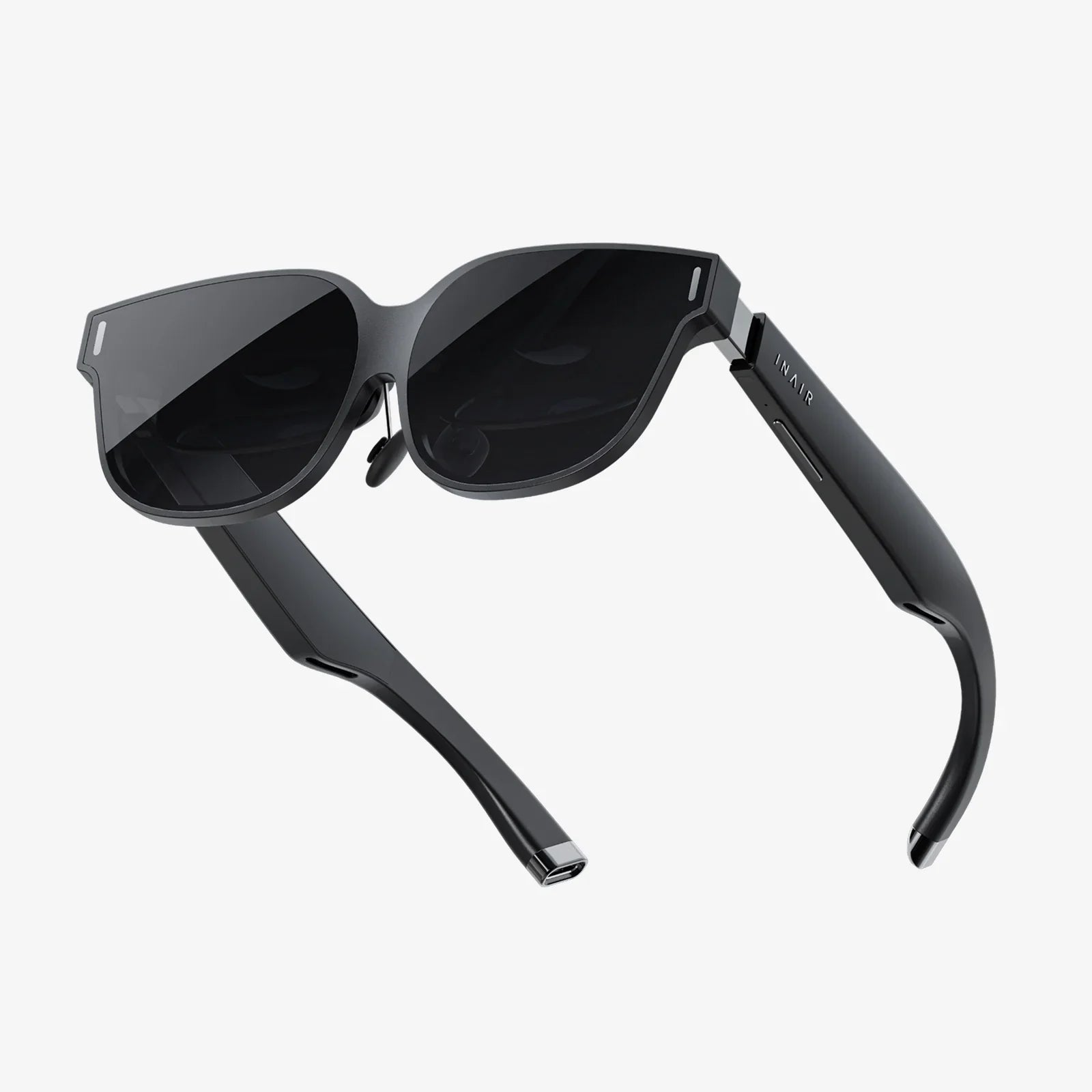
Imagine a world where information doesn’t live on a screen in your hand, but is painted onto the world itself. Directions float on the pavement before you, the history of a landmark unfolds before your eyes, and a recipe hovers perfectly beside your mixing bowl without a single smudge. This isn’t a distant sci-fi fantasy; it’s the imminent future being built today, and it’s arriving on the frames of consumer AR glasses. This technology promises not just to change what we see, but to fundamentally redefine how we interact with reality, making the digital an intuitive and invisible layer over our physical lives. The revolution isn't coming; it's already being fitted for your face.
The Architectural Pillars of Augmented Vision
For consumer AR glasses to transition from a compelling concept to a daily essential, they rely on a symphony of advanced technologies working in perfect harmony. Unlike their virtual reality counterparts, which seek to replace your vision, AR glasses must augment it, presenting a unique set of engineering challenges.
The Display: Projecting a Ghost into the World
The core magic of any AR device is its ability to superimpose digital images onto the user’s field of view. This is achieved through several competing display technologies, each with its own trade-offs between field of view, resolution, and form factor.
- Waveguide Optics: This is the leading technology for sleek, consumer-friendly glasses. It involves projecting light into a thin, transparent piece of glass or plastic that "guides" the light through total internal reflection before directing it into the eye. The result is a relatively normal-looking pair of glasses that can display crisp images without blocking the user’s view of the real world.
- Birdbath Optics: A more compact design that uses a beamsplitter to fold the optical path, allowing for a larger field of view in a smaller package. However, it can sometimes result in a slightly dimmer view of the real world.
- MicroLED Arrays: The holy grail for display brightness and efficiency. These incredibly small, self-emissive LEDs are crucial for creating vivid images that are visible even in bright sunlight, a significant hurdle for many current displays.
Spatial Mapping and Understanding: The Digital Nervous System
For digital content to feel like it’s truly part of the world, the glasses must understand the world itself. This is where a suite of sensors comes into play, acting as a digital nervous system.
- Cameras: Multiple cameras work together to scan the environment in real-time, identifying surfaces, objects, and their relative positions.
- Depth Sensors: Using technologies like LiDAR (Light Detection and Ranging) or structured light, these sensors create a precise 3D map of the surroundings, measuring the distance to every surface. This allows a virtual character to convincingly hide behind your real-world sofa.
- Inertial Measurement Units (IMUs): These accelerometers and gyroscopes track the precise movement and orientation of the user’s head, ensuring the digital content remains locked in place even as you move.
Processing and Connectivity: The Brain Behind the Lenses
All this sensor data must be processed instantaneously. Some devices rely on a powerful external computing unit, often a smartphone, to handle the heavy lifting. The ultimate goal, however, is on-device processing using specialized chips designed for spatial computing. These processors are optimized for tasks like simultaneous localization and mapping (SLAM), which is the process of building a map of an unknown environment while simultaneously tracking the user’s location within it. Seamless connectivity, via Wi-Fi and eventually 5G/6G, is also essential for streaming rich data and cloud-based processing.
Transforming the Fabric of Everyday Life
The true potential of consumer AR glasses lies not in the technology itself, but in the profound ways it will reshape our daily routines, professions, and social interactions.
Navigation and Contextual Awareness
Gone are the days of glancing down at a phone for turn-by-turn directions. With AR glasses, a subtle path or arrow can be laid directly onto the street, guiding you effortlessly to your destination. Look at a restaurant, and its ratings and today’s specials might appear next to the door. Glance at a foreign language sign, and see it instantly translated. This ambient, context-aware information stream will make us more knowledgeable and efficient as we move through the world.
Revolutionizing Work and Productivity
The concept of the desktop will explode beyond the confines of a monitor. Professionals will be able to pin multiple virtual screens around them in any environment, creating an immense, personalized workspace. A mechanic could see a holographic schematic overlaid on the engine they are repairing. An architect could walk a client through a full-scale 3D model of a building before a single brick is laid. Remote collaboration will become truly spatial, with colleagues appearing as life-like avatars in your space, able to manipulate and annotate shared 3D models.
A New Paradigm for Entertainment and Social Connection
Entertainment will become a shared, spatial experience. Instead of watching a movie on a TV, you could project it onto a blank wall at a cinematic size. Multiplayer games could transform your living room into a dungeon or your local park into a battlefield. Socially, these devices could enable more meaningful remote presence, making a video call feel like the other person is sitting across the table from you, able to share and interact with holographic content together.
The Invisible Hurdles on the Road to Adoption
Despite the exciting potential, significant challenges remain before consumer AR glasses can achieve widespread, daily use. Solving these issues is critical to moving from early adoption to a true mass-market product.
The Form Factor Conundrum
For people to wear these devices all day, they must be indistinguishable from regular eyewear: lightweight, comfortable, and stylish. Current technology often forces a compromise between performance and aesthetics. Achieving a wide field of view with high resolution in a package that looks like a typical pair of glasses is the single greatest hardware challenge facing the industry. Battery life is another key aspect of form factor; the goal is a device that can last a full waking day on a single charge without becoming uncomfortably heavy or hot.
The Privacy Paradox
Devices equipped with always-on cameras and microphones understandably raise profound privacy concerns. The idea of being recorded in public or in private spaces without consent is a major societal fear. Manufacturers must build trust through transparent, privacy-first design. This includes clear, physical indicators when recording is active, robust on-device data processing (so sensitive information never leaves the glasses), and giving users complete control over their data. Without solving privacy, the technology will face immense public and regulatory backlash.
Building the Spatial Internet
Today’s internet is built for flat screens. The AR world will require a new kind of web—a spatial internet filled with 3D content and experiences that are anchored to specific locations and objects. Developing the tools, standards, and platforms for creators to easily build for this new medium is a massive undertaking. Furthermore, this digital layer must be accessible and useful, avoiding the pitfalls of information overload or becoming a distracting, spam-filled landscape of virtual advertisements.
The Horizon of Possibility
The journey of consumer AR glasses is just beginning. In the near term, we can expect rapid iterations: better displays, longer battery life, and more elegant designs. But looking further out, the convergence with other technologies will unlock even more transformative applications. Integration with artificial intelligence will make the devices predictive and proactive, offering information before you even know you need it. Advances in brain-computer interfaces could eventually allow for control through mere thought, making the interaction completely seamless. The line between the digital and the physical will not just be blurred; it will be erased, creating a hybrid reality that is richer, more efficient, and more magical than we can currently imagine.
The ultimate success of consumer AR glasses won't be measured by their technical specifications, but by their ability to fade into the background of our lives. The goal is not to be dazzled by the technology, but to be empowered by it. When donning a pair feels as natural as putting on your favorite pair of sunglasses, when digital information flows as effortlessly as intuition, and when the device itself is forgotten—that is when the true revolution will have arrived. The world is about to get a new, invisible layer, and it will change everything.
Share:
AI Efficiency Tools Are Revolutionizing How We Work and Think
Digital Product Market Growth 2025: Navigating the Unprecedented Expansion