


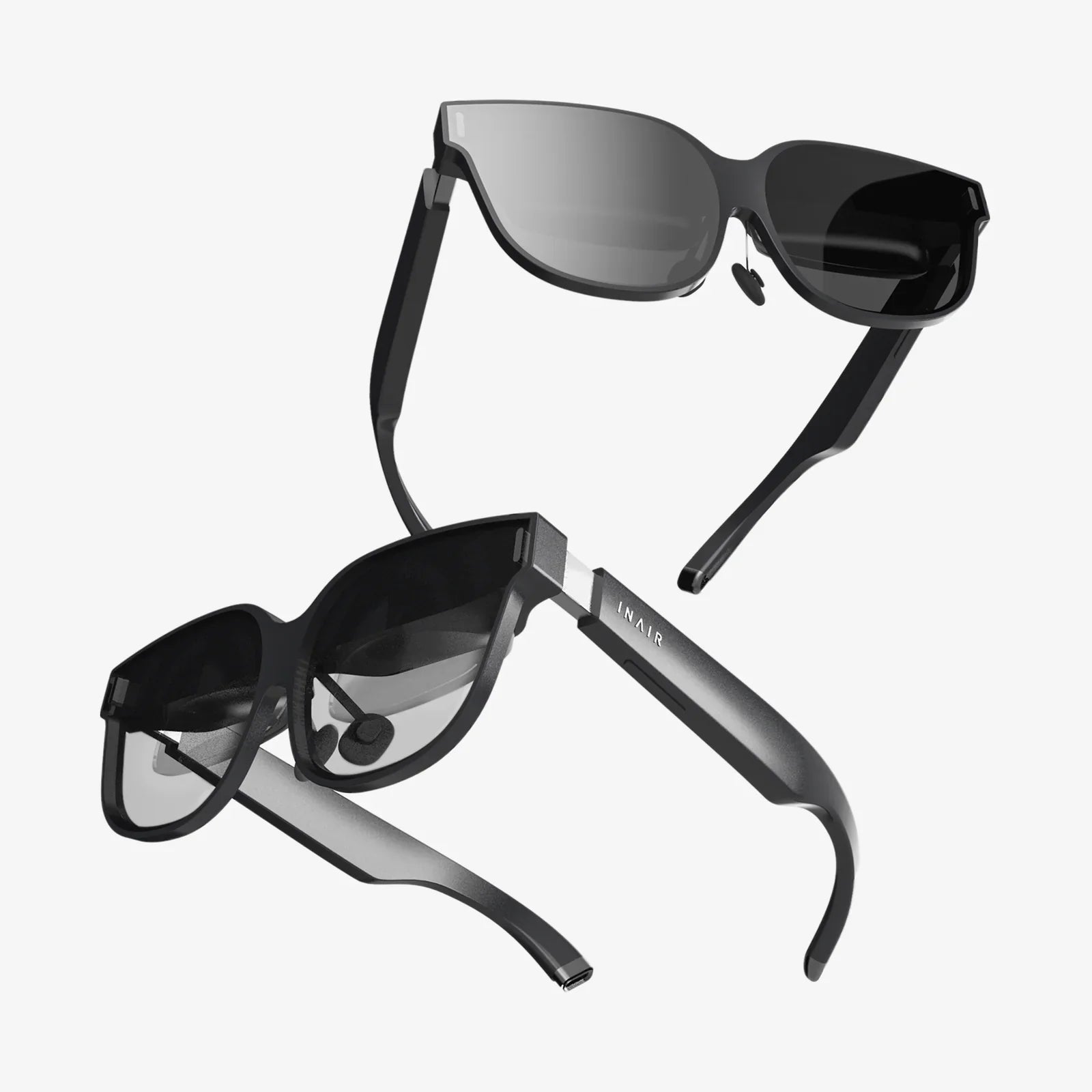
Imagine a world where digital information doesn’t just live on a screen in your hand but is seamlessly woven into the fabric of your reality. Directions float on the street in front of you, a recipe hovers next to your mixing bowl without a smudge, and a distant colleague appears as a lifelike hologram on your sofa, discussing a project as if they were truly there. This is no longer the stuff of science fiction; it is the imminent future being unlocked by the consumer augmented reality headset, a device poised to become the next fundamental shift in how we compute, connect, and perceive the world around us. The journey from clunky prototypes to sleek, wearable glasses is accelerating, promising to dissolve the boundary between the physical and the digital and redefine our daily experiences in profound and unexpected ways.
The Architectural Leap: How Consumer AR Sees and Understands the World
At its core, a consumer AR headset is a sophisticated sensor package and computer designed to perceive, process, and project. Unlike virtual reality, which replaces your vision with a completely digital environment, augmented reality aims to supplement your world with contextual and helpful digital layers. This magic is achieved through a confluence of advanced technologies working in perfect harmony.
The first critical component is spatial mapping. Using a combination of cameras, LiDAR (Light Detection and Ranging) scanners, and depth sensors, the headset constantly scans its environment. It doesn’t just capture a 2D image; it constructs a real-time, millimeter-accurate 3D mesh of the room, understanding the geometry of walls, floors, furniture, and other objects. This digital twin of your physical space allows digital content to have a sense of permanence and physics—a virtual character can hide behind your actual couch, and a digital clock can sit firmly on your real wall.
This leads to the second pillar: precise tracking. Through simultaneous localization and mapping (SLAM) algorithms, the headset understands not only the environment but also its own position and orientation within that space down to the minutest movement. This ensures that as you turn your head or walk around, the digital overlays remain locked in place, preventing the jittery, floating effect that breaks immersion. This rock-solid anchoring is what sells the illusion that the digital and physical are one.
The Display: Painting Light onto the Real World
Perhaps the most crucial and challenging aspect is the display technology. The goal is to project bright, high-resolution, and convincing images onto the user’s retina while still allowing them to see the real world clearly. Early waveguides and birdbath optics are giving way to more advanced solutions like holographic waveguides and eventually, microLED arrays. These technologies pipe light from tiny projectors at the temples of the glasses into the lenses themselves, which then direct the image toward the eye. The race is on to create displays that are visually stunning, energy-efficient, and, most importantly, can be packaged into a form factor that resembles everyday eyewear. The success of consumer AR hinges on this miniaturization, moving from bulky helmets to socially acceptable glasses.
Beyond Novelty: The Practical Applications Reshaping Daily Life
While the technology is mesmerizing, its true value lies in its utility. Consumer AR headsets are transitioning from expensive toys to powerful tools that solve real-world problems and enhance human capability across a spectrum of activities.
Transforming the Domestic Sphere
Inside the home, AR becomes an interactive assistant. Imagine following a complex recipe with each step demonstrated by a hovering video, ingredient measurements displayed right over your bowls, and timers that are visually tied to your oven. For DIY enthusiasts, digital instructions and measurements can be projected directly onto the piece of furniture they’re assembling or the wall they’re mounting a TV on, eliminating misdrilled holes and frustration. Interior design is revolutionized—you can virtually place true-to-scale models of sofas, lamps, and art in your room, walk around them, and see how they look in different lighting conditions before making a purchase.
Revolutionizing How We Work and Learn
The concept of the static, 2D desktop is becoming obsolete. With an AR headset, your workspace is limitless. You can have multiple large, virtual screens arrayed around you in your physical room, accessible from any café, library, or airport. Remote collaboration takes a giant leap forward. Instead of a grid of faces on a video call, colleagues can appear as spatial avatars or holograms in your environment, able to interact with and manipulate 3D models of a product design or architectural plan together as if they were physical objects in the room. In education, students can dissect a virtual frog, walk through a historical site as it was thousands of years ago, or visualize complex molecular structures in 3D space, transforming abstract concepts into tangible, interactive experiences.
Redefining Navigation and Exploration
Walking through a new city will never be the same. Instead of constantly looking down at a phone, arrows and directions can be overlaid onto the pavement. Landmarks can have floating informational tags, restaurant reviews and ratings can appear as you pass by their storefronts, and public transit schedules can be visualized at the bus stop. This technology extends beyond cities to hiking trails, museums, and large campuses, providing contextual information exactly when and where it is needed, making exploration more immersive and informed.
The Inevitable Challenges: Navigating the Social and Ethical Landscape
This powerful technology does not arrive without significant questions and potential pitfalls. The widespread adoption of always-on cameras and sensors worn on the face raises profound privacy concerns. The ability to continuously record and analyze the world—including people—could lead to unprecedented surveillance, both by corporations and governments. Clear norms and robust regulations regarding data collection, facial recognition, and the recording of public spaces without consent must be established to prevent a dystopian outcome.
Furthermore, the social acceptance of wearing computers on our faces is a hurdle. Will it be considered rude to wear AR glasses during a conversation? How do we prevent the digital world from becoming a distracting, overwhelming layer of spam and advertisements? The industry must prioritize thoughtful and unobtrusive design, both in hardware and software, to ensure these devices augment our humanity rather than detract from it. There is also a real risk of a digital divide, where access to this enhanced layer of reality becomes a marker of socioeconomic status, creating a new dimension of inequality between those who are “augmented” and those who are not.
The Road Ahead: From Isolated Device to Invisible Platform
The future of the consumer AR headset is not as a standalone product but as the primary window into the spatial web. This is the next evolution of the internet, where information is not tied to URLs but to physical locations and objects. Your headset will be the browser for this new reality, pulling contextually relevant data from the cloud and displaying it in your field of view. It will be the central hub that connects to your other devices—your phone, your smartwatch, your smart home—orchestrating a seamless flow of information between the digital and physical.
Advancements in artificial intelligence will be the engine that powers this vision. AI will move from being a tool we consciously use to an ambient intelligence that anticipates our needs, filters information, and provides assistance before we even have to ask. The combination of AR and AI will create a truly personalized and proactive computing experience.
We are standing at the precipice of a new era of human-computer interaction. The consumer AR headset is the key that will unlock it, offering a glimpse into a future where our digital and physical lives are no longer separate, but harmoniously integrated. The potential to enhance our cognition, creativity, and connection is immense. The challenge lies in guiding its development with careful consideration for the societal and ethical implications, ensuring that this powerful new lens on reality is built to empower all of humanity, creating a future that is not only more efficient but also more magical, more connected, and more profoundly human. The world is about to get a major upgrade, and it will be visible through a new pair of glasses.
Share:
Extended Reality What Is It: The Ultimate Guide to Our Merging Worlds
Best VR Headset Under 3000: Your Ultimate Guide to Premium Immersion on a Budget