


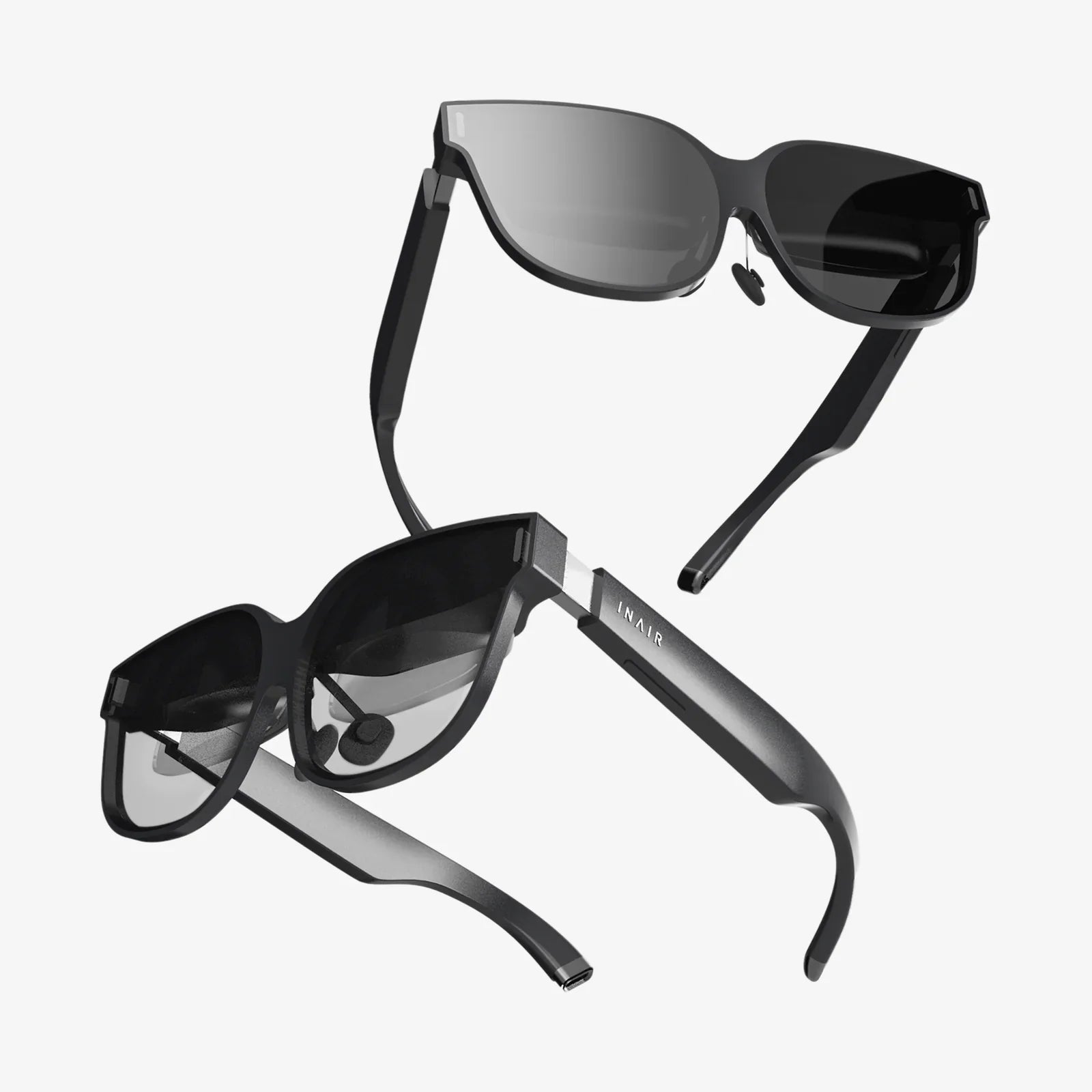
Imagine a world where information floats before your eyes, where digital assistants are not confined to screens but exist in your peripheral vision, and where the line between the physical and digital realms becomes so blurred it effectively vanishes. This is not the distant future of science fiction; it is the imminent reality being forged in laboratories today, and its vehicle is the most intimate of technologies: the contact lens. The convergence of advanced optics, micro-electronics, and augmented reality is birthing a new paradigm of human-computer interaction, one where the display is not something you look at, but something you see through. This is the promise of augmented reality contact lenses, a technology set to redefine everything from communication and entertainment to medicine and industry.
The Evolutionary Leap from Handheld to Hands-Free
To appreciate the seismic shift promised by AR contact lenses, one must first understand the trajectory of AR itself. The journey began with bulky headsets and progressed to more streamlined smart glasses. While these devices represent significant technological achievements, they remain an external apparatus—a layer between the user and the world. They can be obtrusive, socially conspicuous, and limited by their form factor. The contact lens represents the logical endpoint of this miniaturization trend. By moving the technology onto the surface of the eye itself, developers are aiming for the holy grail of AR: complete immersion without obstruction. It is the difference between holding a flashlight to see in the dark and having built-in night vision.
The core challenge is monumental. It involves integrating components that traditionally require significant space—micro-displays, sensors, power sources, and data transceivers—into a soft, flexible, biocompatible polymer disc that is thinner than a human hair in places. The engineering feats required are pushing the boundaries of material science and nanotechnology. Unlike their passive vision-correcting predecessors, these are active, intelligent systems that must interact with their environment and the user in real-time.
Deconstructing the Miracle: Core Technologies at a Glance
The magic of an AR contact lens lies in the seamless integration of several sophisticated systems, all working in concert.
The Micro-Display System
How does one project an image onto an eye that is itself the instrument of projection? The prevailing concept involves an infinitesimal LED or a laser that projects light onto a waveguide—a microscopic grating pattern embedded within the lens. This waveguide then directs the light across the surface of the lens and into the retina, painting a digital image over the user's natural field of view. The image must be focused at a distance comfortable for the eye to perceive, often using virtual retinal display techniques to create the illusion that the digital content is meters away, preventing eye strain.
Sensing and Tracking
For the digital overlay to be meaningful and stable, the lens must understand its own position in space and track the user's gaze. This is achieved through embedded micro-sensors, including accelerometers, gyroscopes, and even magnetometers. Crucially, a photodetector or a tiny camera continuously monitors the eye's movement. By tracking the precise direction of the pupil, the system can determine exactly where the user is looking. This gaze-tracking data allows the AR interface to be context-aware; information about a person you're talking to could appear when you look at them, or a menu could materialize when you glance at your wrist.
The Power Dilemma
Perhaps the most significant hurdle is power. A wired connection is implausible, and a bulky battery is unsafe and uncomfortable. The solutions being pioneered are elegant. Radio-frequency (RF) harvesting uses a tiny antenna to draw minuscule amounts of power from ambient radio waves, similar to how some RFID tags work. Solar energy harvesting, using a transparent, integrated photovoltaic cell, is another avenue. Some prototypes even explore biofuel cells that generate electricity from the glucose in natural tears. These methods would trickle-charge a microscopic solid-state battery or supercapacitor embedded in the lens, providing enough energy for short bursts of operation.
Data Connectivity
An AR lens is not an island; it is a node in a larger network. A dedicated, low-power wireless communication system, like a customized version of Bluetooth or a similar protocol, would tether the lens to a companion device, most likely a smartphone or a dedicated processing puck. This external device would handle the heavy computational lifting—rendering complex graphics, running AI algorithms, and connecting to the cloud—and stream the necessary data to the lens, ensuring its internal components can remain simple, cool, and energy-efficient.
A World Remastered: Transformative Applications
The applications for this technology extend far beyond novelty, promising to become fundamental utilities in daily life.
Revolutionizing Healthcare and Assisted Living
This is perhaps the most impactful arena. For individuals with visual impairments, AR lenses could act as a dynamic visual aid. They could highlight edges, enhance contrast, recognize and label objects or people, and magnify text in real-time, granting unprecedented levels of independence. For diabetics, lenses with integrated biosensors could continuously monitor glucose levels from tear fluid, displaying vital readings without ever needing a finger-prick. Surgeons could overlay 3D anatomical guides and patient vitals directly onto their field of view during operations, and mechanics could see torque specifications and wiring diagrams superimposed on the engine they are repairing.
The Ultimate Personal Assistant
Imagine walking through a foreign city where translations of street signs and menus appear instantly. Or attending a conference where the name and professional background of every attendee you look at discreetly materializes. Your daily schedule could hover at the edge of your vision, and turn-by-turn navigation arrows could be painted onto the road itself. This constant, contextual stream of information, accessible without ever reaching for a device, would fundamentally alter our efficiency and connection to information.
Redefining Social Interaction and Entertainment
Social media could evolve from a platform you visit to an environment you inhabit. A friend's comment about a restaurant might appear as a floating tag over its entrance. Gaming would become truly pervasive, with digital creatures hiding in real parks and narratives unfolding on your city streets. The very concept of screens for watching movies or browsing the web could become obsolete, replaced by virtual, customizable displays that only you can see, available anywhere, at any time.
Navigating the Invisible Minefield: Challenges and Ethical Quandaries
The path to this future is strewn with formidable obstacles, both technical and societal.
Safety and Biocompatibility
The human eye is an exceptionally delicate organ. Any device placed on it must be perfectly safe. The materials must allow sufficient oxygen permeability to keep the cornea healthy and must not cause irritation or long-term damage. The micro-displays must not emit harmful levels of radiation or heat. A device failure, such as a miniature battery leak, could have severe consequences. Rigorous testing and regulatory approval will be a long and complex process.
The Privacy Apocalypse
If thought the smartphone camera raised privacy concerns, AR lenses represent a quantum leap in potential intrusion. A device that records everything you see, tracks your every glance, and hears your every conversation is the ultimate surveillance tool. The ethical implications are staggering. Who owns this data? How is it stored and used? Could advertisers pay to have their logos digitally inserted into your reality? Could governments use it for constant monitoring? Without robust, preemptive regulations and transparent data policies, this technology could enable a dystopian level of surveillance, both from corporations and state actors.
The Social Fabric and the Digital Divide
The constant immersion in a digital overlay could profoundly affect human psychology and social dynamics. Will we become more distracted, less present in our real-world interactions? Will we trust our own eyes if reality can be so easily edited? Furthermore, the cost of this advanced technology threatens to create a new, extreme digital divide—a chasm between those who can afford an augmented perception of reality and those who cannot, potentially leading to inequalities in access to information, education, and economic opportunity.
The Road Ahead: From Prototype to Mainstream
Currently, fully functional AR contact lenses exist primarily as proof-of-concept prototypes and patents. Major technology companies and nimble startups are in a fierce race to solve the intricate puzzles of power, display, and miniaturization. The first iterations will likely be limited, offering simple notifications and basic health monitoring, and will be expensive. Widespread adoption is still years, perhaps a decade, away. The journey will be incremental, but the direction is clear.
The development of this technology is not merely an engineering challenge; it is a philosophical one. It forces us to ask fundamental questions about the nature of reality, experience, and human connection. It demands a global conversation about the ethical frameworks we need to build alongside the technology itself. We must be active architects of this future, not passive passengers.
The day is approaching when slipping in your lenses will mean more than just clear vision—it will mean activating a new layer of existence. It will be the moment we stop looking at devices and start looking through them, forever changing what it means to see, to know, and to connect. The bridge between our biological selves and the digital universe is being built, and it is being designed to fit perfectly on the human eye.
Share:
Hand Signals for Virtual Meetings: The Silent Language of Digital Collaboration
Define Virtual Office Costs: A Comprehensive Financial Breakdown