


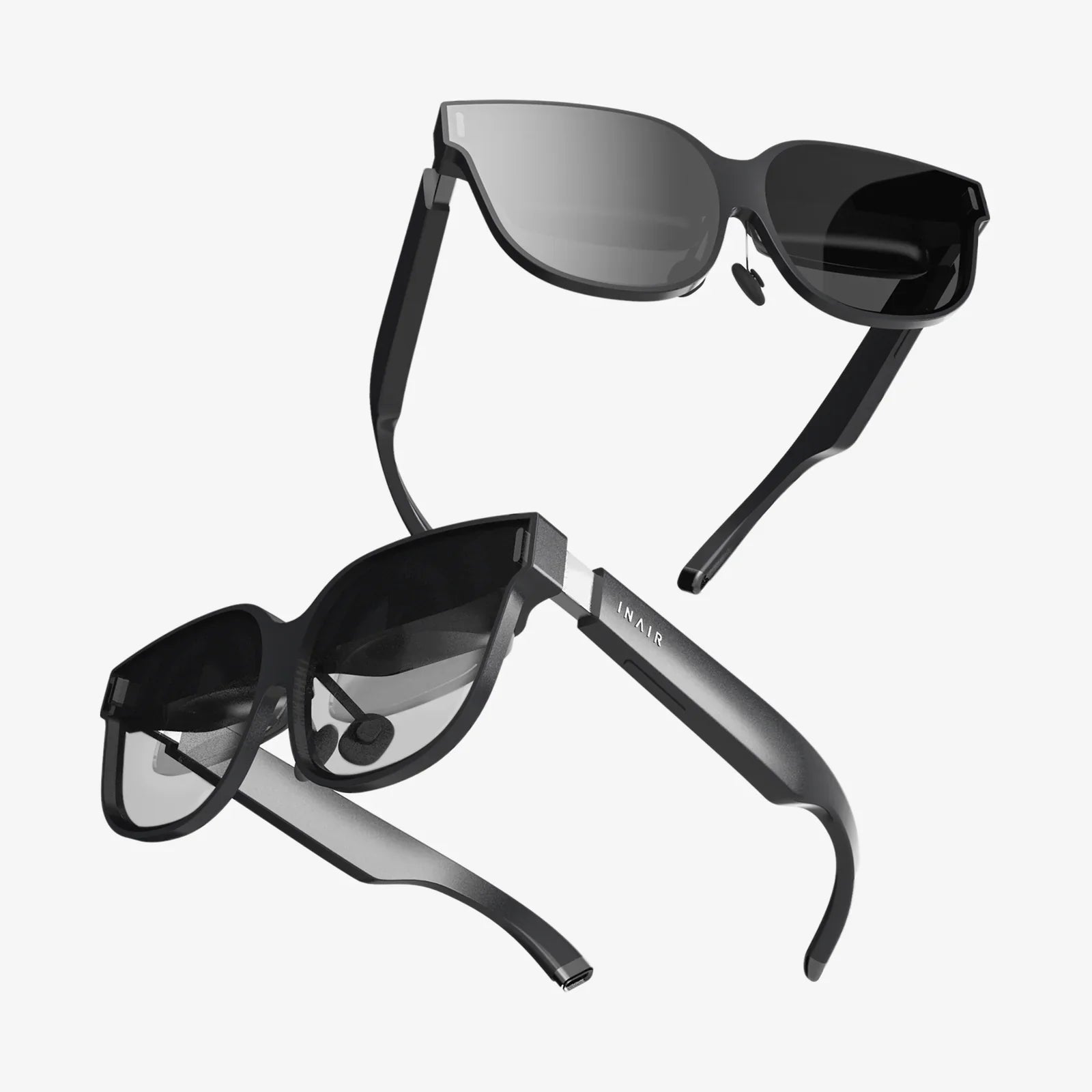
Imagine a world where information flows over your field of vision as naturally as breathing, where digital assistants materialize beside you to offer guidance, and where the line between the physical and digital realms becomes beautifully, seamlessly blurred. This is the promise of augmented reality glasses, a technology poised to revolutionize everything from how we work and learn to how we socialize and play. But this incredible potential hinges on a single, critical question: how do we control it? The quest for the perfect method of controlling augmented reality glasses is not just a technical challenge; it is the fundamental key that will unlock this technology’s destiny, determining whether it remains a niche gadget or becomes the next universal computing platform, woven into the very fabric of our daily lives.
The Foundational Challenge: Moving Beyond the Touchscreen
For decades, our primary method of interacting with digital information has been the touchscreen. We poke, swipe, and pinch flat glass surfaces to command our devices. This paradigm, however, collapses in the three-dimensional, context-rich environment of augmented reality. Holding up a phone to see an AR overlay is a clumsy precursor to true spatial computing. The ideal interface for AR glasses must be hands-free when needed, incredibly intuitive, socially acceptable, and powerful enough to handle complex tasks without becoming a distraction. It must feel like an extension of our own will, not a separate tool we must consciously operate. The journey of controlling augmented reality glasses is a pursuit of this invisible interface, and it encompasses a fascinating spectrum of technologies, each with its own strengths and philosophical implications.
The Language of Gestures: Speaking to the Digital World
One of the most intuitive methods for controlling augmented reality glasses involves using our hands. After all, we naturally point, grab, and gesture to interact with the physical world; why not extend that to digital objects?
Early systems relied on simple, predefined gestures—a pinching motion to select an item, a swiping motion in the air to scroll through a menu. These were often tracked by external cameras or rudimentary inward-facing sensors on the glasses themselves. The modern approach is far more sophisticated. Advanced computer vision algorithms, powered by miniature cameras and depth sensors on the device's frame, can now track the precise 3D position of the user's hands and all twenty-seven degrees of freedom of their fingers. This allows for subtle and expressive control.
Imagine reaching out and literally grabbing a virtual chart during a presentation, rotating it with a twist of your wrist to show a different data perspective to your colleagues. Or pinching the corner of a digital browser window floating in your living room and dragging it to a new location. This direct manipulation is powerful because it leverages our existing motor skills and spatial understanding. The primary challenges lie in precision—avoiding the "gorilla arm" fatigue from holding up one's arms for extended periods—and in social acceptance. Mime-ing commands in public can feel awkward, though proponents believe that as the technology becomes more refined and widespread, these gestures will become as normal as tapping on a smartphone screen is today.
The Power of Voice: A Conversational Interface
For tasks where hands-free operation is paramount, voice control stands as a pillar of interaction. The concept is simple: you talk, and the glasses listen and obey. Voice assistants have become ubiquitous in our homes and phones, and their integration into AR is a natural progression.
Voice is excellent for issuing broad commands: "Glasses, navigate to the nearest coffee shop," "Record a video of what I'm seeing," or "What is the name of this building?" It allows for rapid input without any physical movement, making it ideal for situations where your hands are occupied, such as when repairing machinery, cooking while following a recipe overlay, or performing a surgical procedure. The development of sophisticated Natural Language Processing (NLP) models means these systems are moving beyond rigid command structures to understand context and intent.
However, voice control has its limitations. It is not a private interface; dictating an email or searching for sensitive information in a crowded room is far from ideal. Background noise can hamper accuracy, and constant talking can be socially disruptive and mentally taxing. Therefore, voice is best seen as one tool in a larger toolbox for controlling augmented reality glasses, perfectly suited for specific commands but rarely serving as the sole method of interaction.
The Subtlety of Gaze and Head Tracking
Perhaps the most inherently unique method for controlling augmented reality glasses involves using the most natural pointer we possess: our eyes. Gaze tracking uses tiny, imperceptible infrared cameras to monitor where the user's pupils are focused within the display. This allows for incredibly subtle and fast interaction.
A simple dwell-time selection—staring at a virtual button for a second to activate it—can feel like magic. It enables lightning-fast menu navigation; the option you merely look at can highlight, ready for a confirmatory blink or a subtle hand gesture to activate. This creates a form of predictive control where the device anticipates your intent based on your focus. Combined with head tracking, which understands the orientation and movement of your head, the system can create a rich context of where your attention is directed in the physical space. This is crucial for placing persistent digital objects. For instance, you could "pin" a virtual weather widget to your real-world wall simply by looking at the spot and giving a voice command to anchor it there.
The Emergence of Wearable Companions and Neural Interfaces
To address the limitations of other methods, the industry is exploring peripheral devices and even biological interfaces. A smart ring or a wristband equipped with inertial measurement units (IMUs) can act as a subtle remote control. A tiny twitch of the finger or a specific gesture made near the lapel can be detected and translated into commands, keeping interactions minimal and private. These devices offer high precision without the fatigue of full-arm gestures.
Looking further into the future, the ultimate goal for controlling augmented reality glasses may lie in direct neural interfaces. Technologies like non-invasive electroencephalogram (EEG) sensors, which can detect brainwave patterns, are being researched to interpret user intent. The concept of a "silent voice" command—merely thinking about wanting to take a picture—is the holy grail. While this technology is in its infancy and fraught with ethical considerations regarding privacy and data security, it represents the logical endpoint of the quest for a truly seamless and invisible interface: control through thought alone.
The Symphony of Multimodal Control
The prevailing consensus among developers is that no single modality will reign supreme. The future of controlling augmented reality glasses is multimodal. It’s a sophisticated symphony of inputs, seamlessly blending together based on context, user preference, and the task at hand.
You might initiate a command with your gaze, looking at a virtual music player floating by your window. Your voice could then specify the action: "Play my morning playlist." As the first song begins, you might use a subtle finger gesture controlled by your smart ring to adjust the volume slider. The glasses' software intelligently fuses these inputs, understanding that your look provided the object context, your voice specified the action, and your gesture performed the fine-tuning. This context-aware, multimodal approach reduces cognitive load. The user doesn't need to think "now I must use a gesture"; they simply act naturally, and the technology adapts to them.
Beyond Convenience: The Profound Implications of Control
How we settle on controlling augmented reality glasses will have ramifications far beyond user convenience. It will dictate the very nature of the technology's impact on society.
Accessibility: A robust multimodal system could be transformative for individuals with physical disabilities. Voice and gaze control could offer new levels of digital independence for those unable to use their hands, while tailored gesture systems could empower others.
Privacy and Security: These interfaces will have unprecedented access to biometric data—our voiceprints, our eye movements, our unique gestures, and potentially even our brainwave patterns. Protecting this intimate data from misuse is a monumental challenge that must be solved at the hardware and software level. The very act of controlling one's device must not become a vector for surveillance.
Social Dynamics: Will a world of constant, subtle gestures and muttered voice commands be socially cohesive or isolating? New etiquettes will need to evolve. The chosen control schemes will directly influence whether AR glasses are seen as a barrier to human connection or a tool that enhances it.
The interface is not merely a way to issue commands; it is the conduit through which we project our intent onto the digital layer of the world. Getting it right means building technology that amplifies our humanity, our intuition, and our agency. The race to perfect the art of controlling augmented reality glasses is, in essence, a race to define the next chapter of human-computer symbiosis. The winners will not be those with the most powerful displays, but those who can make the interface disappear entirely, leaving behind only the pure, empowering magic of augmented thought and action.
The day is approaching when your digital world will not be confined to a slab in your pocket but will instead live all around you, responsive and intelligent. The silent conversation between your intent and your glasses will happen in the blink of an eye, the subtle turn of a wrist, or a quiet thought, making you the conductor of an invisible orchestra of information, and forever changing what it means to interact with reality itself.
Share:
Human Computer Interaction Artificial Intelligence: The Dawn of a Symbiotic Era
OLED Microdisplay Market Analysis: A Deep Dive into the Next Wave of Visual Technology