


Imagine pointing your device at a static museum exhibit and watching a historical figure step out of the painting to tell their story, or visualizing a complete new kitchen in your empty house before a single tile is laid. This is the captivating promise of cool AR experiences, a technological revolution that is seamlessly stitching the digital into the fabric of our physical world, creating a hybrid reality that is more interactive, informative, and downright magical than ever before.
Beyond the Novelty: Understanding the AR Spectrum
To truly appreciate cool AR experiences, one must first move beyond the simplistic view of it as just digital overlays. Augmented Reality exists on a spectrum, each point offering a different depth of immersion.
On one end, there's Marker-Based AR. This is often the gateway drug into the AR world. It uses a specific visual object—a QR code, a product package, or a printed image—as a trigger to anchor the digital content. The experience begins only when the device's camera recognizes this predefined marker. It's precise and reliable, perfect for educational texts, interactive marketing materials, and museum guides.
Then there's Markerless AR, which is where things get truly cool. This form uses technologies like simultaneous localization and mapping (SLAM) to understand the environment and place digital objects persistently within it. It’s the technology that allows you to place a virtual sofa in your living room or have a cartoon character hide behind your real-world couch. It uses your device's GPS, accelerometer, and compass to place information based on location, enabling experiences like city-wide scavenger hunts or navigation arrows superimposed on the street in front of you.
The cutting edge, however, is often found in Superimposition-Based AR. This form doesn't just add digital objects; it replaces the original view of a physical object with an augmented one. Imagine a medical student using AR to see a fully rendered, interactive human anatomy model superimposed over a mannequin, or a mechanic seeing the internal workings of an engine by looking at its casing. This represents a profound shift from augmentation to total digital transformation of our perception.
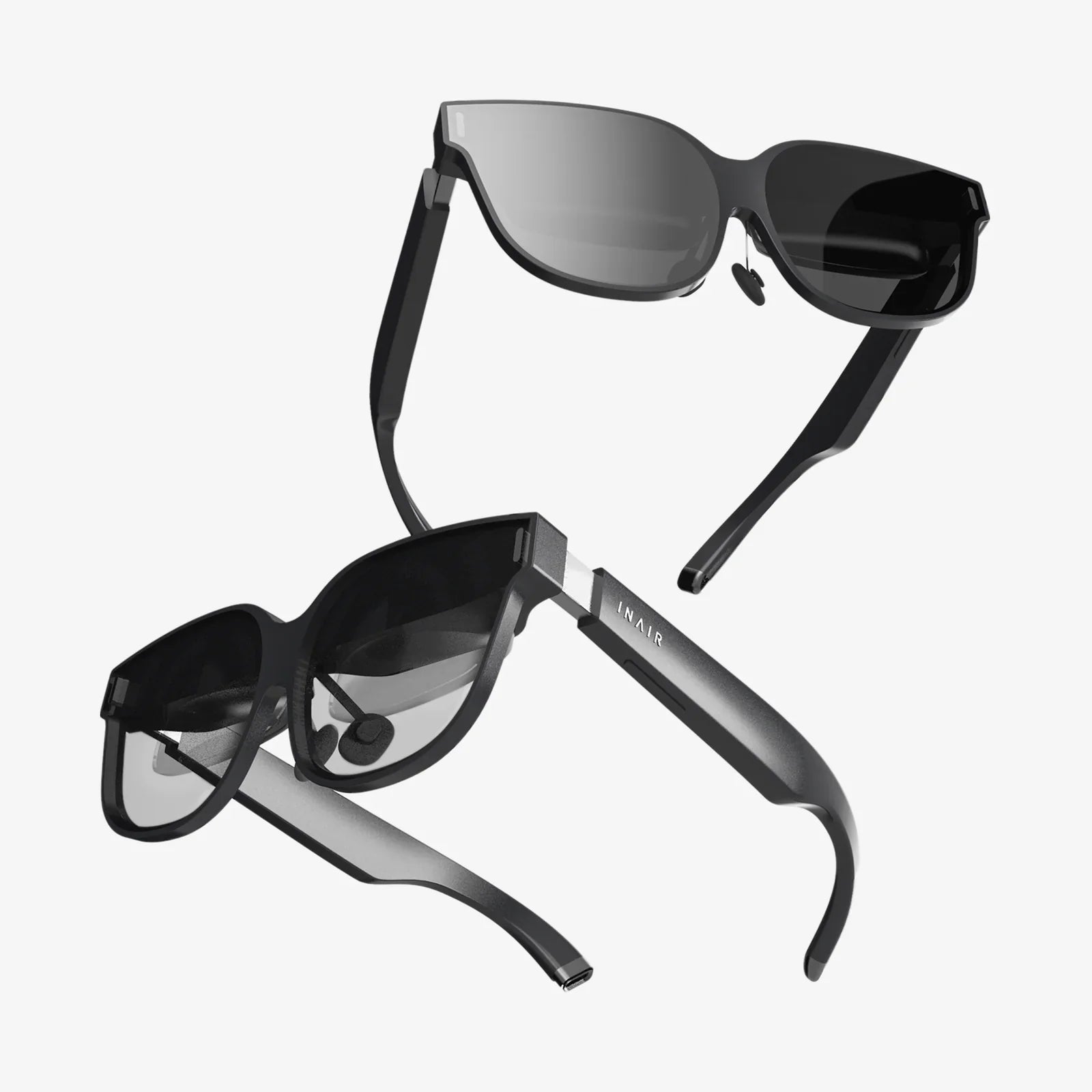
The hardware facilitating these experiences is also diversifying. While smartphones democratized access to AR, the experience is elevated through hands-free devices like smart glasses and headsets. These wearables offer a truly immersive and continuous experience, freeing users from the "tablet zombie" posture and allowing digital interactions to become a natural part of their movement and workflow.
The Canvas of Reality: AR as a Creative and Artistic Medium
One of the most visually stunning applications of cool AR experiences is in the realm of art and self-expression. AR has become a dynamic new canvas, transforming static spaces into living, breathing artworks.
World-renowned artists and institutions are now creating AR art installations. You can visit a public square, point your device, and witness a magnificent digital sculpture that only exists in augmented space, or see a historical building restored to its former glory right before your eyes. This transforms cities into endless, evolving galleries, blurring the line between public space and art exhibition.
This creative power is also being democratized. Social media filters and effects, often dismissed as frivolous, are a massive cultural force in AR creativity. They allow millions to become creators themselves, crafting interactive masks, whimsical environments, and expressive transformations that are shared globally. This has birthed a new form of viral, participatory art that is personal, shareable, and deeply engaging. Furthermore, the rise of digital fashion allows users to wear incredible, impossible garments—couture made of light, fire, or fractal patterns—as AR overlays in photos and videos, challenging our very notions of clothing and identity without any physical waste.
Transforming Knowledge: AR in Education and Training
Perhaps the most impactful cool AR experiences are those that revolutionize how we learn and train. Textbooks and diagrams are inherently limited; AR shatters those limits.
In classrooms, students can dissect a virtual frog with no mess, explore the solar system in 3D from their desks, or witness historical events unfold around them. This shift from passive learning to active exploration boosts engagement and retention dramatically. Complex abstract concepts in subjects like chemistry or physics become tangible and interactive, allowing students to manipulate molecules or visualize magnetic fields.
The value extends powerfully into professional and vocational training. Surgeons can practice complex procedures on detailed, interactive holograms of human anatomy, mitigating risk to real patients. Field technicians can receive remote expert guidance with digital arrows and annotations overlaid directly onto the machinery they are repairing. This "see-what-I-see" remote assistance drastically reduces errors, downtime, and the need for travel. From mechanics to architects, AR is providing an intuitive, hands-on layer of information that accelerates expertise and enhances safety.
Reimagining Commerce: The AR Shopping Revolution
The retail landscape is being utterly transformed by cool AR experiences, solving age-old customer pain points and creating entirely new shopping paradigms.
The most powerful example is virtual try-on Shoppers can now see how glasses, makeup, or even watches look on their own face and wrist in real-time through their camera. The furniture industry has been revolutionized by apps that allow users to place true-to-scale 3D models of sofas, tables, and decor into their actual living space. This eliminates the dreaded "will it fit?" and "will it match?" anxiety that plagues online shopping, leading to greater consumer confidence and significantly reduced return rates.
AR is also enhancing the in-store experience. Pointing a phone at a product on a shelf could trigger reviews, demonstration videos, or detailed information about its materials and origin. This creates a rich, hybrid shopping journey that combines the tactile benefit of physical retail with the information density of e-commerce, empowering consumers to make more informed decisions.
Connecting and Playing: AR in Social Interaction and Gaming
At its heart, AR is a profoundly social technology. It creates shared experiences anchored in the real world, fostering a new type of connection.
The gaming genre exploded into the mainstream with games that turned entire cities into playgrounds, encouraging players to explore their neighborhoods to discover digital creatures and landmarks. This demonstrated the power of AR to promote physical activity and social interaction, as players gathered in public spaces to collaborate and compete.
Beyond gaming, social AR is evolving. Imagine sharing a live AR filter or game with a friend on the other side of the world, both interacting with the same digital object placed in your respective rooms. This shared spatial experience is the next frontier of digital communication, moving beyond flat video calls into a world where you can feel truly present with someone else, manipulating a shared holographic model or playing a virtual board game on your real table.
The Flip Side: Navigating the Challenges and Ethical Considerations
For all its potential, the path forward for AR is not without its obstacles and sobering considerations. Widespread adoption faces significant technical hurdles. Consistent, high-quality AR requires immense processing power, long battery life, and robust, high-bandwidth connectivity—requirements that can still be challenging for current mobile networks and devices to meet seamlessly everywhere.
More profound are the privacy and ethical questions. AR systems, especially those reliant on persistent world understanding, require continuous scanning of our environments. This raises critical data privacy concerns: Who owns the digital map of your home? How is the visual data being collected and used? The potential for persistent advertising and data harvesting in public and private spaces is a legitimate fear that demands clear ethical guidelines and transparent user control.
There's also the risk of a new digital divide, where access to the best AR experiences becomes a marker of socioeconomic status, and the potential for reality blurring to a detrimental degree, where individuals might struggle to distinguish between the physical and the augmented. Ensuring that AR enhances our reality rather than distracting from it or overwhelming us will be a central design challenge for years to come.
Glimpsing the Horizon: The Future of Augmented Reality
The evolution of cool AR experiences is accelerating toward a future that feels like science fiction. We are moving toward increasingly intuitive interfaces that will move beyond touchscreens to gesture control, eye-tracking, and eventually brain-computer interfaces, making the technology feel like a natural extension of our own will.
The concept of the spatial web or metaverse is deeply intertwined with AR's future. This envisions a world where digital information and experiences are not confined to apps on a phone but are persistently layered over everything, accessible through lightweight, stylish glasses. In this future, your navigation path appears on the road, a recipe hovers beside your mixing bowl, and a colleague's avatar can join you at your desk for a meeting from across the globe.
This will fundamentally change our relationship with computing, taking it out of our pockets and painting it onto the world itself. It promises a future of heightened efficiency, boundless creativity, and deeper connection, all accessed through the coolest AR experience of all: simply looking at the world around us.
The line between what's real and what's digital is not just blurring—it's becoming irrelevant. The most compelling AR experiences are those that don't feel like using technology at all, but rather like gaining a superpower: the ability to see the hidden layers of information, story, and connection woven into the very fabric of our world, waiting for us to look closer and discover the magic.
Share:
Can My Phone Do Virtual Reality? A Complete Guide to Mobile VR
Can My Phone Do Virtual Reality? A Complete Guide to Mobile VR