


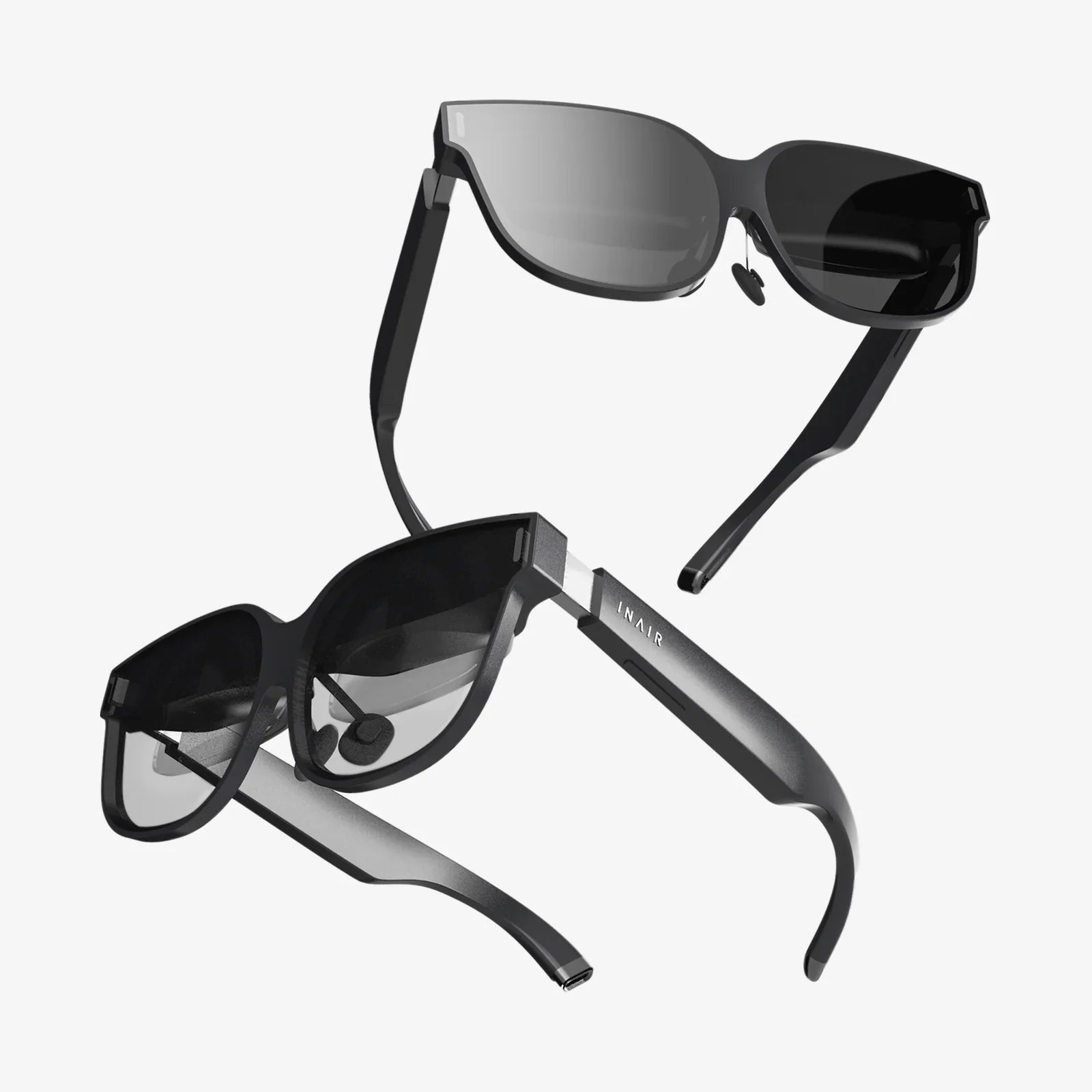
Imagine pointing your device at a starry night sky and seeing the constellations trace themselves out before your eyes, complete with mythological stories unfolding. Envision trying on a new outfit or placing a new piece of furniture in your living room without ever leaving your home. This is the magic of cool augmented reality (AR), a technology that is not just knocking on our future's door but is already stepping inside, blending the digital and physical worlds in ways that are as practical as they are breathtaking. It’s a seamless layer of information and imagination painted onto the canvas of our reality, and it’s fundamentally changing how we play, learn, work, and connect.
The Foundational Magic: How AR Works Its Cool
At its core, cool augmented reality is deceptively simple in concept but brilliantly complex in execution. Unlike its cousin, virtual reality (VR), which seeks to replace your world with a digital one, AR aims to supplement and enhance your existing reality. It achieves this through a sophisticated dance of hardware and software.
The process begins with sensors and cameras that capture the user's real-world environment. This visual data is then processed by sophisticated computer vision algorithms that work to understand the environment. These algorithms identify flat surfaces, track objects, and even recognize specific images or locations, a process known as simultaneous localization and mapping (SLAM). This allows the AR system to understand the geometry of the space and its position within it.
Once the environment is mapped, the software renders digital content—3D models, animations, informational text, or videos—and precisely anchors it to a point in the real world. This is displayed to the user in real-time through a screen, whether it's on a smartphone, a tablet, or a pair of smart glasses. The result is the illusion that the digital object coexists with physical objects, obeying perspective and, in advanced systems, even occluding behind real-world items. This technical ballet is what makes the experience feel so intuitive and, frankly, cool.
Beyond the Novelty: The Practical Power of AR
While early AR was often seen as a parlor trick or a gaming gimmick, its true coolness lies in its profound utility. It's moving from a novelty to a necessity across a wide spectrum of industries.
Revolutionizing Education and Training
Imagine a medical student peering at a human body and seeing a detailed, interactive 3D model of the muscular system overlaid onto their classmate. Or a mechanics trainee seeing step-by-step repair instructions and part names superimposed directly onto the engine they are working on. Cool augmented reality makes this possible. It transforms abstract concepts into tangible, interactive experiences, dramatically improving comprehension and knowledge retention. It allows for safe, repeatable, and cost-effective training in high-stakes fields like surgery, aviation, and complex machinery operation, reducing errors and accelerating expertise.
Transforming the Retail and Design Landscape
The "try before you buy" paradigm has been completely redefined. Shoppers can now see how a new sofa would look in their actual living room, how a pair of glasses fits their face, or even how a new shade of paint would transform their walls. This immersive preview capability reduces purchase hesitation and minimizes returns, creating a win-win for consumers and businesses alike. For interior designers, architects, and urban planners, AR provides a powerful tool to visualize projects at scale within their intended environment long before a single physical resource is committed.
Enhancing Navigation and Field Work
Forget looking down at a blue dot on a 2D map. The next generation of navigation uses cool augmented reality to overlay directional arrows, street names, and points of interest directly onto the live view of the street through your smartphone or car windshield. This creates an intuitive, heads-up display that makes navigating complex intersections or finding a specific restaurant entrance effortless. For field technicians, engineers, and surveyors, AR can display crucial data, schematics, or safety warnings directly onto the equipment they are servicing, streamlining workflows and enhancing safety.
The Hardware Evolution: From Handheld to Hands-Free
The accessibility of AR has been driven by a rapid evolution in hardware. The journey began with marker-based AR, which required a specific image (a QR code or a printed trigger) to anchor the digital content. This soon gave way to markerless AR, powered by SLAM, which can understand and place content on any surface, from a tabletop to a park lawn.
The most significant hardware shift has been the move from smartphones to wearables. While phones democratized AR and brought it to billions, they require users to hold up a device, breaking immersion. The true potential of cool augmented reality is realized with wearable technology like smart glasses. These devices project imagery directly onto the user's retina or a transparent lens, allowing for a truly hands-free, always-available experience. They are the gateway to a future where digital information is seamlessly integrated into our daily perception, available with a simple glance or voice command.
Challenges on the Path to Pervasive AR
Despite its exciting progress, the path to ubiquitous cool augmented reality is not without obstacles. Significant technical hurdles remain, particularly in achieving photorealistic rendering and perfect occlusion in real-time across all lighting conditions. The hardware, especially advanced smart glasses, needs to become lighter, more power-efficient, and socially acceptable—moving from bulky prototypes to something resembling regular eyewear.
Beyond technology, there are critical societal questions to address. Privacy is a paramount concern. Always-on cameras and sensors that constantly scan environments raise serious questions about data collection and surveillance. Who has access to what we see through our AR devices? Furthermore, the potential for digital addiction and the further blurring of lines between our online and offline lives present new psychological challenges. There is also the risk of visual clutter and AR spam—a world where our field of vision is polluted with unwanted advertisements and notifications. Establishing clear ethical guidelines and robust digital etiquette will be just as important as the technological advances.
The Future is Augmented: What's Next for AR?
The horizon for cool augmented reality is shimmering with possibility. We are moving towards a world of context-aware AR, where systems will not only understand the geometry of a space but also its context. Your AR device could recognize a monument and tell you its history, identify a plant in a garden and offer care tips, or translate a restaurant menu in real-time while you look at it.
The convergence of AR with Artificial Intelligence (AI) and the Internet of Things (IoT) will unlock even more powerful applications. Your AR glasses could receive data from smart sensors in your home, showing you energy flow or alerting you to maintenance issues. AI-powered assistants could exist as persistent, visible avatars in your environment, helping you with tasks through natural gesture and speech interaction.
Ultimately, the goal is invisible computing—technology that fades into the background, enhancing our capabilities and enriching our experiences without demanding our constant attention. The device itself will become less important than the digital layer it provides.
The line between what is real and what is digital is becoming beautifully, creatively blurred. Cool augmented reality is more than a technological trend; it is a new lens through which we will experience life, offering unparalleled opportunities to enhance human potential, amplify creativity, and solve complex problems. It promises a world where information is not something we seek out on a screen, but something that is simply there when we need it, woven intrinsically into the fabric of our reality. The future isn't just coming; it's being layered right on top of the present, and it’s waiting for you to look up and see it.
Share:
AI Glasses Features Comparison: A Comprehensive Guide to Smart Eyewear
AI and Augmented Reality Regulations: Navigating the New Frontier of Digital Governance