


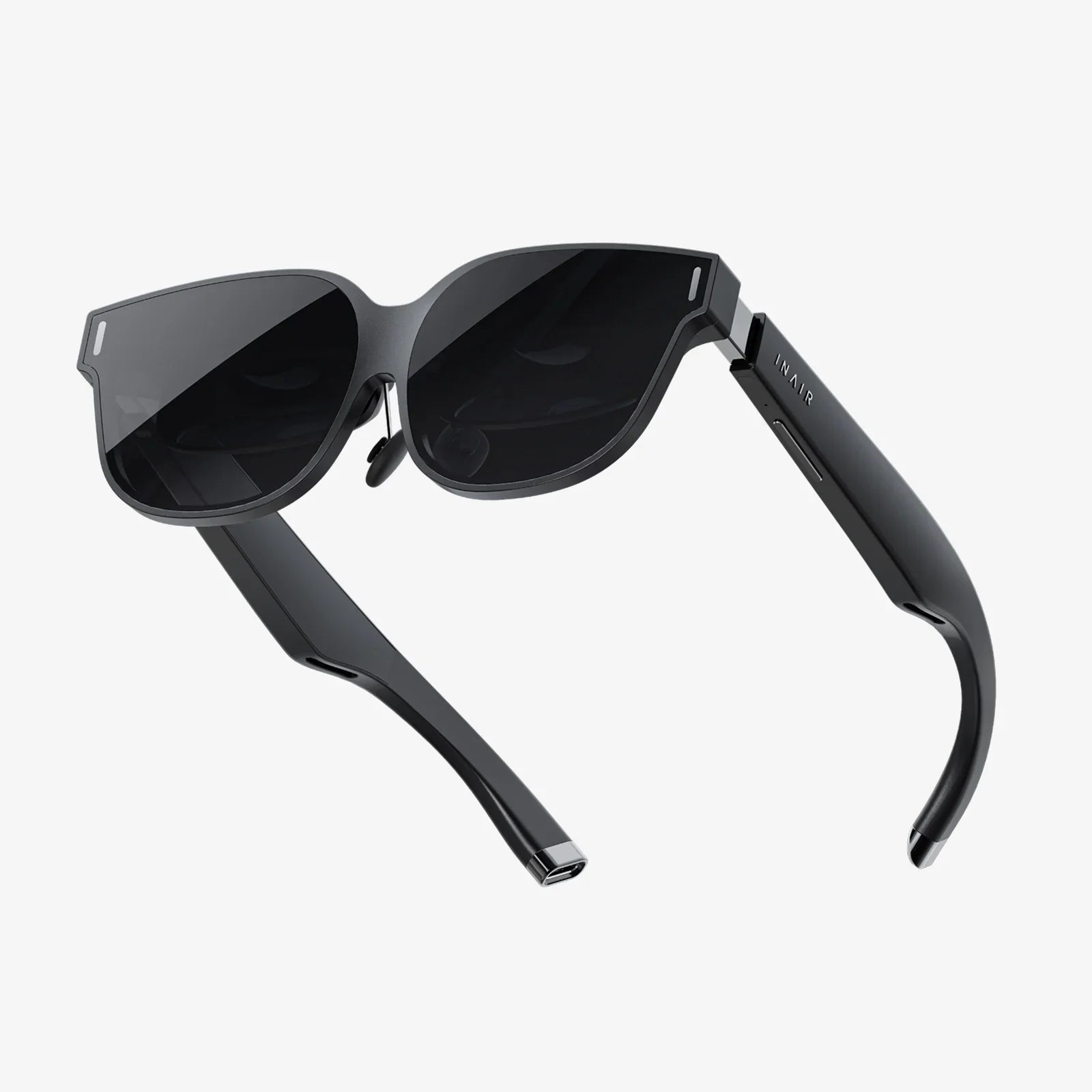
You've seen the futuristic previews and the breathtaking demos; digital dinosaurs roaming your living room and intricate schematics overlaid onto real-world machinery. The promise of augmented reality is intoxicating, a seamless blend of our physical and digital lives. But before you can step into that future, a single, pragmatic question brings you back to the present: what is the real cost of an AR headset, and is it an expense or an investment? The answer is far more complex than the price tag on a box, weaving together cutting-edge technology, aspirational software, and a vision of how we will work, learn, and connect tomorrow.
Deconstructing the Price Tag: The Hardware That Powers the Magic
To understand the financial outlay for an AR headset, one must first appreciate the symphony of advanced components packed into a often sleek, wearable form factor. This is not a simple screen; it's a portal to a new layer of reality.
At the core of any high-end device are the optical systems. These typically involve waveguide technology or micro-displays that project digital images onto transparent lenses, allowing the user to see both the real world and the digital overlay simultaneously. Manufacturing these optics with precision, clarity, and a wide field of view is a notoriously difficult and expensive process, representing a significant portion of the research, development, and production costs. Unlike a television where you look at a screen, these optics must project an image that feels native to your environment, a challenge that pushes the boundaries of physics and material science.
Then there is the sensor suite. A true spatial computer needs to understand the world around it. This requires a complex array of components including:
- High-Resolution Cameras: For capturing the environment and enabling pass-through video AR.
- Depth Sensors (LiDAR/ToF): For mapping the world in 3D, understanding the geometry of a room, and placing digital objects convincingly.
- Inertial Measurement Units (IMUs): Including accelerometers and gyroscopes to track head movement with extreme precision and low latency to prevent user discomfort.
- Eye-Tracking Cameras: For foveated rendering (which focuses processing power only where the user is looking, saving energy) and intuitive interaction.
Finally, all this data must be processed in real-time. This requires a powerful, miniaturized system-on-a-chip (SoC), often custom-designed, that can handle immense computational loads without overheating a device sitting on your face. The combination of these high-end, specialized components—advanced optics, a dense sensor array, and powerful, efficient processing—forms the baseline for the substantial cost associated with premium AR hardware. You are not just buying a display; you are buying a compact, wearable supercomputer.
The Spectrum of AR: From Pocket-Friendly to Professional Powerhouse
The term "AR headset" encompasses a vast range of devices with wildly different capabilities and, consequently, price points. The market can be broadly segmented into three distinct tiers.
1. The Consumer-Grade Entry Point
On the most affordable end of the spectrum are devices that often leverage a user's existing smartphone for processing and display. These headsets, typically made of plastic and containing basic optics, are designed for short-term, casual experiences like watching a 360-degree video or playing a simple game. Their cost is relatively low because they offload the expensive components (processor, sensors, battery) to the phone you already own. They offer a tantalizing glimpse into AR but lack the power, comfort, and persistence for all-day use or complex applications.
2. The Standalone All-Rounder
This category represents the current sweet spot for developers, prosumers, and enterprise users seeking a balance between capability and affordability. These are self-contained units with their own processors, batteries, and sensors. They offer robust tracking, reasonable field-of-view, and a growing library of applications for productivity, design, and remote assistance. The cost for these devices is significant, reflecting the integrated technology, but they avoid the extreme premium of the top tier. They are the workhorses of the current AR revolution, powerful enough for serious applications without requiring a dedicated external computer.
3. The High-Fidelity Professional Tier
At the apex are the devices that fully deliver on the sci-fi promise of AR. These headsets feature state-of-the-art optics offering a vast, crystal-clear field of view, unparalleled environmental understanding, and incredibly precise tracking. They are often designed for specific, demanding industrial, medical, or military applications where absolute accuracy and reliability are non-negotiable. The cost here is exceptionally high, reflecting not only the best available components but also the lower production volumes, extensive R&D, and specialized software integration required. For these users, the headset is not a consumer gadget but a critical piece of professional equipment, a tool that can save millions of dollars in efficiency gains or training costs.
Beyond the Box: The Hidden Costs of the AR Ecosystem
The initial purchase is merely the first chapter in the story of AR ownership. The true total cost of ownership (TCO) includes several often-overlooked factors that can significantly impact the long-term investment.
- Software and Subscriptions: While some apps are free or one-time purchases, the most powerful enterprise-grade software for design, training, or remote collaboration often operates on a subscription model (SaaS). These recurring fees, per user, per month, can quickly eclipse the hardware cost over a few years.
- Accessories: To tailor the device to specific needs, users may require additional controllers, specialized straps for comfort during extended use, protective cases for harsh environments, or prescription lens inserts for those who wear glasses.
- Processing Power: Some high-end headsets, particularly those focused on ultra-realistic graphics, may require a tether to a powerful external computer. This means the true cost must include a high-end GPU and a capable machine, adding thousands to the overall investment.
- Content and Development: For businesses, creating custom AR experiences, training modules, or digital twins of their products requires a significant investment in content creation, either through in-house developers or by hiring specialized agencies.
Failing to account for these ecosystem costs is like buying a high-performance sports car without budgeting for insurance, premium fuel, and maintenance. The sticker price is only part of the journey.
The Driving Forces: Why Are AR Headsets Priced This Way?
Several macroeconomic and industry-specific factors conspire to keep AR headset costs high, for now.
Research and Development (R&D): The technology inside these devices is on the bleeding edge. Companies invest billions of dollars in R&D to solve immense challenges in optics, miniaturization, and battery life. These costs are amortized into the price of each unit sold, especially in the early stages of the market.
Economies of Scale: Unlike smartphones, which sell hundreds of millions of units annually, the market for high-end AR headsets is still nascent and measured in the hundreds of thousands or low millions. Components are purchased in smaller volumes, manufacturing lines are less optimized, and the fixed R&D costs are spread over far fewer devices, keeping per-unit costs high.
Supply Chain and Components: The specialized sensors and displays required are often produced by a limited number of suppliers. Disruptions in the global supply chain, as witnessed in recent years, can cause shortages and price inflation for key components, directly impacting the final product's cost.
The Future is Getting Cheaper: The Trajectory of AR Pricing
History provides a reliable blueprint for the future of AR headset pricing. Look at the evolution of technologies like color televisions, personal computers, and smartphones. They all started as prohibitively expensive luxuries for the wealthy or for large institutions before becoming ubiquitous consumer goods.
The same forces will drive down the cost of AR. As adoption increases, manufacturing will achieve greater economies of scale. Optical and sensor technologies will become more standardized and cheaper to produce. Competition will intensify, pushing companies to find cost efficiencies and offer more value. We are already seeing this trend begin with the introduction of more capable devices at lower price points than were available just two years ago.
Future innovations will also play a role. Breakthroughs in pancake optics, laser beam scanning, and even more efficient processors will allow for simpler, cheaper, and more powerful designs. The goal for the industry is clear: to create a device that is as lightweight, comfortable, and affordable as a pair of everyday glasses, while still delivering a magical experience. We are on that path, and the cost will inevitably follow a downward curve.
Weighing the Value: Is the Cost Justified?
Ultimately, the question of cost is intrinsically linked to value. For an early adopter or a casual user, the current price of a high-end headset may be difficult to justify. However, for specific audiences, the value proposition is already crystal clear and overwhelmingly positive.
In enterprise and industrial settings, AR headsets are not expenses; they are investments with a clear and rapid return. A field technician wearing a headset can have schematics, remote expert guidance, and sensor data overlaid directly onto the equipment they are repairing. This slashes repair times, reduces errors, and eliminates the need for a specialist to travel to a site. The cost of the headset and software is repaid in a matter of weeks through massive gains in efficiency and productivity.
In medicine, surgeons use AR for pre-operative planning, overlaying 3D scans onto a patient's body for unprecedented precision. In design and architecture, creators can visualize and manipulate 3D models at full scale before a single physical resource is spent. In these contexts, the cost of the hardware becomes almost incidental compared to the immense value and savings it generates.
The journey to understand the cost of an AR headset reveals a landscape far richer than a simple number. It's a story of astronomical R&D, breathtaking engineering, and a market still finding its feet. It’s about recognizing the difference between a consumer novelty and a professional tool that can redefine entire industries. While the upfront price may give you pause today, the trajectory is set, and the value is already being proven in boardrooms and on factory floors worldwide. The true cost isn't just what you pay for the device; it's the opportunity cost of being left behind as the world begins to layer digital information onto our physical reality. The future has a price, and it's dropping faster than you think.
Share:
VR Headset Under $200: Your Ultimate Guide to Affordable Virtual Reality
What's a Good VR Headset for PC - The Ultimate 2024 Buyer's Guide