


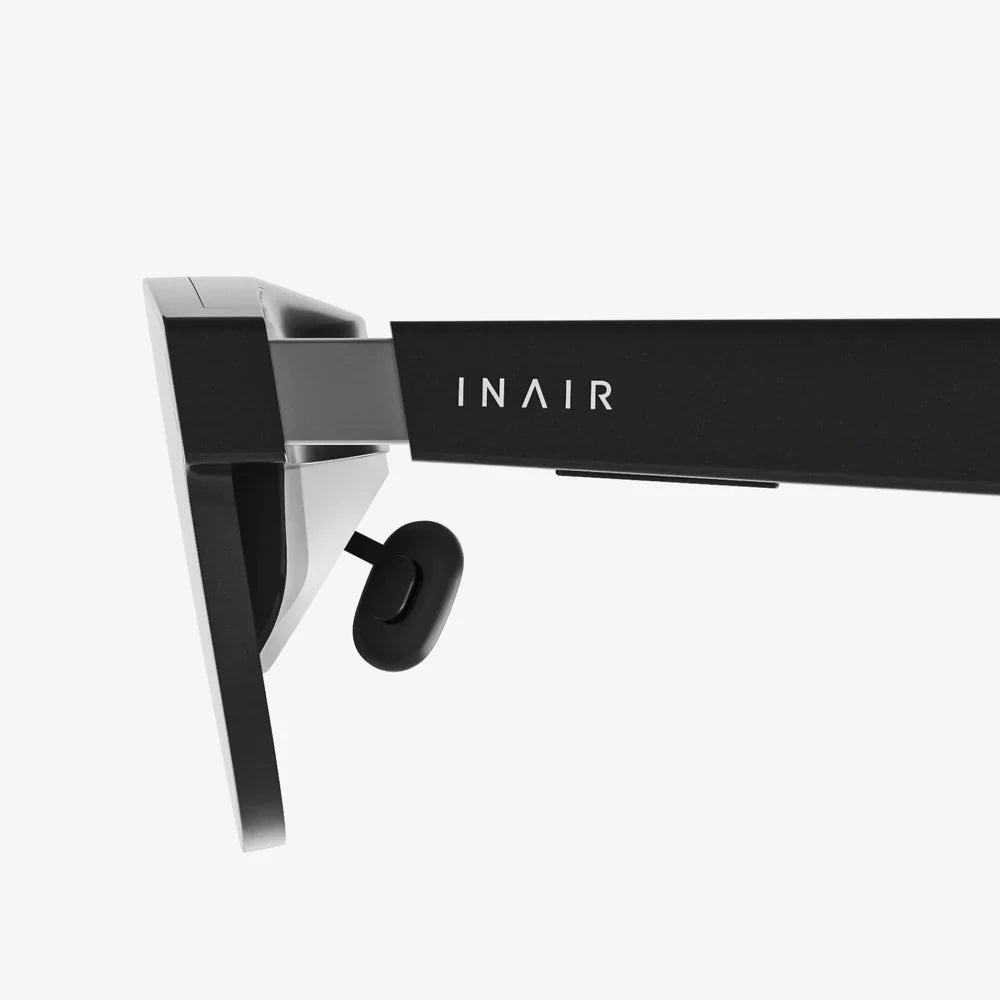
Imagine slipping on a headset and stepping into a world entirely of someone else's design—a realm where the laws of physics are optional and the only limit is imagination. This is the tantalizing promise of virtual reality, a concept that has leaped from the pages of science fiction into our living rooms. But beyond the hype and the hardware lies a deeper, more profound inquiry: could virtual reality truly be said to exist? Is it merely a sophisticated trick of light and sound, or does it constitute a genuine plane of existence, a new digital frontier with its own ontological weight? The answer is not a simple yes or no; it is a journey through the cutting edge of technology, the murky depths of philosophy, and the very nature of human consciousness.
The Technical Blueprint: Building Blocks of a Digital Universe
Before we can ponder existence, we must first understand the machinery that makes the illusion possible. Virtual reality does not materialize from nothing; it is a meticulously engineered symphony of hardware and software designed to hijack the human sensory system.
Sensory Deception: The Gateway to Presence
The entire endeavor of VR rests on a concept known as presence—the unequivocal feeling of being in a place other than your physical location. This is achieved through a multi-sensory onslaught:
- Visual Immersion: High-resolution displays are positioned mere centimeters from the eyes, filling the entire field of view. Stereoscopic 3D rendering creates depth, while a high refresh rate and low persistence ensure smooth, blur-free motion that mimics the fluidity of real-world vision.
- Aural Precision: Advanced spatial audio algorithms simulate how sound waves interact with the human head and ears. A sound from your left arrives at your left ear microseconds before your right, and with a slightly different frequency response, tricking your brain into pinpointing its location in 3D space.
- Haptic Feedback: From simple controller vibrations to full-body suits that simulate touch, impact, and even temperature, haptics provide the crucial tactile layer to the digital world, grounding the experience in physical sensation.
The Computational Engine: Rendering Reality in Real-Time
Creating a believable world is a task of monumental computational complexity. It requires generating two distinct, high-resolution images for each frame, one for each eye, and doing so at least 90 times per second to maintain immersion and avoid the nausea-inducing effects of latency. This real-time rendering demands immense graphical processing power to handle complex lighting models, physics simulations, and detailed textures. Furthermore, sophisticated tracking systems—using a combination of gyroscopes, accelerometers, and external lasers or cameras—precisely monitor the position of the user's head and hands, updating the virtual perspective with imperceptible delay. This closed loop of action and reaction is what sustains the illusion; the virtual world must respond to your movements as instantaneously and predictably as the real one does.
The Philosophical Labyrinth: What Does It Mean "To Exist"?
With the technical foundation laid, we arrive at the core of the question. The technology demonstrably functions, but does the reality it creates exist? This pushes us into the realm of metaphysics.
Idealism vs. Materialism: A Clash of Perspectives
Philosophers have long debated the nature of existence. A materialist would argue that only physical matter and energy are real. From this standpoint, a VR experience is merely a pattern of electrons dancing across silicon and light photons striking the retina—a complex, but ultimately physical, process happening entirely within the base reality. It has no independent existence. An idealist, however, might argue that reality is fundamentally mental or informational. If all experience is ultimately constructed in the mind, then a convincingly simulated experience that generates genuine feelings, thoughts, and memories holds a claim to a kind of existence. The emotions felt in VR—fear on a virtual plank, joy in a virtual concert—are neurologically identical to those felt in the physical world. In this view, if it is experienced, it is real.
The Simulation Hypothesis: Are We Already There?
This line of thinking culminates in the simulation hypothesis, popularized by philosophers like Nick Bostrom. The argument posits that if a civilization could ever reach a level of technological maturity capable of running vast, conscious simulations of its ancestors, then the statistical likelihood is that we are already living in such a simulation, rather than in the base reality. If this is true, it radically flips the script. It suggests that what we call "real life" could share the same ontological status as a future, advanced VR. This does not make our experiences less valid; it simply redefines the framework of existence as potentially layered and computational in nature. The question "Could virtual reality exist?" becomes moot if we are all already inside one.
The Consciousness Conundrum: The Self in a Simulated Space
Perhaps the most intriguing facet of this discussion is the role of the participant. A world, no matter how detailed, is inert without a conscious observer to experience it. VR, therefore, raises profound questions about the self.
The Embodied Mind: Can We Leave Our Bodies Behind?
Traditional neuroscience emphasizes embodied cognition—the idea that our consciousness is deeply rooted in and shaped by our physical bodies and their interactions with the environment. VR challenges this by offering a form of disembodied cognition. Through avatars, we can occupy bodies of a different gender, species, or entirely fantastical form. Studies have shown the "Proteus Effect," where individuals' behavior and self-perception unconsciously change to align with the characteristics of their avatar. This suggests that our sense of self is more malleable than previously thought. If donning a virtual body can alter your identity, then the VR platform becomes more than a medium; it becomes a crucible for the self, a space where identity can be experimented with and rewritten. In this sense, VR exists as a psychological and social space, a venue for genuine human experience and transformation.
The Reality of Shared Experience
Existence is often validated through shared experience. A tree falling in a forest with no one to hear it may make a sound, but its existence is confirmed by consensus. Social VR platforms allow multiple users to inhabit the same digital space simultaneously, interacting through avatars with voice chat and body language. They can attend virtual meetings, concerts, or classes together, building memories and relationships that have tangible effects on their offline lives. The business deal signed in a virtual boardroom is real. The friendship forged on a virtual mountaintop is real. The collective experience creates a shared social reality that possesses a compelling authenticity, regardless of the substrate on which it is built.
The Tangible Impact: VR's Very Real Effects on the Real World
The most potent argument for VR's existence lies in its measurable consequences. A phenomenon that has no real-world effects could be easily dismissed as a fantasy. VR, however, is already leaving an indelible mark.
- Therapy and Rehabilitation: VR exposure therapy is a clinically validated treatment for PTSD, phobias, and anxiety disorders. Patients confronting virtual representations of their triggers experience real neurological changes that alleviate their conditions. Similarly, stroke victims using VR for physical therapy show improved motor function. The virtual experience directly catalyzes healing in the physical body.
- Education and Training: Surgeons practice complex procedures in risk-free virtual operating rooms, and astronauts train for spacewalks in detailed simulations. The skills and knowledge acquired in the virtual environment directly transfer to enhanced performance in the physical one.
- Architecture and Design: Architects and clients can walk through unbuilt structures, making design decisions that affect millions of dollars of physical construction. The virtual model becomes the functional blueprint for a physical reality.
- The Economy: A multi-billion-dollar industry has emerged around VR hardware, software, and experiences. It creates real jobs, generates real revenue, and drives real technological innovation. Its economic footprint is undeniable proof of its impact.
These applications demonstrate that VR is not an escape from reality, but an interface with it. It is a tool for shaping, understanding, and improving the physical world. Its value and its effects are undeniably real, granting it a form of existence through its causal power.
So, does virtual reality exist? The technology is irrefutably real—a marvel of human engineering. The worlds it generates, however, exist in a fascinating liminal space. They are not real in the way a rock is real, but they are profoundly real in the way a dream, a conversation, or a mathematical equation is real. They exist as informational structures, as psychological states, and as catalysts for real-world change. They exist because we, as conscious beings, will them into existence through our interaction and our perception. Virtual reality may not be a physical place, but it has become a new arena for human experience, a digital layer superimposed on our world that is, in every meaningful sense, becoming just as real as the world itself. The line between the simulated and the authentic is not a border to be patrolled, but a horizon that is constantly expanding, inviting us to redefine what we are capable of creating—and what we are willing to call real.
Share:
How to Create 3D Hologram Video: A Comprehensive Guide to Crafting Your Own Holographic Content
Future Technology Environment: A Symbiotic Blueprint for a Sustainable World