


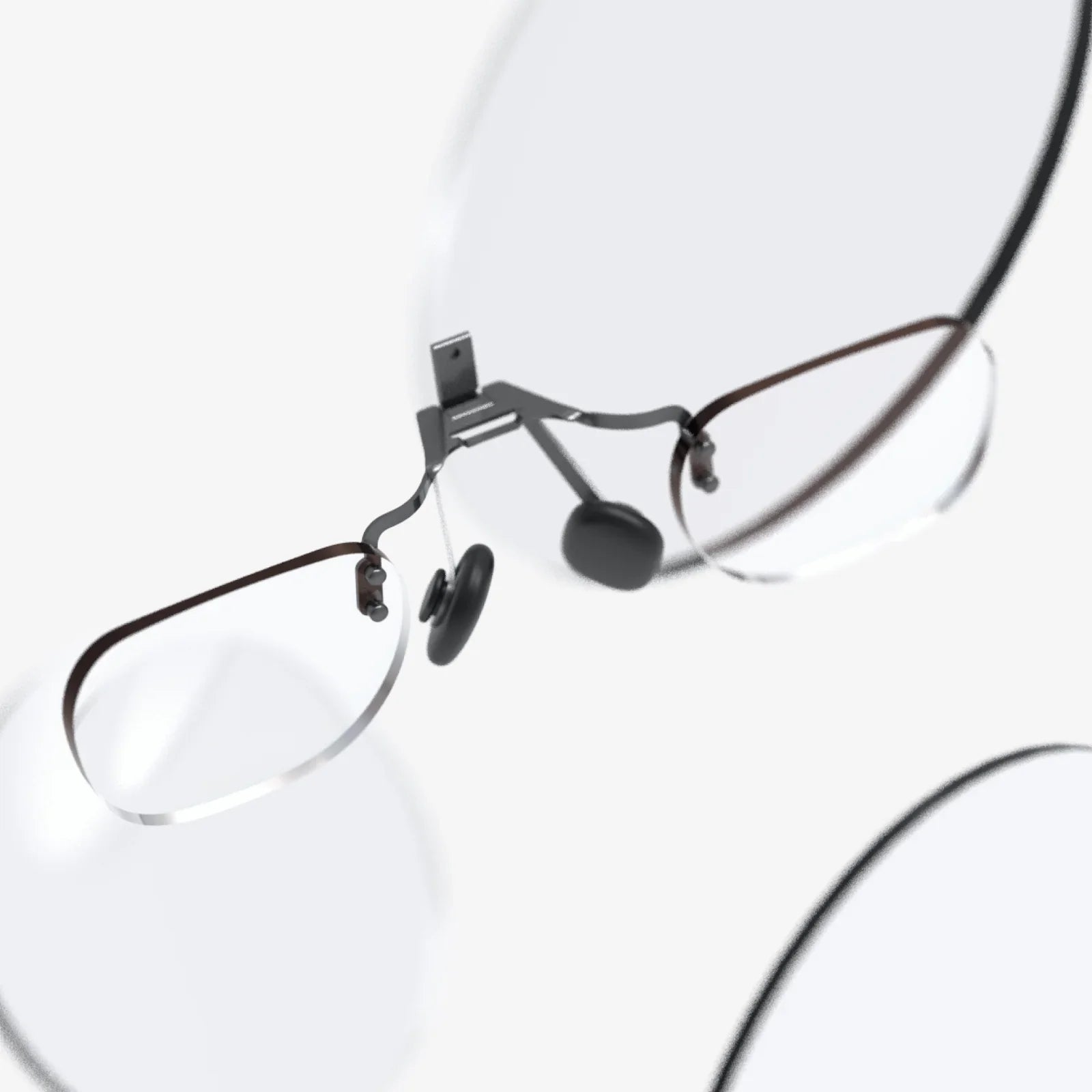
- by wangfred
Creating AR Glasses: The Engineering Marvels Shaping Our Digital Future
- by wangfred
Imagine a world where digital information doesn’t live on a screen in your hand but is woven seamlessly into the fabric of your reality. This is the tantalizing promise of augmented reality glasses, a technology poised to revolutionize how we work, learn, play, and connect. The journey of creating AR glasses is not merely a tale of miniaturizing components; it is a monumental feat of engineering, a delicate ballet of physics, software, and human-centered design, all converging to build a window into a new dimension of computing. The path from concept to a comfortable, functional, and transformative device on a user’s face is fraught with immense challenges and breathtaking innovation.
At the very heart of creating AR glasses lies the optical system, arguably the most significant engineering hurdle. Unlike virtual reality, which blocks out the real world to immerse you in a digital one, AR must perfectly overlay digital content onto your view of the physical environment. This requires a complex arrangement of components often referred to as the optical engine.
Several competing technologies are vying for dominance in providing the source image.
Two critical metrics in the optical system are Field of View (FoV) and brightness. A wide FoV is essential for immersion—it’s the difference between looking through a small window and having a panoramic view. However, expanding the FoV without making the waveguides thicker and the glasses heavier is a persistent challenge. Similarly, the digital image must be bright enough to be visible in various lighting conditions, especially outdoors. This creates a power consumption problem, as brighter displays drain batteries faster, leading to a critical trade-off between performance and practicality.
An optical engine is useless without a brain and a nervous system. Creating AR glasses requires a sophisticated sensor suite to understand the user’s environment and their position within it. This is the domain of Simultaneous Localization and Mapping (SLAM).
The typical sensor array includes:
All this data must be processed in real-time. This requires immense computational power, which traditionally meant tethering to a powerful external computer or smartphone. The holy grail is on-device processing. This demands custom-built, ultra-efficient chipsets—Systems on a Chip (SoCs)—that can handle complex computer vision algorithms and machine learning models without overheating the device or destroying battery life in minutes. The development of these specialized processors is a key frontier in making AR glasses truly standalone and wearable.
The most advanced technology is worthless if people won’t wear it. Creating AR glasses is as much a challenge of industrial and social design as it is of engineering.
Engineers are locked in a constant battle between performance, battery life, and aesthetics. Users want glasses that look like ordinary eyewear—lightweight, stylish, and unobtrusive. However, packing high-resolution displays, a powerful compute unit, a multitude of sensors, speakers, and a battery capable of all-day use into a frame that weighs less than 100 grams is perhaps the ultimate challenge. Compromises are inevitable. Some designs opt for a heavier frame with more capability, while others strip down features to achieve a socially acceptable look, often relying on a paired smartphone for heavy computing.
A device that sits on your face is uniquely positioned to become a profound personal companion. Beyond eye-tracking, future AR glasses could monitor health metrics like pupil dilation, blink rate, and even blood oxygen levels. This introduces a new layer of complexity regarding privacy and data security. Furthermore, prescription lenses must be integrated seamlessly, and the digital experience must be calibrated for each user’s unique interpupillary distance (IPD) to ensure a comfortable and clear image.
Google Glass famously highlighted the "glasshole" problem—the social awkwardness of wearing a camera on your face and the unease it can cause in others. Creating AR glasses for mass adoption means solving this. This involves clear user indicators showing when recording is active, designing cameras that are discreet or not immediately obvious, and establishing strong, transparent privacy norms. The goal is to make the technology feel as natural and accepted as wearing wireless earbuds is today.
All the technology in the world is useless without power. The battery is a massive bottleneck in creating AR glasses. The components—especially the display, wireless radios, and processor—are incredibly power-hungry. Achieving a full day of use on a single charge with a battery small enough to fit in an eyeglass frame is currently impossible with existing lithium-ion technology.
Innovations are happening on multiple fronts:
The hardware is a vessel; the software is the soul. Creating AR glasses requires a robust operating system and development platform. This software layer is responsible for:
The success of the platform will hinge on a vibrant developer community creating "killer apps"—applications that are not just novel but fundamentally better in AR than on any other device. This could be a step-by-step repair guide that highlights the exact bolt you need to turn on an engine, a navigation system that paints directions onto the street, or a video call where the participant appears to be sitting on your sofa.
The companies creating AR glasses carry a heavy responsibility. This technology, which mediates our perception of reality, raises profound questions:
Addressing these issues cannot be an afterthought. Ethical considerations must be baked into the design and policy framework from the very beginning.
The dream of perfect, ubiquitous augmented reality is still on the horizon. Yet, every day, teams of brilliant engineers, designers, and visionaries are solving these intricate puzzles, piece by piece. They are developing new nanomaterials for lighter composites, writing more efficient algorithms, and designing chips that do more with less power. The process of creating AR glasses is a testament to human ingenuity, a multi-disciplinary marathon pushing the boundaries of what’s possible. It’s not a question of if, but when, these devices will transition from niche prototypes to an integral part of our everyday lives, forever changing our relationship with both the digital and physical worlds. The race is on to define the next epoch of human-computer interaction, and it’s happening right before our eyes.
We stand at the precipice of a new reality, one where the line between our digital and physical lives will finally dissolve. The relentless pace of innovation suggests that the futuristic dreams of AR are closer than they appear, promising to unlock unimaginable ways to enhance human potential and reshape our collective experience. The next time you put on a pair of glasses, take a moment to imagine the incredible complexity and promise contained within the future frames that will not just help you see the world, but will fundamentally transform it.
Share:
How Does a Smart Keyboard Work: The Intelligence Beneath Your Fingertips
How Does AR Smart Glasses Work with Arts: A New Canvas for Creativity