


Imagine a world where digital information doesn’t live on a screen in your hand, but is seamlessly woven into the fabric of your reality. Where directions float on the street ahead, translations appear instantly over foreign text, and a colleague’s 3D model can be examined from every angle on your empty desk. This is the promise of augmented reality, and as we stand in 2025, that promise is finally crystallizing into tangible, powerful, and surprisingly accessible technology. The current AR glasses available are not the clunky, limited prototypes of yesteryear; they are sophisticated portals to a blended world, and they are poised to change everything.
The Evolution of Form: From Geek to Chic
The most immediately noticeable shift in the current AR glasses landscape is the radical improvement in design. The archetypal, bulky helmet-like visors have largely been relegated to specialized industrial and gaming use cases. The focus for mainstream consumer and professional devices is now on wearability, comfort, and, crucially, style.
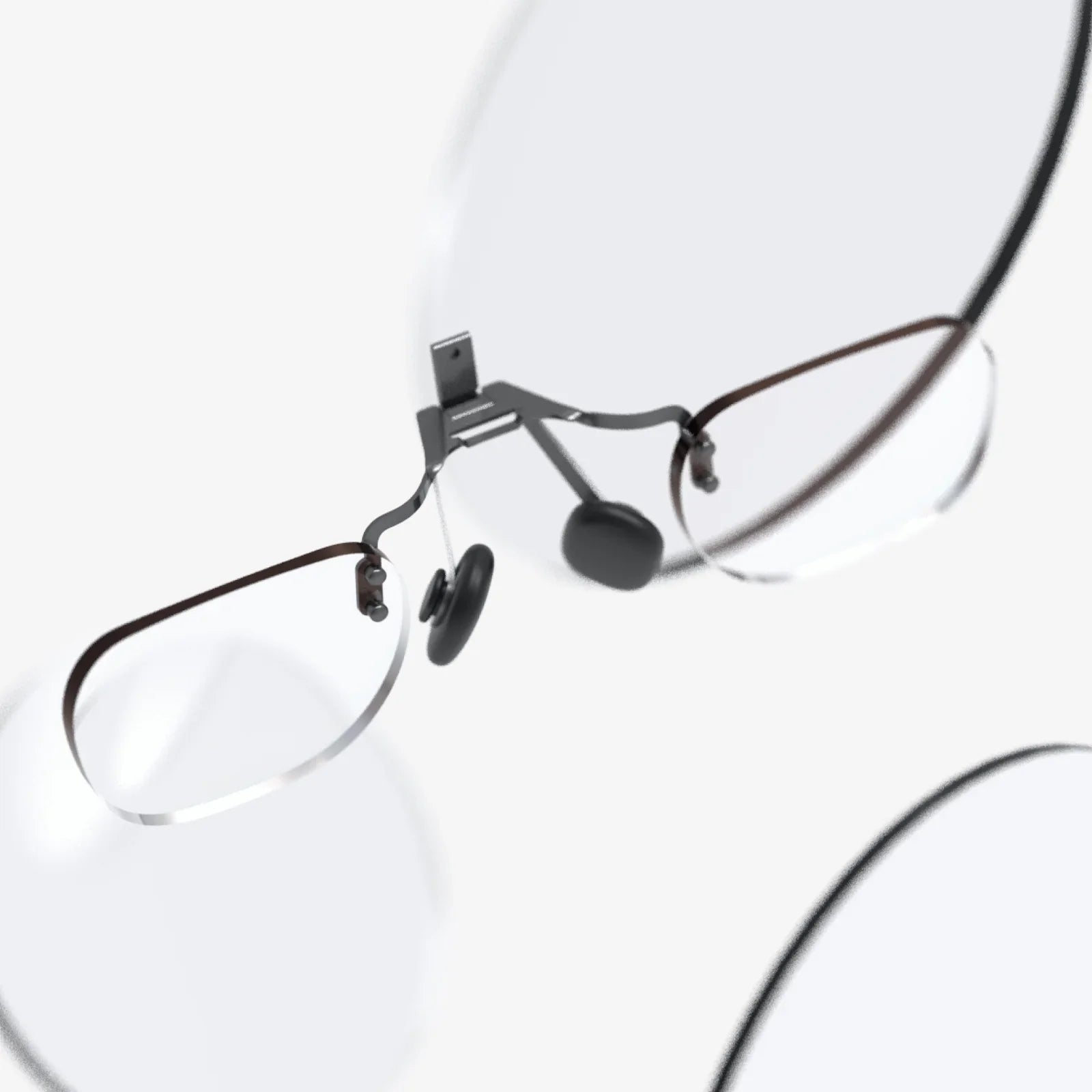
Modern frames are sleeker, lighter, and often indistinguishable from high-end traditional eyewear at a casual glance. Manufacturers have embraced a platform approach, offering a variety of frame shapes—from classic full-rim to modern semi-rimless and bold aviators—allowing users to choose a style that fits their personal aesthetic. The technology has been miniaturized to the point where the compute unit, which once required a separate pack tethered by a wire, is now often integrated directly into the temples or, in some models, offloaded entirely to a powerful smartphone in your pocket, acting as a personal processor.
The Heart of the Experience: Display Technologies in 2025
The magic of AR happens in the lenses, and the display systems have seen the most significant engineering breakthroughs. The current AR glasses available utilize a few dominant technologies, each with its own strengths.
Waveguide Displays
This remains the gold standard for most devices aiming for a socially acceptable form factor. Light from a micro-LED projector is channeled through a transparent, wafer-thin glass or plastic substrate using a complex pattern of gratings. In 2025, waveguides have become brighter, more efficient, and offer a significantly larger field of view (FoV), addressing the previous criticism of looking through a ‘letterbox’. Advanced manufacturing techniques have also driven down costs, making this premium technology more accessible.
MicroLED on Mirror
An alternative approach used in some models involves tiny, incredibly bright MicroLEDs projecting onto a specially coated combiner lens that reflects the image into the user’s eye. This technology is renowned for its ability to deliver stunningly bright and vibrant images, even in direct sunlight, making it ideal for outdoor use. The trade-off has traditionally been a slightly bulkier design, but recent iterations have made impressive strides in miniaturization.
Holographic Optics
Emerging from research labs, holographic optical elements (HOEs) are beginning to appear in commercial products. These use laser light to ‘write’ optical structures into a polymer film, creating incredibly thin and light lenses that can manage light with high efficiency. This technology promises the ultimate combination of a wide field of view and a minimalist design, pointing the way to the future of AR eyewear.
Seeing and Understanding the World: The Sensor Suite
For digital content to interact convincingly with the real world, AR glasses must understand their environment with profound depth. The current generation is equipped with a sophisticated array of sensors that act as its eyes and brain.
- High-Resolution Cameras: Used for capturing the environment for video passthrough (in devices that don’t use optical see-through) and for computer vision tasks like object recognition and text scanning.
- Depth Sensors: LiDAR (Light Detection and Ranging) scanners and time-of-flight sensors fire out infrared light to measure the distance to every object in a room, creating a precise 3D map in milliseconds. This is essential for placing virtual objects that occlude correctly behind real-world furniture or stick to surfaces.
- Eye-Tracking Cameras: Tiny infrared cameras pointed at the user’s eyes enable foveated rendering (where the highest detail is rendered only where you are looking, saving processing power) and incredibly intuitive interface control. A mere glance can select a menu item.
- Inertial Measurement Units (IMUs): A combination of accelerometers and gyroscopes that track the precise movement and rotation of your head, ensuring the virtual world stays locked in place as you move.
A Universe of Use Cases: Beyond Novelty
The conversation around AR has shifted from ‘what if’ to ‘what for’. The hardware has matured enough to enable genuinely transformative applications across numerous fields.
Enterprise and Industrial Revolution
This remains the most mature and valuable sector for AR. Technicians can see schematics and receive guided instructions overlaid directly on the machinery they are repairing, hands-free. Warehouse workers see optimal picking routes and item information flash before their eyes, dramatically increasing efficiency and reducing errors. Architects and engineers can walk clients through full-scale 3D models of unbuilt structures, fostering a deeper understanding and better collaboration.
Redefining Connectivity and Remote Work
Spatial computing has dismantled the traditional video call. Remote assistance has become a visceral experience, where an expert can see a technician’s view and draw arrows and diagrams directly into their reality. Collaborative design sessions now involve multiple users, represented as avatars, interacting with the same 3D model from different parts of the globe as if they were standing around the same physical table.
The New Frontier of Navigation
Turn-by-turn navigation has been liberated from the smartphone. Giant floating arrows guide you down the street, the name and rating of a restaurant appear over its entrance, and public transit schedules pop up as you approach a bus stop. For drivers, important information like speed and navigation hints can be projected onto the windshield, keeping their eyes on the road.
Consumer Entertainment and Gaming
While immersive, full-field-of-view gaming is still the domain of more dedicated headsets, modern AR glasses have unlocked new forms of entertainment. Board games can come to life on your tabletop with animated characters and effects. Sports fans can watch a game with live stats and player profiles hovering beside the action. It’s a more personal, contextual, and socially present form of media consumption than staring at a isolated screen.
The Invisible Challenges: Battery Life, Connectivity, and the Ecosystem
Despite the progress, challenges remain. Battery life is the eternal balancing act. The most powerful standalone devices may still only last 2-4 hours under heavy use, though conservative use and the proliferation of efficient co-processors are stretching this further. Many models have adopted a ‘hot-swap’ battery strategy, where a small battery in the temple can be quickly replaced to extend usage indefinitely.
Connectivity is also key. While many glasses can operate independently, a low-latency connection to a phone or a cloud compute service via 5G and Wi-Fi 6E is often essential for the most complex tasks, ensuring a smooth and responsive experience.
Finally, the software ecosystem, while growing rapidly, is still in its adolescence. A killer app that defines the medium for everyone—akin to the spreadsheet for the PC or the browser for the internet—is still emerging. The foundation is there, and developers are building at an incredible pace, but the true potential of the platform will only be unlocked as this ecosystem matures.
A Glimpse into the Immediate Future
The trajectory is clear. The current AR glasses available in 2025 are setting the stage for what’s to come. We can expect to see even further miniaturization, with the goal of achieving a ‘normal eyeglasses’ form factor with all-day battery life. Display technology will continue to improve, pushing FoV to its limits and achieving perfect visual fidelity. Perhaps most importantly, the development of more powerful and intuitive AI assistants, capable of understanding context and intent, will make interacting with this new layer of reality feel effortless and magical.
The distance between science fiction and reality has never been shorter. The devices on the market today are not just products; they are the first true glimpses of a fundamental shift in how we will interact with computers and with each other. They are moving out of the laboratory and the factory floor and onto the streets, into offices, and onto our faces, ready to augment our perception of the world itself. The question is no longer if this future will arrive, but how quickly we will choose to embrace it and what we will build once we do.
Share:
AR Research: The Invisible Revolution Reshaping Our World
Best AR Coating Glasses: The Ultimate Guide to Sharper Vision and Digital Comfort