


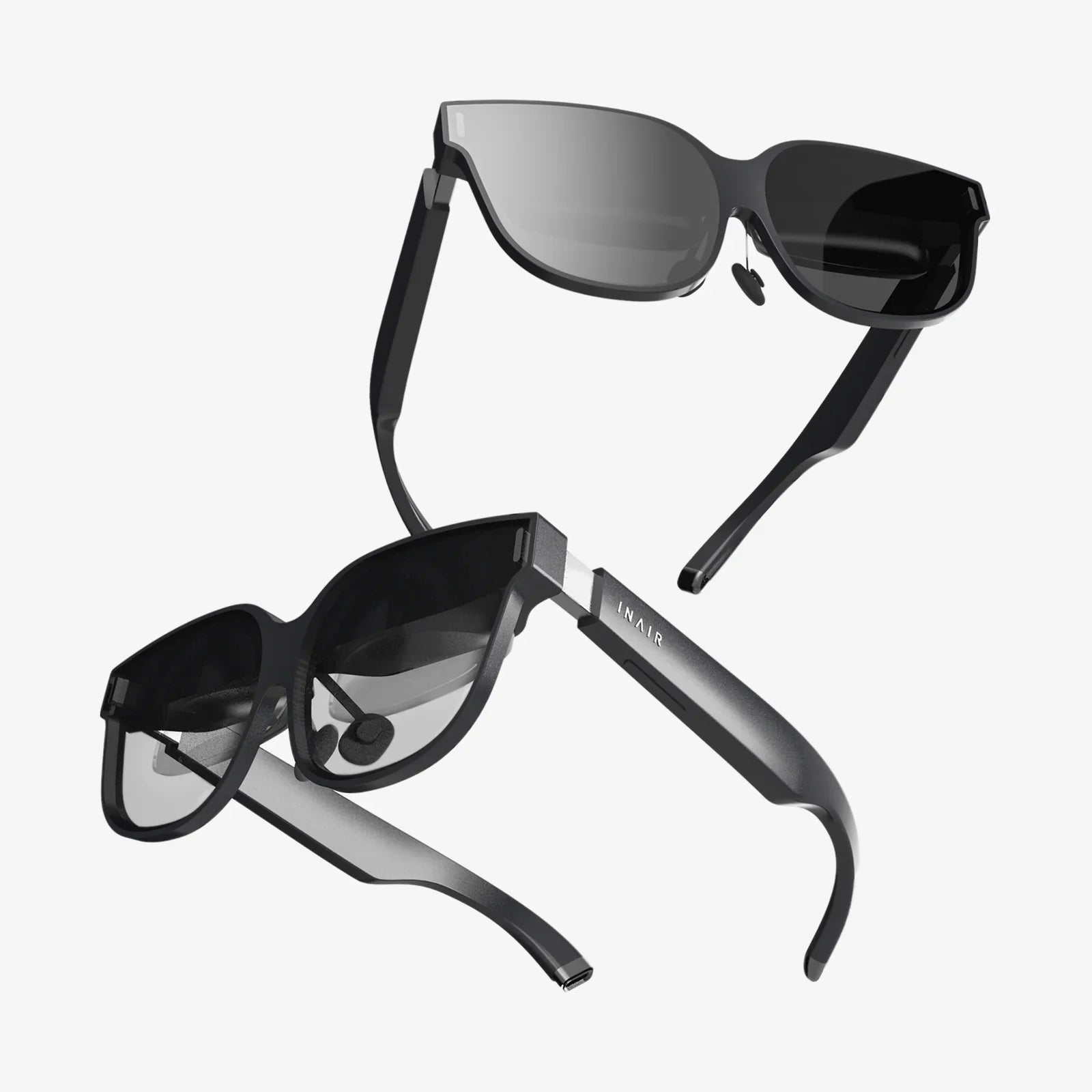
Imagine a world where the digital information you need doesn’t appear on a handheld screen but is seamlessly painted onto the canvas of your reality, tailored not just to your location, but to your very eyes, your preferences, and your immediate needs. This isn’t a distant sci-fi fantasy; it’s the imminent future being unlocked by the advent of truly custom AR glasses. This technology promises to move beyond the novelty of floating holograms and into the realm of indispensable, personalized visual computing, fundamentally altering how we work, connect, learn, and perceive the world around us.
Beyond One-Size-Fits-All: The Imperative for Customization
The journey of wearable technology, particularly on the face, has been fraught with a fundamental challenge: the human form is incredibly diverse. Standardized frames, lens shapes, and hardware placements inevitably fail a significant portion of the population. They sit uncomfortably, slide down noses, cause pressure points, or simply don’t align correctly with the user’s eyes, leading to a subpar visual experience, eye strain, and ultimately, rejection of the technology. Custom AR glasses directly confront this physical hurdle. Through advanced 3D scanning, precise facial mapping, and bespoke manufacturing, these devices are engineered to conform to the unique contours of an individual’s face. This ensures a secure, comfortable, and stable fit that feels like a natural extension of the wearer, a stark contrast to the clunky, generic prototypes of the past.
But the customization goes far deeper than mere physical ergonomics. The core magic of augmented reality lies in the precise overlay of digital content onto the physical world. For this to work flawlessly, the technology must understand the user’s specific physiology. Custom AR glasses integrate precise interpupillary distance (IPD) measurement, accounting for the exact space between the user’s pupils. This calibration is critical. An incorrect IPD setting can cause misaligned images, depth perception errors, and rapid onset of simulator sickness or headaches, completely breaking the immersive illusion. By tailoring this and other optical parameters to the individual, custom AR glasses deliver a crystal-clear, stable, and comfortable visual experience that feels intrinsically real.
The Architecture of Personalization: How Custom AR Glasses Work
The creation of a pair of custom AR glasses is a symphony of advanced technologies converging to serve a single user. The process typically begins with a high-fidelity 3D scan of the wearer’s face. This isn't a simple photo; it's a detailed topographic map capturing every curve, angle, and asymmetry of the brow, nose, temples, and ears. This data forms the digital blueprint for crafting frames that distribute weight evenly and maintain perfect alignment throughout the day.
Optical systems are the heart of the device. Customization here involves not just IPD adjustment but also catering to individual prescription needs. For the vast population requiring vision correction, the AR display can be seamlessly integrated with prescription lenses, eliminating the need to wear clumsy adapters or uncomfortable contact lenses. This merges essential vision correction with cutting-edge digital overlay, creating a unified visual aid. Furthermore, the display itself—often using technologies like waveguides or micro-LED projectors—can be fine-tuned for the user’s dominant eye, visual acuity, and even sensitivity to certain light wavelengths, optimizing clarity and reducing fatigue.
A World Remastered: The Transformative Applications
The true power of custom AR glasses is unleashed not in their technical specs, but in their profound applications across every facet of human endeavor. When a digital interface becomes this personal and intuitive, it ceases to be a tool and becomes a partner.
Revolutionizing Professional and Industrial Fields
In complex professions, hands-free access to contextual information is a game-changer. A surgeon, their hands sterile and occupied, could see vital signs, 3D anatomical models, or surgical guidance superimposed directly onto their field of view, all calibrated to their precise perspective. An engineer performing maintenance on a complex machine could see torque specifications, part numbers, and animated repair instructions overlaid on the components they are touching. This context-aware assistance, delivered through a comfortable, personalized visor, dramatically increases efficiency, reduces errors, and enhances safety.
The Ultimate Personalized Assistant
For the everyday user, custom AR glasses evolve into an intelligent companion. Imagine walking through a foreign city where translations of street signs and menus appear instantly, not as disruptive text boxes, but as natural-looking text integrated into the environment. Your navigation path is drawn on the sidewalk ahead of you. A network of subtle, context-aware notifications—a reminder of a friend’s birthday as you pass their favorite café, or the fact that you need milk as you glance at the refrigerator—flows seamlessly into your perception without the jarring interruption of a phone buzz. The interface learns from you, prioritizing the information you find most valuable and presenting it in a way that feels natural to you.
Redefining Social Connection and Entertainment
Social interaction is poised for a radical shift. Instead of videoconferencing on a flat screen, custom AR glasses could project life-sized, photorealistic holograms of remote participants into your living room, creating a powerful sense of shared presence. In gaming and entertainment, the entire world becomes a playground. A historical battle could unfold in your local park, or a fantastical creature could peek out from behind your furniture, with the perspective and scale perfectly rendered for your specific vantage point, creating an unparalleled level of immersion.
Navigating the Invisible Frontier: Challenges and Considerations
The path to this augmented future is not without significant obstacles. The most pressing concern is privacy. These devices, by their very nature, are equipped with always-on cameras and sensors that perceive the world around the user. This raises critical questions about data collection, storage, and usage. Who has access to the continuous video feed? How is facial recognition data of bystanders handled? Robust, transparent, and user-centric privacy frameworks must be established and hardwired into the technology’s DNA to prevent a dystopian future of perpetual surveillance.
Furthermore, the social etiquette of wearing AR glasses is uncharted territory. The "creep factor" of not knowing if someone is recording you or looking at a digital overlay while speaking to you is a real social barrier. Solutions may involve clear external indicators—like a visible light—that signal when recording or active processing is occurring, helping to establish new norms of trust and interaction.
Finally, there is the challenge of accessibility and the digital divide. The advanced manufacturing and technology required for deep customization will initially come with a high cost. Ensuring that this transformative technology does not become a luxury good that exacerbates societal inequalities is a crucial consideration for developers and policymakers alike.
The Invisible Canvas: A Glimpse into the Future
Looking ahead, the trajectory of custom AR glasses points toward even greater integration and subtlety. The goal is not a bulky headset but a form factor indistinguishable from regular eyewear—light, stylish, and socially acceptable. Battery life and processing power will continue to improve, perhaps moving computation to a separate, pocketable device or leveraging powerful cloud networks to keep the glasses themselves minimalist.
We are moving toward a future where your AR glasses will know you better than any device before them. They will understand your gaze, recognize your micro-expressions, and anticipate your needs before you voice them. They will not just show you information; they will enhance your memory, augment your creativity, and connect you to a global knowledge network in a way that feels like a natural extension of your own cognition.
The ultimate destination is a world where the technology itself fades into the background. You won’t think about putting on your "AR glasses"; you’ll simply put on your glasses. The digital layer woven into your reality will feel so intuitive, so personal, and so seamlessly integrated that its absence will feel like losing a sense. This is the promise of custom AR glasses: not to distract us from the world, but to help us see it, understand it, and connect with it in ways we’ve never before thought possible, crafting a reality that is uniquely and powerfully our own.
Share:
2D to 3D Model AI: The Revolutionary Technology Reshaping Digital Creation
What Can You Use AI For: A Comprehensive Guide to Modern Applications