


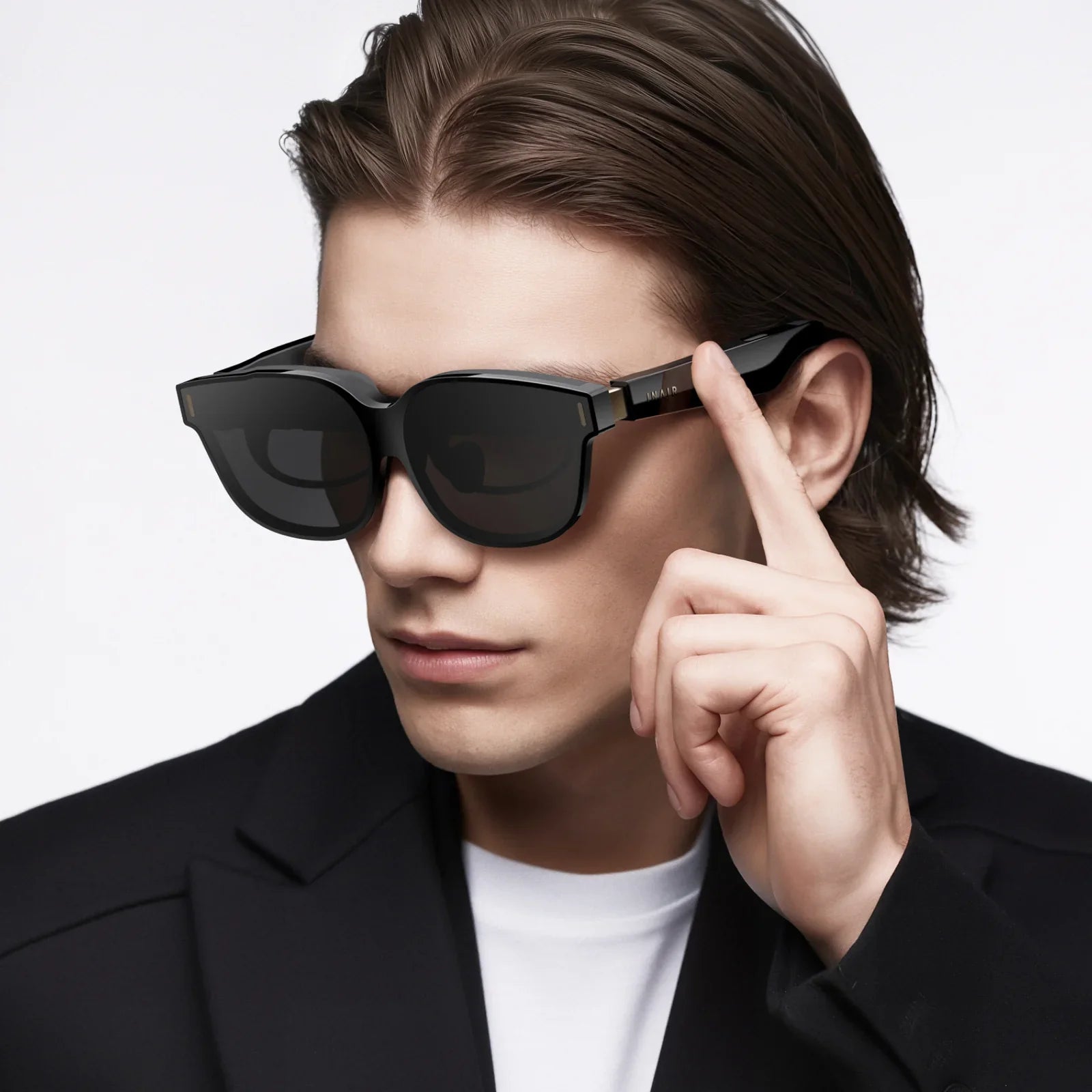
Imagine slipping on a virtual reality headset that feels less like a piece of mass-produced technology and more like a natural extension of your own senses—a portal to other worlds crafted uniquely for you. This is the promise, the allure, and the rapidly approaching future of custom made VR glasses. For years, virtual reality has been a one-size-fits-most experience, often leaving users with discomfort, suboptimal visuals, and a lingering sense that the technology wasn't quite built for them. But a revolution is brewing, moving away from generic standards and towards a new paradigm of hyper-personalized immersion. This shift isn't just about luxury; it's about unlocking the full, intended potential of virtual reality by ensuring the hardware disappears, leaving only the experience in its wake. The era of compromise is over; the age of bespoke virtuality has begun.
The Foundational Pillars of Customization
True customization in VR hardware is not a single feature but a holistic approach that addresses the fundamental ways humans interact with technology. It rests on three core pillars: physiological fit, optical precision, and aesthetic expression. Each pillar is critical to achieving a seamless and deeply personal virtual experience.
Physiological Fit: Beyond One-Size-Fits-None
Every human face is a unique landscape of contours, proportions, and pressure points. Standard VR headsets, with their limited adjustment options, often create hotspots of pressure on the forehead and cheeks, leading to fatigue and a constant awareness of the hardware on your face. This phenomenon, known as "VR face," is a significant barrier to long-term immersion.
Custom made VR glasses tackle this problem at its root. The process often begins with advanced 3D scanning technology. Using either specialized hardware or sophisticated smartphone applications, a precise digital map of the user's face is created. This point-cloud data captures the exact distance between the eyes (interpupillary distance or IPD), the width of the brow, the bridge of the nose, and the curve of the temples.
This data then informs the creation of a custom facial interface—the foam or silicone gasket that makes direct contact with the skin. Instead of a flat, uniform pad, a custom interface is a contoured marvel, engineered to distribute weight evenly across the entire contact area. The result is a headset that feels weightless, secure, and remarkably comfortable, even during extended sessions. For professional users—architects walking clients through digital twins of buildings or surgeons training for complex procedures—this comfort is not a luxury but a necessity for productivity and focus.
Optical Precision: Crystal Clear Vision for All
Perhaps the most transformative aspect of custom VR is in the realm of optics. For the estimated 75% of the adult population who require some form of vision correction, standard VR has always involved a awkward choice: wear cumbersome contact lenses or cram their prescription glasses inside the headset, often leading to scratched lenses, reduced field of view, and immense discomfort.
Custom made VR glasses eliminate this compromise entirely by integrating prescription lenses directly into the optical path of the headset. This isn't merely placing inserts over the existing lenses; it's about calibrating the entire visual system to the user's specific needs.
The process involves using a precise eyeglass prescription, including sphere, cylinder, and axis for astigmatism correction. High-quality lenses are then ground to these specifications and mounted at the exact optimal distance from the headset's primary lenses and the user's eyes. The benefits are profound:
- Unmatched Visual Clarity: Eliminates the "sweet spot" problem, where looking away from the center of the lens causes blurriness. The entire field of view becomes the sweet spot.
- Enhanced Comfort: Removes pressure on the nose and temples from wearing two sets of frames.
- Protection: Keeps the headset's original lenses safe from dust, scratches, and oils from eyelashes.
For users with strong prescriptions or complex astigmatism, this customization is nothing short of revolutionary, offering a level of visual fidelity in VR that they may never have experienced in the real world without their glasses.
Aesthetic Expression: The Device as an Extension of Self
While fit and function are paramount, the desire for personal expression should not be underestimated. Consumer technology is increasingly a form of personal identity, and VR headsets are no different. Customization offers a canvas for this expression.
This can range from choosing a specific color scheme for the headset's exterior shell and controllers to employing advanced techniques like hydro-dipping for complex patterns (e.g., carbon fiber, wood grain, camouflage) or even incorporating custom artwork. For enterprises and esports teams, this presents a powerful branding opportunity, creating bespoke headsets featuring team logos, colors, and player aliases that foster unity and a professional image.
This pillar transforms the VR headset from a anonymous black box into a personal artifact, a piece of technology that the user is proud to own, display, and use.
The Technology and Process Behind the Custom Fit
The journey to a perfect pair of custom made VR glasses is a fascinating blend of digital capture and physical fabrication, primarily leveraging additive manufacturing—more commonly known as 3D printing.
- Data Acquisition: The process begins with capturing the user's unique physiological data. This is most accurately done with a high-resolution 3D scan of the face. Modern smartphone apps can achieve surprisingly detailed results using the front-facing depth-sensing cameras or by guiding the user to take a series of photographs from different angles that are then reconstructed into a 3D model.
- Modeling and Design: The 3D scan is imported into computer-aided design (CAD) software. Here, a digital model of the standard headset's interface is digitally "fit" to the user's face scan. Engineers and designers algorithmically adjust the model to ensure perfect weight distribution and seal, crucial for both comfort and maintaining immersion by blocking out external light.
- 3D Printing: The final, approved digital model is sent to a 3D printer. Multi-jet fusion or selective laser sintering printers are often used for their ability to create durable, lightweight, and complex structures with fine details. These printers use nylon-based powders that result in a strong yet slightly flexible final product.
- Finishing and Assembly: The printed interface undergoes post-processing, which may include sanding for a smooth finish, dyeing for color, and the application of hypoallergenic, easy-to-clean comfort materials like pleather or medical-grade silicone. For optical inserts, the prescription lenses are precision-cut and mounted into custom-designed frames that clip securely inside the headset.
This end-to-end process, from scan to finished product, represents a significant shift towards on-demand, personalized manufacturing.
Implications for Accessibility and Inclusivity
The impact of custom VR extends far beyond enhanced comfort for the average user; it opens the door to virtual reality for populations previously excluded by its limitations.
- Users with Uncommon IPD: Standard headsets typically offer IPD adjustments between 58mm and 72mm. Individuals with IPDs outside this range, including many children and some adults, have been unable to use VR without strain or distorted vision. Custom solutions can be crafted for any IPD, making VR accessible for education and entertainment for a wider age range.
- Individuals with Facial Differences: For those with facial asymmetries, scars, or who have undergone medical procedures, a standard headset can be painful or impossible to wear comfortably. Custom interfaces can be designed to accommodate these unique contours, ensuring VR is an inclusive technology.
- Those with Severe Visual Impairments: By seamlessly integrating complex prescriptions, including high-index lenses for severe near- or far-sightedness, custom VR can provide a clear visual experience that was previously unattainable, creating new possibilities for visual therapy and accessible gaming.
This drive for inclusivity ensures that the virtual worlds of the future are built for everyone, not just those who fit the manufacturer's predefined physical mold.
The Future is Bespoke: What Lies Ahead?
The trend toward customization is only accelerating. We are moving towards a future where biometric sensors woven into custom interfaces can provide real-time data on focus, stress, and engagement, allowing experiences to adapt dynamically to the user's state. Imagine a training simulation that pauses when it detects you are overwhelmed, or a horror game that subtly intensifies based on your heart rate.
Furthermore, as eye-tracking technology becomes standard, its accuracy will be vastly improved by a perfectly fitted headset where the cameras are always at the optimal distance and angle from the eyes. This will unlock foveated rendering—a technique that drastically reduces the computational power needed by rendering only the center of your vision in high detail—making high-fidelity VR more accessible and efficient.
The ultimate endpoint may be headsets that are entirely bespoke, from the shape of the housing to the layout of the internal optics, all designed around a digital twin of the user, ensuring a level of perceptual realism that today's devices can only hint at.
Stepping into a virtual world should feel like opening your eyes, not like putting on a device. The friction of ill-fitting hardware, the blurriness of uncorrected vision, and the generic nature of off-the-shelf design have long been the final barriers to true presence in VR. Custom made VR glasses are systematically dismantling these barriers, offering a glimpse into a future where our digital and physical realities are perfectly aligned through technology that is, finally, made for one. The question is no longer if you will experience virtual reality, but how perfectly it will be tailored to you.
Share:
Augmented Reality vs Technology: The Invisible Revolution Reshaping Our World
Augmented Reality vs Technology: The Invisible Revolution Reshaping Our World