


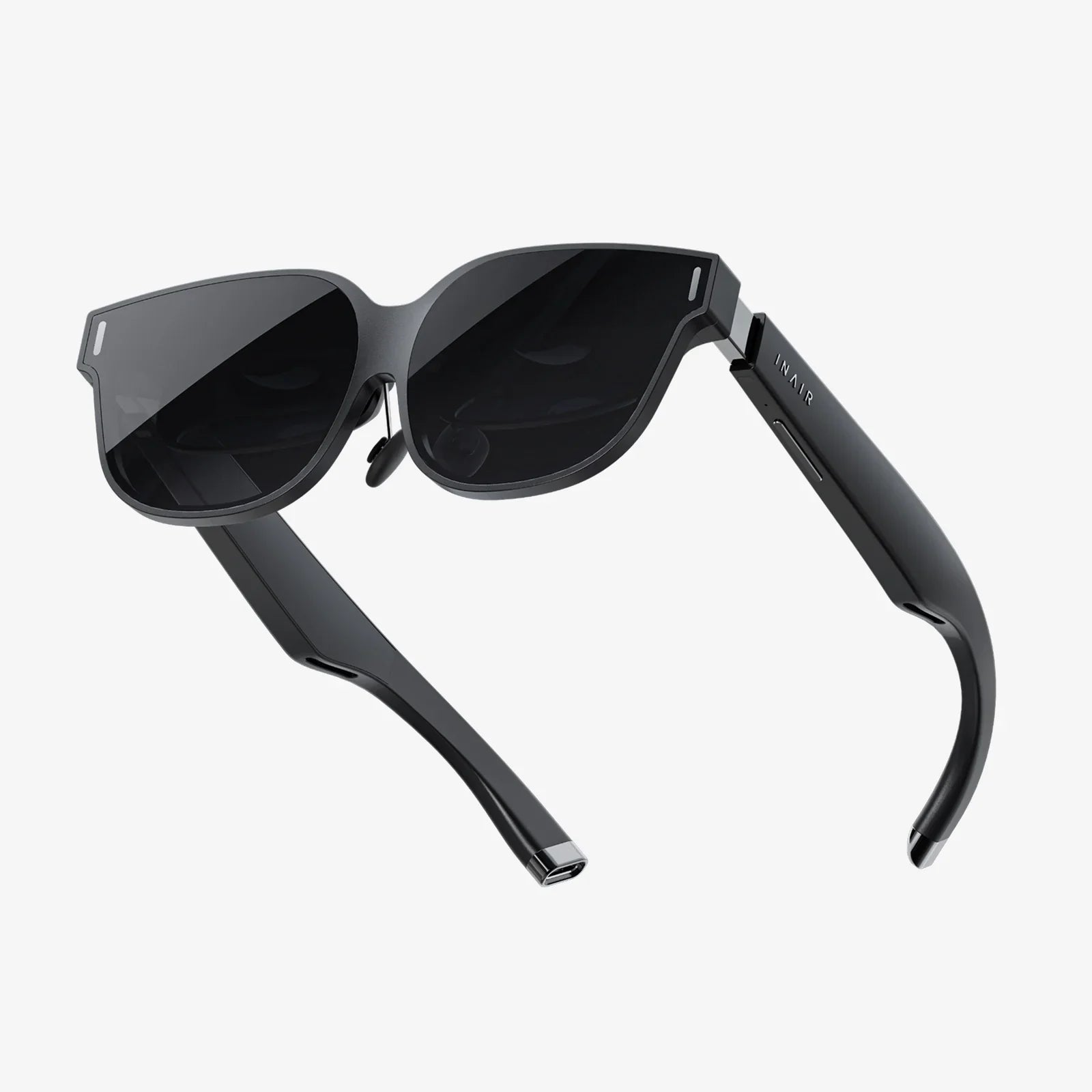
Imagine a world where your digital life doesn’t live on a screen you hold in your hand, but is elegantly woven into the very fabric of your perception. A world where information, entertainment, and connection are presented not as interruptions, but as intuitive enhancements to your reality. This is the promise of custom smart AR glasses, a technological leap that moves beyond one-size-fits-all gadgets to deliver a deeply personal, powerful, and profoundly transformative experience tailored uniquely to you. The era of staring down at a device is ending; the age of looking up and out, with a digitally-augmented vision crafted for your eyes only, is just beginning.
The Architectural Foundation of Augmented Reality
At their core, all smart AR glasses are marvels of modern engineering, integrating a complex array of components to project digital imagery onto the real world. The magic begins with micro-displays, tiny projectors that generate the images. These are then directed through a series of waveguides or combiners—essentially transparent lenses embedded with nanotechnology that bounce the light directly into the user's eyes while still allowing them to see the physical environment. This optical engine is the heart of the device, and its precision dictates the clarity, brightness, and field of view of the augmented content.
Powering this visual symphony is a sophisticated onboard computing unit, a compact system-on-a-chip (SoC) that handles everything from spatial tracking and gesture recognition to running complex applications. This processor must be incredibly powerful yet energy-efficient to avoid overheating and ensure all-day usability. It works in concert with a suite of sensors: cameras for computer vision, inertial measurement units (IMUs) for tracking head movement, depth sensors for mapping the environment, and microphones for voice input. This sensor fusion creates a real-time, three-dimensional understanding of the space around the user, allowing digital objects to be anchored persistently to physical locations.
Finally, user interaction is managed through a multimodal interface. Voice commands offer a hands-free approach, while touch-sensitive pads on the frames allow for subtle swipe and tap controls. The most advanced systems are incorporating eye-tracking and neural input, detecting intention and focus to create an interface that feels less like operating a machine and more like an extension of thought itself. This entire ecosystem—optics, compute, sensors, and interface—must be perfectly balanced and miniaturized into a form factor that is socially acceptable and comfortable to wear for extended periods.
Why Customization is the Key to Unlocking Mass Adoption
The first generation of augmented reality wearables often struggled with a critical flaw: they were designed for a hypothetical "average" user. This approach ignores the beautiful diversity of human anatomy and preference. Ill-fitting frames cause discomfort, poor weight distribution leads to neck strain, and incorrect inter-pupillary distance (IPD) alignment can cause eye strain, headaches, and a subpar visual experience. For AR to transition from a niche gadget to an indispensable everyday tool, it must embrace customization as its core principle, addressing both physical and digital fit.
The Physical Dimension: A Tailored Fit
Custom smart AR glasses begin with the physical form. Using advanced 3D scanning technology via a simple smartphone app, a precise digital model of a user's head and face can be created. This data informs the design of frames that contour perfectly to the unique shape of their nose bridge, the width of their face, and the curve of their ears. Lightweight, durable materials like titanium or advanced polymers can be used to create a structure that feels weightless and secure, eliminating pressure points.
Beyond comfort, optical customization is paramount. Prescription lenses can be seamlessly integrated, allowing users who require vision correction to experience augmented reality without the need for cumbersome inserts or wearing contact lenses. The alignment of the digital projectors can be calibrated to the millimeter based on the user's specific IPD, ensuring the augmented imagery is sharp, clear, and comfortable to view for hours. This level of physical personalization transforms the device from a piece of technology into a personal accessory, as unique as a tailored suit or a custom-made pair of shoes.
The Digital Soul: Software and Experience Personalization
If the hardware is the body, the software is the soul of custom smart AR glasses. Personalization here moves beyond aesthetics to encompass functionality, context, and privacy. A unified operating system acts as a conduit, but the user's individual needs dictate how information is presented. A surgeon in an operating theater would have a vastly different "augmentation" than an engineer repairing a complex machine or a tourist exploring a historic city. The device must intelligently adapt its interface and content based on context, learned from user behavior and explicit preference.
Machine learning algorithms will play a crucial role, curating information proactively and minimizing clutter. The glasses could learn that you prefer navigation prompts to appear at the edge of your vision during your morning commute, but want meeting reminders centered during work hours. Privacy controls become deeply personal; the glasses could be programmed to only display sensitive notifications when it detects you are alone, blurring them in the presence of others. This creates a digital experience that feels less like using software and more like having a intelligent assistant that understands your habits, your profession, and your world.
Transforming Industries Through Bespoke AR
The impact of mass-produced AR is significant, but the potential of custom solutions is revolutionary, poised to redefine entire sectors by providing workers with exactly the information they need, precisely when and where they need it.
Revolutionizing Healthcare and Surgery
In medicine, custom AR glasses calibrated for a surgeon's exact vision and ergonomics can overlay critical patient data—heart rate, blood pressure, MRI scans—directly into their field of view during procedures. A radiologist could examine 3D holograms of organs from every angle, manipulating them with gestures. For complex surgeries, anatomical guides and critical pathways can be projected onto the patient itself, reducing error rates and improving outcomes. For medical students, this technology offers an unparalleled immersive learning experience, dissecting virtual cadavers and practicing procedures in a risk-free environment.
The Future of Manufacturing and Field Service
On the factory floor or at a remote wind turbine, custom smart AR glasses become the ultimate tool. A technician wearing tailored glasses can see schematics, torque specifications, and step-by-step repair instructions overlaid directly on the equipment they are servicing. A remote expert can see through their eyes and annotate their reality, drawing circles and arrows to guide them through a complex fix, reducing downtime and the need for travel. For assembly line workers, digital guides ensure accuracy and speed, highlighting the correct parts and illustrating assembly sequences, drastically reducing errors and training time.
Redefining Personal Entertainment and Social Connection
Beyond the enterprise, the personal entertainment sphere will be utterly transformed. Imagine watching a film where the screen is a vast, perfect canvas floating on your wall, or playing a game where characters and environments spill out into your living room. Social interactions will become more immersive; instead of flat video calls, you could share a virtual space with holographic representations of friends and family, feeling as if you are sitting together in the same room, regardless of physical distance. Customization ensures this is all delivered with perfect visual comfort, tailored to your entertainment preferences and social habits.
Navigating the Challenges on the Horizon
The path to this customized future is not without significant hurdles. The most pressing concern is privacy. Glasses with always-on cameras and sensors raise legitimate fears about constant surveillance and data collection. Robust, transparent, and user-centric privacy frameworks are non-negotiable. Features like physical shutter switches for cameras, clear activity indicators, and on-device data processing will be essential to build public trust.
Social acceptance is another barrier. The specter of a society where people are constantly distracted by digital overlays, ignoring their surroundings and each other, is a real concern. The design of the devices must be fashionable and subtle, moving away from the bulky, tech-heavy look of early prototypes. Furthermore, digital etiquette will need to evolve, establishing norms for when it is appropriate to use such immersive technology in public spaces.
Finally, the economic model of customization presents a challenge. Bespoke manufacturing is inherently more expensive than mass production. Companies will need to develop efficient and scalable processes to make custom smart AR glasses accessible to a broad audience, potentially through subscription models, modular designs, or trade-in programs that allow for upgrades and re-customization over time.
The Inevitable Fusion of Human and Machine Perception
We are standing at the precipice of a new paradigm in computing. The journey from the centralized mainframe to the personal computer to the smartphone was about putting more power into our pockets. The next step, led by custom smart AR glasses, is about dissolving that power into our environment and our perception. It’s a shift from interactive computing to experiential computing.
This technology will cease to be a "device" we "use" and will instead become a constant, intelligent layer enhancing our reality—a digital sixth sense. It will empower us with superhuman knowledge and capabilities, allowing us to work more efficiently, learn more intuitively, and connect more deeply. The ultimate promise of custom smart AR glasses is a more intuitive and empathetic relationship with technology, one that adapts to us so seamlessly that it feels entirely natural, expanding human potential without overwhelming the human experience.
The future is not about escaping into a virtual world; it's about enhancing the one we already inhabit. It’s about a world where your digital life finally fits you perfectly, not the other way around. The next time you look at the world, the world itself might just look back, ready to show you something incredible.
Share:
AI Assortment Optimization Tools 2025: The Future of Retail is Hyper-Personalized and Data-Driven
What AI Means in Computer Science: A Deep Dive into the Digital Mind