


- by wangfred
Deep AR AI: The Next Frontier in Blending Reality and Digital Innovation
- by wangfred
Imagine a world where the line between the digital and the physical doesn't just blur—it disappears. Where your surroundings become an interactive canvas, responsive to your gaze, your voice, and your very presence. This isn't a distant sci-fi fantasy; it's the emerging reality being built today through the powerful convergence of two of the most disruptive technologies of our time: deep learning and augmented reality. This fusion, known as Deep AR AI, is poised to revolutionize everything from how we shop and learn to how we connect and create, offering a glimpse into a future where our environment is as intelligent as it is immersive.
To understand the profound impact of Deep AR AI, one must first dissect its core components. It is not merely augmented reality with a sprinkle of artificial intelligence. It is a deeply integrated stack of technologies, each layer dependent on the others to create a seamless, intelligent experience.
At its foundation lies Augmented Reality (AR), the technology that overlays digital information—images, videos, 3D models—onto the user's view of the real world through a device like a smartphone, tablet, or pair of smart glasses. Traditional AR is powerful but often static, relying on pre-programmed markers or simple plane detection to place digital objects.
The transformative element is the infusion of Deep Learning, a subset of artificial intelligence inspired by the structure and function of the human brain. Utilizing complex neural networks, deep learning algorithms can learn from vast amounts of data, identifying patterns and making intelligent decisions with minimal human intervention. When applied to AR, these capabilities supercharge the experience.
The theoretical potential of Deep AR AI is vast, but its real-world applications are already demonstrating tangible value across numerous sectors.
The retail landscape is undergoing a seismic shift. Deep AR AI is solving one of online shopping's oldest problems: the inability to try before you buy. Virtual try-on for apparel, accessories, and makeup is now highly sophisticated. AI algorithms precisely map a user's facial features or body measurements to ensure virtual clothing fits correctly, adjusts to lighting, and moves naturally. For home goods, shoppers can place true-to-scale 3D models of furniture, appliances, and decor into their actual living spaces. The AI understands the room's layout, lighting conditions, and spatial relationships, rendering products with photorealistic accuracy. This drastically reduces return rates and increases consumer confidence.
Education is moving from passive absorption to active immersion. Deep AR AI can bring historical events to life in a classroom, with AI-powered historical figures interacting with students. Medical students can practice complex surgical procedures on detailed, virtual anatomies overlaid onto mannequins, receiving real-time feedback from an AI instructor. Field technicians can be guided through intricate repair tasks with intelligent AR manuals that recognize the equipment in front of them and overlay animated instructions directly onto the components they need to adjust. This contextual, hands-on learning accelerates skill acquisition and improves knowledge retention.
In healthcare, the stakes are high, and Deep AR AI is rising to the challenge. Surgeons can use AR headsets to see critical patient data, like heart rate or MRI scans, overlaid directly onto their field of view during an operation, without looking away from the patient. AI can enhance this by highlighting critical structures, suggesting optimal incision paths, or alerting to potential risks. For patients, AR-powered physiotherapy can guide exercises with correct form, while AI adapts the difficulty in real-time based on the patient's performance. It's also being used for phobia treatment, gradually exposing patients to virtual representations of their fears in a controlled, safe environment.
On the factory floor, Deep AR AI is creating the industrial metaverse. Workers wearing AR glasses can see digital schematics overlaid onto complex machinery, receive step-by-step assembly instructions, and have quality control issues highlighted automatically by AI vision systems. Remote experts can see what a local technician sees and annotate the real world with arrows and notes to guide them through a fix, reducing downtime and travel costs. Predictive maintenance is another key application, where AI analyzes sensor data and uses AR to visually point out components that are likely to fail soon.
With great power comes great responsibility. The ascent of Deep AR AI is not without significant challenges that society must proactively address.
Deep AR AI systems, by their very nature, are data-hungry. They continuously capture and process video and audio of their surroundings—which often includes unsuspecting members of the public. The potential for mass surveillance is unprecedented. Clear regulations and ethical frameworks are needed to govern data collection, usage, and storage. Questions of consent become incredibly complex when a user's device is constantly scanning a public space.
If Deep AR AI can generate hyper-realistic overlays on the world, it can also be weaponized to deceive. Malicious actors could create AR experiences that spread misinformation, alter public signage, or create dangerous situations—imagine virtual obstacles placed on a real road. Differentiating between what is real and what is augmented could become a central challenge, eroding public trust. Developing robust digital authentication and provenance standards for AR content will be crucial.
This technology requires powerful hardware and high-bandwidth connectivity, creating a risk of a new digital divide. If Deep AR AI becomes integral to education, work, and social interaction, those without access to the latest devices could be left at a significant disadvantage. Ensuring equitable access and developing inclusive design principles from the outset is imperative to prevent further societal fragmentation.
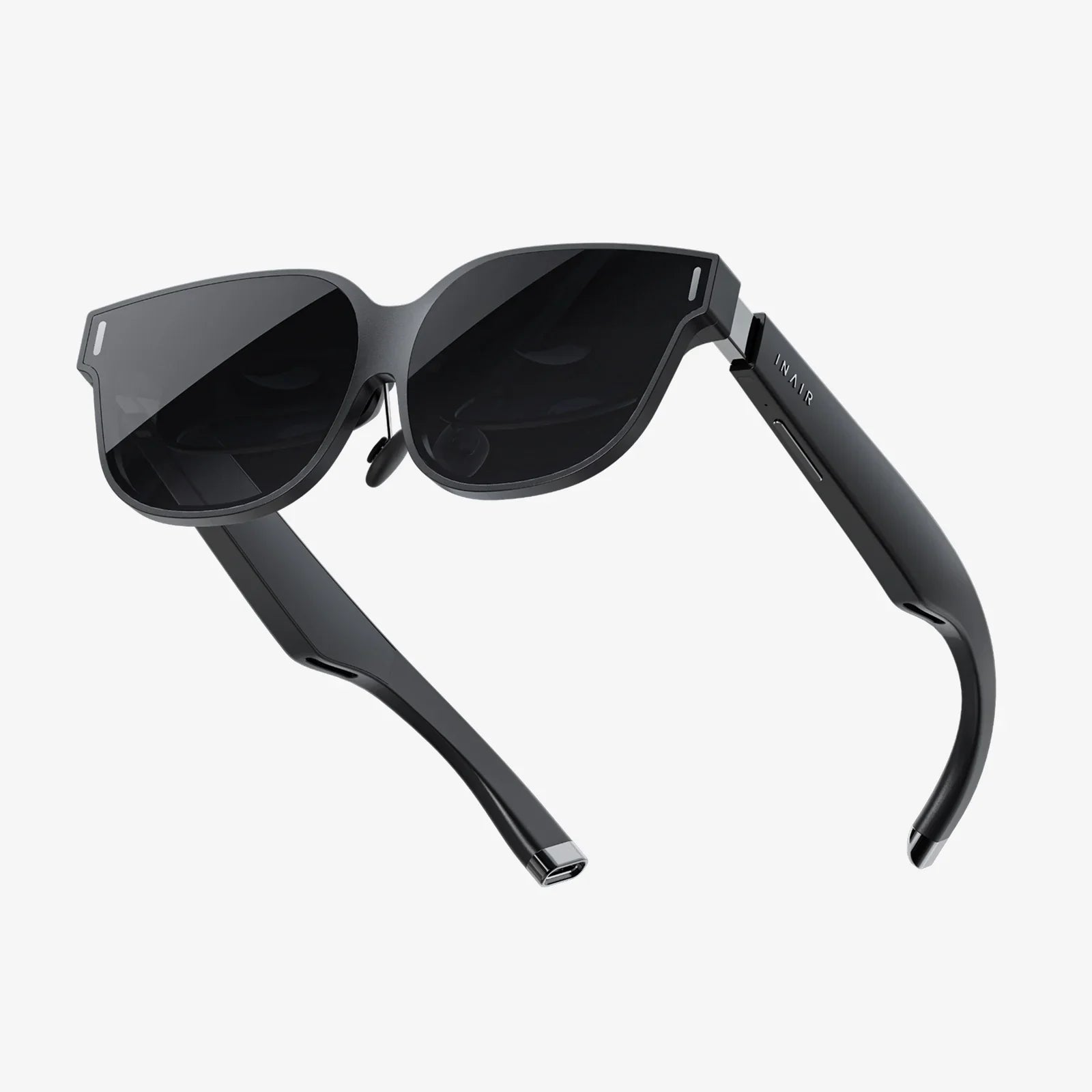
The current state of Deep AR AI, largely experienced through smartphone screens, is merely the prototype. The future lies in lightweight, socially acceptable wearables like smart glasses and eventually contact lenses. These devices will offer a always-on, hands-free layer of intelligence over our world.
We are moving towards a world of contextual and predictive computing. Your AR device, powered by a deeply personalized AI, will anticipate your needs before you articulate them. Walking through a foreign city, it might automatically translate street signs and menus. In a meeting, it could discreetly display talking points it knows you wanted to cover. It will remember where you left your keys and guide you to them with a virtual path on the floor.
This evolution will culminate in the concept of the Ambient Intelligence, where technology recedes into the background of our lives, and the information we need simply appears at the right moment, in the right place, in the most intuitive way possible. Deep AR AI is the key that unlocks this door, moving us from a world of devices we interact with to an environment that interacts with us.
The door to a new layer of reality is now open, and it's not just for viewing—it's for interacting, creating, and understanding our world in ways previously confined to imagination. The journey beyond the screen has begun, and it promises to be the most transformative technological adventure of the coming decade, reshaping reality itself from the inside out.
Share:
Difference Between AI and Smart Device: The Intelligence Revolution in Your Home
Intelligent Electronic Devices Market Trends: Navigating the Next Wave of Hyper-Connectivity