


- by wangfred
Define AR Technology: Bridging Our Digital and Physical Worlds
- by wangfred
Imagine a world where digital information doesn't just live on a screen but is seamlessly woven into the fabric of your everyday life. You look at a city street and see historical facts floating beside ancient buildings, instructions hover over a complex machine you're learning to repair, and a navigational arrow is painted directly onto the pavement guiding your way. This is no longer the stuff of science fiction; it is the rapidly evolving reality being built by Augmented Reality (AR) technology. To truly grasp its potential, we must first move beyond a simplistic definition and delve into what AR is, how it works, and why it represents a fundamental shift in our relationship with technology.
At its most fundamental level, to define AR technology is to describe a transformative interface that superimposes computer-generated perceptual information—be it visual, auditory, haptic, or somatosensory—onto the user's real-world environment. Unlike Virtual Reality (VR), which seeks to replace the real world with a fully digital one, AR's power lies in its additive nature. It enhances reality by layering digital content on top of it, creating a composite view that enriches the user's interaction with their immediate surroundings.
The core differentiator of AR is its commitment to context. The digital content it presents is not random; it is directly relevant to the user's environment, objects within it, or the task at hand. This context-awareness is what separates a simple heads-up display from true augmented reality. AR systems understand the geometry of the space, recognize objects and surfaces, and align digital assets with real-world coordinates to create a convincing and interactive experience. The ultimate goal is to make the digital elements feel as if they truly belong in the physical world, blurring the line between what is real and what is computer-generated.
The seemingly effortless magic of AR is powered by a complex symphony of hardware and software components working in perfect harmony. Understanding this process is key to moving beyond a basic definition.
The journey begins with perception. AR-enabled devices are equipped with a suite of sensors, primarily cameras, but also including GPS, accelerometers, gyroscopes, and light sensors. These act as the eyes and ears of the system. The camera continuously captures the live video feed of the user's environment. Meanwhile, the inertial measurement unit (IMU)—comprising the accelerometer and gyroscope—tracks the device's precise orientation, tilt, and movement in three-dimensional space. This combination of visual and motion data is crucial for establishing a frame of reference.
This is where the real computational heavy lifting occurs. The raw sensor data is processed using advanced algorithms, most notably a technology called Simultaneous Localization and Mapping (SLAM). SLAM does two things at once: it localizes the device (figures out where it is in space) and maps the environment (builds a digital 3D model of the surroundings). It identifies feature points in the camera feed and tracks how these points move as the device moves, constructing a geometric understanding of the world in real-time.
Complementing SLAM is computer vision, which allows the system to recognize and interpret specific objects or triggers. For instance, it can identify a flat surface like a table (plane detection), recognize a specific image (image target recognition), or even understand complex objects like a car engine. This object recognition allows the AR system to know precisely where to anchor digital content.
Once the environment is understood, the software generates the appropriate digital content—a 3D model, an animation, a video, or informational text. The rendering engine then projects this content onto the screen, perfectly aligned with the real-world view based on the data from the SLAM and computer vision systems. Techniques like occlusion, where digital objects can be hidden behind real-world objects, and realistic lighting and shadow casting are employed to achieve a convincing blend. This composite image—the real-world view enhanced with interactive digital elements—is then presented to the user, completing the illusion.
Not all AR experiences are created equal. The technology exists on a spectrum, evolving from simpler, marker-based systems to sophisticated markerless and projection-based realities.
To define AR technology solely by its mechanics is to miss its profound impact. Its true value is revealed in its practical applications, which are disrupting and enhancing numerous fields.
AR is solving one of the fundamental limitations of online shopping: the inability to try before you buy. Customers can now use their smartphones to see how a piece of furniture would look in their living room, how a new shade of paint would transform their wall, or how a pair of glasses fits their face. This "try-it-on" functionality drastically reduces purchase uncertainty and product return rates, creating a more confident and engaging shopping experience. It effectively brings the showroom into the consumer's home.
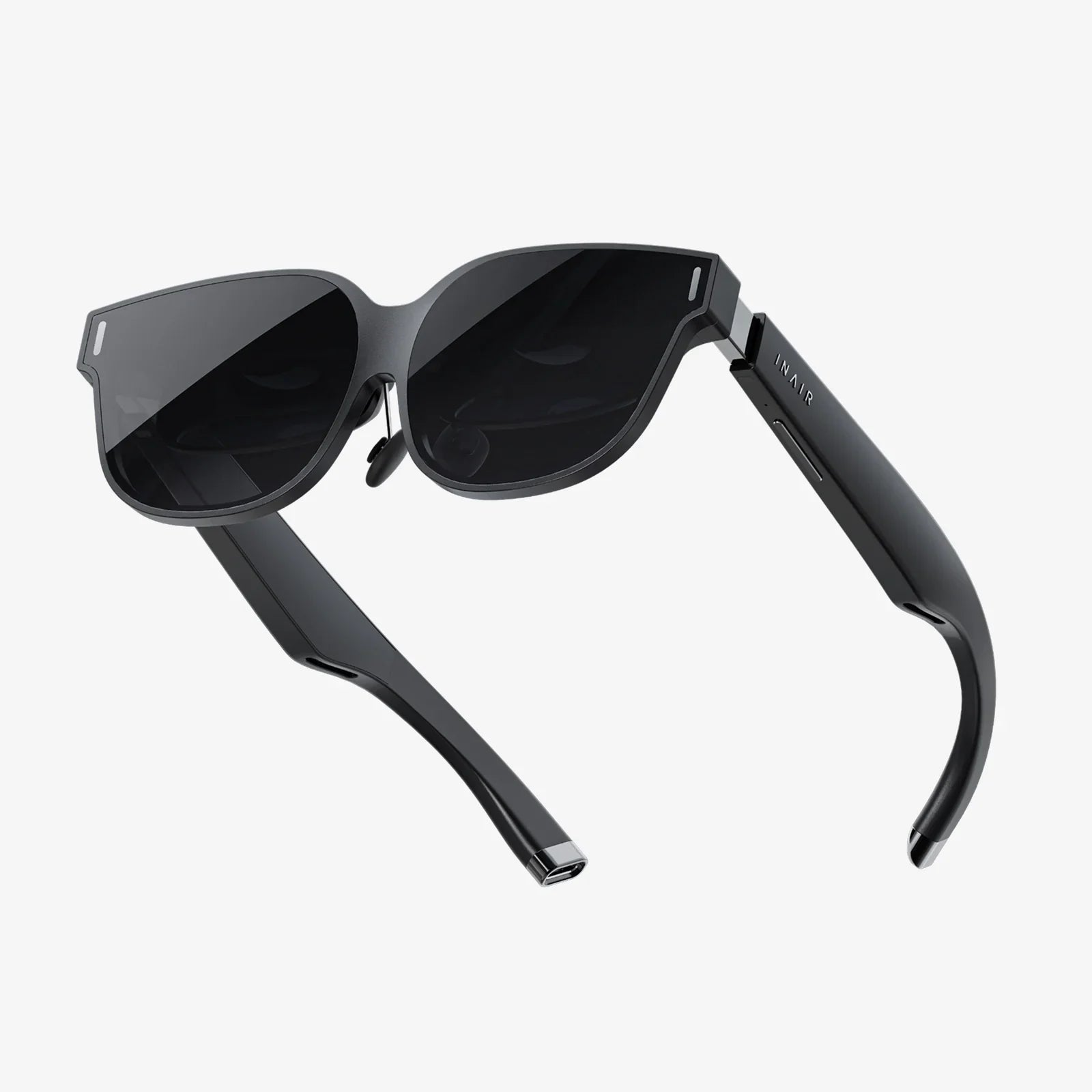
In industrial settings, AR is a powerful tool for efficiency and accuracy. Technicians wearing AR smart glasses can see schematics, instructions, and safety information overlaid directly onto the machinery they are repairing, allowing them to work hands-free. Remote experts can see what a field worker sees and annotate their view with arrows and notes to guide them through complex procedures, reducing downtime and the need for travel. This digital workflow minimizes errors and dramatically accelerates training and task completion.
The healthcare sector is embracing AR for its ability to visualize the invisible. Medical students can practice procedures on detailed, interactive 3D models of human anatomy. Surgeons can use AR overlays during operations to visualize critical structures like blood vessels and tumors beneath the surface of the organ they are operating on, improving precision and safety. AR can also assist patients by providing interactive, visual guides for physical therapy exercises or helping them understand their condition by overlaying information onto their own body.
AR has the potential to turn any classroom into an immersive learning environment. Instead of reading about ancient Rome, students can walk through a digitally reconstructed Colosseum. Biology students can dissect a virtual frog, and astronomy students can explore the solar system in the center of their classroom. This interactive, experiential learning model boosts engagement, improves knowledge retention, and caters to diverse learning styles by making abstract concepts tangible.
Despite its immense potential, the widespread adoption of AR faces significant hurdles that must be addressed. Technical challenges include achieving truly seamless tracking and rendering without latency, which can cause a disconnect between the digital and physical objects. Battery life remains a constraint for mobile and wearable AR devices. From a social and ethical perspective, questions about data privacy—as these devices constantly scan and map our environments—are paramount. There is also the risk of digital addiction, sensory overload, and the creation of new forms of spam, often called "AR graffiti," that could clutter our physical world.
The future of AR lies in overcoming these challenges. We are moving towards more powerful, smaller, and more socially acceptable wearables, like advanced smart glasses. The development of 5G and edge computing will offload processing power, enabling more complex experiences. Most importantly, the evolution will be towards a more intuitive and contextual "ambient intelligence," where AR interfaces fade into the background, providing information exactly when and where it is needed without overwhelming the user.
The journey to define AR technology reveals it as far more than a parlor trick or a gaming gimmick; it is a foundational shift in computing, often termed the "fourth wave." It represents a move away from isolated screens and into a world where computing is spatially aware, contextually relevant, and intimately integrated with our physical lives. It promises a future where technology enhances human capability without isolating us, making us more informed, efficient, and connected to the world around us. The bridge between our digital and physical realities is being built right before our eyes, and it is a sight to behold.
Share:
Human Computer Interaction Market Size: A Deep Dive into the $XX Billion Interface Revolution
What Means Virtual Meeting - The Complete Guide to Digital Collaboration