


Imagine a world where the digital and the physical are no longer separate realms but a single, seamless continuum. A world where you can train for complex surgery on a virtual patient, collaborate with colleagues across the globe as if they were in the same room, or walk through a historical site and see it restored to its former glory right before your eyes. This is not a distant science fiction fantasy; it is the burgeoning reality being built today under the umbrella of a single, transformative term. To truly grasp the next evolution of human-computer interaction, one must first define Extended Reality.
The Umbrella Term: What Exactly is XR?
Extended Reality, or XR, is not a specific technology itself but an all-encompassing term that refers to all real-and-virtual combined environments and human-machine interactions generated by computer technology and wearables. It is the superset that includes its more well-known subsets: Augmented Reality (AR), Virtual Reality (VR), and Mixed Reality (MR). The core principle uniting these technologies is their goal to either extend the reality we experience by adding digital layers to it or to create entirely new realities from scratch. XR represents the entire spectrum of experiences, from the completely real to the utterly virtual, as famously illustrated in Paul Milgram's Reality–Virtuality Continuum. This conceptual model provides the foundational framework for understanding how these technologies relate to one another and to our perceived reality.
Deconstructing the Spectrum: AR, VR, and MR
To fully define extended reality, one must understand its constituent parts. Each occupies a distinct point on the spectrum, offering unique experiences and requiring different technologies.
Virtual Reality (VR): The Immersive Digital Escape
Virtual Reality is the most immersive end of the XR spectrum. It completely replaces the user's real-world environment with a simulated, digital one. By wearing a head-mounted display (HMD) that covers the entire field of vision, users are visually and acoustically transported to a computer-generated world. This world can be a realistic simulation of a real place, a fantastical game environment, or a 360-degree video captured from our own planet. Key to VR's power is its ability to track head and, often, hand movements, allowing users to look around and interact with the virtual environment naturally. The primary goal of VR is to create a sense of presence—the convincing feeling of being in another place, a psychological state that is the hallmark of a successful VR experience.
Augmented Reality (AR): Enhancing the World Around You
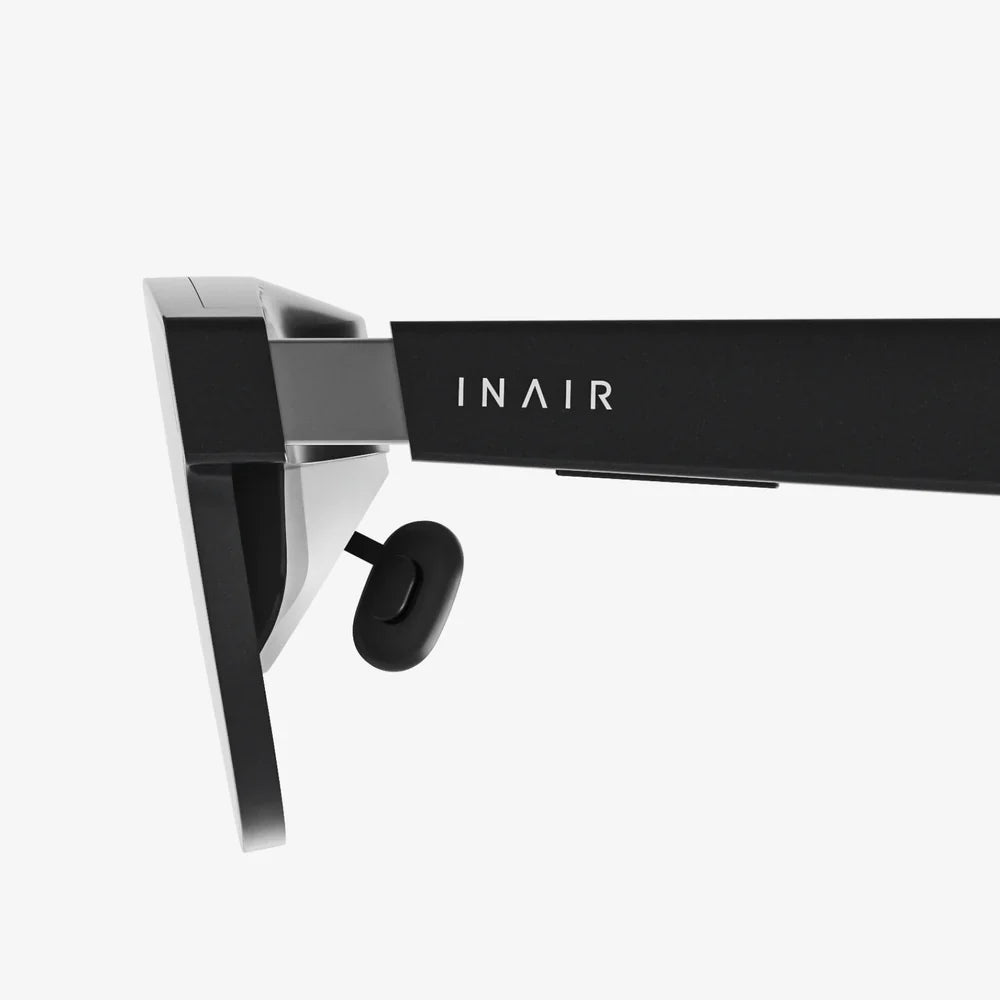
If VR is about replacement, Augmented Reality is about augmentation. AR overlays digital information—such as images, text, or 3D models—onto the user's view of the real world. Unlike VR, AR does not shut out the physical environment; instead, it enhances it by adding a contextual digital layer. This experience is most commonly delivered through smartphone and tablet screens, where the device's camera captures the real world and software superimposes digital content onto it. More advanced AR is enabled through specialized glasses, which project digital imagery directly onto the lenses, allowing for hands-free interaction. From navigation arrows displayed on the road in front of you to trying on virtual furniture in your living room, AR's power lies in its ability to provide information and context exactly when and where it is needed.
Mixed Reality (MR): Where Real and Virtual Coalesce
Mixed Reality is often confused with AR, but it represents a significant technological leap forward. MR is the next step on the spectrum, where digital and physical objects not only coexist but can interact with each other in real-time. In a true MR experience, a virtual ball can bounce off a real-world table, and a digital character can hide behind your physical sofa. This requires a profound understanding of the physical environment, achieved through advanced sensors and cameras that map the space in intricate detail, understanding its geometry, lighting, and surfaces. This environmental understanding allows virtual objects to behave as if they are truly part of the real world, obeying its physics and occluding behind real objects. MR is the blending of worlds, creating a new environment where physical and digital objects are intertwined.
The Engine Room: The Technology Powering XR
The magic of XR doesn't happen by accident. It is powered by a sophisticated convergence of hardware and software technologies working in perfect harmony.
Hardware: The Gateways to New Realities
The primary hardware for experiencing XR are headsets, which range from simple smartphone holders to fully self-contained, powerful computers worn on the face. These devices pack an incredible amount of technology into a small form factor:
- Displays: High-resolution, high-refresh-rate screens placed mere centimeters from the eyes, often using specialized lenses to create a wide field of view.
- Tracking Systems: A combination of internal and external sensors—including gyroscopes, accelerometers, magnetometers, and cameras—that track the position and rotation of the head (6 Degrees of Freedom or 6DoF) to update the view accordingly.
- Cameras: For AR and MR, outward-facing cameras are the eyes that see the real world. For inside-out tracking in VR, they map the environment to understand the user's position within it.
- Processors: Powerful mobile or desktop-grade processors that render complex 3D environments in real-time, requiring immense graphical power to maintain immersion.
- Input Devices: Controllers, hand-tracking cameras, and haptic gloves that translate user actions into digital interactions, providing a crucial link between the user and the experience.
Software: Building the Worlds
On the software side, specialized game engines are the workhorses of XR development, providing the tools to create, render, and manage 3D environments. These platforms include robust physics engines to simulate realism, spatial audio SDKs for convincing soundscapes, and asset stores filled with 3D models and environments. Crucial to AR and MR is computer vision software, which interprets the data from the cameras to identify surfaces, planes, and objects, enabling digital content to be placed and anchored accurately in the real world. This complex software stack is what transforms raw data and code into believable, interactive experiences.
Transforming Industries: The Practical Applications of XR
While entertainment and gaming are the most visible applications, the true potential of XR lies in its capacity to solve real-world problems and enhance capabilities across numerous sectors.
Revolutionizing Education and Training
XR is creating unparalleled opportunities for experiential learning. Medical students can practice intricate surgical procedures on virtual patients without risk, allowing for mistake-driven learning. Mechanics can train on virtual engines, and astronauts can simulate spacewalks. History classes can become immersive journeys through ancient civilizations, and complex scientific concepts can be visualized in 3D, making abstract ideas tangible. This learning-by-doing approach in a safe, repeatable, and cost-effective virtual environment significantly improves knowledge retention and skill acquisition.
Redefining Enterprise and Remote Work
The concept of the office is being reshaped by XR. Remote collaboration is evolving beyond video calls into shared virtual workspaces where colleagues from around the world can meet as lifelike avatars to interact with 3D models, brainstorm on virtual whiteboards, and manipulate data holographically. In fields like architecture and engineering, designers can walk clients through full-scale virtual models of buildings before a single brick is laid, identifying issues and making changes at a fraction of the cost of physical mock-ups. On factory floors, technicians wearing AR glasses can see repair instructions and diagnostic data overlaid directly on the machinery they are fixing, drastically reducing errors and downtime.
Advancing Healthcare and Therapy
The impact of XR on healthcare is profound. Beyond training, it is being used for surgical planning, allowing surgeons to navigate complex anatomies using 3D reconstructions from patient scans. In rehabilitation, VR games make physical therapy for stroke victims or those with mobility issues more engaging and measurable. Perhaps most notably, XR is proving highly effective in mental health treatment, particularly for exposure therapy. Patients with phobias, anxiety, or PTSD can be gradually and safely exposed to their triggers within a controlled virtual environment, empowering them to manage their conditions in new ways.
Enhancing Retail and Customer Experience
The retail sector is leveraging XR to bridge the gap between online shopping and the physical store. Customers can use AR on their phones to see how a new sofa would look in their living room, how a pair of glasses fits their face, or what a new shade of paint would do for a room. Virtual try-on for clothes and accessories is becoming increasingly sophisticated. This not only enhances customer confidence and reduces return rates but also creates engaging, interactive shopping experiences that were previously impossible.
The Future Horizon: Challenges and What Lies Ahead
Despite its rapid advancement, XR technology is still in a relatively nascent stage and faces significant hurdles on its path to widespread adoption. The hardware, while improving dramatically, still needs to become lighter, more comfortable, more powerful, and significantly more affordable to reach a mass consumer audience. A major challenge is overcoming the "social acceptance" barrier—wearing headsets in public is still uncommon. Furthermore, critical questions around data privacy, security, and ethical use must be addressed, especially as these devices collect vast amounts of sensitive biometric and environmental data.
Looking forward, the trajectory is clear. The ultimate goal is the development of true, all-day wearable AR glasses that are as socially acceptable and functionally indispensable as a smartphone. This will require breakthroughs in display technology (like holographic waveguides), battery life, and network connectivity (leveraging 5G and beyond for cloud processing). The concept of the "metaverse," a persistent network of interconnected virtual spaces, is intrinsically linked to the future of XR, promising a future where our digital and physical lives are inextricably linked. The line between user and interface will blur as we move towards more natural interaction paradigms like gesture, voice, and eventually, direct neural interfaces.
We are standing at the precipice of a fundamental shift in how we perceive and interact with information. To define extended reality is to define a new frontier of human experience—a fusion of our physical existence with the infinite possibilities of the digital realm. It is a tool for unparalleled empathy, a canvas for boundless creativity, and a platform that will redefine connection, work, and play. The journey from niche curiosity to central pillar of our computing infrastructure has begun, and its destination promises to reshape our world in ways we are only starting to imagine.
Share:
Least Expensive VR Headset: Your Ultimate Guide to Affordable Virtual Reality
VR Headset Accessories: The Ultimate Guide to Unlocking Your Virtual Potential