


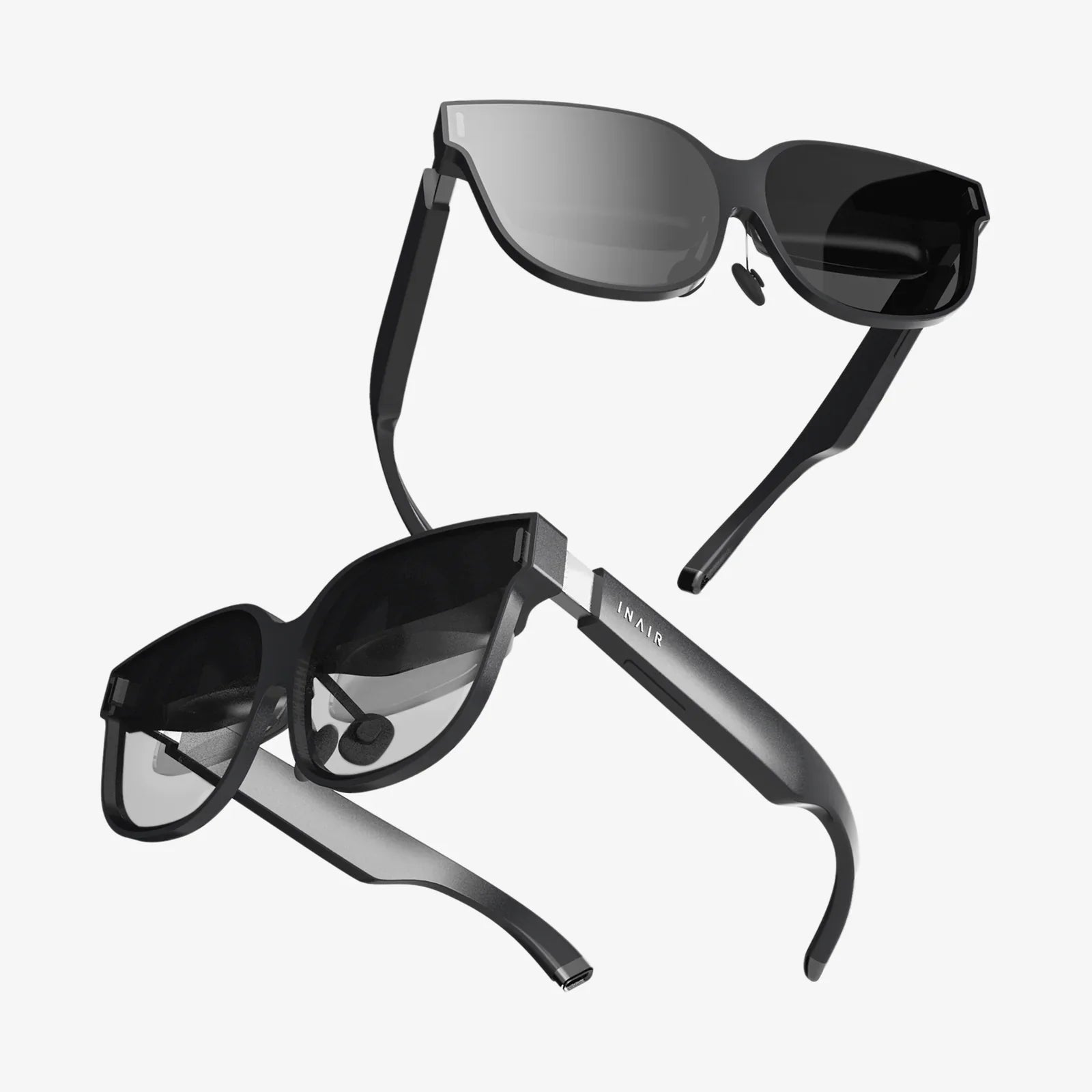
Imagine stepping into a completely different world, from the depths of the ocean to the surface of Mars, without leaving your living room. Now, picture a world where digital dinosaurs roam your local park or repair instructions are overlaid directly onto a broken engine. These are not scenes from a distant sci-fi future; they are the present-day realities powered by two of the most transformative technologies of our time. To understand the seismic shift happening in computing, entertainment, and industry, one must first define virtual reality and augmented reality, the twin pillars of immersive experience.
The Foundational Concepts: A Tale of Two Realities
At their heart, both Virtual Reality (VR) and Augmented Reality (AR) are about altering our perception of the world. However, they approach this goal from fundamentally different angles. The simplest way to define virtual reality and augmented reality is by their relationship with the user's environment.
Virtual Reality is a substitutive technology. It seeks to block out the physical world entirely and transport the user to a simulated, digital environment. This is often achieved through a head-mounted display (HMD) that encompasses the user's field of vision, paired with headphones for immersive audio and motion-tracking sensors to align the digital world with the user's physical movements. The goal is total immersion, making the user feel physically present in a non-physical world.
Augmented Reality, in contrast, is an additive technology. It does not replace the real world but enhances it by superimposing digital information—images, text, 3D models, animations—onto the user's view of their immediate surroundings. The real world remains the foundation, but it is augmented with a layer of interactive digital content. This is most commonly experienced through smartphone cameras, smart glasses, or specialized heads-up displays.
Defining Virtual Reality: A Deep Dive into Digital Worlds
To precisely define virtual reality, we must look beyond the hardware. VR is a computer-generated simulation of a three-dimensional environment that can be interacted with in a seemingly real or physical way by a person using special electronic equipment. The key pillars of a true VR experience are often described as the three I's:
- Immersion: This is the sensation of being physically present in a non-physical world. It is achieved by stimulating the senses, primarily sight and sound, to create a convincing, all-encompassing reality. High-resolution displays, a wide field of view, and precise head-tracking are crucial for maintaining this illusion.
- Interaction: A true VR environment isn't just a 360-degree video; it is interactive. Users can manipulate digital objects, navigate the space, and affect the environment, often through handheld controllers or advanced haptic gloves that provide tactile feedback.
- Imagination: This refers to the design and creative power behind the virtual world. It is the ability of the creators to build compelling, engaging, and believable worlds that captivate the user.
The technology relies on a concept known as the "virtual-physical divide," where the user's brain is convinced to accept the digital reality as their primary reality. This is why high-fidelity graphics, low latency (minimal lag between movement and on-screen response), and spatial audio are non-negotiable for a quality VR experience; any break in this chain can shatter the immersion and cause discomfort.
Defining Augmented Reality: The Art of Enhancing Reality
To define augmented reality is to understand the seamless blending of the digital and the physical. AR is a technology that layers computer-generated enhancements atop an existing reality to make it more meaningful and allow for interaction. The core principle of AR is not to escape reality but to improve upon it, to make it more informative, more entertaining, or more efficient.
Unlike VR, which creates its own reality, AR requires a sophisticated understanding of the user's real-world context. This is achieved through a combination of technologies:
- Computer Vision: This is the "eyes" of AR. Algorithms process the camera's feed to identify objects, surfaces, and spaces. This allows the digital content to be anchored to the real world—for example, placing a virtual chair on a real floor.
- Simultaneous Localization and Mapping (SLAM): SLAM technology allows a device to simultaneously map its environment and pinpoint its own location within that map. This is essential for placing and persisting digital objects in a specific physical location.
- Depth Tracking: Sensors (like time-of-flight cameras or LiDAR) measure the distance to objects, ensuring digital content interacts realistically with the geometry of the physical world, such as being occluded by a real table or appearing to rest on a real surface.
The magic of AR lies in its contextual relevance. The information provided is directly tied to what the user is looking at, making it an incredibly powerful tool for on-the-job training, navigation, and data visualization.
The Spectrum of Experience: From AR to VR and Everything In Between
It is a common mistake to think of AR and VR as strictly binary choices. In reality, they exist on a spectrum known as the Reality-Virtuality Continuum. This model, first proposed in 1994, illustrates a smooth transition from the completely real environment to the completely virtual environment.
On one end, you have the unmodified Real Environment. On the opposite end, you have a fully immersive Virtual Environment. Between these two poles lies Mixed Reality (MR). MR is a term often used to describe environments where physical and digital objects co-exist and interact in real-time. In this continuum:
- Augmented Reality sits closer to the real world. It is primarily a real environment enhanced with digital overlays (e.g., a navigation app showing arrows on the street).
- Augmented Virtuality sits closer to the virtual world. It is a primarily virtual environment that incorporates elements of the real world (e.g., a real person's live video feed integrated into a virtual meeting room).
This continuum helps clarify that these technologies are not rivals but related tools for manipulating our perception. The choice between them depends entirely on the desired outcome: complete escape or contextual enhancement.
Applications Reshaping Our World
The practical applications for these technologies extend far beyond gaming and entertainment. They are poised to revolutionize nearly every major industry.
Virtual Reality Applications
- Training and Simulation: VR provides a safe, controlled, and cost-effective environment for high-stakes training. Surgeons can practice complex procedures, pilots can train for emergency scenarios, and soldiers can rehearse missions in hyper-realistic simulations without any real-world risk.
- Healthcare and Therapy: VR is being used for exposure therapy to treat phobias and PTSD, allowing patients to confront their triggers in a safe setting. It is also used for pain distraction during painful medical procedures and for physical rehabilitation, turning exercises into engaging games.
- Architecture and Design: Architects and clients can "walk through" a building long before the foundation is poured. This allows for unparalleled understanding of scale, space, and design, enabling changes to be made quickly and cheaply in the digital model.
- Remote Collaboration: VR meeting spaces allow distributed teams to collaborate as if they are in the same room, interacting with 3D models and data in ways that are impossible on a flat screen.
Augmented Reality Applications
- Industrial Maintenance and Repair: Technicians can use AR glasses to see step-by-step repair instructions overlaid directly onto the machinery they are fixing, highlighting specific parts and providing real-time data. This drastically reduces errors and training time.
- Retail and E-commerce: Customers can use their smartphones to "try on" clothes, see how furniture would look in their home, or visualize a new coat of paint on their walls before making a purchase, reducing uncertainty and returns.
- Education: AR brings textbooks to life. Students can point a device at a page to see a 3D model of the human heart, a historical event play out on their desk, or a complex mathematical concept visualized in front of them.
- Navigation: AR can project turn-by-turn directions onto the real world through a car's windshield or a user's smartphone, making navigation more intuitive than ever.
The Future is Blended: Challenges and What Lies Ahead
Despite their immense potential, both VR and AR face significant hurdles. For VR, the challenge is achieving true photorealism and "presence" without bulky, expensive hardware, while also solving issues like motion sickness for some users. For AR, the holy grail is developing stylish, socially acceptable glasses with all-day battery life and a display bright enough to work in sunlight.
Furthermore, both technologies raise important questions about privacy, data security, and the psychological effects of blurring the lines between the real and the digital. As these platforms collect vast amounts of visual and spatial data about our lives, robust ethical frameworks will be essential.
The future trajectory points towards a convergence. We are moving towards a world of always-available, context-aware computing. The device itself will fade into the background, and the digital layer will become a seamless, persistent part of our perception. We won't "use" AR or VR; we will simply experience it as an integrated part of our reality, transforming how we work, learn, connect, and perceive the world around us.
The line between the physical and digital realms is not just blurring—it's being actively redefined. As these immersive technologies evolve from niche novelties into central pillars of our digital infrastructure, understanding their core principles is the first step to navigating and shaping the extraordinary future they are building. The next time you look at your world, ask yourself: what would you add to it, or what would you rather escape to?
Share:
How to Update Your VR Headset - A Complete Step-by-Step Guide for Optimal Performance
Budget Friendly VR Headset: Your Ultimate Guide to Affordable Immersion