


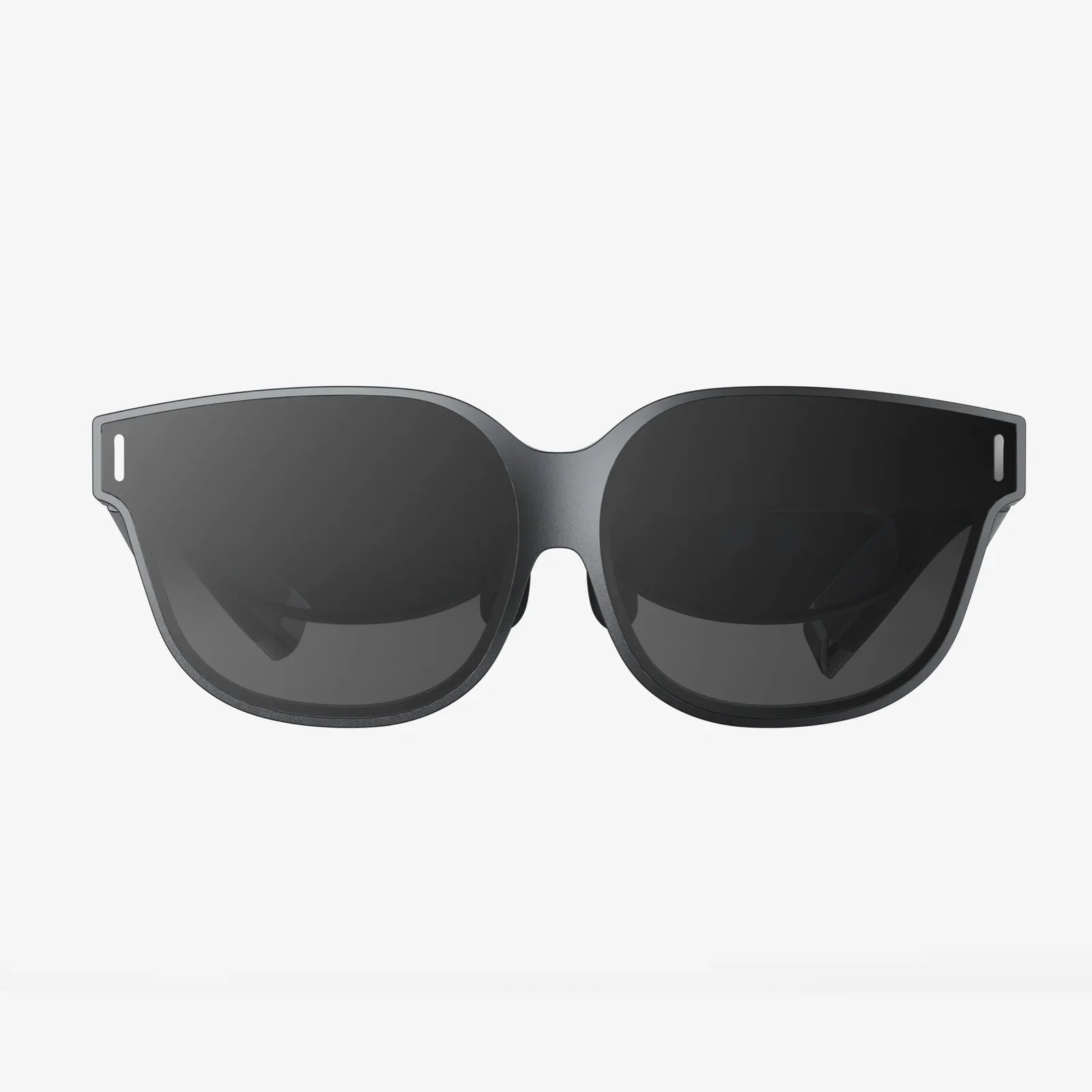
Imagine slipping on a device and instantly being transported. The familiar walls of your room dissolve, replaced by the breathtaking vista of a Martian landscape, the intricate detail of a human cell, or the roaring crowd of a virtual stadium. This is the promise, the magic, and the profound technological leap embodied by the device we are about to define. A virtual reality headset is not merely a screen you wear; it is a portal, an engineered gateway that hijacks your senses to convince your consciousness that you are somewhere you are not. It is the fundamental hardware that makes the dream of virtual reality a tangible, and increasingly accessible, experience.
The Core Components: Deconstructing the Portal
To truly define a virtual reality headset, one must look beyond its sleek exterior and understand the sophisticated symphony of components working in unison. At its most fundamental level, a VR headset is a head-mounted display (HMD) system designed to create a convincing illusion of depth and space.
The Visual Engine: Displays and Lenses
The heart of the visual immersion lies in the twin high-resolution displays, one for each eye. These are not simple screens; they are engineered for low persistence, meaning they flash images incredibly quickly to eliminate motion blur during rapid head movements. Placed between these displays and the user's eyes are specialized lenses. These are not magnifying glasses but complex optical elements that warp the flat image from the screens, correcting the picture into a wide field of view (typically 90 to 120 degrees) that fills your peripheral vision. This stereoscopic vision, presenting slightly different angles to each eye, is what creates the crucial perception of three-dimensional depth.
The Invisible Conductor: Tracking Systems
A static image, no matter how three-dimensional, would break the illusion the moment you moved your head. This is where tracking technology becomes paramount. Precise, low-latency head tracking is the non-negotiable foundation of presence—the feeling of actually being in the virtual environment. Inside-out tracking uses cameras and sensors mounted directly on the headset to observe the surrounding room, mapping its features to understand the headset's position in real space. Outside-in tracking, conversely, uses external sensors or base stations placed in the room to precisely triangulate the position of the headset. Both systems serve the same critical purpose: translating your real-world movements one-to-one into the virtual world with imperceptible delay. Any lag, or latency, between your movement and the visual update results in disorientation and simulator sickness, shattering the fragile illusion.
The Bridge to the Body: Controllers and Haptics
While the headset tracks your gaze, true interaction requires your hands. VR controllers are sophisticated input devices in their own right. They are packed with sensors—accelerometers, gyroscopes, and often haptic feedback motors—that track their position and orientation in space. They allow you to reach out, grab, throw, and manipulate the virtual world, extending your agency beyond mere observation. This haptic feedback, the subtle vibration you feel when you pull a virtual trigger or touch a virtual wall, is a key layer of sensory input that grounds the experience in tactile sensation.
Beyond Sight: The Quest for Full Sensory Immersion
Defining a virtual reality headset is increasingly about more than just vision. The frontier of VR technology is the expansion into other senses to create a truly holistic experience.
Hearing in 3D Space
Integrated or companion headphones are essential for spatial audio or 3D audio processing. This technology mimics how sound waves interact with the human head and ears (Head-Related Transfer Functions or HRTF). A sound originating from your virtual left will reach your left ear slightly sooner and with a different frequency signature than your right ear. This allows your brain to pinpoint the location of sounds in the 3D space around you, making a creaking door behind you genuinely unsettling or the whisper of a character next to you intimately real. It is a powerful, and often underestimated, tool for selling the reality of a virtual space.
The Future of Feel: Haptics and Beyond
The next evolution involves more advanced haptics, moving beyond simple controller vibrations to full-body suits that can simulate touch, pressure, and even temperature changes. Experimental technology explores galvanic vestibular stimulation, which uses gentle electrical signals to the inner ear to artificially simulate the feeling of acceleration and balance shift, potentially allowing users to "feel" a virtual rollercoaster drop while standing still. While not standard in consumer headsets today, these technologies point to a future where the definition of a VR headset may expand to include a full-body apparatus.
More Than Games: The Expansive Applications of VR
While popularized by gaming, the utility of a virtual reality headset stretches far beyond entertainment. It is a tool for productivity, learning, and connection.
Revolutionizing Education and Training
In education, VR headsets offer unparalleled experiential learning. Medical students can practice complex surgical procedures on virtual patients, making mistakes without consequence. History students can walk through ancient Rome. Mechanics can disassemble and reassemble complex engine models life-size before ever touching a physical tool. This "learning by doing" in a safe, repeatable, and scalable virtual environment is transformative.
Transforming Enterprise and Design
Architects and engineers use VR to walk clients through unbuilt designs at a 1:1 scale, providing a sense of space and flow that blueprints cannot convey. Remote collaboration takes on a new meaning as teams from across the globe can meet in a shared virtual workspace, interacting with 3D models and data visualizations as if they were physical objects in the same room.
Empowering Healthcare and Therapy
The therapeutic potential is vast. VR exposure therapy is successfully treating phobias and PTSD by allowing patients to confront their triggers in a controlled, gradual manner. Physical therapists use engaging VR games to motivate patients through repetitive rehabilitation exercises. VR is even being used for pain distraction, immersing burn victims in soothing, cold environments to reduce their perceived pain during wound care.
The Human and Societal Implications
As with any powerful technology, the proliferation of virtual reality headsets brings profound questions and considerations.
The Psychological Impact of Presence
The intense feeling of presence can have lasting psychological effects. Experiences in VR can feel real, and the memories created can be stored by the brain similarly to real-world memories. This raises questions about emotional manipulation, the potential for new forms of trauma, and the blurring line between virtual acts and their real-world consequences. It also offers incredible potential for empathy-building, allowing people to experience the world from another person's perspective.
Privacy in a Data-Hungry Medium
VR headsets are arguably the most intimate data-collection devices ever made. They don't just track what you click; they track your gaze (what holds your attention), your biometric responses (through pupil dilation and heart rate), your precise movements, and the layout of your personal space. This biometric data is incredibly valuable and sensitive, raising massive privacy concerns about how it is stored, used, and potentially exploited.
The Digital Divide and Accessibility
As VR becomes a platform for work, socializing, and education, a new "digital divide" emerges between those who can afford high-quality immersive technology and those who cannot. Furthermore, designing for accessibility is paramount. Experiences must be adaptable for users with different physical abilities, avoiding motion triggers that can cause sickness and providing alternative control schemes.
The Horizon: Where the Technology is Headed
The definition of a virtual reality headset is a moving target, constantly evolving. Several key trends are shaping its future. Standalone, wireless headsets are eliminating the tether to powerful external hardware, increasing freedom and accessibility. Advancements in display technology, like varifocal lenses that dynamically adjust to where your eyes are focused, and eye-tracking that enables foveated rendering (drastically improving performance) are making visuals more realistic and comfortable. The ultimate goal on the horizon is the seamless merger of virtual and physical reality through advanced augmented reality (AR) and mixed reality (MR) functionalities, all potentially integrated into a single, sleek form factor.
The journey to define a virtual reality headset reveals it as far more than a gadget. It is the culmination of decades of research in optics, computing, and human-computer interaction. It is a key that unlocks doors to impossible places, a canvas for creators, a tool for innovators, and a mirror reflecting both our technological ambitions and our societal responsibilities. As this portal continues to evolve, it challenges us to not only ask "what can we build?" but also, more importantly, "what world do we want to step into?"
Share:
Best Artificial Intelligence Tools: A Comprehensive Guide to Elevating Your Workflow
AI Commerce Tools Are Revolutionizing the Entire Customer Journey