Imagine a world where digital information doesn't just live on a screen but is seamlessly woven into the fabric of your physical reality. This isn't science fiction; it's the present and future promised by a revolutionary technology rapidly moving from niche novelty to mainstream utility. The journey to understanding this transformative force begins with a clear and comprehensive description of augmented reality.
Defining the Digital Overlay: What Exactly is Augmented Reality?
At its most fundamental level, a description of augmented reality (AR) is a technology that superimposes a computer-generated overlay—comprising images, sounds, text, and other data—onto a user's real-world view in real-time. Unlike Virtual Reality (VR), which creates a completely immersive, artificial digital environment that replaces the real world, AR enhances and augments the user's existing environment. It acts as a dynamic layer of intelligence placed on top of the physical world, blending digital and physical realities to create a unified, interactive experience. The core objective of AR is to provide a contextually rich, interactive interface where digital information becomes a natural part of a person's perception of reality, thereby simplifying tasks, providing deeper insights, and enabling new forms of interaction and entertainment.
The Architectural Pillars: How Augmented Reality Systems Function
The magic of AR doesn't happen by chance; it is the result of a sophisticated interplay between hardware and software components. A complete description of augmented reality must include an understanding of these core technological pillars.
1. Sensors and Cameras
These are the eyes of the AR system. Cameras, often combined with depth sensors like LiDAR, capture the live video feed of the user's surroundings. This visual data is the primary input, the canvas upon which the digital content will be painted. These sensors also gather critical information about the environment's geometry, distances, and physical properties.
2. Processing Power
AR devices, whether powerful headsets or sophisticated smartphones, contain processors that act as the brain. This computational powerhouse runs complex algorithms for simultaneous localization and mapping (SLAM), object recognition, and gesture tracking. It analyzes the sensor data in real-time to understand the environment and determine precisely where and how to place digital objects so they appear stable and anchored in the real world.
3. Projection and Display
This is the component that makes the augmentation visible to the user. Display technologies vary widely:
-
Heads-Up Displays (HUDs): Often used in automotive contexts, projecting information like speed onto the windshield.
-
Smartphone and Tablet Screens: The most accessible form, using the device's camera and screen to present an augmented view.
-
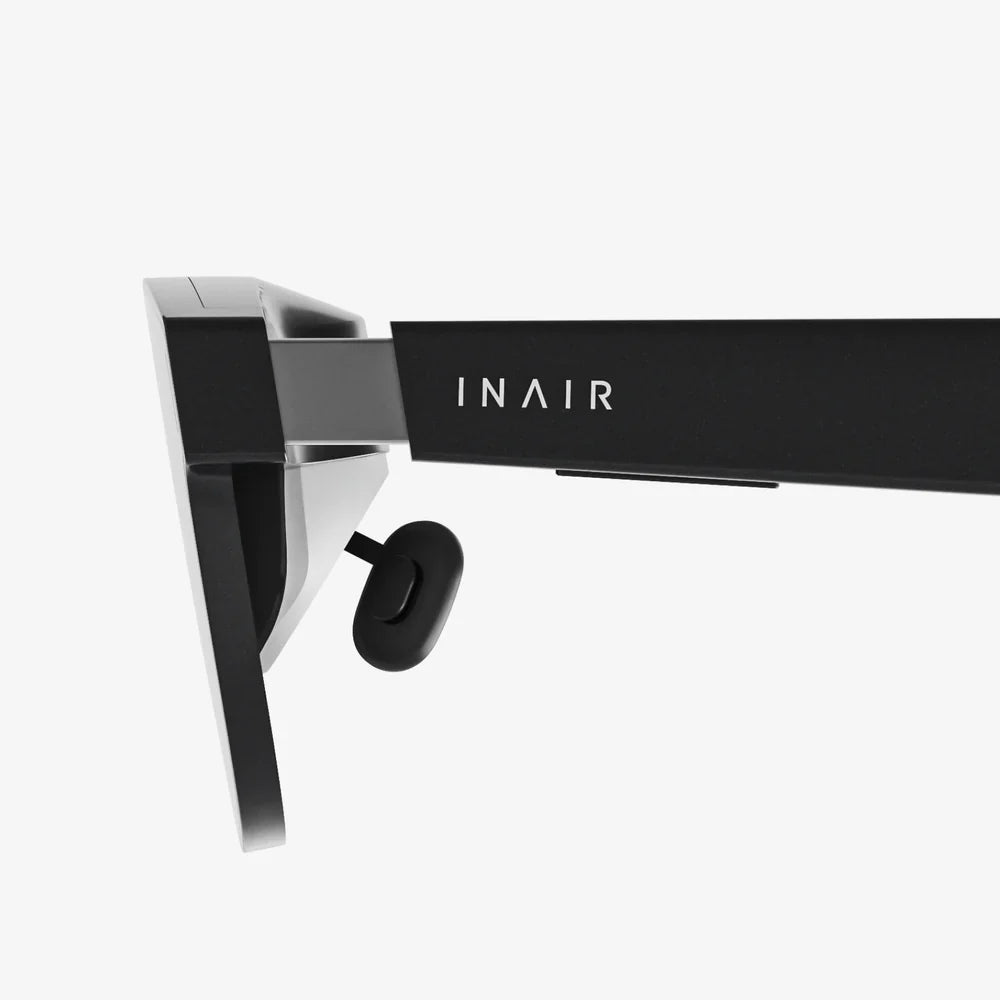
Smart Glasses and Lenses: Wearable devices that project imagery directly onto the user's retina or use transparent lenses to overlay graphics onto their field of vision.
-
Spatial Projectors: Systems that project digital imagery directly onto physical surfaces like walls or tables.
4. Connectivity and Networking
For many AR applications, a connection to the cloud or a local network is essential. This allows for the retrieval of dynamic data (e.g., real-time navigation updates, product information from a database), complex computational offloading, and shared multi-user experiences where several people can see and interact with the same digital objects in a shared physical space.
Bridging Realities: The Critical Technologies Behind the Scenes
Several advanced technologies work in concert to make a coherent AR experience possible.
Simultaneous Localization and Mapping (SLAM)
SLAM is arguably the most crucial technology for modern AR. It is the algorithm that allows a device to simultaneously understand its own position and orientation in an unknown environment while also mapping the geometry of that environment. By identifying feature points in the visual data, SLAM creates a point cloud map, enabling the device to place and persist digital content accurately, ensuring a virtual vase doesn't slide off a real table when the user moves.
Depth Tracking and 3D Reconstruction
To interact convincingly with the real world, AR systems must understand it in three dimensions. Depth-sensing cameras (like time-of-flight sensors or structured light systems) measure the distance to every point in the scene, creating a depth map. This allows digital objects to be occluded by real-world objects (e.g., a virtual character walking behind a real chair), a key factor for achieving believability.
Object and Image Recognition
Powered by machine learning and computer vision, AR systems can be trained to recognize specific objects, images (known as markers), or surfaces. For instance, an AR app might recognize a movie poster and trigger a trailer to play over it, or identify a specific machine part and display its assembly instructions.
Gesture and Gaze Tracking
To move beyond simple viewership into true interaction, AR systems employ cameras to track user input. This can include hand gestures (pinching to select, swiping to navigate menus) or even tracking where the user is looking (gaze control) to initiate commands, creating a intuitive and hands-free user interface.
A World of Applications: How AR is Transforming Industries
The true power of AR is revealed not in its technical description but in its practical application. It is a horizontal technology, disrupting and enhancing a vast spectrum of fields.
Revolutionizing Retail and E-Commerce
AR is solving one of online shopping's biggest drawbacks: the inability to try before you buy. Consumers can now use their smartphones to see how a new sofa would look in their living room, how a pair of glasses fits their face, or how a shade of paint changes a room's ambiance. This "virtual try-on" capability drastically reduces purchase uncertainty and return rates, creating a more confident and engaging shopping experience.
Transforming Manufacturing and Field Services
In industrial settings, AR is a powerful tool for efficiency and accuracy. Technicians wearing AR glasses can see schematics and repair instructions overlaid directly onto the equipment they are fixing, guiding them through complex procedures hands-free. Warehouse workers can have optimal picking routes and item information displayed in their line of sight, dramatically speeding up logistics. Designers and engineers can visualize and interact with full-scale 3D prototypes long before physical models are built.
Advancing Healthcare and Medicine
AR is providing surgeons with "X-ray vision," overlaying critical patient data like ultrasound imagery or 3D reconstructions of tumors directly onto their field of view during procedures, improving precision and outcomes. It is also revolutionizing medical training, allowing students to practice complex surgeries on virtual patients, and aiding in physical therapy by providing interactive guides for exercises.
Redefining Education and Training
AR brings learning to life. Instead of reading about ancient Rome, students can explore a 3D model of the Colosseum on their classroom table. Complex anatomical structures can be studied in 3D, and mechanical processes can be animated step-by-step. This interactive, visual learning paradigm enhances engagement and improves knowledge retention.
Enhancing Navigation and Wayfinding
Turn-by-turn navigation is evolving from a 2D map to a 3D guidance system. AR navigation apps can overlay directional arrows and street names onto the live view from a smartphone camera, making it intuitive to find your way in a complex airport or a new city. This technology is also being integrated into vehicle windshields, projecting speed and directions onto the road ahead.
The Path Forward: Challenges and The Future of Augmented Reality
Despite its rapid advancement, the journey towards perfect, ubiquitous AR faces significant hurdles. Technical challenges include improving battery life for wearable devices, increasing field of view to more naturally match human vision, and enhancing tracking accuracy in all lighting conditions. There are also societal and ethical concerns regarding data privacy, digital addiction, and the potential for reality distortion or spam-like digital advertisements cluttering our physical world.
However, the future trajectory is incredibly promising. The eventual goal is the development of true AR contact lenses and eventually neural interfaces, making the technology as seamless and unobtrusive as wearing ordinary glasses. The concept of the "spatial web" or "metaverse" envisions a persistent digital layer over the entire world, where information, entertainment, and social connection are anchored to locations and objects, accessible through AR interfaces. This will fundamentally change how we work, socialize, learn, and interact with our environment, blurring the line between the digital and the physical until the two become inextricably and usefully linked.
The line between what is real and what is digital is not just blurring—it's being deliberately and intelligently merged. This new synthesized reality offers a paradigm shift in human capability, offering unparalleled access to information and new ways to create, connect, and solve problems. The next time you look at the world around you, consider the invisible layer of data and possibility waiting to be unlocked; the future is already here, waiting for you to see it.


Share:
How to Setup Augmented Reality: A Comprehensive Guide for Developers and Creators
Augmented Reality in French: A Cultural and Technological Renaissance