


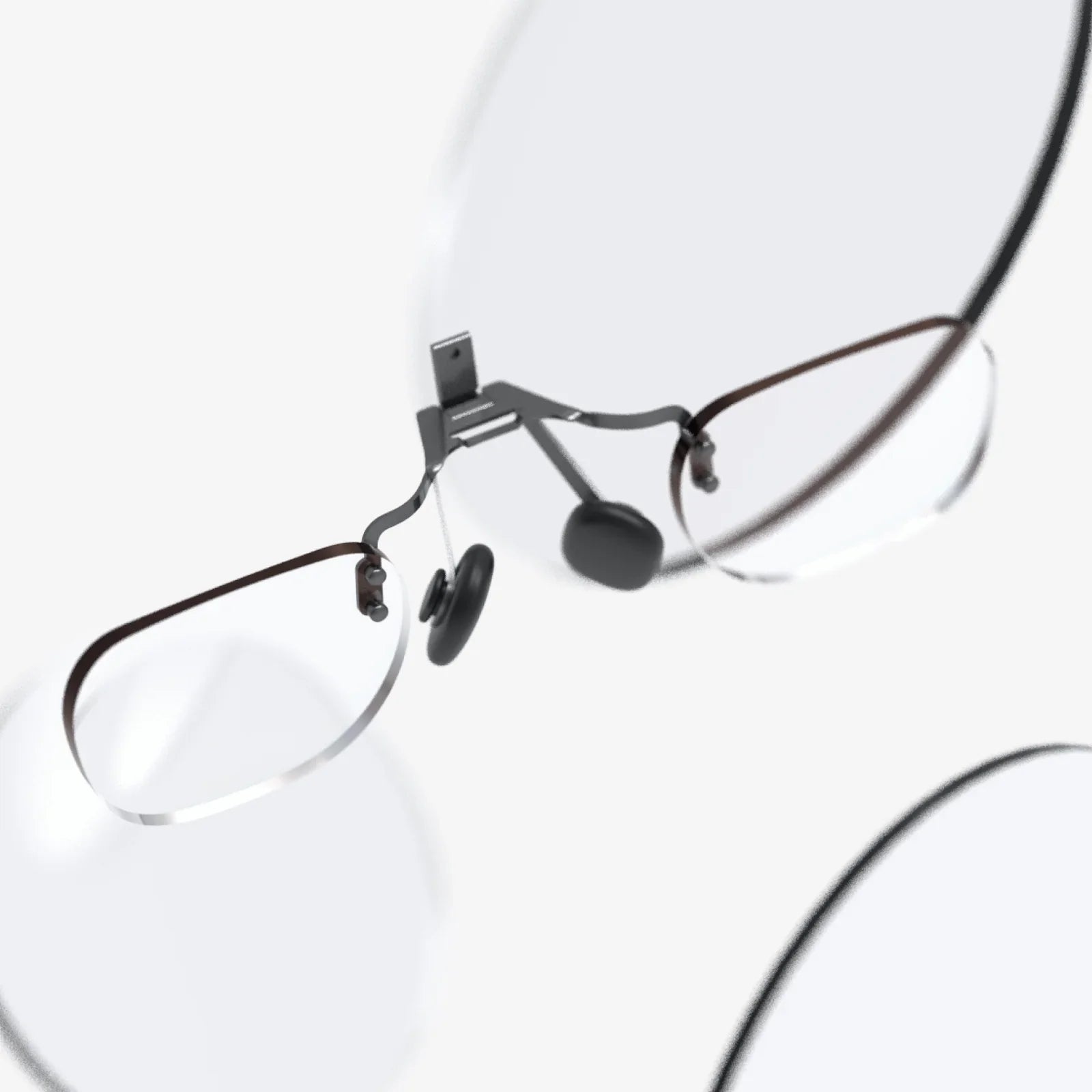
Imagine a world where digital information doesn't just live on a screen but is woven into the very fabric of your reality, where your morning run is guided by floating arrows on the pavement, your cooking tutorial projects animated chefs onto your countertop, and historical figures step out of museum exhibits to tell their own stories. This is the promise of augmented reality (AR), a technology poised to revolutionize how we interact with information, our environment, and each other. But this future isn't built on code alone; it is meticulously crafted through a new, complex, and profoundly human-centered discipline known as design for augmented reality. To unlock its true potential, we must move beyond seeing AR as a simple overlay and start designing for a world where the digital and physical are inextricably linked.
The Fundamental Shift: From Flat Screens to Spatial Canvases
Design for augmented reality represents a paradigm shift away from the two-dimensional, bounded interfaces of traditional graphic and web design. For decades, designers have operated within the safe, predictable confines of a rectangle—a phone, a monitor, a tablet. The rules were well-established: pixels, click events, scroll behaviors, and fixed viewports. AR shatters this frame. The new canvas is the entire world, and the user's field of view becomes the viewport, which is dynamic, unpredictable, and unique to every individual at every moment.
This shift demands a new foundational philosophy. The core question is no longer "How do I layout elements on this page?" but rather "How do I integrate digital objects into a user's physical space in a way that feels intuitive, useful, and real?" This requires a deep consideration of three-dimensional space, environmental context, user movement, and physics. A successful AR experience doesn't feel like a layer on top of the world; it feels like a natural part of it.
Core Principles of Effective AR Design
To navigate this new spatial frontier, designers must adhere to a set of core principles that prioritize user comfort, environmental awareness, and seamless integration.
User-Centricity and Comfort Above All
The user's physical and psychological comfort is the absolute highest priority. Poorly designed AR can cause disorientation, motion sickness (often called simulator sickness), and eye strain. To mitigate this, designers must:
- Ensure Rock-Solid Tracking: The digital content must remain locked in place in the real world. Jittery, drifting, or unstable objects break immersion and cause discomfort. This requires a deep understanding of simultaneous localization and mapping (SLAM) and the limitations of different tracking technologies.
- Respect Personal Space: Avoid placing critical interactive elements too close to the user's face. Maintain a comfortable zone of interaction, typically beyond arm's reach for passive content and within arm's reach for interactive elements.
- Design for Gaze and Gesture: Interaction models are moving beyond the tap and swipe. Design must account for how users will navigate and select options using their gaze (as a cursor) and simple, ergonomic hand gestures that feel natural and are not physically taxing (often called "gorilla arm" syndrome).
Context is King: Designing for the Environment
An AR experience is meaningless without its environmental context. The physical space is not just a backdrop; it is an active ingredient in the experience. Effective design for augmented reality requires the digital layer to be aware of and responsive to its surroundings.
- Spatial Understanding: The experience must understand the geometry of the world—the planes of the floor, tables, and walls. This allows for realistic occlusion (where a digital object can be hidden behind a real couch) and physics-based placement.
- Adaptive Content: The information presented should be relevant to the user's location and what they are looking at. A design pointing out historical facts on a city street is powerful; the same information appearing in a user's living room is confusing and irrelevant.
- Lighting and Shadows: For an object to feel "real," it must react to the real world's lighting conditions. This means dynamically casting shadows and having its own surfaces illuminated by ambient light sources. A bright, sunny virtual object in a dimly lit room will always feel fake and out of place.
Bridging the Gap: The Magic of Seamless Integration
The ultimate goal of design for augmented reality is to create a magical sense of presence—the undeniable feeling that the digital object truly exists in your space. This magic is achieved through meticulous attention to detail that tricks the brain into suspending its disbelief.
- Physics and Materiality: Digital objects should behave like physical ones. They should have apparent weight, texture, and density. They should respond to forces, colliding with real-world objects (if the experience calls for it) and coming to rest in a believable manner.
- Sound Design: Spatial audio is a critical yet often overlooked component. Sounds should emanate from the digital object's location in 3D space, changing volume and directionality as the user moves their head, further anchoring the object in reality.
- Purposeful Abstraction: Not everything needs to be photorealistic. For data visualization or instructional content, clearly abstracted graphics and icons are often more effective and legible than realistic models. The key is consistency and clarity within the experience's own visual language.
The Designer's Evolving Toolkit and Process
The tools and workflows for AR design are rapidly evolving, moving beyond traditional static mockups. The process is inherently iterative and proto-typing heavy.
- Spatial Prototyping: Tools now allow designers to create low-fidelity 3D mockups and experience them in context through head-mounted displays or even on smartphones. This is essential for testing scale, placement, and user flow in the actual environment where the app will be used.
- Storyboarding in 3D: Instead of linear comic strips, storyboards for AR must consider multiple viewpoints and user movements, mapping out potential paths and interactions within a volumetric space.
- Cross-Disciplinary Collaboration: Designers can no longer work in a silo. Effective design for augmented reality requires deep, continuous collaboration with 3D artists, UX researchers, audio engineers, and software developers from the very inception of a project.
Navigating the Inherent Challenges
The path to creating great AR experiences is fraught with technical and ethical challenges that designers must confront head-on.
- The Onboarding Paradox: How do you teach users to interact with a completely new interface范式 without cumbersome tutorials? The best designs use intuitive, discoverable interactions and gradual contextual cues to guide the user naturally.
- Accessibility and Inclusivity: Designing for diverse physical abilities is more crucial than ever. Considerations must be made for users with limited mobility, visual impairments, or hearing loss, ensuring AR does not become an exclusionary technology.
- Privacy and Security: AR devices, with their always-on cameras and microphones, collect unprecedented amounts of data about a user's environment. Designers have a responsibility to advocate for transparent data usage policies and to build experiences that respect user privacy by default.
- Digital Litter: As AR becomes pervasive, the potential for virtual spam—unwanted advertisements and graphics cluttering our vision—is a real danger. Ethical design must focus on value-added content that enhances reality, not pollutes it.
The Future Horizon: Beyond the Smartphone
While much of today's AR is experienced through handheld devices, the future lies in wearable technology like smart glasses. This transition will be the true test of the principles of design for augmented reality.
- Always-Available, Always-On: Glasses-form AR will move interactions from intentional, app-based sessions to continuous, ambient computing. Design will shift from designing "apps" to designing persistent, contextual agents and information streams.
- The Disappearing Interface: The ultimate goal is for the technology to fade into the background. The best interface will be no interface at all—just the right information, at the right time, in the right place, presented so intuitively that it feels like a thought.
- Social and Collaborative AR: The most powerful applications will be those that connect people. Designing shared experiences where multiple users can see and interact with the same digital objects in real time will unlock new forms of remote collaboration, social connection, and entertainment.
The journey into this spatial computing era is just beginning. It demands a new generation of designers—spatial thinkers who are part artist, part technologist, and part humanist. They must be masters of illusion, crafting experiences that feel less like using a tool and more like unlocking a new layer of human perception. By embracing the core tenets of user comfort, environmental context, and seamless integration, we can ensure that the augmented world we build is not only technologically impressive but also intuitive, ethical, and profoundly empowering. The canvas is vast, the rules are being written, and the opportunity to design the future of reality itself is waiting.
Share:
What Is Augmented Reality in Simple Terms: A Beginner's Guide to the Digital Overlay
How Does Augmented Reality Work Step-by-Step: A Deep Dive into Digital Overlays