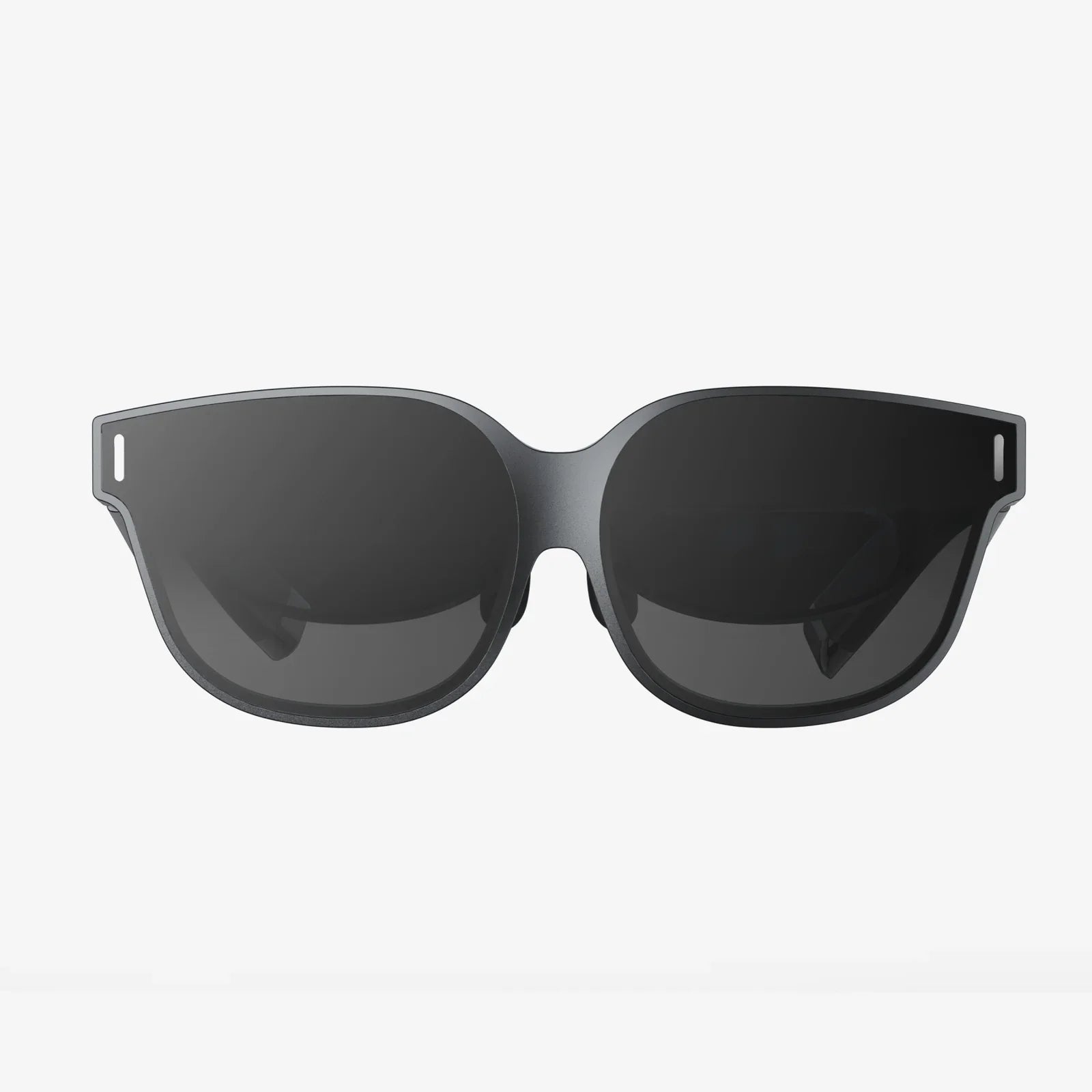
Imagine a world where your morning coffee mug gently glows to signal an incoming calendar reminder, your running shoes project a holographic pacekeeper onto the pavement beside you, and your smart glasses overlay a forgotten colleague's name during a crucial business meeting. This isn't a scene from a distant sci-fi film; it is the imminent future being meticulously architected in laboratories today, a future where the digital and physical universes cease to be separate realities and instead become a single, cohesive experience. The frontier of this convergence is being pioneered at the intersection of next-generation Internet of Things (IoT), advanced wearables, and the sophisticated design of virtual content, a domain where institutions like the Massachusetts Institute of Technology (MIT) are laying the foundational groundwork. The challenge is no longer just about making devices smarter or screens brighter; it is about designing an entirely new language of interaction, one that is intuitive, contextual, and, above all, human-centric.
The Confluence of Three Technological Titans
To understand the magnitude of this shift, we must first deconstruct the three core components. Next-generation IoT moves beyond simple connected appliances. It envisions a vast, intelligent ecosystem of everyday objects—from chairs and walls to entire buildings—embedded with sensing, processing, and communication capabilities. These are not merely 'smart' in isolation; they are hyper-aware of their context, their users, and each other, forming a responsive fabric woven into our environment.
Simultaneously, wearables are evolving from wrist-bound fitness trackers and notification relays into sophisticated, multi-modal computational platforms. Think discreet epidermal patches monitoring biomarkers, advanced hearables with bone conduction and spatial audio, and elegant smart glasses offering high-resolution optical displays. These devices are becoming our constant, intimate companions, serving as the primary gateway between our physical selves and the digital dataosphere.
Bridging these two worlds is virtual content. This term expands far beyond VR games and AR filters. It encompasses any digitally generated information, interface, or object—a 3D model of a heart for a medical student, real-time translation subtitles floating on a street sign, or a ghostly image of a historian guiding you through a museum exhibit. The design of this content is paramount; it must feel less like a pop-up ad and more like a natural part of the world.
Core Design Principles from the Forefront of Research
The research emerging from labs focused on this intersection, including those at MIT, points to a new set of core design principles that are critical for success.
Contextual Integrity and Ambient Intelligence
The most jarring virtual experiences are those that are irrelevant or disruptive. Next-gen systems must possess what researchers call contextual integrity. A device must understand not just where you are, but what you are doing, who you are with, and even your emotional state. Is the user in a quiet library, on a noisy construction site, or in the middle of a conversation? The design of the virtual content must adapt accordingly. This requires a shift from ambient computing to true ambient intelligence—systems that anticipate needs and provide information proactively yet unobtrusively. The goal is to move from user-commanded interactions (“Hey device, show me…”) to system-suggested, context-aware enhancements that feel like a natural extension of thought.
Spatial Registration and Persistent Alignment
For virtual content to feel real, it must obey the laws of physics. This means perfect spatial registration—a virtual vase placed on a physical table must stay on that table as you walk around it, occluded correctly by real objects that pass in front of it. Furthermore, this alignment must be persistent. If you place a virtual note on your refrigerator door, it should still be there tomorrow and the day after. This requires a shared, constantly updated spatial map of the environment, collaboratively built and maintained by IoT sensors in the room and the wearables of its occupants. This creates a unified, persistent digital layer over our physical world, a concept often referred to as the 'metaverse' in its purest, most utilitarian form.
Multi-Modal Interaction and Calm Technology
Relying solely on visual overlays or touchscreens will lead to cognitive overload. The next paradigm is multi-modal interaction. Information should flow seamlessly across different senses. A smart IoT lamp might pulse gently to indicate a delivery at the door, while your wearable ring provides a subtle haptic nudge. Your hearables could deliver a personalized audio cue, all working in concert to convey information without demanding your full visual attention. This philosophy aligns with Mark Weiser's original vision of calm technology, where technology recedes into the background of our lives, informing us but not overwhelming us. The design must prioritize the periphery of our attention, engaging our senses in a gentle, nuanced dance rather than a constant barrage of alerts.
Ethical by Design: Privacy, Security, and Agency
Perhaps the most critical principle is embedding ethics directly into the design process. An ecosystem where every object senses and every wearable monitors is a privacy nightmare waiting to happen. Research emphatically argues for privacy-by-design and security-by-design frameworks. This includes techniques like on-device processing (keeping data local), differential privacy (obscuring individual data in aggregate sets), and clear, intuitive user controls over data sharing. Users must have full agency—the ability to see what data is being collected, understand how it is used, and easily opt out of features they find intrusive. Without trust, the entire ecosystem collapses.
The Architectural Backbone: Sensing, Processing, and Connectivity
These elegant user experiences are built upon a incredibly complex architectural backbone. Next-gen wearables will incorporate a suite of advanced sensors: LiDAR for depth mapping, event-based cameras that only capture movement to save power, and hyperspectral sensors that can analyze material composition. IoT devices will act as anchor points, providing supplementary sensing and processing power, creating a distributed computational network.
Processing will happen across a continuum—from the wearable itself (on-device AI for immediate response) to nearby IoT hubs (edge computing for more complex tasks) and, when necessary, the cloud. This federated approach is essential for low latency, which is critical for maintaining the illusion that virtual content is real. A laggy hologram instantly shatters immersion.
Connectivity is the glue. While 5G and future 6G networks promise the high bandwidth and low latency needed for these data-intensive applications, local mesh networks like ultra-wideband (UWB) will be crucial for the precise, centimeter-level positioning required for spatial registration between devices.
Overcoming the Formidable Challenges
The path forward is fraught with challenges. Power consumption remains the Achilles' heel of wearables. Driving high-resolution displays and powerful processors quickly drains small batteries. Innovations in low-power displays, efficient chipsets, and perhaps even energy harvesting from body heat or movement are essential.
Interoperability and Open Standards are another monumental hurdle. For a user's smart glasses, their connected car, and their office's IoT system to work together seamlessly, they must speak a common language. The current landscape of walled gardens and proprietary protocols is antithetical to this vision. A push for open standards, perhaps championed by academic and industry consortia, is non-negotiable.
Finally, there is the challenge of the social contract. How do we design these experiences to be socially acceptable? Does someone have the right to record a conversation on their smart glasses in a public space? How do we avoid a new digital divide? These are not purely technological questions but societal ones that require broad dialogue and thoughtful regulation.
Glimpsing the Future: From Labs to Life
The research prototypes emerging today offer thrilling glimpses into this future. Imagine assisted living facilities where IoT sensors detect a fall and virtual guides appear on a resident's glasses to help them through recovery exercises. Envision factories where maintenance technicians see schematics and safety warnings overlaid directly on machinery, with expert guidance streamed from across the globe. Picture urban environments where navigation lines are projected onto the sidewalk, and historical buildings digitally reconstruct their past facades for interested passersby.
In healthcare, continuous monitoring through epidermal IoT patches and smart clothing could provide unprecedented insights into personal health, with virtual interfaces allowing doctors and patients to explore complex medical data in an intuitive, 3D space. In education, students could dissect a virtual frog on their physical desk or walk through a historical battlefields, all from their classroom.
The work being done to design virtual content for nextgen IoT and wearables is, at its heart, profoundly humanistic. It is not about replacing reality with a digital simulacrum, but about augmenting our human capabilities—our perception, our cognition, our ability to connect and create. It is about building a world where technology understands us so well that it empowers us to be more present, more informed, and more capable in our physical lives. The blueprint is being drawn; the future is waiting to be built.
We stand on the precipice of a new era of computing, one that promises to dissolve the barriers between our minds and the digital realm, transforming every interaction, every object, and every space into a potential canvas for intelligence. The seamless integration of data into our physical lives will not just change how we work and play; it will fundamentally redefine what it means to be human in an increasingly digital world. The devices themselves will fade into the background, but the experiences they enable will become the unforgettable foreground of our daily existence, making the once-magical feel utterly and beautifully mundane.