


Imagine a world where digital information doesn't just live on a screen but is seamlessly woven into the very fabric of your physical reality. This is the promise of augmented reality (AR), a technology not of distant science fiction, but of our present and accelerating future. It’s a paradigm shift in how we interact with data, our environment, and each other, and understanding its intricacies is the first step to navigating the new world it is building around us.
The Core Concept: Blending Realities
At its essence, augmented reality is a technology that superimposes a computer-generated overlay—comprising images, sounds, haptic feedback, and other sensory enhancements—onto a user's real-world view. Unlike virtual reality (VR), which creates a completely immersive, artificial digital environment, AR starts with the real world and adds to it. The key differentiator is that AR allows the user to remain present in their physical surroundings while interacting with virtual objects and information. This creates a composite view that enriches the user’s perception of reality rather than replacing it.
A Journey Through Time: The Evolution of AR
The conceptual roots of AR are deeper than many realize. In 1968, computer scientist Ivan Sutherland, with the help of his student Bob Sproull, created the first head-mounted display system, nicknamed "The Sword of Damocles." It was a primitive, monstrously heavy apparatus that hung from the ceiling and displayed simple wireframe graphics, but it laid the foundational idea. The term "augmented reality" itself was coined much later, in 1990, by researchers Thomas P. Caudell and David Mizell while working at Boeing to assist assembly line workers with complex wiring schematics. The technology remained largely confined to research labs and high-budget industrial and military applications for decades due to prohibitive costs and technological limitations. The true catalyst for its mainstream emergence was the smartphone revolution. The proliferation of powerful, sensor-packed mobile devices provided a ubiquitous platform for AR experiences, democratizing access and sparking a wave of innovation that continues to this day.
How It Works: The Technological Pillars of AR
The magic of AR is not magic at all; it is the sophisticated orchestration of hardware and software working in concert. The process can be broken down into several critical technological components.
Sensors and Cameras
These are the eyes of an AR system. Cameras capture the live video feed of the user's environment. Meanwhile, a suite of sensors—including accelerometers, gyroscopes, magnetometers (digital compasses), and, in more advanced systems, LiDAR (Light Detection and Ranging) scanners—work tirelessly to understand the device's position, orientation, and movement in space. This data is crucial for anchoring digital content convincingly in the real world.
Processing Power
The raw data from the sensors is meaningless without interpretation. This is where the device's central processing unit (CPU), graphics processing unit (GPU), and, increasingly, specialized AR processors come into play. They perform the immense computational heavy lifting required for real-time tasks like simultaneous localization and mapping (SLAM), object recognition, and rendering high-fidelity 3D graphics.
Projection and Display Systems
This is how the user sees the augmented world. Different display methods offer varying levels of immersion:
- Smartphone and Tablet Displays: The most common method, using the device's screen to show the camera feed with digital overlays.
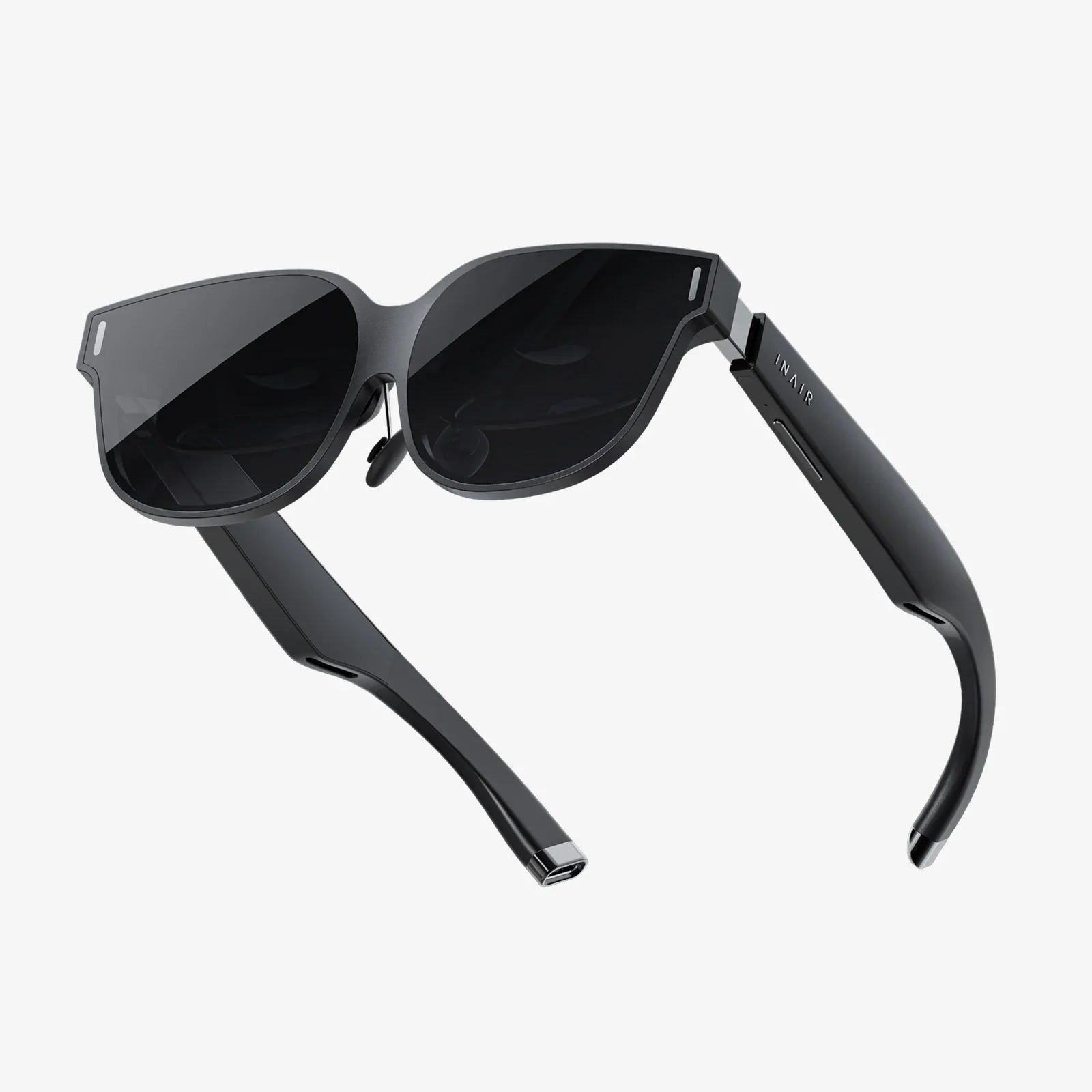
- Smart Glasses and Headsets: These wearable devices use optical projection systems, waveguides, or micro-displays to project images directly onto the user's retina or a transparent lens, allowing them to see digital content while maintaining a clear view of their surroundings.
- Spatial Projectors: Less common but highly immersive, these systems project light directly onto physical surfaces in the environment, turning walls and tables into interactive displays without requiring the user to wear a device.
Simultaneous Localization and Mapping (SLAM)
SLAM is the unsung hero and the most critical software algorithm in advanced AR. It is the process by which a device can simultaneously map an unknown environment and localize itself within that map in real-time. By analyzing the video feed and sensor data, the SLAM algorithm identifies unique feature points in a room, tracks their movement as the device moves, and constructs a detailed 3D geometric understanding of the space. This digital mesh allows virtual objects to be placed with stunning accuracy, ensuring they don't drift or float unnaturally but appear to obey the laws of physics, occluding behind real objects and maintaining their position as the user moves.
Tracking and Registration
This is the final step that makes AR feel real. Registration refers to the precise alignment of virtual and real-world coordinates. Through continuous tracking of the device's position and orientation, the system can render the digital overlay from the correct perspective, ensuring a convincing and stable blend of realities.
The AR Spectrum: Marker-Based vs. Markerless AR
AR experiences are often categorized by how they anchor digital content, falling into two primary types.
Marker-Based AR (Recognition-Based)
This simpler form of AR uses a predefined visual marker—often a distinct black-and-white QR code or a specific image—to trigger the display of digital content. The device's camera identifies the marker, and the software uses it as a fixed anchor point to position the overlay. This method is highly reliable and precise but is limited to the presence of the marker.
Markerless AR (Location-Based or Projection-Based)
This is the more advanced and flexible form of AR, made possible by SLAM and GPS. It doesn't require a pre-programmed marker. Instead, it uses the device's understanding of its environment (via SLAM) or its geographic location (via GPS and compass) to place content. This allows for experiences like placing a virtual piece of furniture in your living room or seeing navigation arrows painted onto the street in front of you. Markerless AR is the foundation for the most immersive and practical applications of the technology.
Transforming Industries: The Practical Applications of AR
The value of AR extends far beyond playful filters and games. It is a powerful tool solving real-world problems across numerous sectors.
Retail and E-Commerce
AR is revolutionizing the shopping experience. Customers can now visualize products in their own space before purchasing. They can "try on" watches, sunglasses, or makeup virtually, see how a new sofa would fit in their living room, or even see what a new coat of paint would look like on their walls. This reduces purchase uncertainty and minimizes returns, creating a more confident and engaging customer journey.
Manufacturing, Maintenance, and Repair
In industrial settings, AR is a game-changer for efficiency and accuracy. Technicians wearing smart glasses can see digital schematics, animated repair instructions, and safety information overlaid directly onto the machinery they are working on. This provides hands-free access to crucial information, reduces errors, speeds up complex assembly and maintenance procedures, and dramatically improves training for new employees.
Healthcare and Medicine
In medicine, AR is saving lives and improving outcomes. Surgeons can use AR overlays to visualize a patient's anatomy, such as the precise location of tumors or blood vessels, directly on the patient's body during procedures, enhancing precision and reducing risk. It is also used for medical training, allowing students to practice on detailed, interactive 3D models of the human body, and for patient education, helping them better understand their conditions and treatments.
Education and Training
AR brings learning to life. Textbooks can be augmented with 3D models, historical events can be reenacted in a classroom, and complex scientific concepts can be visualized and interacted with. This moves education from passive absorption to active exploration, fostering deeper understanding and engagement for students of all ages.
Navigation and Wayfinding
AR navigation apps project directions onto the live camera view, painting arrows onto the road or highlighting the correct turn inside a complex building like an airport or museum. This intuitive guidance system is far more user-friendly than trying to interpret a traditional 2D map while moving.
The Flip Side: Challenges and Ethical Considerations
Despite its immense potential, the widespread adoption of AR is not without significant hurdles and profound societal questions.
Technical Limitations
For AR to become truly seamless, several technical barriers must be overcome. These include improving battery life for wearable devices, increasing field of view for smart glasses, enhancing processing power for more complex simulations, and ensuring robust and accurate spatial mapping in all environments. Latency—the delay between a user's movement and the update of the digital overlay—must be reduced to imperceptible levels to prevent user discomfort or nausea.
Privacy and Data Security
AR devices, by their very nature, are data collection powerhouses. They have always-on cameras and microphones constantly scanning and interpreting the user's environment. This raises critical questions: Who owns the spatial data of your home? How is this intimate environmental and behavioral data being stored, used, and protected? The potential for unauthorized surveillance and data breaches presents a serious privacy challenge that must be addressed with robust regulations and transparent policies.
Social and Psychological Impact
As digital layers become increasingly intertwined with physical reality, new social norms will need to be established. How do we interact with someone who is partially immersed in an AR experience? Will the constant barrage of digital notifications and information lead to increased distraction and a diminished capacity for focus? There is also a risk of reality blurring, where the line between what is real and what is virtual becomes dangerously thin, potentially leading to new forms of addiction or dissociation.
The Digital Divide
As with any transformative technology, there is a risk that AR will exacerbate existing social and economic inequalities. Access to the latest AR hardware and high-speed connectivity required for cloud-based AR experiences may be limited to affluent individuals and nations, creating a gap between those who can leverage its benefits and those who cannot.
The Road Ahead: The Future of Augmented Reality
The trajectory of AR points toward a more integrated, intuitive, and powerful future. We are moving toward lightweight, socially acceptable smart glasses that we wear all day, every day. These devices will be connected to a vast, intelligent network often referred to as the "spatial web" or "AR cloud"—a persistent, digital copy of the real world that stores and shares AR experiences. This will enable shared, multi-user experiences where people in different locations can see and interact with the same virtual objects in real-time. Furthermore, the convergence of AR with artificial intelligence will create systems that don't just display information but understand context and intent, proactively offering relevant information and assistance. This evolution will see AR fade into the background, becoming an invisible but indispensable interface to our digital lives.
The journey into this augmented age is already underway, and its trajectory is set to redefine the human experience in ways we are only beginning to imagine. The boundary between our digital and physical selves is dissolving, offering a future of enhanced perception, boundless creativity, and unprecedented access to knowledge. The question is no longer if this future will arrive, but how we will choose to shape it, ensuring it remains a tool for empowerment, connection, and human progress.
Share:
Augmented Reality Characteristics: The Digital Layer Reshaping Our World
Battery Life Challenge for AI Glasses: The Invisible Barrier to a Seamless Future