


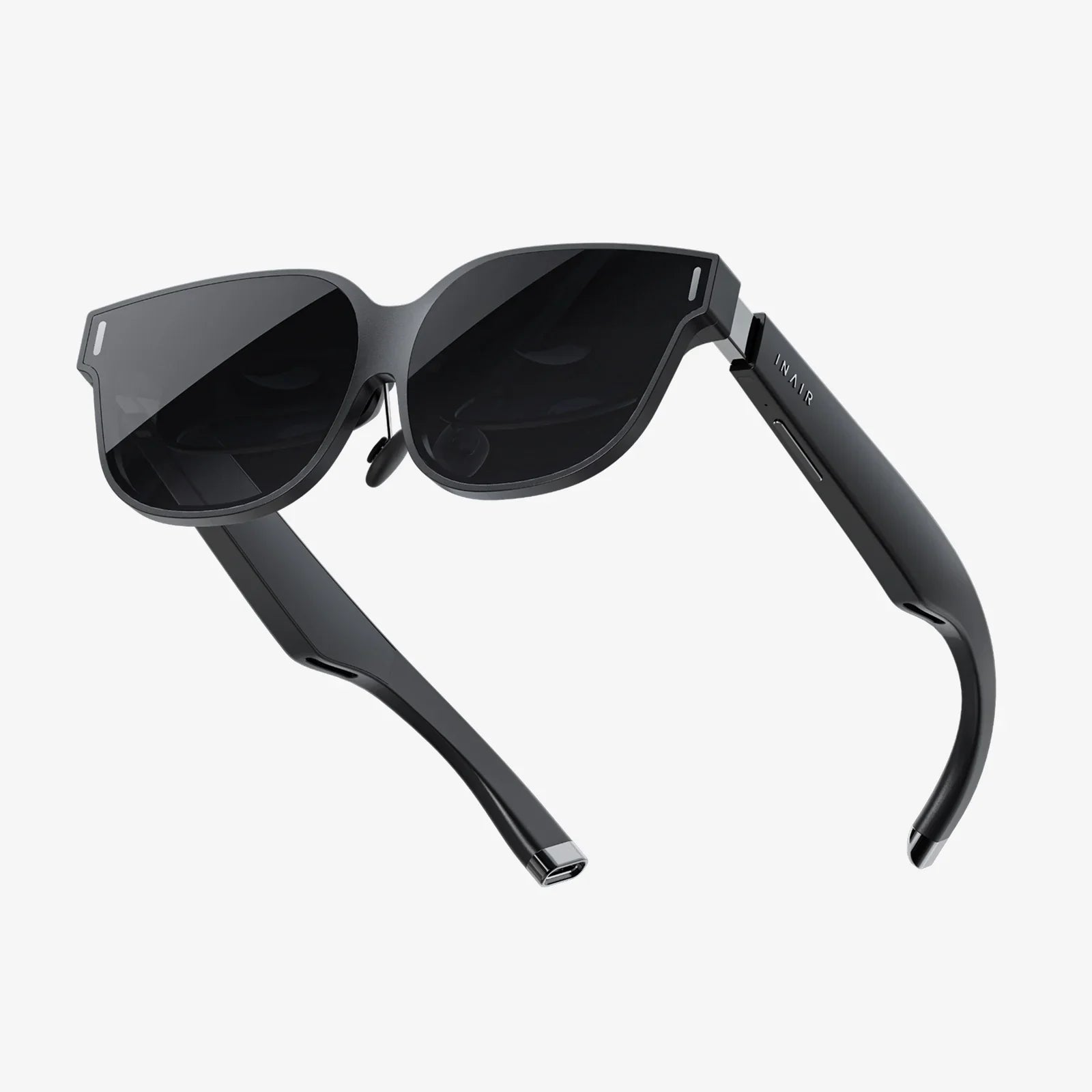
Imagine a world where the digital and the physical are no longer separate realms, but a single, unified layer of experience. This is the promise of augmented reality (AR), a technology not confined to the screens of smartphones or the visors of specialized headsets, but one that is being woven into the very fabric of our daily lives. The journey of developing augmented reality is far more than a technical pursuit; it is a profound re-imagining of human-computer interaction, a silent revolution in its nascent stages, poised to redefine everything from how we work and learn to how we connect and perceive reality itself. The process of building this new world is complex, challenging, and utterly fascinating.
The Foundational Pillars of AR Development
Developing augmented reality is an intricate dance between hardware and software, requiring a symphony of advanced technologies to function seamlessly. At its core, AR development rests on several critical pillars.
Computer Vision: The Eyes of AR
This is the cornerstone technology that allows a device to see and understand the world. It involves developing sophisticated algorithms for:
- Image Recognition and Tracking: Identifying objects, images (like QR codes), or pre-defined markers in the physical environment and using them as anchors for digital content.
- Simultaneous Localization and Mapping (SLAM): This is the holy grail for markerless AR. SLAM algorithms enable a device to simultaneously map an unknown environment and track its own position within that space in real-time. This allows digital objects to be placed on a table, attached to a wall, or seemingly hidden behind a real-world obstacle, persisting even as the user moves.
- Plane Detection: Identifying horizontal (floors, tables) and vertical (walls) surfaces, which is essential for placing digital objects stably in the user’s environment.
- Depth Sensing: Using technologies like LiDAR (Light Detection and Ranging) to create a precise 3D depth map of the surroundings. This is crucial for realistic occlusion, where digital objects can be hidden behind real-world objects, creating a much more convincing and immersive experience.
Processing Power and Hardware Integration
The computational demands of AR are immense. Real-time video processing, running complex SLAM algorithms, and rendering high-fidelity 3D graphics require significant processing power. Developers must optimize their applications to run efficiently on a spectrum of devices, from powerful dedicated headsets with dedicated processing units to consumer smartphones with varying capabilities. This involves careful management of thermal output, battery consumption, and memory usage to ensure a smooth and comfortable user experience.
3D Rendering and Content Creation
The digital layer of AR is built upon 3D graphics. Developers and 3D artists must create assets that are not only visually compelling but also optimized for real-time rendering. This involves:
- Texturing and lighting digital objects to match the lighting conditions of the physical environment, a process known as environmental understanding, to avoid the jarring effect of a brightly lit virtual object in a dimly lit room.
- Ensuring scale and perspective are accurate, making a virtual dinosaur look towering and a virtual teacup look like it fits on a real saucer.
The Developer's Toolkit: Frameworks and Platforms
The barrier to entry for developing augmented reality has lowered dramatically thanks to powerful Software Development Kits (SDKs) and cross-platform frameworks. These toolkits abstract away much of the complex underlying computer vision, allowing developers to focus on creating the user experience.
- ARKit and ARCore: These are the dominant mobile AR platforms for iOS and Android, respectively. They provide developers with a robust set of tools for motion tracking, environmental understanding, light estimation, and people occlusion, enabling the creation of sophisticated AR experiences on hundreds of millions of existing devices.
- WebAR: This approach allows AR experiences to be delivered directly through a web browser, eliminating the need to download a dedicated application. While currently less powerful than native app-based AR, WebAR offers incredible reach and ease of access, perfect for marketing campaigns, try-before-you-buy experiences, and simple games.
- Dedicated Headset SDKs: Platforms for developing on dedicated AR glasses provide even deeper integration with hardware, offering features like hand tracking, eye tracking, and spatial audio for fully immersive and hands-free interactions.
The choice of platform is a fundamental decision in the development process, influencing the target audience, the complexity of the experience, and the overall project scope.
Beyond the Code: The Critical Role of UX/UI Design
Developing augmented reality is as much a design challenge as it is a technical one. Traditional screen-based design principles often fail in a 3D, spatially-aware medium. AR UX/UI designers must grapple with unique questions:
- Spatial Interface Design: How do you design menus and interfaces that exist in the world around the user instead of on a flat screen? How do you prevent user fatigue from constantly moving their head or arms to interact with content (a phenomenon often called "gorilla arm")?
- Intuitive Interaction: What are the most natural ways to interact with digital objects? Gesture control, voice commands, gaze tracking, and traditional touch inputs on a companion device are all modalities that must be tested and refined. The goal is for interactions to feel magical and effortless.
- User Safety and Context Awareness: An AR experience that encourages a user to walk through a public space while looking at their phone poses obvious risks. Ethical design must incorporate contextual warnings and encourage breaks. Furthermore, AR applications must be mindful of social etiquette and privacy, avoiding experiences that are disruptive or intrusive in shared spaces.
- Accessibility: Ensuring AR experiences are usable by people with a wide range of abilities is paramount. This includes considerations for users with limited mobility, visual impairments, or hearing difficulties, ensuring the technology is inclusive by design.
The Real-World Impact: Applications Across Industries
The true power of developing augmented reality is revealed in its practical applications, which are already transforming numerous sectors.
Revolutionizing Enterprise and Manufacturing
Perhaps the most mature application of AR is in the industrial sector. Here, it is driving incredible efficiencies:
- Assembly and Maintenance: Technicians can wear AR glasses that overlay digital instructions, diagrams, and animations directly onto the machinery they are repairing. This reduces errors, speeds up complex procedures, and allows less experienced workers to perform tasks usually reserved for experts.
- Design and Prototyping: Engineers and designers can project full-scale 3D models of products into a physical space, allowing them to evaluate ergonomics, identify design flaws, and collaborate with colleagues in real-time before a single physical prototype is built.
- Logistics and Warehousing: AR can visually guide warehouse workers to the exact location of items, display inventory information, and optimize picking and packing routes, dramatically improving fulfillment speed and accuracy.
Transforming Healthcare and Medicine
In healthcare, AR is moving from science fiction to standard practice:
- Surgical Planning and Guidance: Surgeons can use AR to visualize a patient’s anatomy, such as CT scans or MRI data, superimposed directly onto their body during surgery. This provides unparalleled guidance for navigating complex procedures and minimizing invasiveness.
- Medical Training: Students can practice procedures on hyper-realistic virtual patients, and AR can overlay anatomical information onto medical mannequins, providing a deeply immersive learning experience.
- Patient Education and Rehabilitation: Doctors can use AR to visually explain a condition or procedure to a patient, improving understanding. In physiotherapy, AR games can make repetitive rehabilitation exercises more engaging and measurable.
Redefining Retail and E-Commerce
AR is fundamentally changing how consumers shop:
- Virtual Try-On: Customers can see how glasses, makeup, or clothes will look on them from their own homes. For furniture and home decor, apps allow users to place true-to-scale 3D models of products in their own living space to see how they fit and look with their existing decor.
- Enhanced In-Store Experiences: Pointing a phone at a product on a shelf could reveal additional information, customer reviews, or demonstrate the product in action, bridging the gap between online and physical retail.
Enhancing Education and Cultural Heritage
AR brings learning to life by making the abstract tangible:
- Interactive Learning: Students can explore the solar system in their classroom, dissect a virtual frog, or watch historical events unfold on their desk. This experiential learning leads to dramatically improved engagement and retention.
- Museum and Gallery Exhibits: Pointing a device at an artifact or painting can unlock a wealth of information, reconstructions of how it originally looked, or related stories, creating a deeply personalized and enriching museum experience.
Navigating the Challenges and Ethical Considerations
The path of developing augmented reality is not without significant hurdles and profound ethical questions that developers and society must confront.
- The Privacy Paradox: For AR systems to function, they must constantly capture and analyze data about the user's environment. This raises immense privacy concerns. This data, which could include detailed 3D maps of people's homes and offices, along with continuous video and audio feeds, is incredibly sensitive. Robust data governance, on-device processing, and transparent user consent are non-negotiable requirements.
- Digital Addiction and Mental Health: If current social media has proven addictive, an infinitely more engaging and persistent AR layer could exacerbate issues of digital addiction, social isolation, and the blurring of lines between work and life. Developers have a responsibility to build in digital wellness features and encourage healthy usage patterns.
- The Digital Divide and Accessibility: There is a risk that advanced AR technologies could become a luxury, creating a new dimension of inequality between those who can afford the latest hardware and those who cannot. Ensuring the benefits of AR are widely accessible is a critical societal challenge.
- Safety and Security: Malicious AR applications could overlay dangerous or misleading information onto the real world, with potentially catastrophic consequences—from simple vandalism to causing physical accidents. Establishing security standards and content moderation frameworks for the spatial web is an urgent priority.
The Future is Spatial: Where AR Development is Headed
The current state of AR is merely a prelude to a much more integrated future. The next decade of development will focus on several key frontiers:
- The Shift to Eyewear: The ultimate goal is moving from hand-held devices to comfortable, socially acceptable, and powerful AR glasses. This requires breakthroughs in display technology (like holographic waveguides), battery life, and miniaturization.
- The Rise of the Spatial Web and AR Cloud: This concept involves creating a persistent, shared digital layer over the physical world—an AR cloud. This would allow digital objects and information to be permanently anchored to locations, visible and interactive to anyone, enabling shared multi-user experiences on a global scale. Developing the standards and infrastructure for this is the next great challenge.
- AI Integration: Artificial intelligence will supercharge AR. AI can better understand scene context, identify objects beyond simple markers (e.g., recognizing a specific model of car engine), and generate realistic digital content on the fly, making AR experiences smarter and more responsive.
- Haptic Feedback and Multisensory Experiences: The future of AR will engage more than just sight and sound. Advances in haptic technology (ultrasound, wearables) will allow users to feel virtual objects, adding a crucial layer of realism and immersion.
The process of developing augmented reality is one of the most dynamic and consequential fields in technology today. It is a multidisciplinary endeavor that blends cutting-edge computer science with empathetic human-centered design, all while navigating a complex landscape of ethical implications. It is not about replacing our reality, but about enhancing it, providing us with information, context, and experiences that make us more knowledgeable, efficient, and connected. We are standing at the threshold of a new era, one where our digital and physical lives will finally converge into a seamless tapestry of augmented experience, and the architects of this new world are the developers, designers, and visionaries building it today.
Share:
Mixed Reality Glasses News: The Dawn of a New Computing Era and What It Means for You
Augmented Reality AR for Maintenance: The Ultimate Guide to the Digital Revolution in Repair and Upkeep