


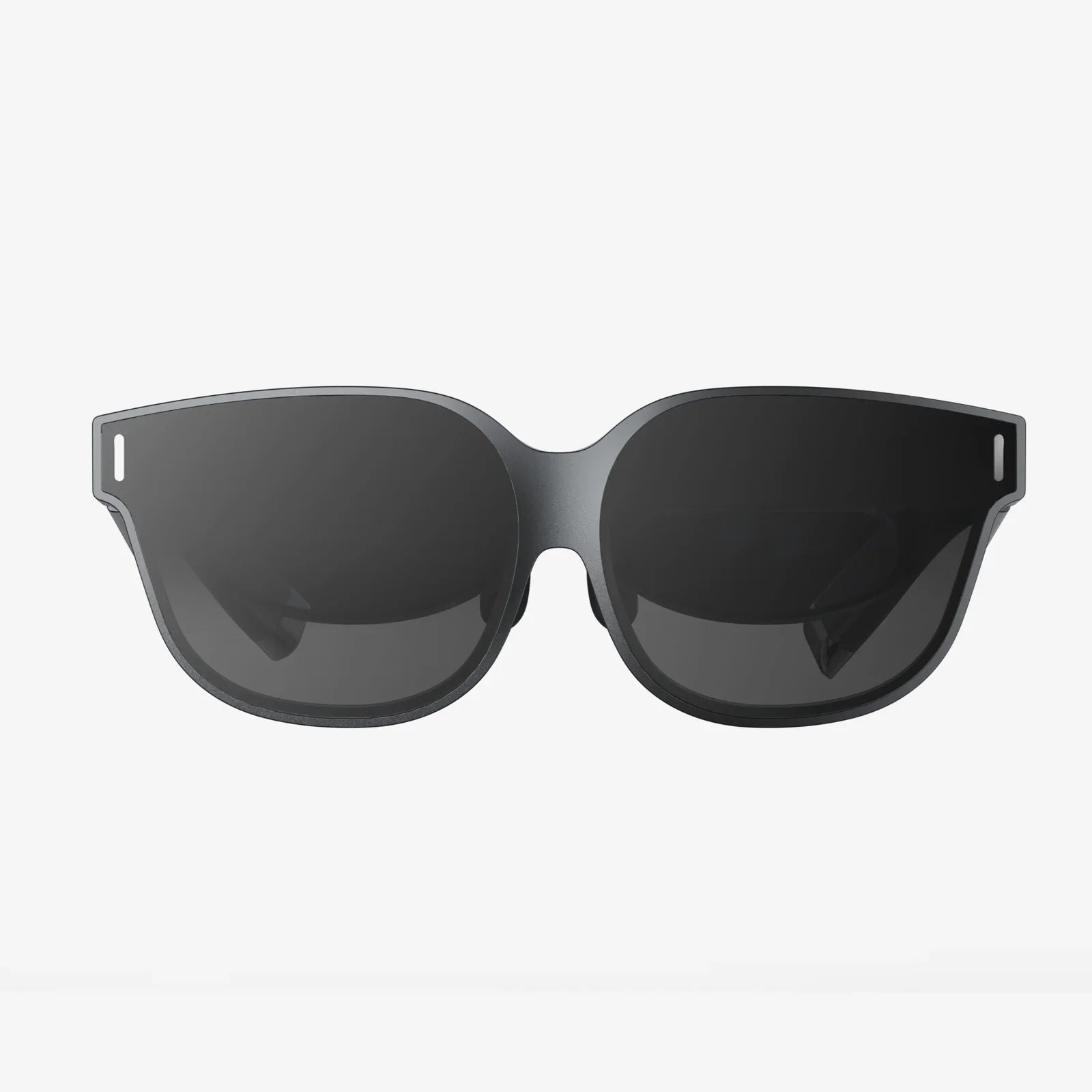
Imagine slipping on a headset and instantly being transported to the summit of Mount Everest, the surface of Mars, or the operating room of a world-class surgeon. This is no longer the stuff of science fiction; it is the tangible, breathtaking reality made possible by the relentless development of virtual reality technology. The journey of VR is a captivating tale of human ingenuity, a story of how a futuristic dream was patiently built, piece by digital piece, into one of the most transformative technologies of our time. Its evolution is not just about better graphics and faster processors; it's about redefining the very boundaries of human experience, communication, and perception.
The Conceptual Seeds: Early Visions and Prototypes
Long before the first head-mounted display was ever conceived, the idea of virtual reality had already taken root in the human imagination. The development of virtual reality technology finds its earliest precursors not in laboratories, but in the artistic and philosophical realms. The 360-degree panoramic murals of the 19th century, known as cycloramas, were an attempt to immerse viewers in a historical scene or battle, effectively creating a primitive form of virtual tourism. Later, Morton Heilig's Sensorama machine in the 1950s was a visionary, if mechanically cumbersome, attempt to create a multi-sensory cinematic experience, complete with stereo sound, aromas, and vibrations.
The true foundational moment for modern VR, however, arrived in 1968 with Ivan Sutherland and his student Bob Sproull. Their creation, The Sword of Damocles, is widely considered the first head-mounted display system. It was a terrifyingly primitive device by today's standards—so heavy it had to be mechanically counterbalanced from the ceiling, and its graphics were simple wireframe shapes. Yet, it contained the essential DNA of all VR to follow: it generated computer graphics in real-time, it provided a stereoscopic display that changed perspective as the user moved their head, and it created a convincing illusion of a world existing within the digital realm. It was the proof of concept that a machine could create a believable, interactive simulation.
The 1980s and 1990s: Branding, Hype, and Commercial Stumbles
The term "virtual reality" was popularized in the late 1980s by Jaron Lanier, founder of VPL Research. This company was instrumental in developing and commercializing many of the core components of VR systems, including the DataGlove, which tracked hand movements, and the EyePhone headset. For a brief period, VR captured the public's imagination, becoming a staple of cyberpunk culture and Hollywood films. It promised a revolution just around the corner.
However, the initial commercial forays in the early 1990s were a sobering lesson in the gap between ambition and technological capability. Arcade VR pods and early home console add-ons failed spectacularly. The technology of the time was simply not ready. The systems were astronomically expensive, the graphics were crude and laggy, the headsets were unbearably heavy, and the low resolution and high latency often induced nausea and simulator sickness in users. The immense hype collided with a disappointing reality, and VR entered a long period of dormancy in the public eye, becoming a technological punchline rather than a promised future.
The Necessary Incubation: Parallel Technological Advances
While VR seemed dead to consumers, its development of virtual reality technology continued quietly in academic, military, and industrial settings. Simulators for pilot training, surgical practice, and architectural walkthroughs continued to refine the technology, valuing function over form. Crucially, this period saw the parallel explosion of other technologies that would prove essential for VR's eventual rebirth.
- The Smartphone Revolution: The massive consumer demand for smartphones drove down the cost and size of critical VR components: high-resolution micro-displays, precise motion sensors (gyroscopes, accelerometers, magnetometers), and powerful, compact mobile processors. A modern VR headset is, in many ways, a smartphone repackaged for your face.
- Computer Graphics: The relentless progress in GPU (Graphics Processing Unit) technology, fueled by the gaming industry, provided the rendering power needed to generate complex, high-fidelity virtual worlds at the high frame rates (90Hz and above) necessary for comfort and immersion.
- Precision Tracking: Advancements in external lighthouse laser systems and internal-outward facing cameras (inside-out tracking) solved the critical problem of accurately and continuously tracking a user's position in physical space, a key factor in preventing disorientation.
The Modern Renaissance: The 2010s Resurgence
The catalyst for VR's second coming was the Kickstarter campaign for the Oculus Rift in 2012. Palmer Luckey's prototype demonstrated that consumer-grade technology had finally caught up to the dream. It offered a wide field of view, low persistence displays to reduce motion blur, and critically low latency, making immersive VR both achievable and affordable. This campaign sparked a new arms race. Major technology companies invested billions, leading to a new generation of headsets categorized broadly into two camps:
- PC-Connected/Standalone High-End Headsets: These systems, often powered by a powerful gaming computer or their own integrated processing, offer the highest fidelity experiences with six degrees of freedom (6DoF) tracking for both the head and controllers, enabling users to walk around and interact naturally within a virtual space.
- Mobile VR (and early Standalone): Leveraging a smartphone for processing and display, platforms like Google Cardboard and Samsung Gear VR introduced millions of users to basic VR through affordable, accessible viewers. They were limited to 3DoF (rotation only) but were vital for market education and content development.
Core Technological Pillars of Modern VR
The development of virtual reality technology today rests on several interdependent pillars, each constantly being refined.
Visual Immersion: The quest is for photorealistic graphics. This involves not just higher resolutions (4K per eye and beyond) to eliminate the "screen door effect," but also advancements in varifocal and light field displays to mimic how human eyes naturally focus on objects at different distances, solving the vergence-accommodation conflict that can cause eye strain. High dynamic range (HDR) is also being integrated to produce more realistic lighting and colors.
Audio: Spatial 3D audio is arguably half of the immersion. By using head-related transfer functions (HRTF), sounds can be made to appear as if they are coming from specific points in the 3D space around the user, such as behind, above, or to the side, making the virtual world feel tangibly real.
Haptics and Interaction: The next frontier is touch. Advanced controller designs with capacitive sensing and haptic feedback allow users to "feel" virtual objects through precise vibrations. The future points towards full hand-tracking without controllers and haptic gloves or suits that can simulate pressure, texture, and resistance, enabling truly natural and expressive interaction.
Social and Cloud Connectivity: VR is evolving from a solitary experience to a social platform. The development of convincing avatars with eye and facial tracking allows for natural non-verbal communication in shared virtual spaces for meetings, concerts, and social gatherings. Cloud-based VR streaming services are also emerging, aiming to offload the intense processing requirements to remote servers, making high-end VR more accessible.
Current Applications: Beyond Gaming
While gaming remains a primary driver, the development of virtual reality technology has unlocked profound applications across diverse fields.
Education and Training: VR creates safe, repeatable, and cost-effective training simulations for surgeons, pilots, mechanics, and first responders. Students can take virtual field trips to historical sites or journey inside the human body, transforming abstract concepts into experiential learning.
Healthcare and Therapy: VR is used for exposure therapy to treat phobias and PTSD, for physical rehabilitation by making exercises engaging, and for pain distraction by immersing burn victims in a calming snowy landscape, proven to reduce perceived pain levels.
Enterprise and Design: Architects and engineers use VR to walk clients through unbuilt structures. Global teams collaborate on 3D models of new products in a shared virtual space, identifying design flaws long before physical prototypes are made.
Remote Work and Collaboration: As hybrid work models become standard, VR meeting spaces offer a more embodied and engaging alternative to flat video calls, fostering a stronger sense of presence and togetherness among distributed teams.
The Horizon: Future Directions and Challenges
The path forward for VR is incredibly exciting, yet fraught with significant technical and ethical hurdles. The holy grail is the development of truly comfortable, all-day wearable glasses, not bulky headsets. This requires breakthroughs in miniaturization, battery technology, and computational efficiency, potentially through neuromorphic computing or specialized AI chips. The concept of the "metaverse," a persistent network of interconnected virtual worlds, represents the ultimate expression of VR as a new computing platform and social domain.
However, challenges remain. Overcoming simulator sickness for all users is a persistent bio-engineering problem. Creating truly compelling and meaningful content, not just tech demos, is crucial for mass adoption. Furthermore, the development of virtual reality technology raises critical questions about data privacy, psychological effects of prolonged immersion, and the potential for new forms of addiction and social isolation. Establishing ethical guidelines and safety standards is as important as the technological progress itself.
The development of virtual reality technology is a story of exponential growth, a testament to the power of converging innovations. It has evolved from a clunky curiosity to a sophisticated portal to new realities. It is no longer a question of if VR will become an integral part of our lives, but how. As the hardware continues to shrink and the software grows more intelligent, the line between the physical and the digital will increasingly blur, opening up possibilities for human connection, creativity, and exploration that we are only beginning to imagine. The next time you adjust a headset, remember—you're not just putting on a device; you're stepping into the culmination of decades of perseverance and stepping onto the threshold of a future limited only by our collective imagination.
Share:
Virtual Reality Input Devices: The Unseen Bridge to Digital Worlds
What Virtual Reality Looks Like: A Journey Into The Digital Frontier