Imagine a world where digital information doesn't just live on a screen in your hand but is seamlessly woven into the very fabric of your reality. This is the promise of augmented reality (AR), a technology poised to revolutionize how we work, learn, play, and connect. But this digital overlay doesn't materialize out of thin air; it is delivered through a sophisticated and rapidly evolving array of hardware. The gateway to this enhanced world is through the various devices for augmented reality, each designed to serve a unique purpose and unlock different experiences. This journey into the hardware powering the AR revolution is not just about understanding gadgets; it's about glimpsing the future of human-computer interaction.
The Core Components of Any AR Device
Before diving into the different types of devices, it's crucial to understand the fundamental components that all AR systems share. These are the essential technological pillars that allow digital content to perceive, process, and project onto the real world.
Sensors: The Eyes and Ears of the Device
AR devices are packed with a suite of sensors that act as their perceptual organs. These typically include:
-
Cameras: Used for both capturing the user's environment for video passthrough AR and for computer vision tasks. They help the device understand what it is looking at.
-
Depth Sensors: Often employing technologies like LiDAR (Light Detection and Ranging) or structured light, these sensors map the environment in three dimensions, measuring the distance to objects. This is critical for placing digital objects convincingly in space, allowing them to occlude and be occluded by real-world geometry.
-
Inertial Measurement Units (IMUs): These contain accelerometers, gyroscopes, and magnetometers that track the device's movement, orientation, and rotation in space with extreme precision and low latency. This ensures that digital objects don't jitter or drift away from their intended position.
-
Microphones and Speakers: For audio input and output, enabling voice commands and spatial audio, which makes sounds appear to emanate from specific points in the environment.
Processors: The Brain Behind the Magic
The raw data from the sensors is meaningless without immense computational power to interpret it. The processor is the brain that performs several demanding tasks simultaneously:
-
Simultaneous Localization and Mapping (SLAM): This is the core software algorithm that allows the device to both map an unknown environment and track its own position within that map in real-time. It's what enables persistent AR experiences.
-
Rendering Engine: This generates the high-fidelity 3D graphics and animations that are overlaid onto the real world, requiring significant graphical processing power (GPU).
-
AI and Machine Learning Co-processors: Many modern AR chipsets include specialized cores for handling machine learning tasks like object recognition, gesture tracking, and semantic understanding of scenes (e.g., identifying a table, a wall, or a floor).
Displays: The Window to an Enhanced World
This is the component that actually projects the digital imagery into the user's field of view. There are two primary methods:
-
Optical See-Through (OST): Used in many smart glasses, these displays allow users to look directly at the real world through transparent waveguides or combiners. Digital light is then projected onto these optical elements, making it appear as part of the real environment. This method offers high clarity of the real world but can struggle with contrast in bright light.
-
Video See-Through (VST): Used in most AR headsets, this method uses outward-facing cameras to capture the real world, which is then combined with digital elements on an internal, opaque display (like an OLED or LCD screen). This allows for more vivid and complex digital overlays but can introduce a slight latency and a feeling of looking at the world through a screen.
Connectivity and Power: The Lifelines
Finally, all this technology requires robust connectivity (Wi-Fi, Bluetooth, and sometimes 5G) to access cloud services, stream content, and connect to other devices. It also demands innovative power solutions, as high-performance computing and bright displays are notoriously energy-intensive, leading to a constant battle between performance, form factor, and battery life.
A Spectrum of Form Factors: From Handheld to Head-Worn
The ecosystem of devices for augmented reality is not monolithic. It encompasses a wide range of form factors, each with its own strengths, limitations, and target use cases.
Smartphones and Tablets: The Gateway Drug to AR
For the vast majority of people, their first encounter with AR was through a device already in their pocket. Using the built-in camera, IMU, and screen, mobile devices can deliver compelling AR experiences.
Advantages: Ubiquitous, no additional hardware cost for users, powerful processors, and high-resolution displays. They served as the perfect platform to introduce the masses to AR concepts like gaming and furniture placement.
Limitations: The experience is constrained to the small screen, requiring users to hold up their device, which is ergonomically taxing for prolonged use. It also lacks the immersive, hands-free quality of dedicated wearables.
Smart Glasses: The Quest for Everyday Augmentation
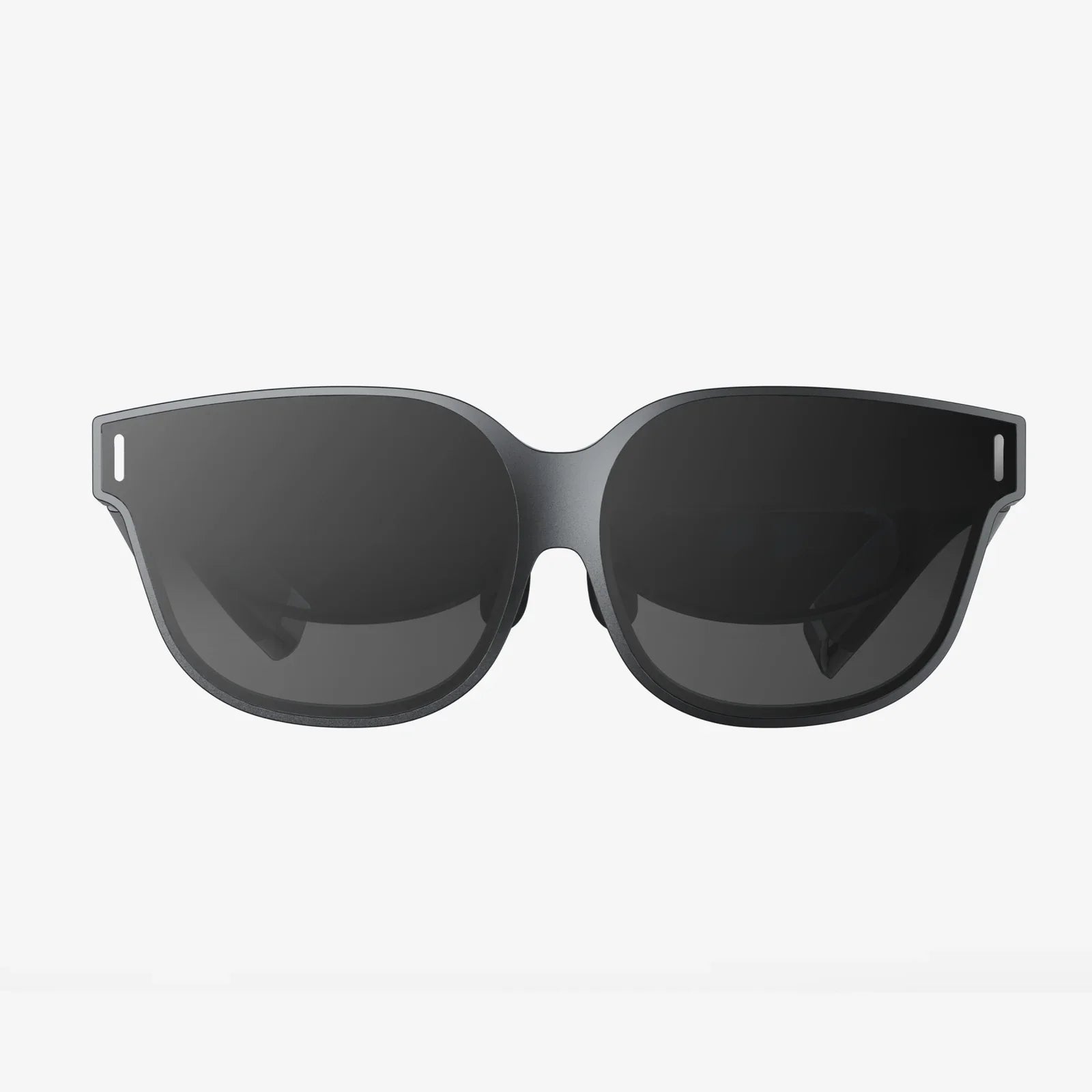
Smart glasses represent the ideal form factor for many—a pair of glasses that look relatively normal but can project contextual information into the periphery of your vision.
Design and Technology: These typically use Optical See-Through displays with waveguides that are becoming increasingly thinner and more efficient. The goal is to maximize the field of view and brightness while minimizing size, weight, and power consumption. They often focus on monochromatic or limited color displays to keep the form factor small and the battery life acceptable for all-day wear.
Primary Use Cases: Currently, their strongest applications are in enterprise and industrial settings. Technicians can have schematics and instructions hands-free on the assembly line. Warehouse workers can see picking and packing information without referring to a handheld scanner. In the consumer space, they are ideal for notifications, navigation prompts, and real-time translation subtitles overlayed onto the world.
Standalone AR Headsets: The Powerhouses of Immersion
These are all-in-one devices that contain all the necessary sensors, processors, and batteries on board. They resemble goggles and often use Video See-Through displays to create rich, immersive, and complex AR environments.
Design and Technology: They sacrifice the subtlety of smart glasses for pure performance. They boast powerful processors, high-resolution color displays, wide fields of view, and advanced depth sensors. Their larger form factor allows for bigger batteries and more robust cooling systems.
Primary Use Cases: These are the tools for deep work and play. They are used for advanced design and prototyping, allowing engineers to examine 3D models at full scale. In medicine, they can help surgeons visualize anatomy during procedures. For training, they can create incredibly realistic simulations for everything from equipment repair to emergency response. They also represent the future of social interaction and entertainment, enabling shared experiences with friends as digital avatars in your living room.
Tethered and Powered AR Systems
Some high-end professional AR systems offload the heavy computing to a separate workstation or a belt-worn pack, connected via a cable. This allows the head-worn component to be lighter and more comfortable while leveraging desktop-level processing power for the most demanding graphical applications, such as complex engineering visualizations or architectural walkthroughs.
The Human Factor: Design Challenges and User Experience
Creating successful devices for augmented reality is not just an engineering challenge; it's a human-centric design challenge.
Ergonomics and Comfort
A device that is heavy, poorly balanced, or gets too hot will not be used, no matter how impressive its technology. Achieving all-day comfort is the holy grail, especially for smart glasses. This involves meticulous weight distribution, use of lightweight materials like magnesium alloys and composites, and customizable fits through adjustable nose pads and temples.
The Vergence-Accommodation Conflict
This is a fundamental visual challenge for many current AR displays. In the real world, our eyes both converge (point inward) and accommodate (focus) on an object. In most AR displays, the digital image is projected at a fixed focal plane (e.g., two meters away). This means our eyes may converge on a virtual object that appears close, but our focus remains fixed at the display's focal plane, causing eye strain and fatigue. Advanced display research into varifocal and light field technology aims to solve this by dynamically adjusting the focal plane.
User Interface and Interaction Paradigms
How do you interact with a interface that floats in the air around you? AR has moved beyond touchscreens to new paradigms:
-
Hand Tracking: Using cameras to track the user's hands and fingers, allowing for natural gestures to grab, push, pinch, and manipulate digital objects.
-
Voice Control: A natural and hands-free method for issuing commands and inputting data.
-
6-Degree-of-Freedom (6DoF) Controllers: Handheld controllers that are tracked in space, providing precise input and haptic feedback, which is crucial for gaming and design applications.
Beyond Sight: The Role of Audio and Haptics
A truly immersive AR experience engages more than just the visual sense.
Spatial Audio
This technology uses head-related transfer functions (HRTF) to make sounds appear to come from specific points in 3D space. A notification can ping from your left, a virtual assistant can speak from beside you, and in a game, you can hear an enemy creeping up behind you. This dramatically increases the sense of presence and immersion.
Haptic Feedback
While still emerging, haptics are crucial for convincing interactions. This can range from simple vibrations in a controller to more advanced wearable haptic gloves that simulate the feeling of touching a virtual object's texture and resistance, completing the illusion of digital matter existing in the physical world.
The Future Horizon: Where AR Hardware is Headed
The trajectory of devices for augmented reality points toward a future of greater invisibility, intelligence, and integration.
Miniaturization and the Path to Normalcy
The end goal is a device that is indistinguishable from regular eyeglasses. This will require breakthroughs in nano-optics, holographic display technology, and ultra-low-power chipsets. The components will continue to shrink, moving from discrete modules to systems-on-chip and eventually systems-on-glass.
Contextual and Predictive Intelligence
Future AR devices will be less about displaying pre-programmed information and more about being a contextual AI assistant. By continuously analyzing what you see and hear, the device will proactively offer the most relevant information—translating a sign before you even ask, reminding you of a person's name as you approach them, or warning you of a potential hazard on the road ahead.
The Convergence with the Metaverse
AR devices will become the primary portal for the spatial web or metaverse—a persistent network of interconnected digital spaces and information layered over the physical world. Your AR glasses will be the key to unlocking experiences, digital art, and social connections that are anchored to specific locations, blurring the line between the digital and physical realms forever.
Biometric Integration
Future devices will likely incorporate sensors to monitor user vitals like heart rate, pupil dilation, and brain activity. This could enable applications that adapt content based on your focus and stress levels, or provide real-time biofeedback for meditation and wellness.
The evolution of devices for augmented reality is a story of technology striving to become more human—to understand our world as we do and to enhance our perception without getting in the way. From the clunky prototypes of yesterday to the sleek, powerful wearables of today and the invisible, intelligent companions of tomorrow, this hardware is building the lenses through which we will all someday see a richer, more informed, and endlessly fascinating world. The next time you look at a pair of ordinary glasses, remember: they might soon be the most powerful portal to a new layer of reality you own.


Share:
Are Eyeglasses Technology? The Digital Evolution of Vision
AI Glasses Use Cases: The Invisible Revolution Reshaping Our Daily Lives