


- by wangfred
Difference Between AR and VR: A Comprehensive Guide to Our Digital Future
- by wangfred
Have you ever imagined a world where digital information overlays your physical surroundings, or where you can be instantly transported to a completely fabricated universe? The lines between our physical reality and digital creations are blurring at an astonishing pace, powered by two revolutionary technologies: Augmented Reality and Virtual Reality. While often mentioned in the same breath, they represent fundamentally different approaches to experience and interaction. Understanding the difference between AR and VR is not just tech jargon; it's a key to unlocking the future of human-computer interaction, and it’s a future that is arriving faster than you think.
At its heart, the most significant difference between AR and VR lies in their relationship with the real world.
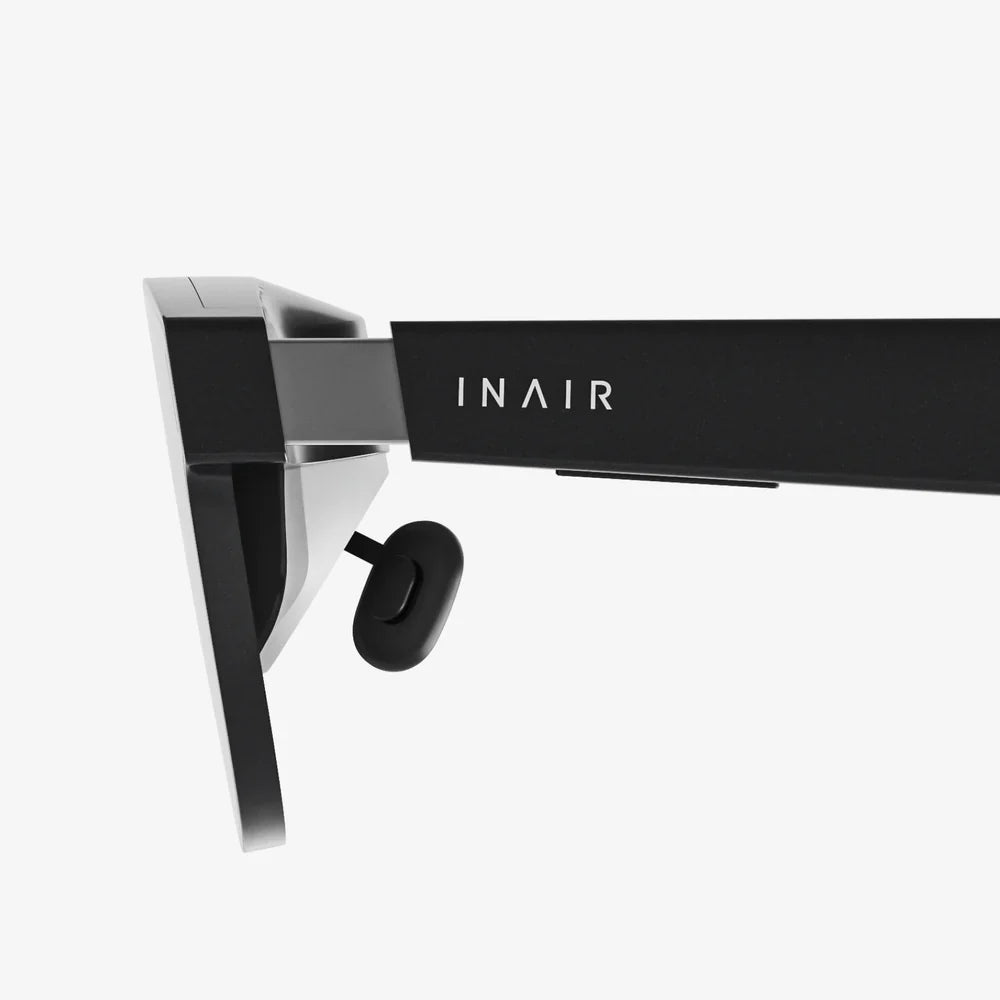
Augmented Reality (AR) is best understood as an enhancement of our physical reality. It operates on a simple but powerful principle: it takes your existing environment and superimposes digital elements—images, data, 3D models, text—onto it. You are never removed from your real-world setting. Instead, you see the real world through a lens, either a camera feed on a smartphone or tablet or a transparent display on smart glasses, which is then enriched with computer-generated information. Think of it as a high-tech heads-up display for life itself.
Virtual Reality (VR), in stark contrast, is all about replacement and immersion. Its goal is to shut out the physical world entirely and transport the user to a fully simulated, computer-generated environment. By wearing an opaque headset that covers your entire field of vision, you are visually and audibly cut off from your actual surroundings. Your reality, for the duration of the experience, becomes the digital world crafted by developers. It’s a passport to anywhere, real or imagined, from the surface of Mars to the depths of the ocean.
The philosophical divide between enhancement and replacement dictates the vastly different technological requirements for AR and VR.
VR technology is designed to trick your brain into believing it is somewhere else. This requires a multi-sensory approach:
AR technology is arguably more complex because it must understand and interact with the real world in real-time.
It's helpful to think of AR and VR not as two distinct boxes, but as opposite ends of a spectrum called the Virtuality Continuum, a concept introduced by researchers Paul Milgram and Fumio Kishino in 1994.
On the far left is the real environment—the physical world as we perceive it with our own senses. On the far right is a completely virtual environment—a world generated entirely by a computer. Most experiences we call "AR" or "VR" fall somewhere between these two extremes.
Mixed Reality (MR) is the term often used to describe the middle ground, where digital and physical objects not only co-exist but can interact with each other in real-time. A virtual character that jumps off your real table and hides behind your real couch is an MR experience. It requires the environmental understanding of AR with the immersive graphical capabilities of VR. This is why the line between advanced AR and MR is often blurry.
The practical applications of AR and VR are already transforming how we work, learn, and play, and they do so in uniquely different ways.
AR excels in situations where context is key and users need to remain connected to their physical environment.
VR is the tool of choice for total immersion, perfect for training, simulation, and deep engagement.
The difference in user experience is profound. In VR, the primary sensation is presence—the convincing feeling of being in another place. A successful VR experience makes your brain accept the virtual world as real, if only temporarily. This is why movement in VR must be carefully designed to avoid simulator sickness, a form of motion sickness caused by a disconnect between what the eyes see and what the body feels.
In AR, the primary sensation is contextual awareness. The technology enhances your understanding of and interaction with your immediate environment. The risk of simulator sickness is vastly lower because your vestibular system (which governs balance) still agrees with the visual input from the real world. The challenge for AR is creating digital objects that feel truly anchored and believable in the real world, avoiding a "floating" or misaligned appearance.
While their paths are distinct, the future likely lies in the convergence of these technologies. We are already seeing the early stages of this with headsets that can switch between a full VR mode (with an opaque display) and a full-color, high-fidelity AR mode (using external cameras to pass through a video feed of the real world). This concept of passthrough AR effectively turns a VR headset into an AR device, blurring the lines even further.
The ultimate goal for many in the industry is a single, lightweight pair of glasses that can do it all—provide rich contextual information during your daily life and, when you desire, fully immerse you in a virtual world. The technological hurdles for this are immense, requiring breakthroughs in display technology, battery life, and processing power, but the trajectory is clear.
The journey into these new digital frontiers is just beginning. The difference between AR and VR today is clear, but their evolution will undoubtedly lead to hybrid experiences we can barely imagine. One thing is certain: these technologies will fundamentally reshape our relationship with computing, moving it from something we look at on a screen to something we exist within and alongside. The question is no longer if they will become mainstream, but how quickly we will adapt to a world where our physical and digital realities are seamlessly intertwined.
Share:
AI Glasses Release 2025: The Dawn of a New Visual Computing Era
Best Augmented Reality Platforms 2025: The Ultimate Guide to the Future of AR