


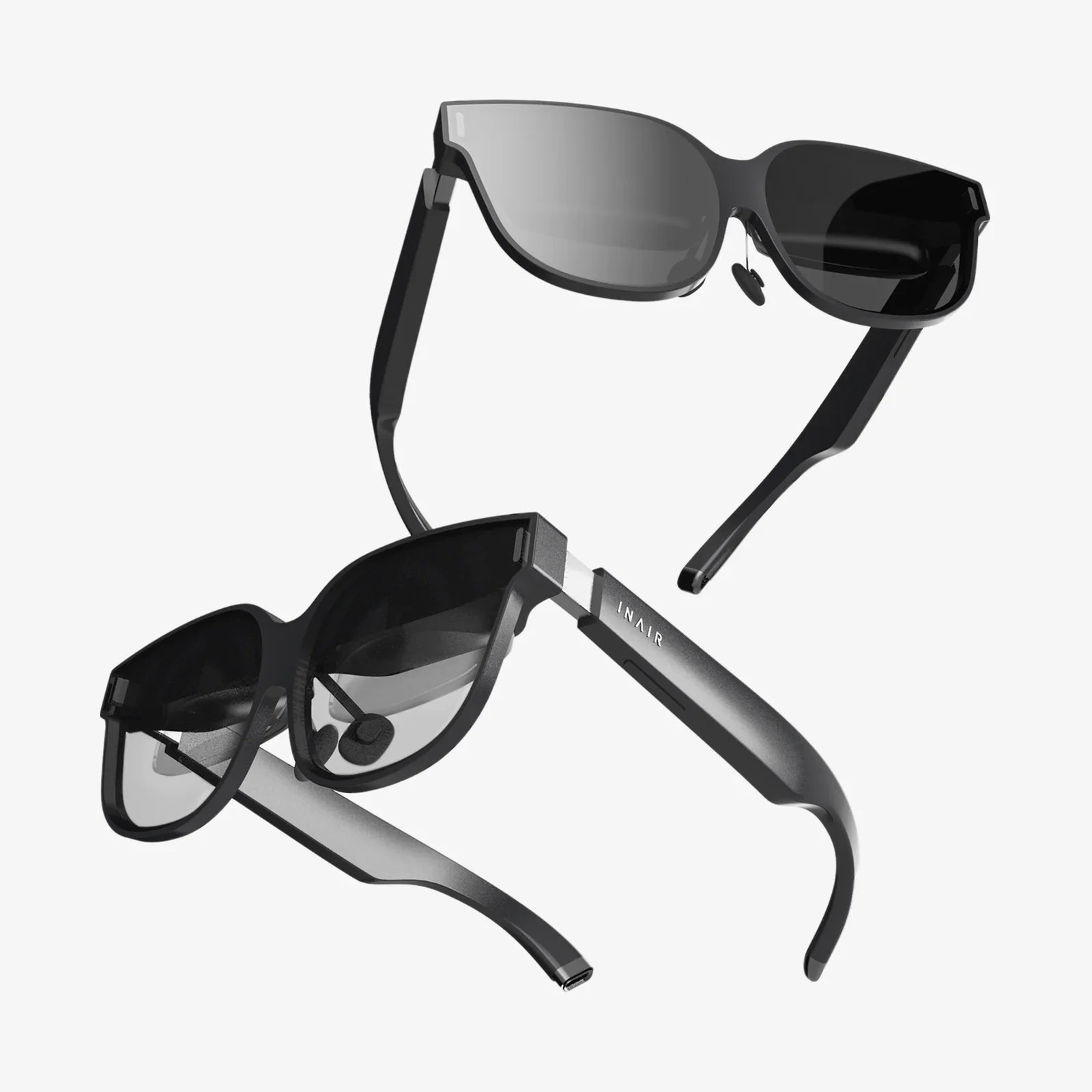
- by wangfred
Difference Between AR, VR, and the Metaverse: A Guide to Our Digital Future
- by wangfred
Imagine a world where the digital and physical seamlessly blend, where you can attend a concert on another continent from your living room, or where a mechanic can see repair instructions overlaid onto a faulty engine. This isn't science fiction; it's the trajectory of technology, driven by three powerful but often conflated concepts: Augmented Reality, Virtual Reality, and the Metaverse. While these terms are frequently used interchangeably in popular discourse, they represent distinct technologies and ideas. Understanding the difference between AR, VR, and the Metaverse is crucial for navigating the next wave of digital innovation that promises to reshape how we work, play, and connect.
At the heart of this technological evolution are two primary methods of altering our perception of reality. They serve as the foundational building blocks, the tools we use to interact with digital content in new and immersive ways.
Augmented Reality (AR) enhances your real-world environment by superimposing digital information—images, text, 3D models, animations—onto your view of the physical world. The key principle here is augmentation, not replacement. AR technology uses cameras and sensors to understand its surroundings and then anchors digital objects within that space.
You don't need a completely immersive headset to experience AR. It is often accessed through everyday devices like smartphones and tablets. For example, using a phone's camera to see how a new piece of furniture would look in your room before buying it is a common AR application. More advanced AR is delivered through specialized glasses or headsets that project holograms into your field of vision, allowing for hands-free interaction. The goal of AR is to provide contextual information and enhance productivity, learning, and entertainment by blending the best of both the digital and physical realms.
In direct contrast to AR, Virtual Reality (VR) aims to replace your real-world environment with a completely simulated, digital one. By wearing a head-mounted display (HMD) that covers your entire field of vision, you are visually and audibly transported to a computer-generated world. This world can be a realistic simulation of a real place or a completely fantastical environment.
The immersion is the defining characteristic of VR. Advanced systems include motion tracking, handheld controllers, and haptic feedback to trick your senses into believing you are somewhere else. When you move your head or hands, the digital world responds in kind, creating a powerful sense of "presence." This makes VR the ultimate tool for total escapism, deep training simulations (like for pilots or surgeons), and immersive gaming and storytelling. It is a closed experience, shutting out the physical world to fully engage with the virtual one.
The fundamental difference between AR and VR lies in their relationship with the real world.
Think of it this way: AR is like a heads-up display in a fighter jet, providing crucial data over the real-world view. VR is like the flight simulator used to train the pilot, a complete digital replica of the experience.
Now, where does the Metaverse fit in? If AR and VR are the technologies, the Metaverse is the environment or the platform they can access. It is a persistent, shared, and continuous digital universe that exists online, comprised of vast interconnected virtual spaces.
Unlike a single VR game or an AR app, the Metaverse is not owned by any one entity. It is a collective virtual shared space, created by the convergence of virtually enhanced physical reality and physically persistent virtual space. It is often described as a potential successor to the current internet—an embodied internet where you don't just browse content but you are in it.
Key characteristics of the Metaverse concept include:
This is where confusion often arises. AR and VR are not the Metaverse itself; they are two of the primary gateways or interfaces to it. They are the windows through which we will experience this future digital world.
You might access the Metaverse through a VR headset to feel fully immersed in a virtual concert or business meeting. Alternatively, you might use AR glasses to bring elements of the Metaverse into your physical living room—watching a live sports game with virtual stats floating around the players or collaborating with a colleague's hologram on a 3D model.
The Metaverse is the overarching, persistent digital realm, while AR and VR are the technologies that determine your level of immersion within it. A simple analogy is the internet and your devices: The internet is the vast network of information (the Metaverse), and you access it through a browser on your laptop, an app on your smartphone, or a voice command to your smart speaker (these are the access points, akin to AR/VR).
It is vital to note that the fully realized vision of the Metaverse, as a single, interconnected universe, does not exist today. What we have now are early precursors: individual virtual worlds, popular online games with social elements, and AR experiences. These are fragmented proto-metaverses.
The technology for a true Metaverse requires advancements far beyond just AR and VR. It will need:
The future likely points not to a choice between AR or VR, but to a convergence into Mixed Reality (MR) devices. These advanced headsets will be able to switch between full VR immersion and AR passthrough, blending virtual objects with the real world in convincing ways. This MR technology will become the ultimate portal to the digital layers of the Metaverse, allowing us to toggle our level of immersion based on the task at hand.
The evolution from isolated AR/VR applications to a more connected Metaverse will have profound implications. Remote work could transform into collaborating around a virtual prototype. Education could become a series of immersive historical experiences. Social media could evolve from scrolling feeds to "hanging out" in digital spaces with friends' avatars.
However, this future also raises significant questions about privacy, data security, digital addiction, and the creation of a new digital divide. The ethical and societal frameworks for this new world are still being written, making it imperative for users to understand the underlying technologies shaping it.
The journey into this next digital frontier is already underway. The lines between our physical lives and our digital ones are beginning to blur, powered by the distinct but complementary forces of Augmented Reality, Virtual Reality, and the grand vision of the Metaverse. Your understanding of these differences is the first step to not just witnessing this transformation, but actively and intelligently participating in it. The screen-based internet is giving way to a world where we step inside the network itself—and knowing your portal from your destination will define your experience in the decade to come.
Share:
VR Headset vs VR Glasses: The Ultimate Immersive Tech Showdown
Top AR VR Headsets 2025: The Ultimate Guide to Next-Gen Immersion