


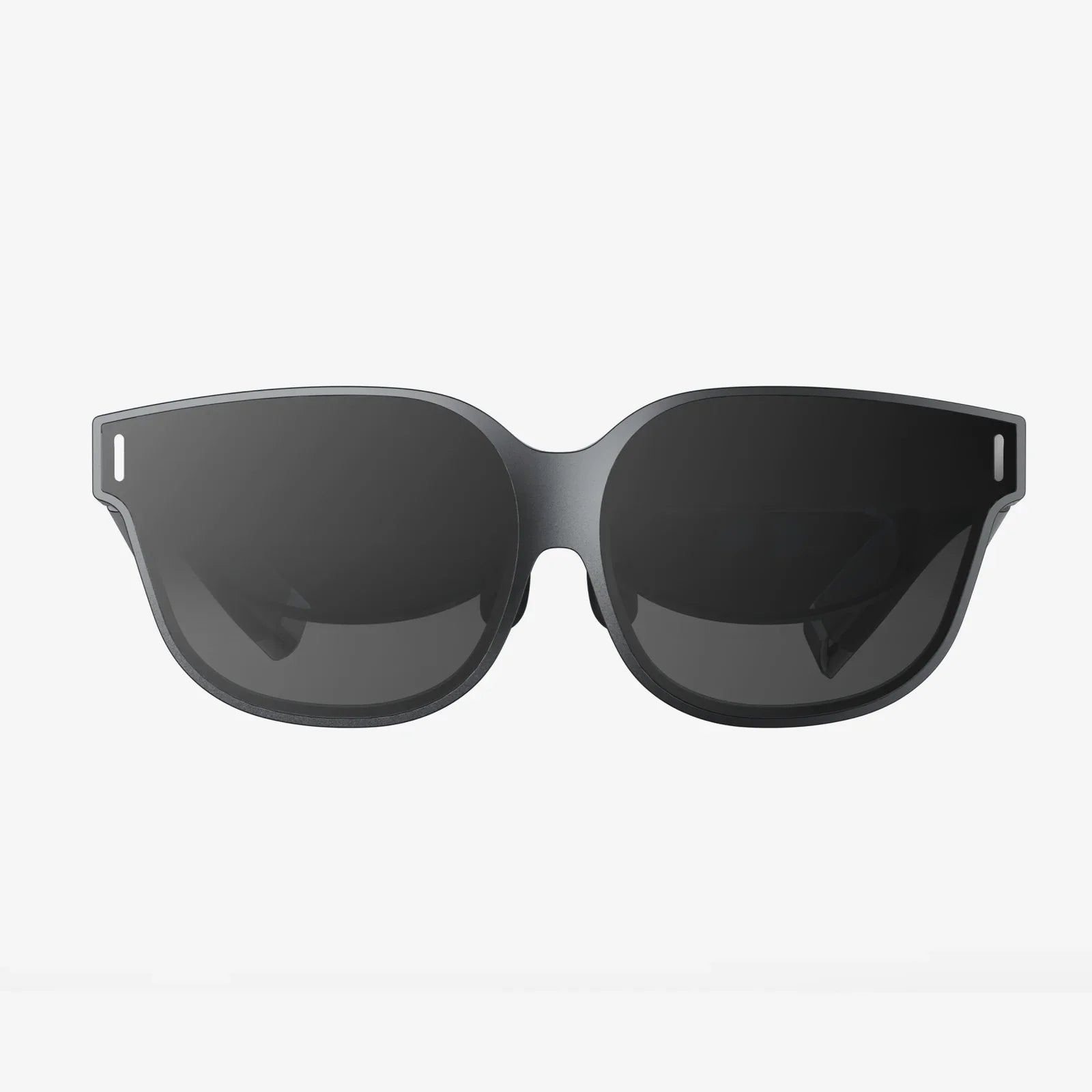
You've seen the ads, heard the hype, and maybe even tried a friend's setup—virtual reality is no longer a distant dream but a tangible, awe-inspiring reality. But as you venture into the market, a daunting question emerges: should you grab an affordable entry-level headset or invest a significant sum in a high-end model? The chasm between a budget-friendly device and a premium powerhouse is vast, impacting everything from the clarity of a distant starscape to the subtle, immersive feel of a virtual handshake. This isn't just about price; it's about the very fabric of your digital experience. Let's peel back the layers and discover what truly separates the economical from the extraordinary in the world of VR.
The Heart of the Experience: Display and Visual Fidelity
This is where the most immediate and striking differences manifest. What you see—or, more importantly, what you don't see—is the first major divider.
Resolution and Pixel Density
Imagine reading a book through a screen door. This "screen-door effect," where you can see the faint lines between pixels, is a common hallmark of older and cheaper VR headsets. Budget models often utilize lower-resolution displays, sometimes a single panel shared between both eyes. The result is a softer, less detailed image where text can be blurry and distant objects lack definition.
Expensive headsets wage war on this blurriness. They boast high-resolution, dual-stacked OLED or fast-switching LCD panels dedicated to each eye. With significantly higher pixel density (pixels per inch), the image is incredibly sharp. The screen-door effect is drastically reduced or eliminated entirely. You're no longer looking at a screen; you're looking through a window into another world where you can read fine text on a virtual console and discern intricate details on a faraway mountain.
Field of View (FOV)
Field of View is how much of the virtual world you can see at any given moment without turning your head. Cheap headsets often have a narrower FOV, typically around 90-100 degrees. It can feel like you're peering into this world through a pair of binoculars or a scuba mask, constantly aware of the black borders surrounding your vision.
Premium models push FOV to 110 degrees or beyond. This expanded periphery is not just a statistic; it's a profound boost to immersion. The real world fades away as your natural vision is more completely filled, making actions like glancing to the side in a racing sim or sensing movement in your peripheral vision in a horror game feel instinctive and natural.
Refresh Rate
The refresh rate, measured in Hertz (Hz), dictates how smoothly the image updates. Lower-cost headsets often cap at 72Hz or 90Hz. For some users, this can contribute to feelings of nausea or simulator sickness, as the brain struggles to reconcile the slightly stuttering visual motion with the body's static position.
High-end headsets offer 120Hz, and some even push to 144Hz. This buttery-smooth motion is a game-changer for comfort and realism, especially in fast-paced games. Movements are fluid, quick head turns don't cause blur, and the overall experience is far more comfortable for extended play sessions, effectively minimizing the risk of VR-induced discomfort.
The Magic of Movement: Tracking and Controllers
How you move and interact within the virtual space is just as important as what you see. The technology that enables this is another key differentiator.
Inside-Out vs. Outside-In Tracking
Most modern budget headsets use what's known as "inside-out" tracking. Cameras mounted on the headset itself look outward to track the position of the controllers and map your room. This is convenient and setup-free—no external sensors to mount around your play space. However, it has limitations. If your controllers move outside the field of view of these cameras (e.g., behind your back, right up against the headset), tracking can be lost or become imprecise.
While many premium headsets also use advanced inside-out tracking with more cameras for better coverage, the absolute pinnacle of precision often comes from "outside-in" or "lighthouse" tracking. This system uses external base stations placed in the corners of your room that emit infrared lasers to precisely track sensors on the headset and controllers. The result is millimetre-accurate, rock-solid tracking with zero latency, no matter where you hold your hands. This is crucial for professional applications and competitive gamers where every millimetre and millisecond counts.
Controller Quality and Haptics
Cheap controllers get the job done. They are typically lightweight plastic wands with basic rumble motors and simple input schemes. The haptic feedback is a simple, generic buzz.
Expensive controllers are feats of engineering. They feature advanced ergonomics, finger-tracking that can detect individual finger movements for more natural gestures, and, most importantly, high-fidelity haptics. These aren't just rumbles; they use precise linear actuators (LRAs) to simulate a stunning range of sensations—from the subtle scrape of a virtual arrow notched on a bowstring to the distinct thump of a virtual pistol firing. This tactile feedback adds a critical layer of immersion that cheap buzzes cannot replicate.
Comfort and Build: Endurance for Long Journeys
VR is demanding. A heavy, poorly balanced headset can become unbearable within minutes, pulling you out of the experience.
Materials and Ergonomics
To cut costs, budget headsets often use heavier plastics and simpler strap systems, like a single elastic band. The weight is frequently front-loaded, putting pressure on your cheeks and the bridge of your nose. This can lead to discomfort, red marks, and fatigue, limiting your sessions.
Premium headsets invest heavily in comfort engineering. They use lighter, more advanced materials like magnesium alloys and carbon fiber. Their strap systems are complex, often featuring a rigid halo design or a top strap that correctly distributes the weight across your forehead and the back of your skull, rather than your face. The result is a headset you can forget you're wearing, enabling multi-hour adventures in comfort. Padded, often replaceable, interfaces made of hypoallergenic materials like leather or foam are also standard.
Lens Quality
Even with a perfect display, poor lenses can ruin the image. Cheaper headsets use basic Fresnel lenses, which can cause god rays (lens flare), chromatic aberration (color fringing), and a small "sweet spot"—the area where the image is perfectly in focus. Moving your eyes away from the center can quickly blur the image.
Top-tier headsets may use custom-calibrated, high-quality Fresnel lenses or, increasingly, state-of-the-art pancake lenses. These advanced optics drastically reduce optical artifacts, provide edge-to-edge clarity, and massively expand the sweet spot. The world remains sharp and clear no matter where you look, enhancing comfort and immersion.
Brain and Brawn: Processing and Performance
Standalone vs. Tethered/PCVR
This is a fundamental architectural divide. Many affordable options are standalone headsets. They have a mobile-grade processor, memory, and storage built right into the headset. They are incredibly convenient and accessible—wireless, portable, and ready to go anywhere. However, this mobility comes at a cost: graphical fidelity. They simply cannot match the raw processing power of a high-end gaming computer. The visuals are necessarily simpler, less complex, and often run at a lower resolution.
Expensive headsets are often tethered (PCVR), meaning they act as a display and sensor package for a powerful external computer. They are conduits for immense graphical power, rendering vast, photorealistic worlds with complex lighting, shadows, and physics. The experience is visually breathtaking and computationally intensive. Some premium models now offer a hybrid approach, functioning as both a capable standalone device and a high-end PCVR headset, giving you the best of both worlds at a premium price.
The Intangible Ecosystem: Software, Support, and Longevity
The cost isn't just about the physical hardware; it's about the ecosystem that surrounds it.
Budget headsets often have more closed ecosystems. Their storefronts may have a more limited selection of games, and the quality control for software can be inconsistent. Software support and updates may be infrequent or cease altogether after a couple of years as the company moves on to its next product.
Investing in a premium ecosystem from a large, established player means investing in a platform. You gain access to a vast, curated library of high-quality content, both games and professional applications. You receive regular, meaningful software updates that add new features, improve performance, and enhance security. The company is invested in the long-term health of the platform, ensuring your expensive hardware remains relevant and supported for years to come. The access to cutting-edge experimental features and social platforms is also a significant draw.
So, Which One is Right for You?
The choice ultimately boils down to your priorities, budget, and intended use.
Choose a budget-friendly VR headset if: You are a VR curious newcomer wanting to dip your toes in the water. Your primary interest is casual gaming, social experiences, and media consumption. Convenience, portability, and a low barrier to entry are your top concerns. You have a limited play space or don't want to deal with external sensors.
Invest in an expensive VR headset if: You are a serious gamer seeking the highest fidelity, most immersive experience possible. You are a developer, architect, artist, or professional using VR for work, where precision and visual accuracy are paramount. You are an enthusiast who values cutting-edge technology, superior comfort for long sessions, and wants to be on the forefront of the virtual reality medium. You already own a powerful gaming PC and want to leverage its power.
Whether you opt for an accessible gateway into virtual worlds or a no-compromises portal to the digital frontier, understanding these key differences ensures your investment—whether small or large—is a informed one. The magic of VR is waiting, and there's a perfect headset out there to unlock it for you.
Your journey into virtual reality is poised to begin, but the path you choose will define every moment within it. Will you explore vast, pixelated plains where the horizon shimmers with potential, or will you step into a reality so crisp and responsive you forget the headset is even there? The gap between a fleeting novelty and a transformative escape isn't just measured in dollars—it's measured in the breath you take when you first look down from a virtual skyscraper, the instinctual duck away from a incoming object, and the sheer wonder of feeling truly present in another world. The right technology doesn't just show you a new world; it makes you believe you're there. Your adventure awaits, and it's more real than you think.
Share:
Why Is My VR Headset Black? A Comprehensive Troubleshooting Guide
Best VR Headset to Buy in India: Your Ultimate 2024 Immersive Tech Guide