


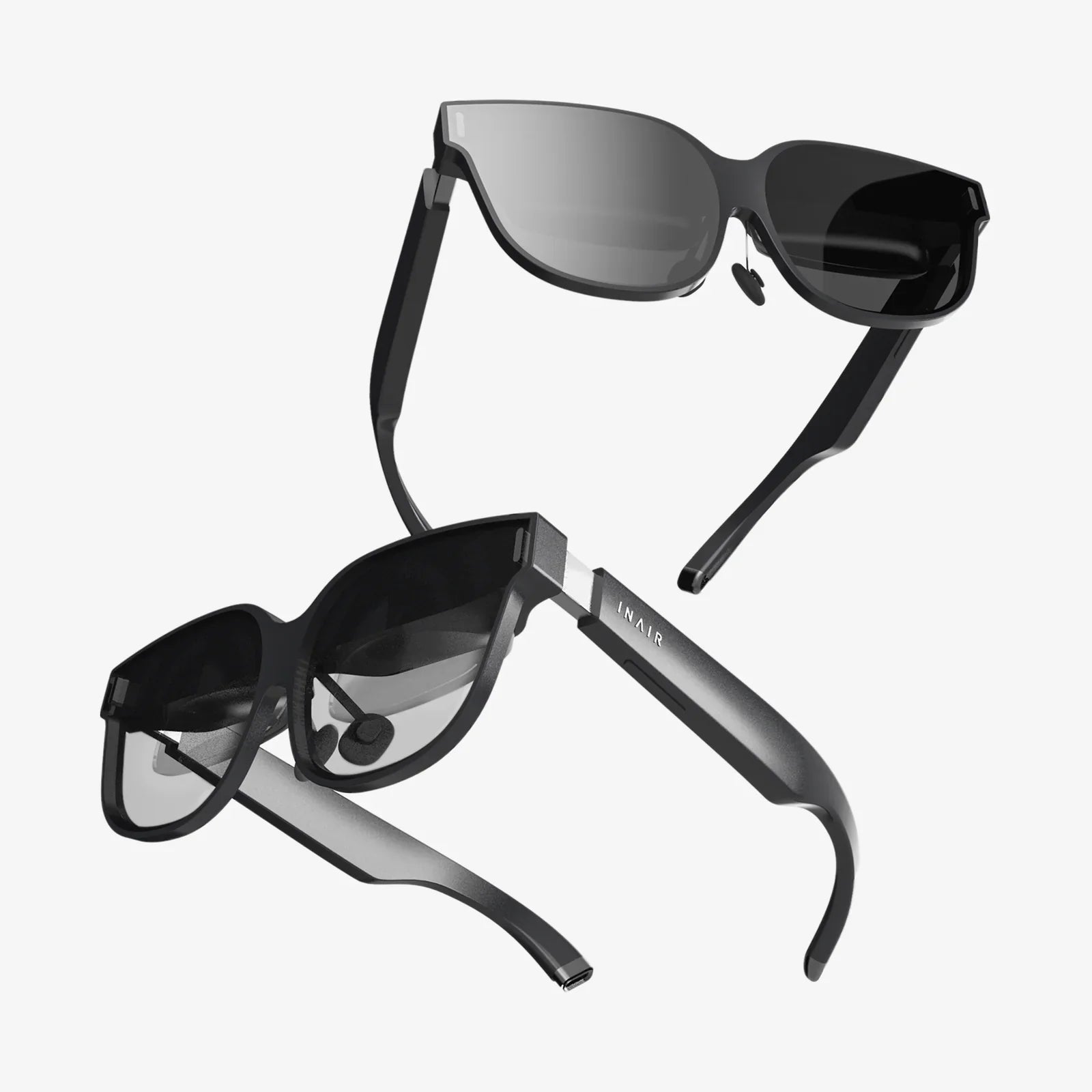
Imagine a world where digital information doesn’t just appear on a screen but is seamlessly woven into the fabric of your physical environment, where virtual objects can interact with your real-world desk, and holographic colleagues can sit across from you as if they were truly in the room. This is no longer the stuff of science fiction; it's the burgeoning frontier of spatial computing, a spectrum dominated by two powerful but often confused technologies: Augmented Reality and Mixed Reality. Understanding the difference between them is key to unlocking how we will work, learn, and play in the decades to come.
Defining the Spectrum: From Reality to Virtuality
To truly grasp the difference between Mixed and Augmented Reality, we must first place them on the broader continuum known as the Virtuality Continuum. This concept, introduced by Paul Milgram and Fumio Kishino in 1994, describes a spectrum of experiences that range from the completely real environment to a completely virtual one.
- Real Environment: The physical world as we perceive it with our unaided senses.
- Augmented Reality (AR): A view of the real world enhanced with digital overlays. These overlays are informational and do not interact with the environment.
- Augmented Virtuality (AV): A primarily virtual world where elements of the real world are incorporated. This is a less common term but sits between AR and MR.
- Mixed Reality (MR): A blend of the real and virtual worlds where physical and digital objects co-exist and interact in real-time.
- Virtual Reality (VR): A fully immersive, computer-generated simulation that replaces the real world.
While AR and MR are neighbors on this spectrum, the line between them is defined by one critical factor: the level of interaction between the digital and the physical.
Augmented Reality: The World as an Informational Canvas
Augmented Reality is the simpler and more widely experienced of the two technologies for most consumers. At its core, AR superimposes computer-generated information—be it images, text, data, or simple 3D models—onto the user's view of the real world. The key characteristic of AR is that these digital elements are merely superimposed; they are aware of the general space but not the specific objects within it.
How AR Works: Marker-Based and Markerless Tracking
AR experiences are typically delivered through smartphone or tablet cameras, or via simpler smart glasses. The technology uses various methods to anchor digital content:
- Marker-Based AR (Image Recognition): This method uses a physical visual marker, like a QR code or a specific image, as a trigger. The device's camera identifies the marker and overlays the predetermined digital content onto it. The digital object stays locked to the marker's position.
- Markerless AR (Location-Based or SLAM): This more advanced form uses technologies like GPS, accelerometers, and digital compasses in mobile devices to place digital content in a specific location in the real world. A more sophisticated version uses a process called Simultaneous Localization and Mapping (SLAM), which allows the device to understand its environment and place objects on surfaces like floors or tables without a pre-defined marker. However, the interaction remains limited.
Key Characteristics of AR:
- Digital Overlays on the Real World: The primary function is to add a layer of information.
- Limited Environmental Interaction: A digital dinosaur might appear in your park, but it won't hide behind a real tree. It will simply pass in front of or behind it based on basic depth mapping.
- Device Agnostic: Mostly experienced on common mobile devices, making it highly accessible.
- Consumer-Focused Applications: Widely used in gaming, retail (trying on clothes virtually), and navigation (arrows superimposed on the road).
Mixed Reality: Where the Digital and Physical Worlds Collide
If Augmented Reality is about putting information on your world, Mixed Reality is about putting digital objects into your world. MR is the next evolutionary step, creating environments where physical and digital elements not only coexist but are fundamentally interconnected. This creates a truly immersive experience where the virtual world is responsive to the real world.
The Magic of MR: Environmental Understanding and Occlusion
The technological leap from AR to MR is significant. MR requires advanced sensors, cameras, and powerful processors to continuously scan, map, and understand the geometry, lighting, and physics of the surrounding space. This enables two groundbreaking capabilities:
- Precise Occlusion: This is the ability for real-world objects to convincingly block virtual objects. In MR, if you place a virtual coffee cup on your real desk and then walk a real book in front of it, the cup will be hidden behind the book. This creates a powerful illusion of presence.
- Environmental Interaction: Virtual objects can interact with the physical environment. A virtual ball can bounce off a real wall, a holographic character can jump onto your real sofa, and a digital light source can cast realistic shadows onto your physical room.
Key Characteristics of MR:
- Seamless Blending and Interaction: Digital and physical objects interact in real-time.
- Advanced Spatial Mapping: Uses depth sensors and cameras to create a detailed 3D map of the environment.
- Immersive Input: Relies on hand-tracking, eye-tracking, and voice commands for intuitive interaction with holograms.
- Specialized Hardware: Requires powerful headsets with a suite of sensors, often called holographic or MR headsets.
- Enterprise and Prosumer Focus: Initially targeted at complex design, remote collaboration, and industrial training.
A Comparative Table: AR vs. MR at a Glance
| Feature | Augmented Reality (AR) | Mixed Reality (MR) |
|---|---|---|
| Core Principle | Overlaying digital information onto the real world. | Merging digital and real worlds to allow for interaction. |
| Environmental Awareness | Basic (surfaces, limited depth). | Advanced (precise 3D mapping, understands objects). |
| Interaction | Digital content does not interact with physical objects. | Digital and physical objects interact seamlessly. |
| Occlusion | Primitive or non-existent. | Highly accurate; real objects block virtual ones. |
| Primary Devices | Smartphones, tablets, simple smart glasses. | Advanced headsets with multiple sensors and cameras. |
| User Immersion | Supplementary experience; the user remains grounded in reality. | Highly immersive; the user perceives digital objects as part of their reality. |
| Example Use Case | Viewing a 3D model of a piece of furniture in your room via your phone. | Designing a piece of furniture in your room, seeing it cast accurate shadows, and walking around it. |
The Real-World Impact: Applications Shaping Our Future
The theoretical differences between AR and MR crystallize when we examine their practical applications across various industries.
Augmented Reality in Action
- Retail & E-commerce: Trying on glasses, makeup, or seeing how a new sofa looks in your living room before buying.
- Navigation: Live view navigation apps overlay directional arrows and street names onto a real-time camera feed.
- Gaming: Location-based games that place characters and items in parks and cities for players to find and interact with.
- Maintenance & Repair: Technicians can see instructional overlays and diagrams superimposed on the machinery they are fixing.
Mixed Reality Revolutionizing Industries
- Design & Engineering: Architects and engineers can create and manipulate full-scale 3D holograms of their designs within a physical space, collaborating with remote colleagues who appear as avatars.
- Healthcare: Surgeons can overlay 3D scans of a patient's anatomy directly onto their body during procedures for unparalleled precision. Medical students can practice complex surgeries on interactive holograms.
- Remote Collaboration: A field engineer wearing an MR headset can receive real-time guidance from an expert thousands of miles away, who can draw diagrams and point to components in the engineer's actual field of view.
- Training & Simulation: Creating hyper-realistic training scenarios for dangerous jobs (e.g., firefighting, surgery, equipment operation) where virtual elements respond to the real-world environment.
The Blurring Line and The Path Forward
As technology rapidly advances, the line between AR and MR is becoming increasingly blurred. High-end AR devices are incorporating more sophisticated sensors, granting them MR-like capabilities, while MR systems are striving for the smaller form factor and accessibility of AR glasses. The ultimate goal for many in the industry is a single pair of ubiquitous, lightweight glasses capable of delivering the full spectrum of experiences—from simple AR notifications to fully immersive MR simulations—all day long. This convergence is often referred to under the broader umbrella term of spatial computing.
The journey from simple AR overlays to complex MR interactions represents a fundamental shift in how we interface with technology. It moves us away from isolated screens and into a future where computing is contextual, environmental, and intimately tied to our physical lives. The distinction, for now, is crucial for developers, enterprises, and early adopters to understand the capabilities and requirements of each technology. But for the end-user, the future promises a seamless blend of both, forever changing our perception of what is real and what is possible.
This isn't just about cooler games or trying on virtual clothes; it's about a fundamental rewiring of human-computer interaction that will redefine collaboration, amplify human capability, and unlock new forms of creativity we are only beginning to imagine. The next time you look at an empty room, just think—it might soon be filled with a universe of digital potential, waiting for you to reach out and interact.
Share:
What Are Voice Commands: The Ultimate Guide to Conversational Computing
How to Use Spatial Audio: The Ultimate Immersive Sound Guide