


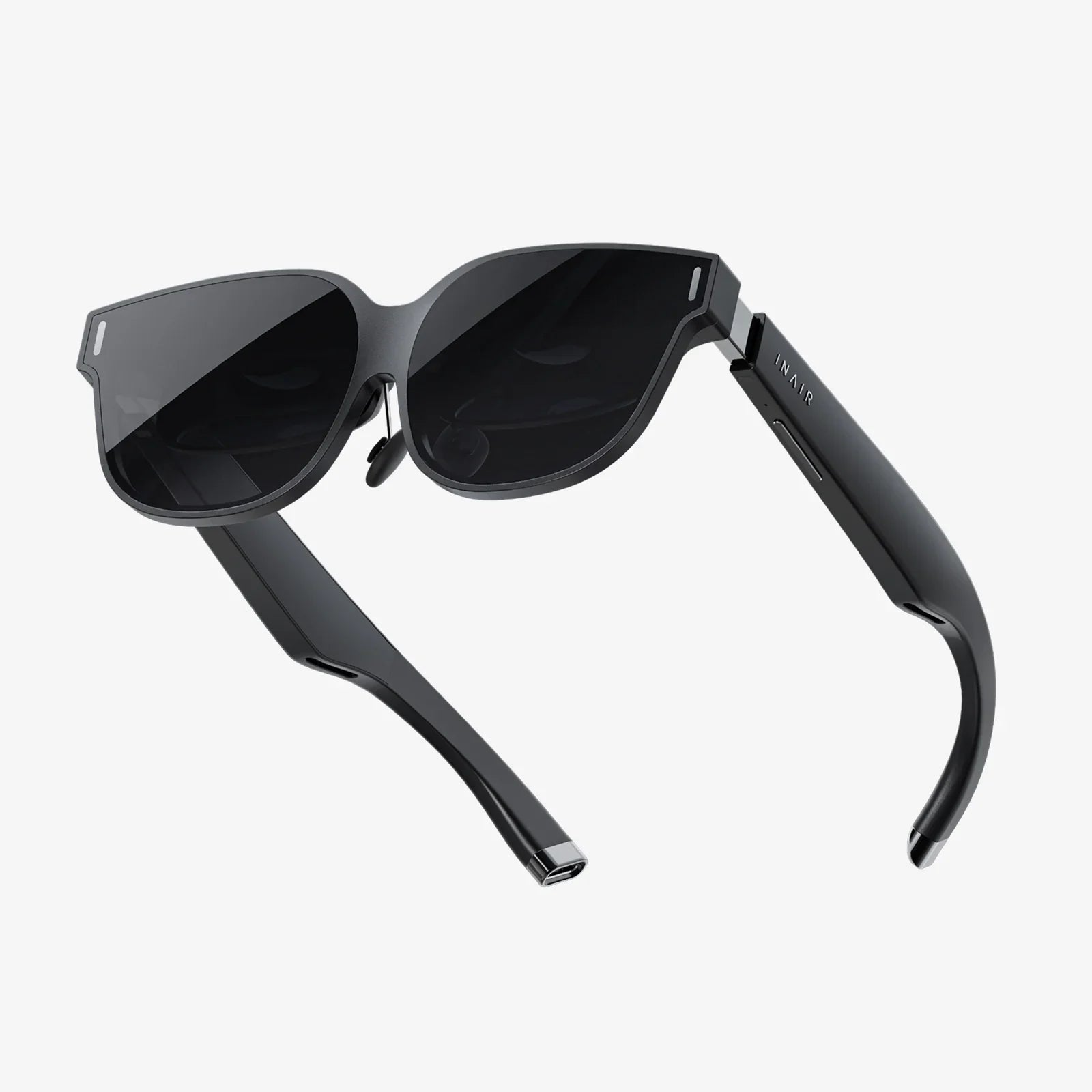
You've strapped on a headset, but what world awaits you? Is it a complete digital escape, or a revolutionary blend of the physical and the virtual? The line between science fiction and reality has blurred, and understanding the fundamental difference between MR and VR is your first step into the next computing revolution. This isn't just about gaming; it's about how we will work, learn, and connect tomorrow.
The Core Divide: Isolation Versus Integration
At its heart, the difference between MR and VR is a philosophical one about our relationship with the digital world. Virtual Reality is fundamentally an isolating technology. It aims to completely replace your visual and auditory reality with a simulated one, effectively transporting your consciousness to a different place, whether a fantasy game world, a prehistoric landscape, or the surface of Mars. The goal is immersion through separation.
Mixed Reality, on the other hand, is an integrative technology. It doesn't seek to remove you from your environment but to enhance it. MR digitally grafts information, objects, and characters onto your real-world view. The goal is contextual enhancement, allowing you to interact with both physical and digital elements simultaneously in a cohesive experience. Think of it as a technological superpower that lets you see and manipulate a layer of digital data overlaid on top of everything you normally see.
Defining the Realms: A Technical and Experiential Breakdown
Virtual Reality (VR): The Total Digital Escape
Virtual Reality is the older and more established of the two technologies. Its primary objective is to create a convincing, all-encompassing digital simulation.
- Technology: VR headsets are typically opaque, using internal displays to project images directly to the user's eyes. They employ a combination of sensors—including accelerometers, gyroscopes, and frequently external base stations or inside-out cameras—to track head movements (6 degrees of freedom tracking) to make the virtual world respond naturally as you look around. Controllers are almost always required to interact with this new environment.
-
Experience: The user experience is one of presence—the powerful sensation of actually being in the virtual space. Your physical surroundings are completely blocked out. This makes VR exceptionally powerful for:
- Gaming: Deep, immersive gameplay where the real world is a distraction.
- Training Simulations: Practicing dangerous or expensive tasks like flight simulation, surgical procedures, or military drills in a risk-free environment.
- Virtual Tourism & Storytelling: Experiencing places and narratives firsthand as if you were truly there.
- Limitations: The major drawback is physical isolation. You are blind to your actual environment, which requires a cleared, safe space to use and makes it impractical for prolonged social interaction with people outside the headset.
Mixed Reality (MR): The Best of Both Worlds
Mixed Reality is a more complex technological feat. It doesn't just display a world; it understands and interacts with yours.
- Technology: MR headsets use transparent lenses or cameras to pass a live video feed of your environment to displays in front of your eyes (often called passthrough technology). The magic lies in the sophisticated sensor arrays—including depth sensors, cameras, and LiDAR—that map and understand the geometry of your physical space in real-time. This allows digital objects to be placed on your real table, occluded by your real couch, and able to interact with your real walls.
-
Experience: The user experience is one of blended interaction. You can have a virtual television screen pinned to your living room wall, examine a holographic engine model from every angle on your desk, or play a game where alien invaders burst through your actual doors and windows. Key applications include:
- Design & Prototyping: Architects visualizing a new building on an empty plot of land or engineers collaborating on a 3D model.
- Remote Assistance & Collaboration: A expert technician can see what a field worker sees and draw arrows and diagrams directly into their field of view to guide them through a repair.
- Interactive Learning: A student can dissect a virtual frog on their kitchen table or watch historical events unfold in their classroom.
- Spectrum of Reality: It's crucial to understand that MR exists on a spectrum, often encapsulated by the broader term Extended Reality (XR). On one end, you have Augmented Reality (AR), which simply overlays basic digital information (like a navigation arrow on your windshield) without deep environmental understanding. True MR sits further along, where the digital and physical objects can interact in real-time.
The Hardware Divide: How the Headsets Tell the Story
The fundamental difference in purpose between MR and VR is physically embodied in their hardware designs.
VR Headsets are built like a fortress against the outside world. They prioritize high-resolution, high-refresh-rate displays to maximize visual fidelity and reduce motion sickness. Their design is about creating a sealed chamber for your senses. They can be tethered to a powerful computer for maximum performance or operate as standalone units, but the principle remains the same: the real world is out, the virtual world is in.
MR Headsets are built like sophisticated sensors-on-a-headband. They are, first and foremost, windows. Their design prioritizes high-resolution passthrough cameras, precise environmental tracking sensors, and enough processing power to analyze the real world in milliseconds. The challenge is making the digital overlay look convincing and anchored in your space, which requires immense computational power to handle spatial mapping and lighting matching. This often makes high-end MR hardware more complex and costly.
Choosing Your Reality: Use Case is King
The question is not "Which technology is better?" but "Which technology is right for the task?"
Choose Virtual Reality when: You need complete focus and immersion. The goal is to escape, train for a specific task in a simulated environment, or experience a narrative without any distractions from the physical world. It is the ultimate tool for total transportation.
Choose Mixed Reality when: The context of your physical environment is crucial. The goal is to enhance your existing world with digital tools, collaborate with people both physically present and remote, or bring digital creativity into your living space. It is the ultimate tool for augmentation and practical utility.
The Future is a Blended One
As technology progresses, the lines between these realities will continue to blur. We are already seeing VR headsets incorporating high-quality color passthrough, effectively giving them MR capabilities. The ultimate destination may be a single, lightweight device capable of seamlessly shifting between a fully virtual experience and an augmented, mixed one based on the user's needs in that moment.
The development of more powerful and efficient processors, better displays, and advanced AI that can understand our intentions will push both MR and VR toward a future where the digital and physical are inextricably linked. This will redefine fields from medicine and manufacturing to social media and entertainment, creating new forms of expression and problem-solving we are only beginning to imagine.
Imagine a world where your workspace is limitless, your learning tools are interactive holograms, and your meetings feel as natural as sitting across a table, even when oceans apart. This isn't a distant dream—it's the inevitable path we're on, driven by the powerful and distinct evolution of both virtual and mixed realities. The journey into these new dimensions starts with understanding the path you want to take.
Share:
Looking Glass VR: A Glimpse into the Future of Immersive Experience
VR Headset Info: The Ultimate Guide to Immersive Technology