


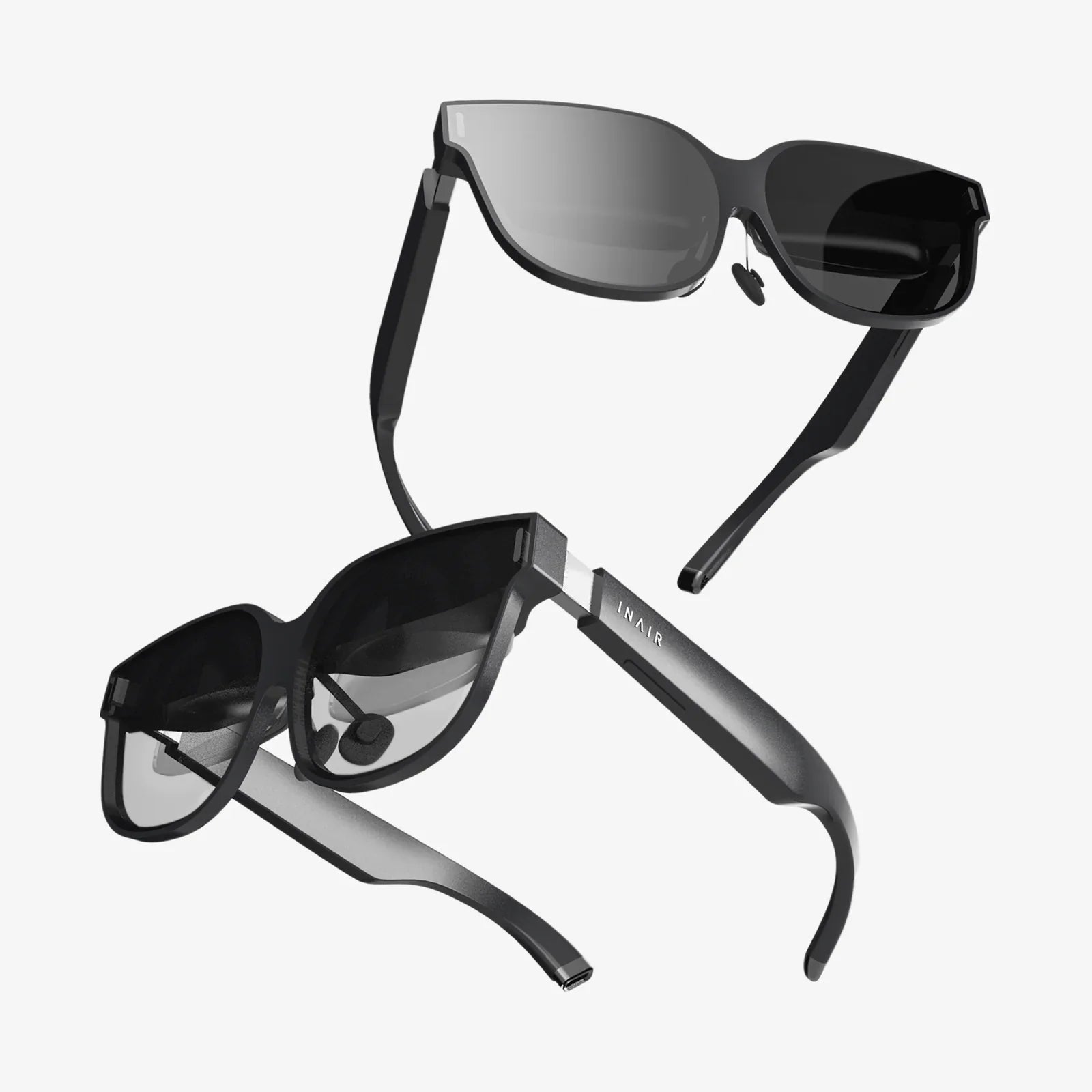
You hold a sleek, familiar tablet in your hands, but the world it reveals is anything but ordinary. The line between your living room and a digital universe begins to blur, and you're left wondering: is this MR, XR, or something else entirely? In the rapidly evolving landscape of immersive technology, two acronyms dominate the conversation, often used interchangeably yet representing profoundly different concepts. Understanding the difference between MR and XR in tablets is not just tech jargon; it's the key to unlocking the future of how we will work, learn, play, and connect. This isn't about picking a winner; it's about mapping the exciting spectrum of reality that modern tablets are now powerful enough to deliver.
Demystifying the Acronyms: A Lexicon of New Realities
Before we dive into the specifics of tablet technology, we must first build a foundational understanding of the terms that define this space. They are often visualized on a spectrum, often called the "Virtuality Continuum," which ranges from the completely real environment to a fully virtual one.
What is XR (Extended Reality)?
Think of XR not as a specific technology, but as an umbrella term. Extended Reality (XR) is the super-category that encompasses all immersive technologies, including Augmented Reality (AR), Virtual Reality (VR), and Mixed Reality (MR), along with any future blends that have yet to be developed. Its purpose is to extend the reality we experience by either blending the virtual and real worlds or creating a fully immersive, digital environment. When a tablet manufacturer claims XR capabilities, they are stating that the device can support some form of these immersive experiences, acting as a gateway to this broader ecosystem.
What is MR (Mixed Reality)?
If XR is the entire solar system, Mixed Reality (MR) is a specific planet within it. MR is the most advanced and immersive form of augmented reality, where digital and physical objects co-exist and interact in real-time. It's not just about overlaying a static digital image onto your world through the camera; it's about that digital object understanding and responding to your environment. A true MR experience on a tablet would involve a virtual character that can hide behind your real-world sofa, or a digital control panel that you can physically walk around to examine from different angles, with the tablet's sensors accurately mapping the space and anchoring the object within it.
The Crucial Relationship
The core difference between MR and XR in tablets boils down to this: XR is the entire field of play, while MR is a specific, advanced player on that field. All MR is XR, but not all XR is MR. A simple AR filter on social media is XR. A fully immersive VR game is XR. But only an experience that seamlessly merges and interactively combines the real and virtual worlds qualifies as MR.
The Technology Inside: How Tablets Enable These Experiences
The leap from standard computing to facilitating MR and other XR experiences requires a significant hardware upgrade. A standard tablet might struggle, but an XR-ready tablet is a technological powerhouse designed for this new dimension of interaction.
Sensors: The Eyes and Ears of the Tablet
This is where the magic begins. To understand the real world, the tablet needs to perceive it. This goes far beyond a standard camera.
- High-Resolution Cameras: Multiple cameras are used to capture the environment from different angles, providing the data needed for depth perception.
- Depth Sensors (LiDAR/ToF): This is arguably the most critical sensor for high-end MR. Light Detection and Ranging (LiDAR) or Time-of-Flight (ToF) sensors fire out thousands of invisible laser points to measure the exact distance to every object in a room. This creates a detailed 3D depth map almost instantly, allowing digital objects to occlude correctly and interact with the physical geometry of the space.
- IMUs (Inertial Measurement Units): These include accelerometers and gyroscopes that track the precise movement, rotation, and orientation of the tablet itself in space.
- Advanced Software Algorithms: The raw data from these sensors is useless without powerful software. Simultaneous Localization and Mapping (SLAM) algorithms process this data in real-time to both map the environment and track the tablet's position within that map simultaneously.
Processing Power: The Brain Behind the Operation
All this sensor data requires immense computational power to process without lag. Lag, or latency, is the enemy of immersion and can cause user discomfort. XR-ready tablets feature top-tier processors with dedicated cores for AI and machine learning tasks, which are essential for object recognition, spatial mapping, and gesture tracking. The GPU (Graphics Processing Unit) is also pushed to its limits, rendering complex 3D graphics that must be perfectly anchored in the real world at a high and stable frame rate.
Display and Audio: Selling the Illusion
The final output must convince your senses. Tablets designed for these experiences often boast high-refresh-rate displays (120Hz) for buttery-smooth motion and minimal blur. While they don't have the fully enclosed displays of VR headsets, their screens are the window into the blended world. Spatial audio is equally important, using advanced algorithms to make sounds seem like they are coming from specific points in your room, further selling the illusion that the digital object is truly there.
Experiential Differences: What It Actually Feels Like on a Tablet
The theoretical differences become crystal clear when you experience them firsthand.
The XR Experience on a Tablet
Using a tablet for a broader XR experience is often app-specific and can range from simple to moderately complex.
- Simple AR (a form of XR): You open an app, point your tablet's camera at a predefined image target (like a QR code or a furniture catalog), and a 3D model of a product appears on your screen, superimposed on your room. You can often move the tablet around it, but the digital object doesn't truly understand the space. It doesn't know if it's floating in mid-air or sitting correctly on your floor.
- Basic VR (a form of XR): You slot your tablet into a low-cost VR headset holder. The screen splits into two images (one for each eye), and you are transported into a fully digital environment. While immersive, you are blind to your actual surroundings, and interaction is typically limited to a Bluetooth controller.
These are valid XR experiences, but they represent the earlier, more segregated ends of the spectrum.
The MR Experience on a Tablet
An MR experience on a capable tablet is fundamentally different and more advanced.
- Environmental Understanding: The first time you use a true MR app, the tablet will often ask you to slowly scan your room. It's building its real-time 3D map. Once complete, the digital content has a spatial awareness that basic AR lacks.
- Realistic Occlusion: This is the "holy grail" visual cue. If you move your tablet so that a real-world table passes in front of a digital dinosaur, the dinosaur will be realistically hidden behind the table. The digital object is not just a overlay; it exists in the world.
- Physical Interaction: You can place a virtual chessboard on your actual coffee table. When you walk around the table, your perspective on the game changes just as it would with a physical board. You can't knock the pieces over with your hand, but advanced MR can even incorporate gesture tracking to allow for some direct manipulation.
- Persistence: In some advanced implementations, the MR world can be persistent. You could place a digital sticky note on your real refrigerator, and it might still be there the next time you open the app, because the tablet remembers the spatial anchors it created.
The feeling is less of "viewing a digital effect" and more of "visiting a place where the rules of reality have been subtly rewritten."
Applications and Use-Cases: From Gimmick to Game-Changer
The value of understanding the difference between MR and XR in tablets is realized in their practical applications. Different problems require different solutions on the reality spectrum.
Where XR Shines
The broader XR umbrella offers a wide array of valuable applications that don't require the full complexity of MR.
- Retail and E-commerce: Using simple AR to visualize how a new lamp or a framed picture will look on your wall before you buy it.
- Education: Bringing textbooks to life. Students can point their tablet at a diagram of the human heart and see a 3D, beating model spin above the page.
- Marketing and Entertainment: Interactive AR filters for social media, or VR-style 360-degree videos that let you look around a movie scene by moving your tablet.
- Field Service: An engineer can have a schematic or instruction manual overlaid onto the machinery they are repairing, providing hands-free guidance.
Where MR Becomes Essential
MR is for scenarios where context and interaction with the real world are paramount.
- Advanced Design and Prototyping: Architects and interior designers can place full-scale, interactive 3D models of their designs into an empty physical space. They can walk clients through a building that doesn't exist yet, seeing how light from the real windows falls on the virtual walls at different times of day.
- Complex Training and Simulation: Medical students can practice procedures on a virtual patient that is lying on a real hospital bed. The tablet understands the bed's location, making the simulation incredibly realistic. Mechanics can learn to repair a virtual engine bolted onto a real workbench.
- Remote Collaboration: This is a killer app for MR. A expert in another country can see your real-world environment through your tablet's camera. They can then draw diagrams in your space, highlight specific components with digital arrows, and place 3D instructions directly onto the equipment you're working on, as if they were standing right next to you.
- Interactive Data Visualization: Imagine a weather forecaster manipulating a 3D, real-time hurricane model that hovers over their desk, slicing through it to show internal pressures and wind speeds, all while seeing their physical hands interact with the data.
Choosing Your Path: What to Look For in a Tablet
Your needs will dictate whether you should invest in a tablet that merely supports XR or one that is fully optimized for MR experiences.
For General XR Exploration: Many modern mid-range and higher tablets can handle basic AR and VR experiences. Look for a decent processor, a good-quality camera, and support for the latest AR software frameworks. This will open the door to a vast world of apps for fun, shopping, and light productivity.
For Serious MR Capability: You will need to look for a high-end tablet explicitly marketed for its advanced AR/MR features. The non-negotiable hardware feature is a LiDAR or advanced ToF scanner. This sensor is the primary differentiator that enables the environmental understanding and occlusion required for true mixed reality. Pair this with the most powerful processor available, a high-refresh-rate display, and ample RAM, and you have a device that is ready for the most demanding immersive applications.
The Future is Blended
The evolution of this technology points toward a future where the distinction between MR and other forms of XR may become less important as the technology becomes more accessible and capable. We are moving towards lightweight AR glasses that will eventually replace the tablet-as-a-window approach, offering a seamless, always-available blended reality experience. The development work happening on today's advanced tablets is the crucial stepping stone to that future, refining the algorithms and proving the use-cases that will define the next era of personal computing.
Imagine a world where your next creative project isn't confined to a screen but spills out onto your desk, reacting to your touch and the space around it. The journey to that future starts by understanding the tools of today. The tablet in your hand is no longer just a portal to the internet; it's a lens for a new layer of reality, and knowing whether you're looking through an XR or MR lens changes everything you're capable of seeing and creating.
Share:
How to Find a VR Headset: The Ultimate Guide to Your Perfect Immersive Experience
VR Doesn't Work on My iPhone: The Ultimate Troubleshooting and Compatibility Guide