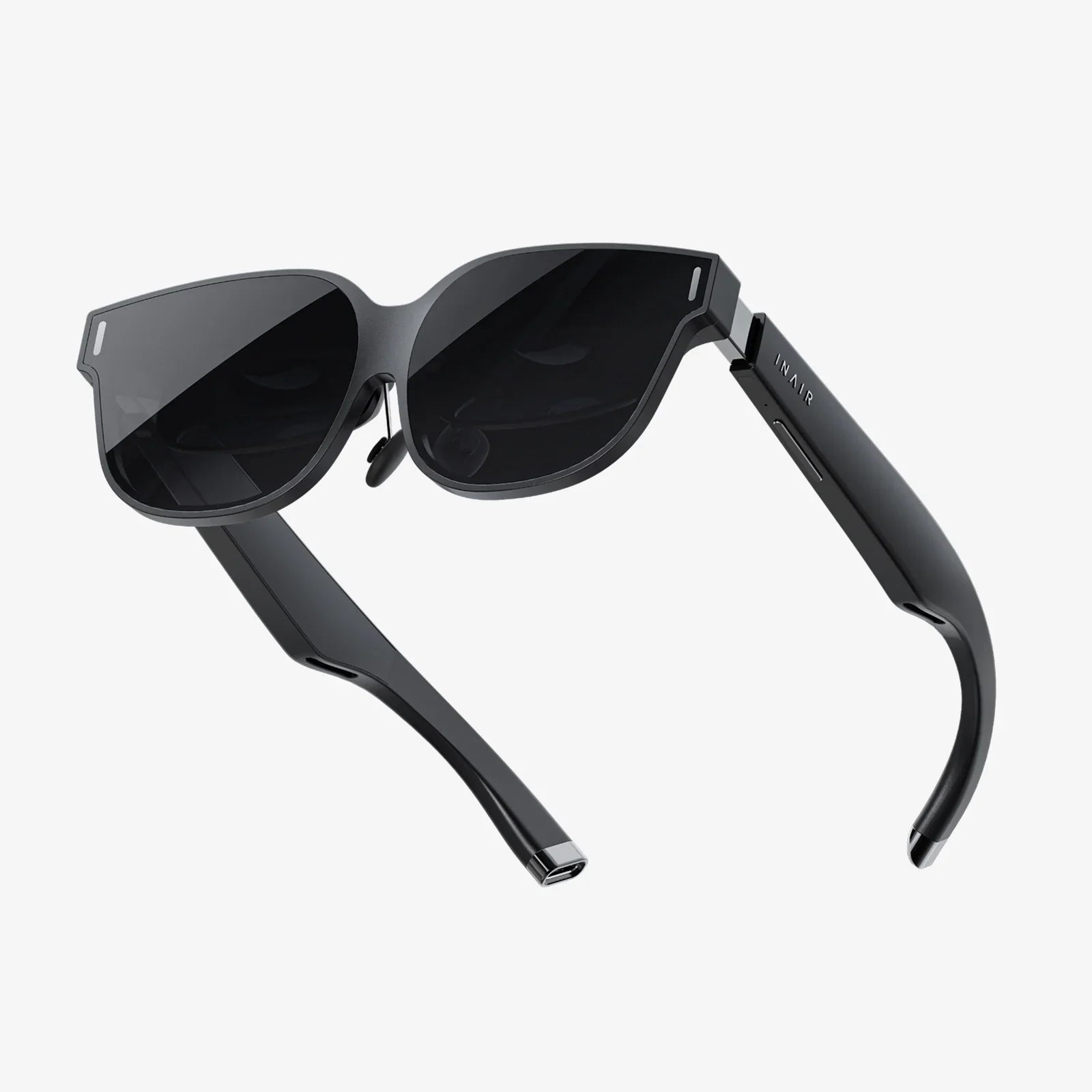
In an era dominated by technological buzzwords, two terms consistently capture the public imagination, often spoken in the same breath yet representing vastly different realms of innovation: robotics and virtual reality. While both stand as titans of modern engineering and computer science, promising to reshape our world, the fundamental difference between robotics and virtual reality is as profound as the chasm between the physical and the digital. One seeks to manipulate our tangible reality through autonomous machines; the other aims to replace it entirely with immersive, simulated experiences. Understanding this distinction is not just academic—it's crucial for grasping the trajectory of our technological future and the unique challenges and opportunities each field presents.
Defining the Domains: Core Concepts and Principles
At its most elemental level, the difference between robotics and virtual reality can be distilled into a single concept: actuation versus simulation.
What is Robotics?
Robotics is an interdisciplinary branch of engineering and science that includes mechanical engineering, electrical engineering, and computer science. It is concerned with the design, construction, operation, and use of robots. The ultimate goal of robotics is to create machines that can assist and help humans, often by taking over tasks that are dangerous, repetitive, or require superhuman precision. A robot is a physical entity, an electromechanical system that exists in and interacts with the real, physical world. Its core functions involve:
-
Sensing: Using sensors (e.g., cameras, LiDAR, torque sensors) to perceive its environment.
-
Processing: Using onboard computers and algorithms to make decisions based on sensor data and pre-programmed instructions.
-
Actuation: Using motors, actuators, and end-effectors (like grippers or welders) to physically manipulate its surroundings.
The success of a robotic system is measured by its ability to perform a physical task accurately, efficiently, and safely within the constraints of the real world, with all its friction, gravity, and unpredictability.
What is Virtual Reality?
Virtual Reality (VR), in stark contrast, is a simulated experience that can be similar to or completely different from the real world. It is a computer-generated environment that is primarily a software-based construct. VR's goal is to immerse the user in a digital world, tricking their senses into believing they are somewhere else. It is primarily concerned with perception and experience rather than physical manipulation. The core components of a VR system are:
-
Immersion: Using head-mounted displays (HMDs) and audio systems to replace the user's sensory input with digital information.
-
Interactivity: Using motion trackers and controllers to allow the user's movements to influence the virtual environment.
-
Simulation: Generating a convincing, real-time, and responsive 3D world through powerful graphics rendering engines.
The success of a VR system is measured by the fidelity of the immersion—the sense of "presence" a user feels—and the believability of the simulation, free from the latencies and graphical flaws that can break the illusion.
The Great Divide: A Comparative Analysis
The primary difference between robotics and virtual reality establishes a series of subsequent contrasts across every aspect of their existence.
Nature of Existence: Physical vs. Digital
This is the most fundamental distinction. A robot has mass, occupies space, and is subject to the laws of physics. It can be touched and, if it malfunctions, can cause physical damage. Virtual reality, however, is entirely informational. It exists as code and pixels. A user can "see" a virtual object but cannot physically touch it (without additional haptic technology). A glitch in a VR system might break immersion, but it won't cause a physical collision.
Primary Objective: Interaction vs. Immersion
The core purpose of a robot is to interact with the physical world to achieve a task. This could be welding a car chassis, sorting packages in a warehouse, or performing delicate surgery. Its value is derived from its physical output. The core purpose of VR is to immerse the human consciousness into a digital world for purposes like training, entertainment, design, or social connection. Its value is derived from the quality of the user's subjective experience.
Key Challenges: Physics and Uncertainty vs. Perception and Latency
The monumental challenges in robotics are overwhelmingly tied to the complexity of the real world. Engineers must overcome:
-
Uncertainty: The real world is messy and unpredictable. A robot must be able to handle objects that are slightly different, surfaces that are uneven, and lighting conditions that change.
-
Physics: Mastering dynamics, kinematics, and force control is paramount. A robot arm must know exactly how much force to apply to screw in a lightbulb without shattering it.
-
Safety and Ethics: A physical machine operating around humans requires immense safeguards to prevent harm, raising complex ethical questions.
The central challenges in VR are largely centered on human perception and computational power:
-
Latency: The delay between a user moving their head and the display updating must be less than 20 milliseconds to avoid motion sickness and maintain presence.
-
Visual Fidelity: Creating high-resolution, photorealistic graphics in real-time requires immense processing power.
- Haptic Feedback:
Providing a sense of touch within a digital world remains a significant hurdle, though technologies like force-feedback gloves are making progress.
Unexpected Convergences: Where the Lines Blur
Despite their profound differences, robotics and virtual reality are not always mutually exclusive. There are fascinating and powerful areas where these two technologies intersect and synergize, creating new paradigms of use.
Teleoperation and Telepresence
This is the most direct fusion of the two fields. Teleoperation involves a human operator controlling a physical robot from a distance. VR becomes the ultimate interface for this. Instead of looking at a robot's camera feed on a 2D screen, an operator wearing a VR headset can feel like they are inside the robot's body. They can look around the remote environment naturally and use motion-controlled interfaces to guide the robot's actions. This is invaluable for:
- Performing surgery across continents.
- Conducting maintenance in highly hazardous environments like nuclear facilities or deep underwater.
- Exploring deep space or other planets with a human's decision-making intelligence and a robot's durable body.
Here, VR provides the immersive perception and control, while robotics provides the physical agency in the real world.
Digital Twins and Simulation
Before a physical robot is ever built or deployed, it is extensively tested and programmed within a virtual environment. Engineers create a "digital twin"—a perfect virtual replica of the robot and its intended workspace. This allows them to:
- Test thousands of operational scenarios and identify potential failures without any risk of physical damage.
- Program and optimize complex tasks like motion paths and assembly sequences offline.
- Train AI algorithms that will control the robot in a safe, scalable, and accelerated virtual sandbox.
In this context, virtual reality serves as a powerful visualization tool to step inside these simulations, walking around a virtual factory floor to inspect a robot's proposed workflow from a human perspective.
VR for Robot Programming and Interface
Traditional robot programming is often a complex, code-heavy process. VR is now being used to create intuitive programming interfaces. A technician wearing a VR headset can simply demonstrate a task by physically moving their hands—their movements are tracked and translated into a path for the robot to follow. This "programming by demonstration" drastically simplifies the process and makes it accessible to non-experts.
Gazing into the Future: Separate and Joint Evolution
The trajectories of robotics and VR will continue to be defined by their core principles, but their convergence will become increasingly common and sophisticated.
The Future of Robotics
Robotics will advance through greater autonomy, powered by more sophisticated AI and machine learning. We will see the rise of:
-
Collaborative Robots: Machines designed to work safely alongside humans, adapting to their presence in real-time.
-
Soft Robotics: Robots made from compliant materials that can safely interact with fragile objects and unpredictable environments, like the human body.
-
Swarm Robotics: Large numbers of simple robots coordinating to achieve complex tasks, inspired by insect colonies.
The challenge will remain mastering the physical world, but with ever-greater intelligence and nuance.
The Future of Virtual Reality
VR is marching towards the goal of the "ultimate simulator," striving for full sensory immersion. This path includes:
-
Photorealism: Real-time graphics that are indistinguishable from reality.
-
Haptic Suits and Feedback: Technology that can simulate touch, temperature, and even pressure across the entire body.
-
Brain-Computer Interfaces (BCIs): A more distant but possible future where neural inputs could create VR experiences directly in the mind, bypassing traditional screens and controllers altogether.
The challenge will be to create perfect, convincing illusions.
The Future of Their Convergence
The synergy between the two will deepen. We can envision a future where:
- Surgeons on one side of the globe routinely perform life-saving operations on patients elsewhere through VR-controlled robotic systems, with haptic feedback allowing them to "feel" the tissue.
- Factories are entirely designed, monitored, and controlled from within persistent virtual environments, with every physical asset represented by a live-updating digital twin.
- Disaster response is led by teams operating fleets of robots from the safety of a command center, experiencing the hazardous zone through immersive VR feeds as if they were there themselves.
In these scenarios, the line between the physical actuator and the digital interface will become seamless, creating a new paradigm of human capability.
Ultimately, the journey of these two technologies is a testament to humanity's dual desire: to enhance our physical reality with powerful mechanical allies and to escape its limitations altogether through boundless digital worlds. One extends our body; the other liberates our mind. The difference between robotics and virtual reality is the difference between mastering the world we have and inventing worlds we can only imagine—and as both fields advance, they promise to empower us to do both like never before.