


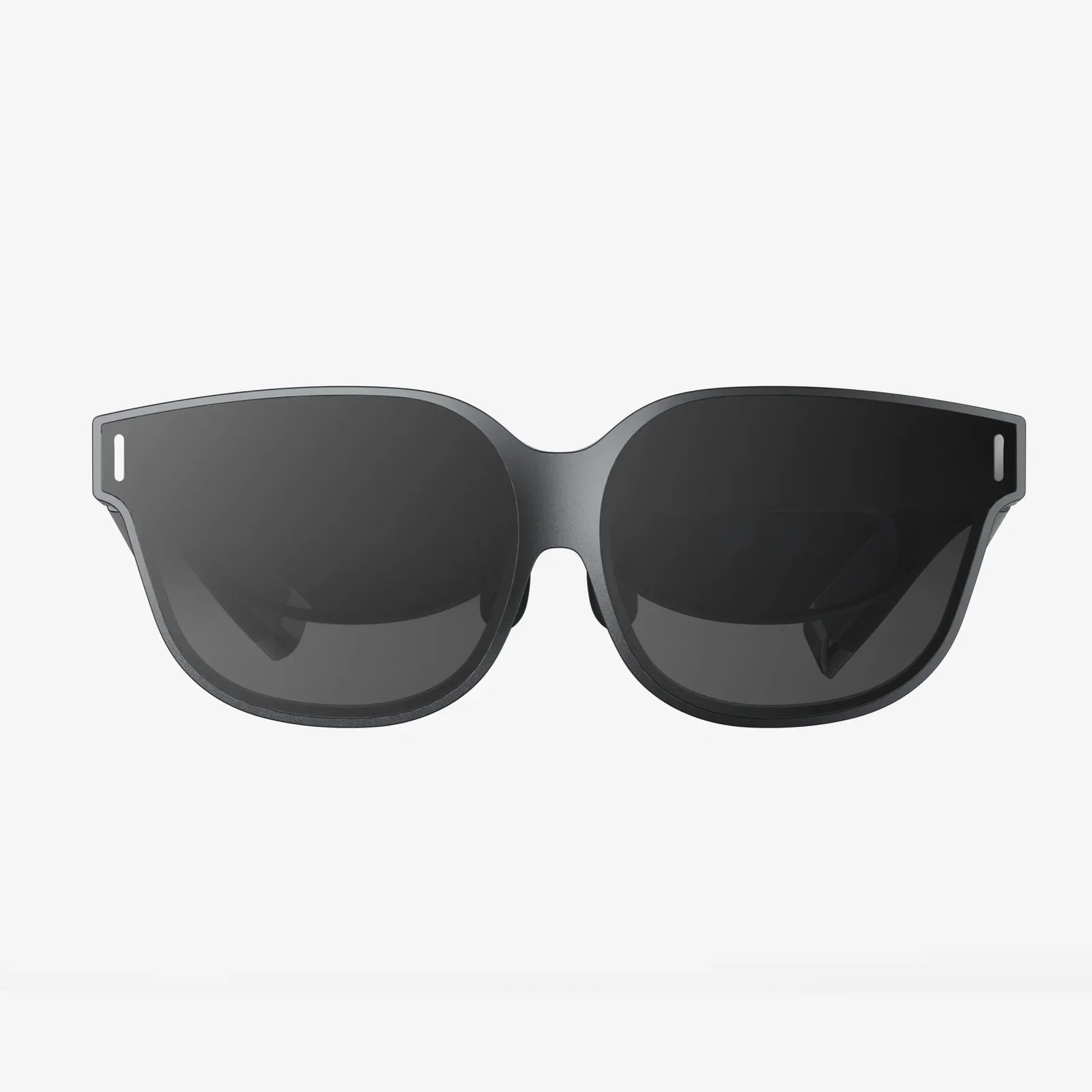
Imagine a world where your digital and physical realities are no longer separate realms but a seamless, interactive experience. This is no longer the stuff of science fiction; it's the promise of immersive technologies that are rapidly reshaping industries, entertainment, and our very perception of the world around us. Yet, amidst the buzzwords and futuristic hype, two terms often dominate the conversation: Virtual Reality and Augmented Reality. While frequently mentioned in the same breath, they represent fundamentally different approaches to blending the digital with the physical. Understanding the difference between virtual reality and augmented reality with examples is not just a technical exercise—it's a key to unlocking the potential of the next technological revolution.
The Core Philosophical Divide: Replacement vs. Enhancement
At its heart, the distinction between VR and AR is a philosophical one. Virtual Reality operates on the principle of replacement. It seeks to completely immerse the user in a fully digital, computer-generated environment, effectively shutting out the physical world. The goal is to convince your senses that you are somewhere else entirely, whether that's the surface of Mars, the depths of the ocean, or inside a human cell. It is an exercise in total escapism and simulation.
Augmented Reality, in stark contrast, is built on the principle of enhancement. It does not aim to replace your reality but to augment it by superimposing digital information—images, data, 3D models—onto your view of the real world. The physical environment remains the central stage, and the digital elements serve as a layer of interactive context. AR's power lies in its ability to provide real-time, relevant information that enhances your understanding and interaction with your immediate surroundings.
Defining the Realms: A Technical and Experiential Breakdown
To truly grasp the difference, we must look at the technology and the user experience each one creates.
What is Virtual Reality (VR)?
Virtual Reality is a simulated experience that can be similar to or completely different from the real world. It is typically delivered through a head-mounted display (HMD) or headset that blocks out the user's physical surroundings. These headsets contain screens that display a stereoscopic 3D image, creating a sense of depth and scale. Advanced systems incorporate head-tracking technology, which adjusts the on-screen perspective as the user moves their head, reinforcing the feeling of being "inside" the virtual space. This is often combined with spatial audio and handheld controllers to allow for interaction within the digital environment.
The ultimate goal of VR is to achieve a state of "presence"—the convincing illusion of being in another place. This is its defining characteristic.
What is Augmented Reality (AR)?
Augmented Reality is an interactive experience where digital objects are seamlessly overlaid onto the real-world environment. This can be achieved through various devices. While specialized glasses are being developed for this purpose, AR is most commonly experienced today through the cameras on smartphones and tablets. The device captures the real world, software processes the scene, and then the screen displays a composite view that blends both realities.
Modern AR utilizes complex technologies like simultaneous localization and mapping (SLAM) to understand the geometry of the space and precisely anchor digital objects to physical surfaces. This allows a virtual character to convincingly hide behind a real sofa or a digital instruction manual to be pinned to a physical machine. The goal is not immersion but contextual integration.
A Tale of Two Headsets: The Hardware Divide
The hardware required for each technology further highlights their differences. A dedicated VR headset is, by design, an isolating device. It features a fully enclosed design to block out ambient light and sound, with high-resolution displays positioned very close to the user's eyes. Their primary function is to create a closed-loop sensory experience.
AR hardware, particularly in its ideal form as smart glasses, is designed for transparency. The goal is to project digital imagery onto clear lenses or use cameras to pass a video feed of the real world to the user, all while allowing them to see their actual environment naturally. The hardware is meant to be worn while navigating the real world, making considerations like field of view, battery life, and social acceptability paramount.
Virtual Reality in Action: Immersive Examples
To solidify our understanding, let's explore concrete examples of VR applications.
- Gaming and Entertainment: This is the most well-known application. Users can step into fully realized fantasy worlds, wield a lightsaber, or become the quarterback in a championship football game. The entire experience is digital, offering unparalleled levels of immersion and interactivity.
- Training and Simulation: VR is revolutionizing high-stakes training. Surgeons can practice complex procedures on virtual patients without risk. Pilots have trained on flight simulators for decades, and VR is the next evolution of this concept. Companies use VR to train employees for dangerous situations, like fire drills on an oil rig or hostage negotiation for police officers, all within a safe, controlled, and repeatable virtual environment.
- Virtual Tourism and Real Estate: Potential homebuyers can take immersive, interactive 3D tours of properties across the globe without leaving their living room. Museums and historical sites offer VR experiences that transport visitors to ancient Rome or the Jurassic period, walking through digital reconstructions.
- Therapy and Rehabilitation: VR is used in exposure therapy to help patients confront phobias like a fear of heights or public speaking in a gradual, controlled manner. It's also used in physical rehabilitation, where engaging games can motivate patients to complete repetitive exercises.
Augmented Reality in the Wild: Enhancing Reality with Examples
AR's value lies in its practical application within our daily lives and work.
- Retail and E-Commerce: A famous example is the furniture store app that allows you to see how a new sofa would look in your actual living room. You point your phone's camera at the space, and a 3D model of the sofa appears at scale, letting you walk around it and see if it fits with your decor before you buy.
- Navigation: AR navigation apps project directional arrows, street names, and points of interest directly onto a live video feed of the street in front of you. This is far more intuitive than trying to match a abstract 2D map to a complex 3D world, making it easier to navigate crowded airports or unfamiliar cities.
- Industrial Maintenance and Repair: A field technician wearing AR glasses can look at a malfunctioning machine and see digital schematics, step-by-step repair instructions, or performance data overlaid directly onto the equipment. This provides hands-free access to crucial information, improving efficiency and reducing errors.
- Education: Anatomy students can point a tablet at a target to see a beating 3D heart model float in their classroom. History students can point their devices at a monument to see it digitally reconstructed to its former glory. AR brings static information to life in the context of the learning environment.
- Social Media Filters: The playful face filters that add dog ears or butterfly crowns to your selfies are a ubiquitous, lightweight form of AR. They use facial recognition to anchor digital assets to your real-world features in real-time.
Mixed Reality: Blurring the Lines Further
As technology advances, the line between VR and AR is beginning to blur, giving rise to a hybrid known as Mixed Reality (MR). MR not only overlays digital content onto the real world but also allows that content to interact with it in a believable way. A MR experience could involve seeing a virtual robot hide under your very real desk, with its movement obscured by the desk's legs. The digital object is aware of and occluded by the physical environment. This represents the next step in merging our physical and digital realities, combining the immersion of VR with the contextual awareness of AR.
Choosing the Right Tool for the Job
The decision to use VR or AR depends entirely on the desired outcome. Ask: What is the primary goal?
- Choose Virtual Reality if the goal is complete immersion, total control over the environment, training for high-risk scenarios, or creating an experience that is entirely separate from the user's physical location.
- Choose Augmented Reality if the goal is to provide contextual information, enhance a real-world task, visualize objects in a real space, or allow the user to remain present and engaged with their actual environment.
One is not better than the other; they are simply different tools designed for different purposes. A carpenter wouldn't use a sledgehammer to drive a finishing nail, and an experience designer wouldn't use VR for a task that requires the user to see their own hands and the room around them.
The Future is a Spectrum of Reality
The evolution of these technologies points toward a future where the boundaries between the real and the virtual become increasingly fluid. We are moving toward a continuum of experiences, often referred to as the "virtuality continuum," with the completely real environment at one end and a fully immersive virtual environment at the other. AR and VR are key points on this spectrum, and Mixed Reality exists somewhere in the middle. As hardware becomes more powerful, smaller, and more socially integrated, our interactions with digital information will become more natural and pervasive.
From transforming how we work and learn to redefining social connection and entertainment, the implications are vast. The key to navigating this future is a clear understanding of the fundamental principles that distinguish these powerful technologies. By knowing the difference between virtual reality and augmented reality with examples, we can better envision, create, and critically engage with the blended world of tomorrow.
Whether you're a developer dreaming up the next breakthrough application, a business leader seeking a competitive edge, or simply a curious individual fascinated by the future, this knowledge is your compass. The journey into these new realities is just beginning, and it promises to be one of the most transformative adventures of our time, reshaping everything from how we play a game to how we perform heart surgery. The door between worlds is now open, and the only limit is the imagination of those willing to step through.
Share:
Artificial Intelligence Products List: The Ultimate Guide to AI Tools Shaping Our World
AI Tool Suite: The Comprehensive Guide to Unlocking Intelligent Automation