


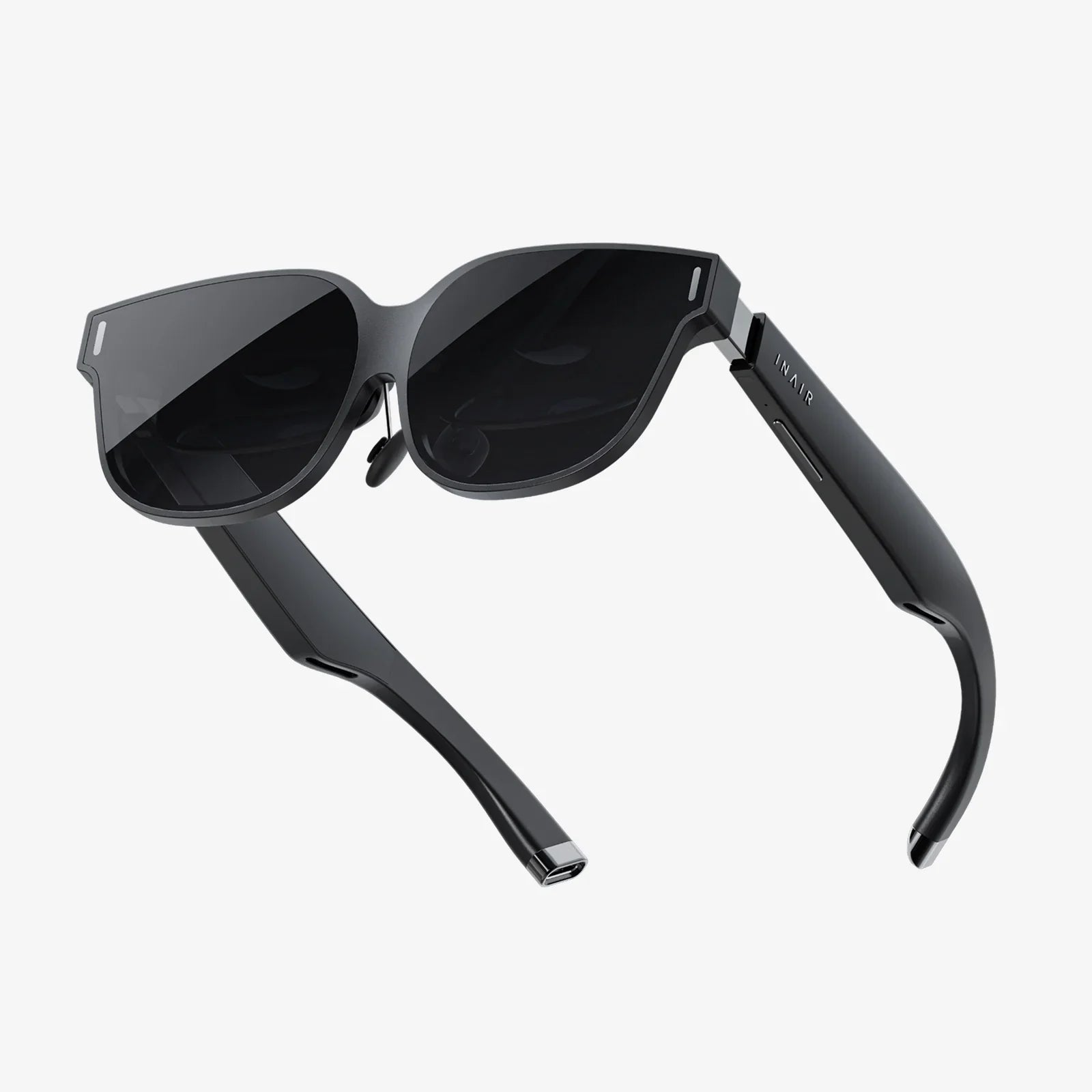
Imagine a world where your computer anticipates your needs, responds to the subtle arch of an eyebrow, or translates your silent thoughts into actions. This isn't the distant future of science fiction; it's the rapidly converging reality of human-computer interaction (HCI). For decades, our dialogue with machines was a stilted, one-way command, but today, it's blossoming into a rich, multimodal conversation. The evolution from punch cards to perceptual computing represents one of the most profound shifts in technology, moving the digital world from something we operate to an environment we inhabit. This deep dive into the different types of human-computer interaction will unpack the past, present, and thrilling future of how we connect with the technology that defines our age.
The Foundational Pillars: Established Modalities
Before we soar into the future, we must stand on the shoulders of the giants that built the digital world. These interaction types are so ingrained in our daily lives that we often use them without a second thought, yet they remain the bedrock of computing.
Command-Line Interfaces (CLI): The Textual Foundation
The earliest form of interaction was stark and unforgiving: text. Users communicated with machines by typing precise, syntactic commands into a CLI. This required a significant cognitive load—memorization of commands, flags, and syntax—creating a high barrier to entry. However, its power and efficiency for certain tasks are undeniable. Scripting and automation, where a user can execute a complex sequence of actions with a single command, remain a domain where CLIs excel. They represent a pure, unmediated form of instruction, offering precision and control that graphical methods sometimes obscure.
Graphical User Interfaces (GUI): The Visual Revolution
The advent of the GUI was a paradigm shift, democratizing computing by making it visual and intuitive. Instead of memorizing text commands, users manipulated on-screen objects like windows, icons, and menus using a pointing device, most famously the mouse. This "desktop metaphor" leveraged users' real-world knowledge, making digital environments feel familiar. The direct manipulation of graphical objects lowered the learning curve dramatically, inviting a mass audience to become computer users. From the desktop PC to the smartphone, the GUI has been the dominant interaction paradigm for over three decades, proving the immense power of a visual, metaphorical approach to HCI.
The Ubiquitous Mouse and Keyboard
While technically input devices for GUIs and CLIs, the keyboard and mouse deserve special mention for their enduring role. The QWERTY keyboard, a relic from the typewriter era, became the primary method for inputting textual data. The mouse, providing two-dimensional analog input, became the perfect partner for navigating graphical landscapes. Their combination offers a versatile, high-precision, and low-fatigue method of interaction that has proven incredibly difficult to surpass for general-purpose computing, cementing their status as the default HCI hardware for generations.
The Modern Mainstream: Touch and Voice
The 21st century introduced interaction styles that felt more natural and direct, moving computing out of the office and into our pockets and homes.
Touch and Multi-Touch Interfaces
The rise of smartphones and tablets was catalyzed by capacitive multi-touch screens. This technology transformed the display itself into an input device, enabling interactions through intuitive gestures: tap to select, pinch to zoom, swipe to scroll. This is perhaps the most direct form of manipulation—touching the digital object itself. It reduced the interaction gap to almost zero, making computing accessible to toddlers and grandparents alike. The success of touch interfaces demonstrates a fundamental HCI principle: the best interface often feels like no interface at all, as the user's focus remains on the content, not the tool.
Voice User Interfaces (VUI) and Conversational AI
Speaking is one of the most natural human behaviors, and VUI leverages this by allowing users to interact with systems through spoken commands and natural language. Early VUIs were frustratingly limited to rigid, pre-defined command sets. The modern era, powered by advances in natural language processing (NLP) and machine learning, has given rise to conversational AI and intelligent assistants. These systems can understand context, manage complex dialogs, and even detect user intent from messy, human speech. The hands-free, eyes-free nature of VUIs makes them ideal for a multitude of scenarios, from controlling smart home devices while cooking to getting directions while driving, fundamentally expanding the contexts in which we can interact with technology.
The Cutting Edge: Perceptual and Ambient Computing
Beyond touch and voice lies a new frontier where computers begin to perceive and interpret the world around them, and us, in radically new ways.
Gesture Recognition
Gesture recognition systems allow users to interact through bodily motion, without physical contact with a device. Using cameras, depth sensors, or radar, these systems can interpret waves, pinches, and swipes performed in the air. This technology ranges from simple controller-based systems that track a handheld device to sophisticated computer vision systems that can track the skeletal movement of a user's entire body. The applications are vast, from controlling a presentation from across the room to full-body gaming and immersive training simulations in fields like medicine and engineering, where a sterile, touchless interface is paramount.
Haptic Feedback: The Language of Touch
Haptic technology, or haptics, creates the experience of touch by applying forces, vibrations, or motions to the user. It's a bidirectional channel; if a touchscreen provides input, haptics provides output. A simple vibration in a game controller during a collision is a primitive form of haptics. The future lies in advanced, high-fidelity haptic systems that can simulate the texture of fabric, the resistance of a button, or the weight of a virtual object. This sensory feedback is crucial for creating truly immersive experiences in virtual and augmented reality, closing the loop between what the user sees and what they feel, and adding a rich, tactile layer to digital interactions.
Eye-Tracking and Gaze Control
Eye-tracking technology uses cameras and infrared light to measure a user's point of gaze, or where they are looking on a screen. This provides a incredibly fast and passive input modality. Applications are diverse: it can be used for usability testing to see where users actually look on a webpage, as a control mechanism for individuals with mobility impairments, or to create dynamic depth-of-field effects in virtual reality that mimic how our eyes naturally focus. It represents a shift towards more passive, perceptive interfaces where the computer gains awareness of the user's attention and focus without explicit command.
The Emerging Frontier: Brain and Physiology
The most futuristic forms of HCI aim to bypass physical movement entirely, creating a direct link between the brain and the machine.
Brain-Computer Interfaces (BCI)
BCI is the ultimate frontier in HCI—a direct communication pathway between the brain's electrical activity and an external device. Non-invasive BCIs, often using electroencephalography (EEG) headsets, can detect general brain states (like focus or relaxation) or simple intentional commands. Invasive BCIs, which involve implants, have shown remarkable success in allowing paralyzed individuals to control robotic limbs or computer cursors with their thoughts. While still in its infancy for mainstream consumer use, BCI research promises a future where controlling technology could be as effortless as thinking, offering revolutionary new possibilities for accessibility and human augmentation.
Affective Computing: Emotionally Intelligent Systems
Affective computing is a field focused on creating systems that can recognize, interpret, process, and simulate human emotions. By analyzing data points like facial expressions via camera, vocal inflection via microphone, galvanic skin response, or heart rate, computers can begin to infer a user's emotional state. An emotionally intelligent system could adapt its responses accordingly—a tutoring program could offer encouragement if it detects frustration, or a car could alert a driver if it detects drowsiness. This moves HCI from a purely transactional model to a more empathetic and context-aware partnership.
The Invisible Future: Context-Aware and Ambient UIs
The next evolution of HCI may involve no explicit interface at all. Ambient user interfaces and context-aware computing describe systems that weave themselves into the fabric of our environment and anticipate our needs.
An ambient UI presents information in a peripheral, non-intrusive way—think of a smart lamp that glows a certain color to indicate rain, or a room whose lighting and temperature automatically adjust based on your presence and circadian rhythm. Context-aware systems use sensors and data to understand the user's situation (location, time, activity, nearby people) to provide relevant information and services automatically. Your device might silence itself as you enter a movie theater, or your smartwatch might suggest a walking route because it knows you have a meeting across town in 30 minutes. This paradigm represents a shift from explicit, command-based interaction to an implicit, symbiotic relationship where technology serves us proactively and quietly.
The Human Factor: Designing for a Multimodal World
With this explosion of interaction types, the role of the designer has become more complex and critical than ever. The goal is no longer to choose the single best interface, but to weave together multiple modalities into a seamless, coherent, and accessible whole. This is multimodal interaction.
A well-designed multimodal system allows the user to choose the mode that best suits their context, or even combine them. A user might start a query by voice while their hands are busy, then switch to touch to refine the results on a screen. Crucially, these modes must be consistent and complementary, not contradictory. Furthermore, ethical considerations around privacy, data security, and accessibility are paramount. As interfaces become more perceptive, collecting more biometric and behavioral data, designers and engineers bear a profound responsibility to build systems that are not only powerful and intuitive but also trustworthy and equitable for all users.
The journey of human-computer interaction is a story of the gap closing. From the abstract text of the command line to the direct manipulation of the touchscreen, and now towards perceptive systems that understand our gestures, our voice, and even our emotional state, the trajectory is clear: the computer is becoming less of a tool and more of a partner. We are moving towards a world saturated with computing power, yet the best interfaces will be the ones we hardly notice—quietly, intelligently, and seamlessly amplifying human potential. The future of HCI isn't about a single winning technology; it's about a symphony of interaction types, orchestrated to fit the moment, the task, and, most importantly, the human.
Share:
VR Headset Black Friday Under $200: Your Ultimate Guide to the Best Deals
Best AR in Ready or Not: The Ultimate Tactical Loadout Guide