


You’ve heard the terms, seen the futuristic commercials, and perhaps even experienced them yourself, but do you truly understand the fundamental divide between the two technologies poised to reshape our digital lives? The worlds of Augmented Reality and Virtual Reality are often lumped together under the banner of "immersive tech," yet they offer profoundly different experiences, serve distinct purposes, and are built on contrasting technological foundations. This isn't just tech jargon; it's the difference between enhancing your world and replacing it entirely. Unraveling this distinction is the first step to grasping the next great leap in human-computer interaction.
The Core Philosophical Divide: Enhancement vs. Replacement
At its heart, the difference between AR and VR is a philosophical one. It’s a question of fundamental intent.
Augmented Reality (AR) is best understood as a digital overlay on the real world. Its primary objective is to supplement and enhance your immediate physical environment by superimposing computer-generated information—images, data, 3D models, text—onto your field of view. AR does not seek to remove you from your surroundings; instead, it aims to make your reality more informative, interactive, and engaging. Think of it as a high-tech heads-up display for life. You remain present and aware of your actual location, but your perception is enriched with a digital layer.
Virtual Reality (VR), in stark contrast, is about immersion and transportation. Its goal is to shut out the physical world entirely and replace it with a fully digital, computer-simulated environment. VR technology blocks your view of your actual surroundings and tricks your senses into believing you are somewhere else—be it a fantasy game world, the surface of Mars, or a virtual meeting room. This complete sensory detachment is the defining characteristic of a true VR experience. It’s not an enhancement of reality; it’s a substitution for it.
Hardware and Technology: How the Experience is Delivered
The philosophical chasm between AR and VR is mirrored by the hardware they employ. The devices are engineered for their specific missions, leading to vastly different forms and functions.
Virtual Reality Hardware
VR systems are designed for immersion, which necessitates blocking out the external world. This is primarily achieved through:
- Head-Mounted Displays (HMDs): These are fully opaque headsets that contain one or two high-resolution displays placed very close to the user's eyes. Lenses focus and reshape the image to fill the user’s field of view, creating the sensation of being inside the virtual world.
- Tracking Systems: To make the virtual world feel responsive and real, VR systems use a combination of internal and external sensors (like cameras, gyroscopes, accelerometers, and infrared lasers) to precisely track the user's head movements (rotational and positional) and, often, the movement of their hands via controllers.
- Controllers and Haptic Feedback: Handheld motion controllers are standard, allowing users to interact with the virtual environment. These often include advanced haptic feedback (vibrations and force feedback) to simulate the sense of touch.
Augmented Reality Hardware
AR technology, needing to see the real world to augment it, takes a different approach:
- See-Through Displays: AR devices use either optical see-through or video see-through methods. Optical see-through (found in many smart glasses) uses semi-transparent mirrors or waveguides to project digital images onto clear lenses, allowing you to see your real environment directly. Video see-through uses cameras to capture the real world and then displays that video feed, combined with digital elements, on an opaque screen inside the headset.
- Sensors and Cameras: AR devices are packed with cameras—not for tracking the user, but for understanding the environment. They perform simultaneous localization and mapping (SLAM), which means they scan the room, identify flat surfaces (tables, floors, walls), and understand depth and spatial relationships to anchor digital objects convincingly in the real world.
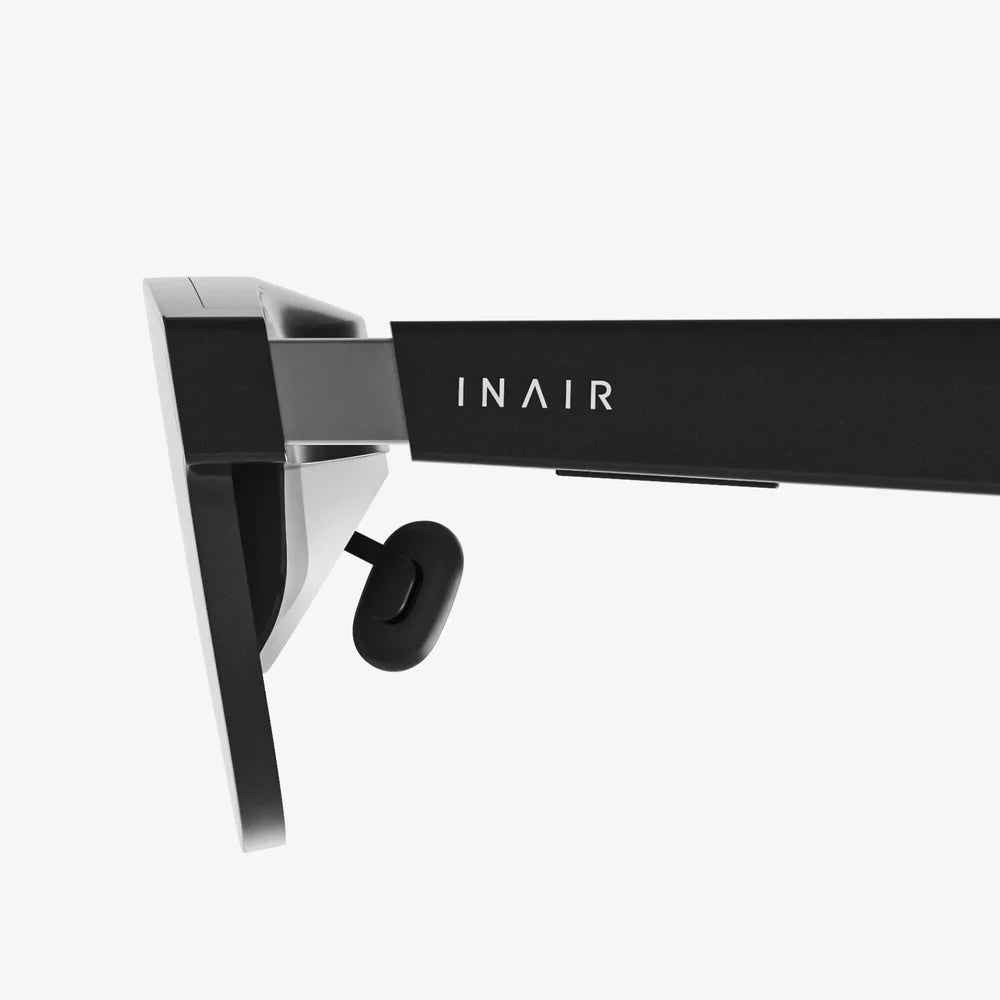
- Form Factors: AR hardware exists on a spectrum. On one end are smartphones and tablets, which use their screens and cameras for basic AR. In the middle are smart glasses, which are lightweight, wearable, and designed for all-day use. On the far end are more powerful, tethered AR headsets used for complex industrial design and training.
Levels of Immersion and User Awareness
The sensory experience of using these technologies highlights their core difference.
A user in a high-quality VR experience can experience presence—the powerful and convincing sensation of actually being in the virtual place. This is its greatest strength but also necessitates safety considerations; users are completely blind to their physical surroundings, often requiring a cleared-out "play area" to avoid bumping into furniture.
An AR user, however, remains fully aware of their physical environment. They can walk around naturally, hold a conversation with someone next to them, and see their own hands and body. The immersion is not total; it's contextual and additive. This makes AR suitable for use in dynamic, real-world settings like a factory floor, a city street, or a living room.
Applications and Use Cases: Solving Different Problems
Because AR and VR alter our reality in different ways, they excel in different domains. Their applications reveal their unique value propositions.
Where Virtual Reality Excels
VR's strength lies in creating controlled, immersive experiences that are either impossible, too expensive, or too dangerous to undertake in the real world.
- Gaming and Entertainment: This is VR's most famous application. It places you directly inside the game world, offering unparalleled levels of immersion for interactive entertainment and storytelling.
- Training and Simulation: From training surgeons for complex procedures and pilots to fly aircraft to preparing soldiers for combat scenarios, VR provides a risk-free, repeatable, and highly realistic training environment.
- Virtual Tourism and Real Estate: Explore a museum on the other side of the world, walk through a house for sale, or visit a historical site reconstructed in VR without ever leaving your home.
- Therapy and Rehabilitation: VR is used for exposure therapy to treat phobias (fear of heights, flying), for physical rehab by making exercises more engaging, and for managing pain through distraction.
Where Augmented Reality Excels
AR's power is in delivering information and digital content contextually within the user's immediate environment, enhancing real-world tasks.
- Industrial and Manufacturing: Technicians can see repair instructions overlaid on a malfunctioning engine. Warehouse workers can see digital picklists and navigation arrows guiding them to items, drastically improving efficiency.
- Design and Retail: Architects can visualize 3D building models on an empty plot of land. Consumers can use their smartphone to see how a new sofa would look in their living room or how a pair of glasses would look on their face before buying.
- Navigation: AR can project turn-by-turn directions onto the real road ahead through a head-up display in a car or on a smartphone screen, making navigation more intuitive.
- Education: A student studying anatomy can point their tablet at a textbook page to see a beating 3D heart model emerge. Historical events can be reenacted in the classroom through AR.
The Blurring Line: Mixed Reality and the Spectrum of Immersion
The line between AR and VR is not always rigid. The term Mixed Reality (MR) has emerged to describe experiences that sit on the spectrum between the two, particularly those where digital objects are not just overlaid but can interact with the real world in a believable way.
An advanced MR experience might use a headset with pass-through cameras (a VR-like device that uses its cameras to show you the real world, effectively making it an AR device) to allow a digital character to jump onto your real-world coffee table, knowing it's there because the environment has been mapped. The virtual object is aware of and occluded by real-world geometry. This blending represents the cutting edge, combining VR's high immersion with AR's contextual awareness.
Choosing the Right Tool for the Job
Understanding the difference between AR and VR ultimately comes down to asking a simple question: What is the goal?
- Choose VR when you need to transport the user to a completely different environment for training, simulation, or deep, uninterrupted immersion.
- Choose AR when you need to assist the user in their current environment by providing hands-free information, visualizing data in context, or adding a digital layer to a real-world task.
Both technologies are rapidly evolving, with hardware becoming more powerful, smaller, and more affordable. While they are distinct today, their paths are converging toward a future where advanced headsets might seamlessly switch between full VR and persistent AR, ultimately giving us control over our perception of reality itself. This isn't a competition; it's a continuum of tools that will fundamentally expand human potential, and knowing which tool to use is the first step in harnessing its power.
The journey into our digital future is not a single path but a branching tree of possibilities. One branch enhances the world you know, layering it with magic and information, while the other whisks you away to realms limited only by imagination. This critical distinction between augmenting reality and replacing it is the key that unlocks the true potential of these transformative technologies, shaping everything from how we work and learn to how we play and connect. The next time you see a glimpse of the future, you'll know exactly which reality you're stepping into.
Share:
10 Advantages of Augmented Reality: Transforming Industries and Enhancing Experiences
10 Advantages of Augmented Reality: Transforming Industries and Enhancing Experiences