


- by wangfred
Digital Future Productions: The New Frontier of Content and Experience
- by wangfred
Imagine a world where the line between the physical and the digital has not just blurred but has been completely redefined. A world where you can attend a concert with friends from across the globe, feeling the thrum of the bass in your chest as a holographic performer shares the stage with a living one. Where you can step inside a historical documentary, walking the streets of ancient Rome and witnessing events unfold around you. Where the stories we consume are no longer static narratives but living, breathing ecosystems that respond to your choices. This is not a distant sci-fi fantasy; it is the imminent reality being forged by the pioneers of Digital Future Productions. This emerging field represents a fundamental shift in how we create, distribute, and experience content, moving beyond traditional media into a fully immersive, interactive, and intelligent digital realm. It is the convergence of art, technology, and human connection on an unprecedented scale, and it is poised to revolutionize every industry it touches.
Digital Future Productions is not defined by a single technology but by a synergistic fusion of several groundbreaking advancements. These are the foundational pillars upon which this new era is being built.
Perhaps the most transformative force is artificial intelligence. AI is no longer just a tool for automation; it is becoming a collaborative partner in the creative process. In Digital Future Productions, AI algorithms can generate intricate, original musical scores, write dynamic dialogue that adapts to audience reaction, and create stunning, photorealistic visual assets from simple text prompts. It powers hyper-realistic digital humans—actors and presenters who can perform in any language, never age, and are available 24/7. Furthermore, AI is the engine behind personalization at scale. It can analyze viewer data in real-time to alter plotlines, change the mood of a scene, or suggest alternative narrative paths, ensuring that no two experiences are exactly the same. This moves content from a one-size-fits-all model to a one-size-fits-one paradigm.
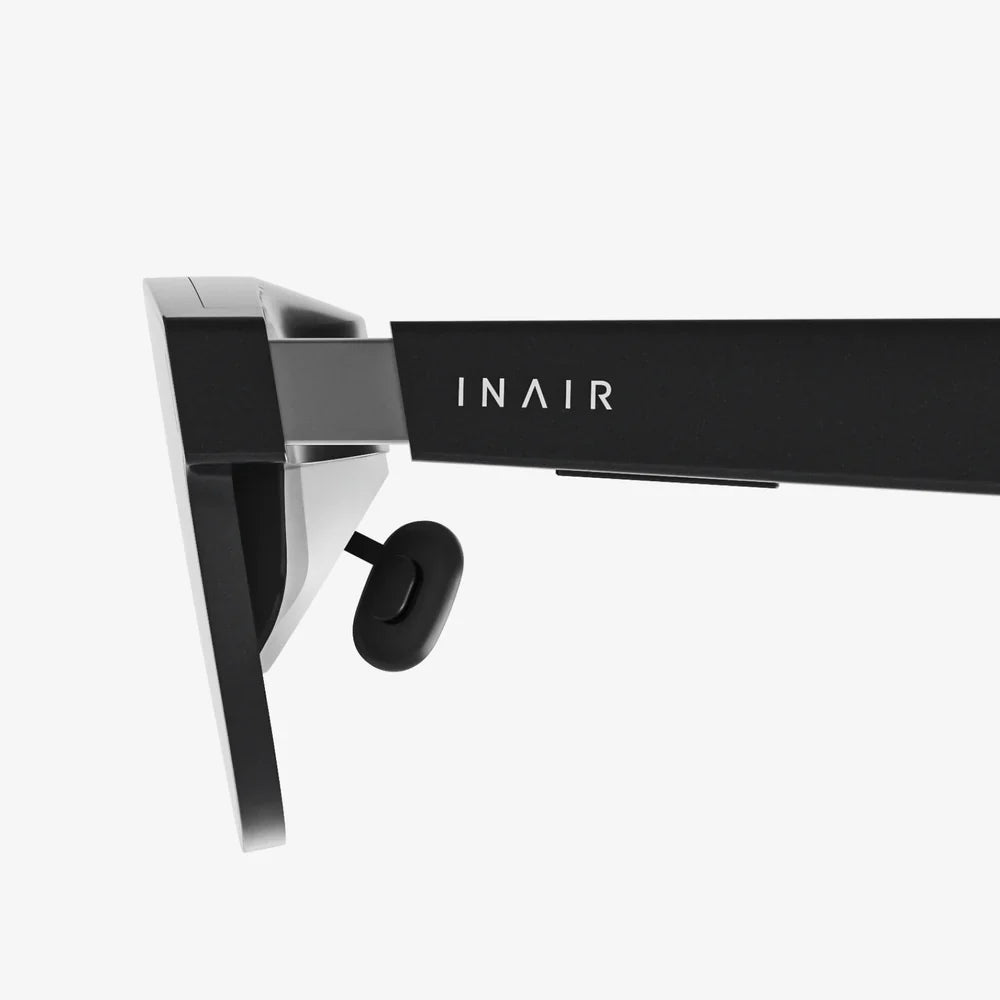
Virtual, Augmented, and Mixed Reality (VR/AR/MR) provide the canvas for these AI-powered creations. While VR offers complete digital immersion, AR overlays digital information onto our physical world, and MR merges the two seamlessly. Digital Future Productions leverage these technologies to create experiences that are not watched but inhabited. Imagine an educational production about the human body where students wearing AR glasses can walk around a life-sized, beating heart, watching oxygenated blood flow through the arteries. Or a corporate training module where employees practice soft skills with an AI-powered digital human in a simulated, high-stakes business meeting. These technologies dissolve the screen, placing the user at the center of the narrative and creating a powerful sense of presence and emotional connection that flat media can never achieve.
The experiences crafted through Digital Future Productions require a new kind of internet: the spatial web. This evolution from a 2D web of pages to a 3D web of spaces is foundational to the concept of the metaverse—a persistent network of interconnected virtual worlds. This becomes the primary distribution channel for future productions. A film premiere is no longer a red-carpet event at a single theater but a global gathering inside a fantastical virtual venue. A product launch becomes an interactive experience where potential customers can examine, customize, and test a digital twin of the product in their own living room via AR. The metaverse provides a persistent social and experiential layer over reality, a new frontier for storytelling, commerce, and community.
The impact of Digital Future Productions will ripple across every sector, redefining established business models and creating entirely new ones.
The entertainment industry is undergoing its most significant transformation since the advent of sound. Narrative structures will evolve from linear (beginning, middle, end) to modular and branching, offering audience-driven stories. Live events will become hybrid experiences, selling virtual tickets that offer exclusive digital perks, like backstage AR meet-and-greets with digital avatars of the performers. Sports broadcasting will allow viewers to choose their own camera angles from the field, access real-time player stats overlaid on their view, and even step into a VR replay to experience a crucial play from the quarterback's perspective. The passive couch potato will become a thing of the past, replaced by an active participant in the spectacle.
Education and corporate training will be utterly revolutionized. The concept of "show, don't tell" will be taken to its absolute extreme. Instead of reading about a historical event, students will witness it. Instead of watching a safety video, factory workers will practice emergency procedures in a photorealistic VR simulation of their actual workspace, muscle memory and all. Medical students will practice complex surgeries on virtual patients, making mistakes without consequences. This experiential learning dramatically improves knowledge retention, engagement, and skill acquisition, moving education from theoretical understanding to practical mastery.
Marketing will shift from interruption to invitation. Brands will no longer just advertise products; they will create immersive brand worlds and narrative experiences that consumers choose to enter. A automotive company might produce a short, interactive film where the viewer is the driver of their latest model, navigating a thrilling chase sequence. A fashion house could host a virtual fashion show in the metaverse, where attendees' digital avatars can immediately try on and purchase the digital clothing, with an option to order the physical counterpart. This is "storyliving"—where the consumer becomes part of the brand's story, creating a deeper, more emotional, and more memorable connection than any 30-second spot could ever achieve.
With great power comes great responsibility, and the dawn of Digital Future Productions brings a host of complex challenges that society must proactively address.
The ethical questions are profound. As digital humans become indistinguishable from real ones, how do we regulate their use? Clear labeling will be essential to prevent deception. The data required to power hyper-personalized experiences is immense, raising critical questions about privacy, consent, and the potential for manipulation. Who owns the content created by AI—the programmer, the user who provided the prompt, or the AI itself? Furthermore, the potential for deepfakes and hyper-realistic synthetic media presents a clear and present danger to information integrity and personal security. Establishing robust ethical frameworks and legal guardrails is not optional; it is a prerequisite for a healthy digital future.
There is a very real risk that these technologies could exacerbate existing social and economic inequalities, creating a new kind of digital divide. Access to high-speed internet, powerful computing hardware, and expensive VR/AR headsets is not universal. If transformative educational, professional, and social experiences are locked behind a paywall, we risk creating a two-tier society: those who can afford to live in the enhanced reality of Digital Future Productions and those who are left behind in the analog past. Ensuring equitable access and developing low-cost, inclusive platforms will be one of the defining societal challenges of the next decade.
Finally, we must consider the role of the human artist. Will AI replace writers, designers, and musicians? The more likely outcome is a redefinition of their roles. The value of the human artist will shift from technical execution to high-level creative direction, emotional intelligence, and curatorial insight. The human touch—the ability to convey raw, authentic emotion, to understand cultural nuance, and to make bold, unexpected creative leaps—will become more valuable than ever. The future of creativity is not human versus machine, but human with machine, a collaboration that amplifies our innate abilities and opens doors to forms of expression we have yet to imagine.
The curtain is rising on a stage of infinite possibilities. Digital Future Productions are not merely upgrading our screens; they are redesigning the very fabric of human experience, offering a portal to worlds of our own making. The power to shape these worlds—to build them with empathy, responsibility, and a fierce commitment to human connection—rests not in the code, but in us. The next great story won't just be something you watch; it will be something you choose, something you shape, and something you live. The audience is no longer just watching; they are waiting for their cue to step into the light and become part of the production itself.