Imagine a world where your environment anticipates your needs, your digital assistant is a true creative partner, and the line between the physical and virtual realms dissolves into a seamless, intuitive experience. This isn't a distant science fiction fantasy; it's the imminent future being built today, set to arrive in full force by 2025 and 2026. The next two years will mark a pivotal turning point, moving beyond incremental updates to fundamental shifts in how we interact with the digital fabric of our lives. The trends emerging are not just about faster processors or sharper screens; they are about a more profound, contextual, and human-centric integration of technology.
The trajectory of digital innovation is accelerating at an exponential rate, fueled by advancements in artificial intelligence, quantum computing, and connectivity. The products we will use in 2026 are being conceptualized in research labs today, built upon a foundation of technologies that are currently in their nascent stages. This article will unpack the most significant trends that will define the digital product landscape, offering a glimpse into a future that is more adaptive, immersive, and intelligent than ever before.
The Pervasive Intelligence: AI Evolves from Tool to Teammate
The most dominant force shaping digital product trends is the continued and radical evolution of Artificial Intelligence. We are rapidly moving beyond the era of AI as a simple predictive tool or a reactive assistant. The next two years will see the rise of AI as a proactive, collaborative partner.
Agentic AI and Autonomous Workflows: Instead of giving an AI a single command, users will increasingly delegate complex, multi-step tasks. Imagine instructing a digital agent to "plan and book a full summer vacation for my family of four, balancing budget and preferences, and present me with three complete itineraries." The AI agent would autonomously research flights, accommodations, activities, and dining, cross-reference calendars and budgets, and execute the bookings upon approval. This shift from command-based interaction to goal-based delegation will redefine productivity software, creative suites, and enterprise resource planning platforms.
Small Language Models (SLMs) and On-Device Processing: While large language models power the cloud, a significant trend will be the proliferation of smaller, highly specialized models that run directly on devices. This enables real-time processing, enhanced privacy as data never leaves the device, and functionality that remains available even without an internet connection. Your smartphone, headphones, and laptop will possess a native, intrinsic intelligence capable of handling sensitive tasks, understanding context, and learning your hyper-local patterns without constant recourse to a distant data center.
Multimodal AI Becomes Standard: AI systems will seamlessly blend and understand multiple data types simultaneously—text, audio, image, and video. You could show your phone a broken bicycle chain, ask "how do I fix this?" verbally, and the AI would overlay AR repair instructions onto the physical chain in real-time. This fluid, human-like understanding will make interactions with technology far more natural and effective.
The Spatial Shift: The Interface Gets a New Dimension
The concept of a user interface is undergoing its most significant transformation since the advent of the touchscreen. The two-dimensional screen is giving way to a three-dimensional, spatially-aware digital layer overlaid onto our physical world.
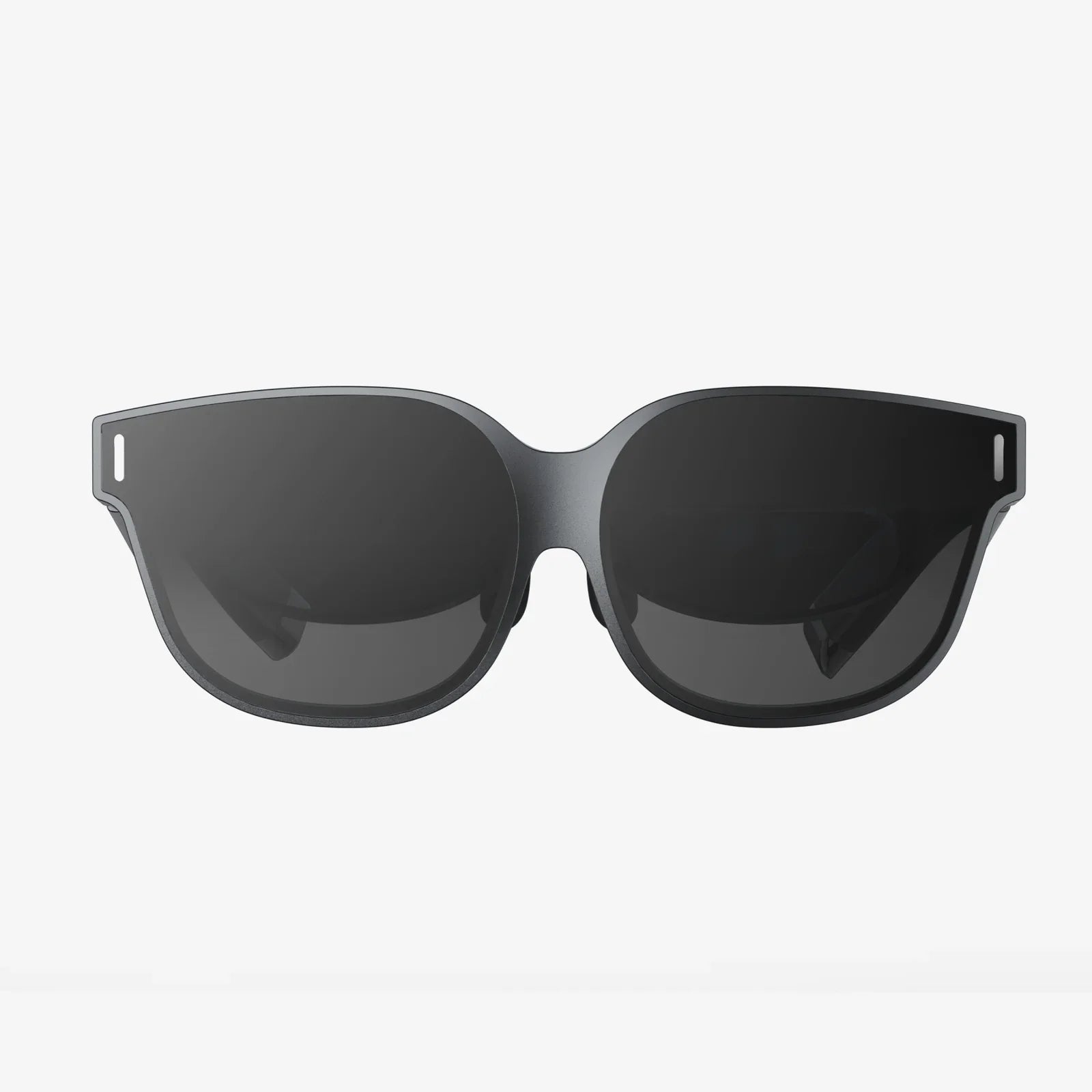
Spatial Computing and Ambient Displays: Digital products will no longer be confined to rectangles in our hands or on our desks. Through advanced wearables, every surface can potentially become a display. Information and interfaces will exist ambiently in your environment, accessible with a glance or a gesture. Checking the weather might involve simply looking at your window, which digitally enhances the view with forecast data. Controlling your smart home could involve turning a virtual dial that appears to hover next to your thermostat. This trend moves computing from something we actively use to something we passively inhabit.
The Maturing Metaverse and Digital Twins: The hype around a single, unified virtual world will subside, giving way to practical, high-fidelity digital twins of real-world systems. Factories, cities, and supply chains will be mirrored in real-time by vast, interactive digital models. Engineers will troubleshoot production line issues from across the globe by immersing themselves in the digital twin, and urban planners will simulate traffic flow changes before ever breaking ground. This application of immersive technology offers profound implications for efficiency, sustainability, and remote collaboration in enterprise and government.
Haptic Feedback and Embodied Interaction: As we interact with virtual objects, the need for tactile feedback becomes paramount. Advanced haptic technologies will evolve beyond simple phone vibrations to provide realistic sensations of texture, weight, and resistance. This could involve gloves that simulate the feel of turning a virtual knob or suits that create a sense of touch at a distance, revolutionizing fields from telemedicine and remote surgery to immersive gaming and design.
The Invisible Infrastructure: Connectivity and Compute Redefined
For these advanced experiences to function seamlessly, the underlying infrastructure of the digital world must become faster, more pervasive, and more intelligent itself.
AI-Optimized Silicon and Heterogeneous Computing: The end of Moore's Law is driving a revolution in chip design. Instead of generic processors, we will see a explosion of specialized silicon designed from the ground up for specific AI workloads—Neural Processing Units (NPUs) for on-device learning, Tensor Cores for graphics and AI, and dedicated processors for spatial tracking and sensor fusion. This heterogeneous approach allows for massive gains in efficiency and performance, enabling the complex tasks required by spatial computing and agentic AI without draining battery life.
The Edge Computing Ecosystem Expands: To support low-latency applications like autonomous vehicles and augmented reality, vast amounts of computation will move from centralized cloud data centers to the "edge"—closer to the user. This will involve a network of micro-data centers in cellular towers, office buildings, and even vehicles, ensuring that the response time for mission-critical digital products is nearly instantaneous.
Post-Quantum Cryptography Begins Its Rollout: While practical quantum computers may still be years away, the threat they pose to current encryption standards is very real. In 2025-2026, we will see a significant push towards integrating post-quantum cryptographic algorithms into digital products and communication protocols. This silent but crucial trend will be essential for securing the financial, governmental, and personal data of the future.
The Human Focus: Ethical, Sustainable, and Inclusive Design
As technology becomes more powerful and pervasive, a counter-trend is emerging: a heightened focus on its human impact. Digital product design will increasingly be measured not just by its capabilities, but by its ethics, sustainability, and inclusivity.
Ethical AI by Design: With greater autonomy comes greater responsibility. There will be a surge in tools and frameworks for ensuring AI systems are fair, transparent, and accountable. This includes techniques for detecting and mitigating bias in training data, enabling explainable AI (XAI) so users can understand why a system made a certain decision, and building in hard ethical constraints to prevent misuse.
The Right to Disconnect and Digital Wellness: As ambient technology vies for our constant attention, a product's ability to facilitate focus and mental well-being will become a key differentiator. We will see more sophisticated digital wellness features that are not just simple screen-time trackers, but intelligent systems that help users manage their cognitive load, filter notifications based on mental state and context, and genuinely promote a healthier relationship with technology.
Radical Accessibility and Adaptive Interfaces: Digital products will become inherently more accessible, using AI to adapt their interfaces in real-time to the user's abilities and environment. A device could switch to full voice control for a user with limited mobility, simplify its visual layout for someone with cognitive differences, or provide enhanced audio descriptions for the visually impaired—all automatically and seamlessly. This moves accessibility from a bolted-on feature to a core, intelligent function of the product.
Sustainable Tech Lifecycles: The environmental cost of technology, from manufacturing to energy consumption to e-waste, will come under greater scrutiny. Trends will include a stronger push for modular, repairable device designs, the use of recycled and bio-based materials, and software optimized for maximum energy efficiency. Carbon footprint tracking could become a standard feature for cloud services and digital platforms.
The New Realities: Security, Privacy, and the Battle for Trust
In a world saturated with intelligent, always-on devices that understand our context and habits, the concepts of security and privacy will be completely redefined.
Biometric and Behavioral Continuous Authentication: The password will finally become obsolete. Instead, systems will use a continuous, multimodal authentication system that combines biometrics (facial recognition, voice print) with behavioral analytics (typing patterns, gait, typical usage times). Your device will constantly, quietly verify that it is still you, significantly improving security while reducing user friction.
Privacy-Enhancing Computation (PEC): Techniques like homomorphic encryption (which allows data to be processed while still encrypted) and federated learning (where AI models are trained on your device without your data ever being uploaded) will move from academic concepts to mainstream product features. This allows companies to derive insights from user data without ever actually seeing the raw, personal information, creating a new paradigm for data privacy.
The Sovereign Digital Identity: Individuals will gain greater control over their personal data through self-sovereign identity (SSI) systems. Instead of logging in with a social media account, you might use a verifiable digital credential stored in a personal wallet on your phone, choosing exactly what information to share with each service. This trend empowers users and disrupts the current model of data aggregation by large platforms.
The next two years promise not just new gadgets, but a rearchitecting of our relationship with the digital world. The trends of 2025 and 2026 point towards a future that is less about isolated devices and more about a cohesive, intelligent, and contextual ecosystem. It's a future filled with immense potential to augment human capability, solve complex problems, and create breathtaking new forms of experience and expression. The only question that remains is how we will choose to shape it.
This isn't just an upgrade; it's the dawn of a new technological era, and its first waves are already starting to crest. The choices made by developers, designers, and policymakers in the immediate years ahead will determine whether this powerful convergence of trends becomes a force for unprecedented empowerment or ushers in new complexities we are only beginning to understand. The future is being coded now, and it's more adaptive, immersive, and intelligent than anyone could have predicted.