


Imagine a world where your devices don't just respond to your commands—they anticipate your needs, manage your reality, and enhance your humanity in ways that feel less like using a tool and more like having a capable partner. This isn't a distant science fiction fantasy; it's the tangible horizon of digital product trends 2026, a future being built in research labs and design studios today. The next two years will catalyze a profound shift from reactive technology to a proactive, ambient, and deeply personalized digital ecosystem that will redefine our relationship with the digital world.
The Rise of the Anticipatory Interface: Beyond Screens and Swipes
The most significant evolution we will witness by 2026 is the move beyond the traditional graphical user interface (GUI). For decades, we have been trained to seek out, click on, and navigate through digital information. The next paradigm is the anticipatory interface, where the product itself surfaces the right functionality or piece of information at the precise moment it's needed, often before the user consciously realizes the need.
This shift is powered by staggering advances in artificial intelligence and machine learning. Sophisticated models will analyze a user's historical data, real-time context, biological signals, and even environmental cues to predict intent. Your wellness application will not just track your sleep; it will notice a slight deviation in your respiratory pattern overnight, cross-reference it with a heightened stress level detected in your calendar and communication patterns, and gently suggest a curated mindfulness session and a lighter workload for the day—all before you've had your morning coffee.
This requires a new design philosophy centered on humility and trust. The product must be accurate and valuable in its predictions, offering subtle nudges rather than authoritarian commands. The goal is frictionless empowerment, creating a seamless flow between human intention and digital action, making technology feel like a natural extension of our own cognition.
Spatial Computing and The Blurring of the Digital-Physical Divide
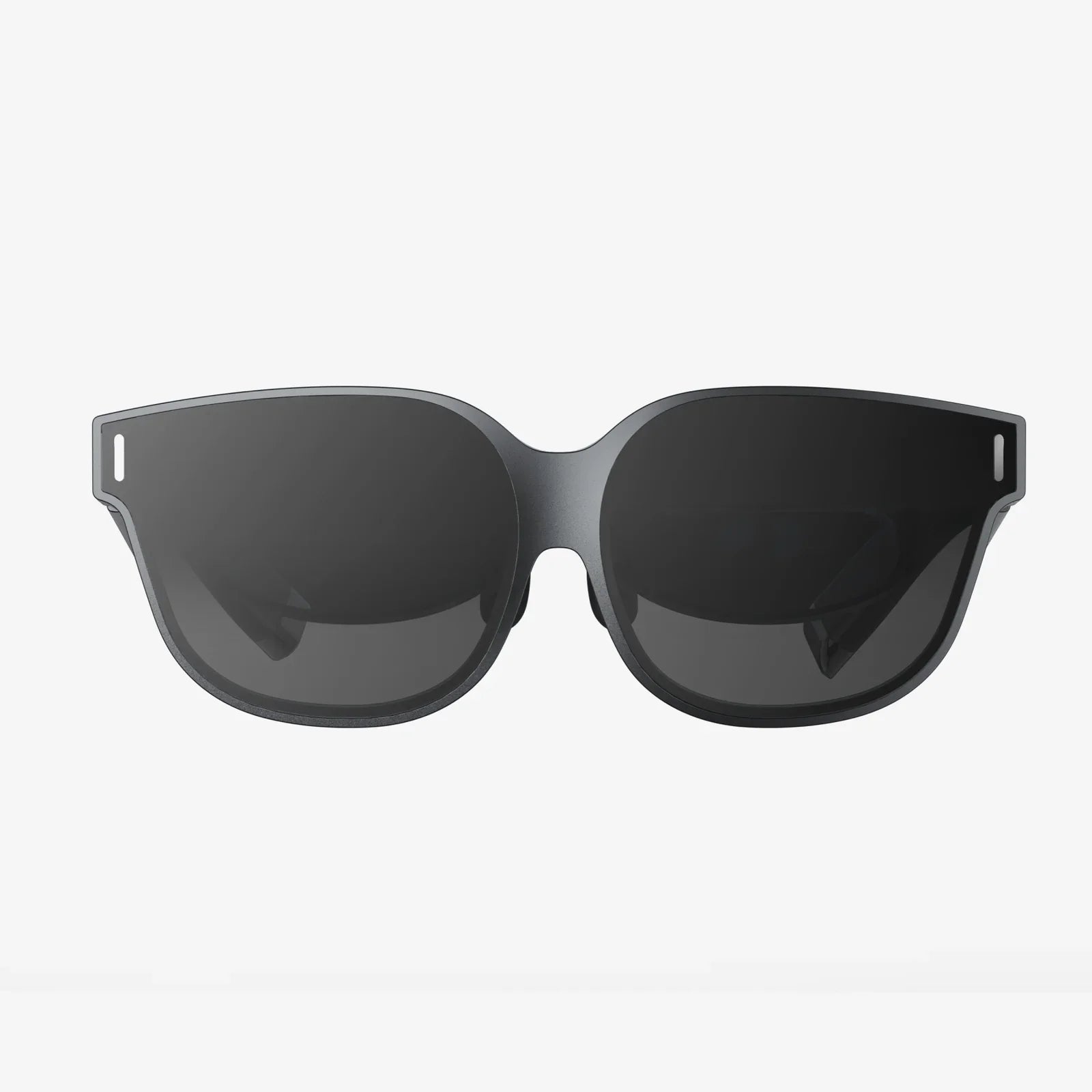
By 2026, the concept of 'going online' will be as archaic as 'dialing up' the internet is today. Digital information will be mapped onto and interwoven with our physical reality through spatial computing. This trend, supercharged by more accessible and powerful augmented reality (AR) and mixed reality (MR) hardware, will transform how we work, learn, shop, and socialize.
Digital product trends 2026 will be less about apps on a phone and more about persistent digital layers over our world. Imagine walking through a city and seeing navigation arrows painted onto the sidewalk, historical facts hovering next to a monument, or the menu and wait time for a restaurant visible through its window. In the workplace, 3D data visualizations will sit on a real conference table for a team to collaboratively manipulate, and complex repair instructions will be overlaid directly onto the machinery a technician is fixing.
The design challenge here is immense. It moves from designing for a rectangular screen to designing for human perception within a three-dimensional space. Information must be contextually relevant, aesthetically integrated into the environment to avoid overwhelming the user, and respectful of privacy. This spatial layer of computing will become a new platform, as significant as the web or mobile, and digital products will be defined by their ability to exist gracefully within it.
Ambient Intelligence and The Invisible Network of Things
Closely related to spatial computing is the maturation of ambient intelligence. If anticipatory interfaces are the brain, ambient intelligence is the nervous system—a distributed network of sensors, devices, and computing power woven into the fabric of our environments. The 'smart home' will evolve into the 'sentient home,' but the trend will extend far beyond our living rooms into smart cities, factories, and agricultural fields.
These environments will sense, interpret, and respond to the presence and activities of people and objects without explicit human direction. Lighting, climate, and acoustics will automatically adjust room-by-room to optimize for comfort, focus, or energy efficiency. Your car will communicate with your garage to open the door and with your house to begin pre-heating the oven based on your estimated time of arrival, a calculation it makes by analyzing real-time traffic data against your calendar.
The key trend here is the move from connected devices to cohesive, intelligent systems. The value is no longer in the individual device but in the symphony of interactions between them. This demands robust, secure, and interoperable standards—a common language for the Internet of Things (IoT) that has been largely absent until now. Success will be measured by how little users have to think about the technology while enjoying a dramatically improved quality of life.
Hyper-Personalization Through AI and the Sovereign Identity
Personalization is not a new concept, but by 2026, it will evolve into hyper-personalization. AI will enable products to tailor experiences, interfaces, and content at an individual level that was previously impossible. This goes beyond recommending a movie you might like; it's about dynamically constructing a unique user journey for every single person.
An educational platform won't just offer courses; it will create a custom learning path based on your knowledge gaps, optimal learning style (visual, auditory, kinesthetic), and even the time of day you learn best. A music streaming service will not only generate playlists based on your listening history but will compose original music in genres you prefer, calibrated to match your current heart rate or desired emotional state.
This deep level of personalization hinges on data, which brings the critical counter-trend of sovereign identity and privacy-first design to the forefront. Users will increasingly demand control over their personal data. We will see the rise of decentralized identity models, where users own their data and grant temporary, permissioned access to applications rather than surrendering it irrevocably. Digital products will need to be transparent about data usage and provide clear, tangible value in exchange for personal information, building trust as a core feature.
The Demand for Digital Wellness and Sustainable Tech
As digital products become more immersive and pervasive, a powerful counter-movement is gaining steam: the demand for digital wellness and sustainability. By 2026, users will actively seek out products that promote a healthy relationship with technology, moving beyond simple screen-time trackers.
We will see products designed with 'attention economics' in mind, prioritizing features that minimize distraction and promote deep focus. This could include interfaces that declutter automatically based on priority, communication tools that batch notifications for designated times, or environments that can enter a 'zero-digital' mode to encourage rest and human connection.
Furthermore, the definition of 'sustainable' tech will expand. It will encompass not only energy efficiency and the use of recycled materials in hardware but also the cognitive sustainability of the software itself. Companies will be judged on their product's environmental footprint, its ethical data practices, and its overall impact on human well-being. Products that are designed to be addictive will face backlash, while those that empower users to use technology intentionally will thrive.
The New Building Blocks: AI-Native Development and Composable Systems
Underpinning all these user-facing trends will be a radical shift in how digital products are built. The era of being 'AI-powered' will give way to being 'AI-native.' This means AI won't be a added feature bolted onto an existing product; it will be the core architectural principle from the ground up. Development platforms will themselves be driven by AI, assisting engineers with writing code, debugging, and even generating entire functional modules from natural language descriptions.
Furthermore, the architecture of products will become increasingly composable. Instead of building monolithic applications, developers will assemble products from pre-built, modular business capabilities (often accessed via API). This allows for incredible agility, enabling companies to rapidly adapt and recombine features to meet evolving user needs and to create highly personalized experiences. This composable approach mirrors the user trend of hyper-personalization, giving builders the flexibility to construct unique value propositions quickly and efficiently.
This landscape of digital product trends 2026 paints a picture of a world where technology becomes more intuitive, integrated, and intelligent. The winners in this new era will not be those with the most features, but those who can master the delicate balance of powerful capability with humane design, offering proactive value while fiercely protecting user trust and well-being. The gap between human and computer will narrow, not through more complex interfaces, but through technology that finally learns to speak our language and understand our world.
The digital landscape of 2026 won't be navigated with clicks and scrolls, but with intention and intuition. The most revolutionary products will be the ones you barely notice—quietly orchestrating your world, anticipating your next move, and freeing you to focus on what truly makes us human. The future is not about better gadgets; it's about a better layer of intelligence seamlessly integrated into the fabric of our existence, and it's arriving sooner than you think.
Share:
Best Smart Display Device: The Ultimate Hub for Your Connected Home
Advantages of Digital Products: Unlocking a World of Limitless Potential