


- by wangfred
Digital Production Tools Are Revolutionizing How We Create, Collaborate, and Innovate
- by wangfred
Imagine a world where the barrier between a spark of inspiration and a tangible, market-ready product is not a chasm of cost, time, and specialized skill, but a seamless digital workflow. This is no longer the realm of science fiction; it is the present reality being forged by the relentless evolution of digital production tools. These sophisticated software and hardware platforms are dismantling traditional gatekeepers of creation, empowering a new generation of makers, designers, and innovators to turn their visions into reality with unprecedented speed and precision. The very fabric of industry, art, and entrepreneurship is being rewoven by these digital threads, promising a future limited only by imagination.
The journey from analog to digital production is a story of exponential growth. It began with the digitization of individual tasks. Computer-Aided Design (CAD) software replaced drafting tables, allowing for intricate designs to be created and modified with a few clicks. Digital Audio Workstations (DAWs) transformed bedrooms into recording studios, and non-linear video editing systems made film editing as simple as dragging and dropping clips on a timeline. These were the first steps, but they were often isolated islands of digital capability.
The true revolution ignited with the convergence of several key technologies. The exponential increase in computing power, often summarized by Moore's Law, provided the necessary horsepower to run complex simulation and rendering software on commodity hardware. The proliferation of high-speed internet enabled cloud-based collaboration, breaking down geographical barriers. Finally, the advent of accessible additive manufacturing (3D printing) and computer-controlled subtractive manufacturing (CNC machining) created a direct bridge from the digital realm to the physical world. This trifecta of processing power, connectivity, and digital fabrication marked the birth of the modern digital production toolkit.
The term "digital production tools" encompasses a vast and diverse ecosystem. To understand their impact, we can categorize them by their primary function within the creative and production pipeline.
This is the birthplace of any project. Tools in this category focus on conceptualization, prototyping, and detailed design.
Once a design is conceived, it must be tested and validated. This is where digital tools prevent costly physical mistakes.
Modern production is rarely a solitary endeavor. These tools ensure teams stay in sync.
This is the moment of transformation from bits to atoms, from data to object.
The proliferation of these tools has catalyzed a seismic shift across multiple dimensions.
The most profound impact is democratization. High-quality production is no longer the exclusive domain of well-funded corporations. An independent filmmaker can shoot a feature film on a modest camera and edit it on a laptop, achieving a look that would have required a million-dollar suite two decades ago. A solo entrepreneur can design a new product in CAD, simulate its strength, 3D print a prototype, and launch a Kickstarter campaign—all from a home office. This lowering of barriers has unleashed a tsunami of innovation and creativity, giving rise to the vibrant "creator economy."
Digital tools have collapsed the time required for iteration. In the past, a design flaw discovered in a physical prototype could set a project back weeks and incur significant costs. Now, a change can be made in the digital model within minutes. The model can be re-simulated to validate the change and a new prototype can be printed overnight. This rapid feedback loop accelerates innovation, improves product quality, and allows for a more experimental and exploratory design process.
Traditional mass production thrives on uniformity. Digital production tools enable mass customization. From orthodontic aligners molded to the exact contours of a patient's teeth to sneakers designed with a customer's unique color preferences, digital tools make it economically feasible to produce one-off items or small batches without sacrificing efficiency. This shift from a one-size-fits-all economy to a made-for-you economy is reshaping consumer expectations and manufacturing strategies.
The cloud-native nature of modern tools has redefined collaboration. A design team in one country, an engineering team in another, and a client in a third can all view, comment on, and edit the same model simultaneously. This seamless integration eliminates the confusion of emailing large files and ensures everyone is working from the latest version. It enables a truly global and diverse talent pool to work together as a single, cohesive unit.
Despite the immense benefits, the adoption of digital production tools is not without its challenges.
The power of these tools is directly proportional to the skill of the operator. There is a significant and growing skills gap in the market. Mastery requires not only learning the software itself but often a deeper understanding of the underlying principles (e.g., material science for 3D printing, audio physics for mixing). This necessitates a commitment to continuous learning and upskilling, which can be a barrier for individuals and organizations.
When valuable designs and proprietary data reside in digital formats and on cloud servers, they become targets for theft and cyber-attacks. Protecting intellectual property (IP) is a paramount concern. Companies must invest in robust cybersecurity measures, including encryption, access controls, and secure collaboration platforms, to safeguard their most valuable digital assets.
The sheer number of available tools can be overwhelming. Selecting the right tool for a specific task and, more importantly, ensuring that different tools can work together seamlessly (e.g., can your CAD software talk to your simulation software and your CAM software?) is a critical and often complex task. Poorly integrated toolchains can create data silos and bottlenecks, negating the efficiency gains of going digital.
While digital production can promote sustainability through optimized designs that use less material and reduced waste from faulty prototypes, it also has an environmental cost. The energy consumption of data centers powering cloud-based tools, the manufacturing and eventual disposal of computing hardware, and the use of plastics in 3D printing present significant environmental challenges that the industry must address responsibly.
The evolution of digital production tools is accelerating, driven by advancements in artificial intelligence, generative design, and the metaverse.
Artificial Intelligence (AI) and Machine Learning (ML) are moving from being passive tools to active collaborators. AI-powered plugins can now auto-color-grade video footage, suggest design optimizations, compose musical scores based on a mood, and even write code. Generative design software, where a designer defines goals and constraints (e.g., weight, strength, material) and the AI generates thousands of optimized design options, is turning the traditional design process on its head.
The concept of the digital twin—a live, virtual replica of a physical product or system that updates and changes in real-time alongside its physical counterpart—is becoming central to industries like manufacturing and aerospace. It allows for unparalleled monitoring, analysis, and simulation throughout an asset's entire lifecycle.
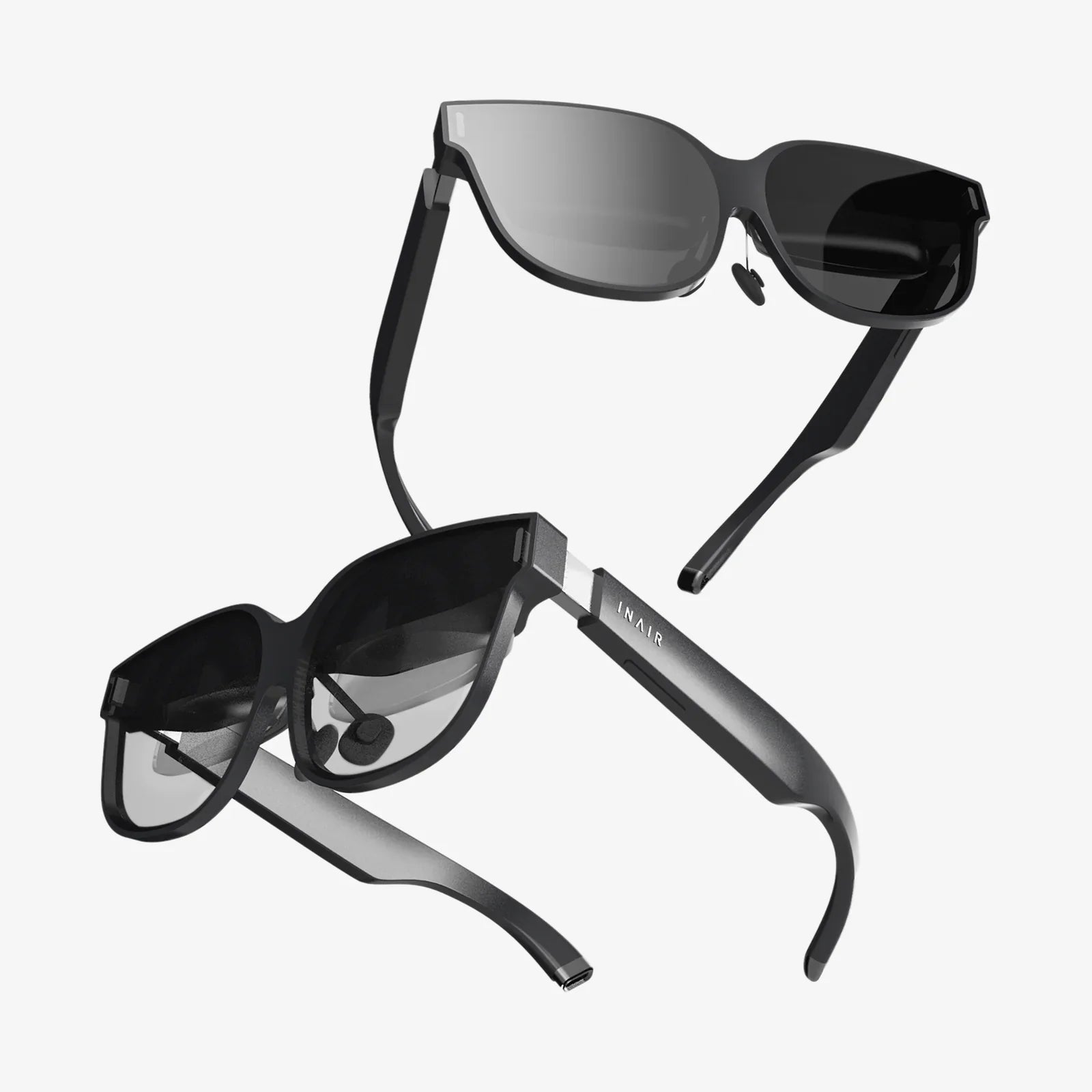
Furthermore, the lines between the digital and physical are blurring with Augmented Reality (AR) and Virtual Reality (VR). Designers can step inside their creations using VR headsets to review scale and ergonomics before anything is built. AR apps can overlay assembly instructions directly onto a physical workspace or visualize how a new piece of furniture would look in a room.
The next frontier is the seamless integration of these technologies into a cohesive spatial computing environment, where interacting with digital content becomes as intuitive as interacting with the physical world. The digital production tools of tomorrow will be less about screens and mice and more about immersive, intuitive creation.
The silent hum of a 3D printer, the intricate mesh on a designer's screen, the collaborative markup on a cloud-based document—these are the sounds and sights of a revolution already in progress. Digital production tools have handed us the keys to the workshop of the future, a workshop unbounded by physical walls or traditional limitations. The question is no longer what we can imagine, but how quickly we can learn, adapt, and use these extraordinary tools to build it. The next great innovation, the next beautiful design, the next world-changing idea, is being crafted right now on a device near you, waiting for its moment to cross the bridge from digital dream to tangible truth.