


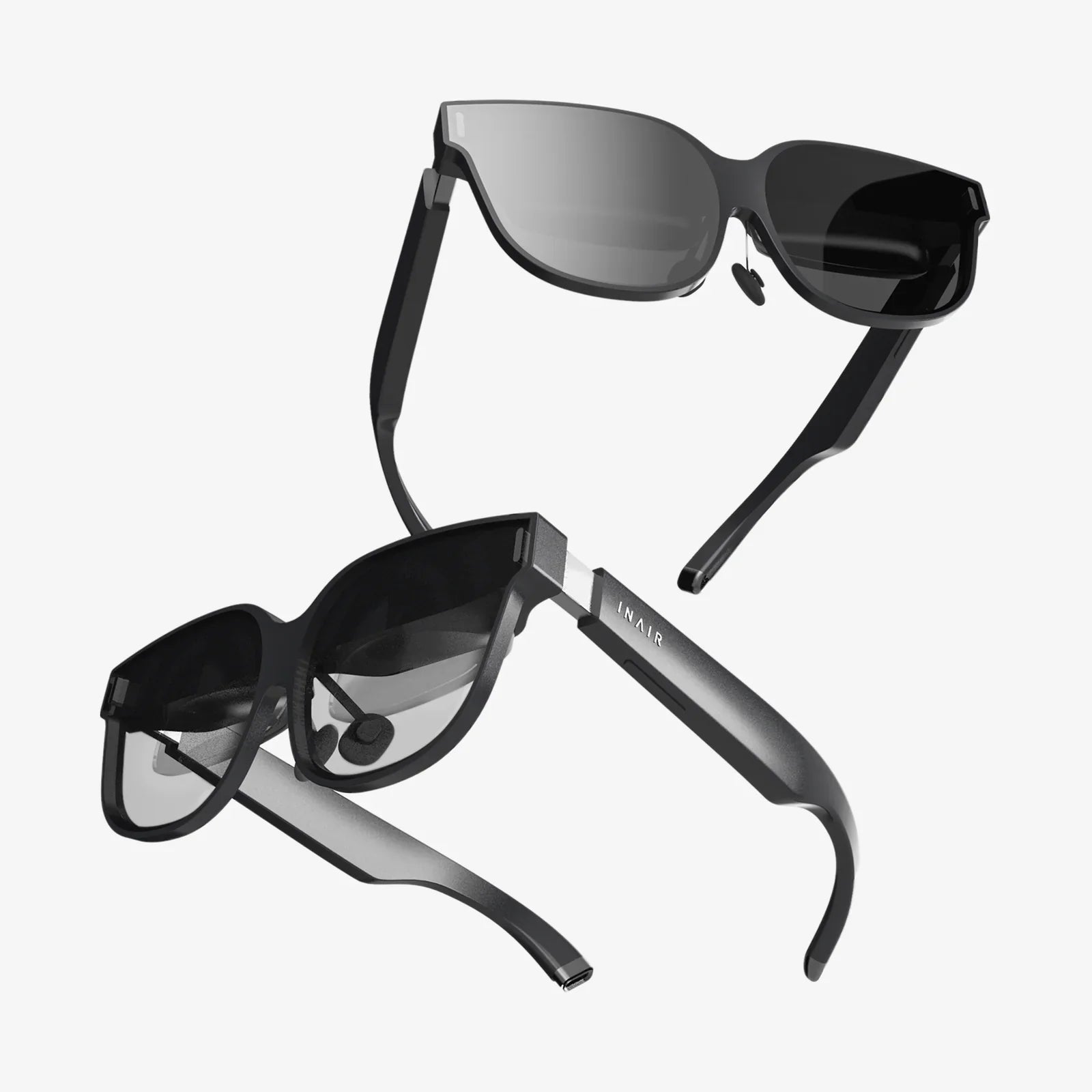
Imagine a world where digital information doesn't just live on a screen but is seamlessly woven into the fabric of your everyday life. You point your device at a historic building, and its entire history materializes before your eyes. A mechanic wearing smart glasses sees the internal wiring of a complex machine overlaid perfectly on the physical unit, guiding each repair. This is not science fiction; it is the present and future being built by one of the most significant digital trends: augmented reality. This technology is poised to fundamentally alter how we work, learn, play, and connect, blurring the lines between our physical existence and the digital universe in ways we are only beginning to comprehend.
The Core Principle: Enhancing, Not Replacing
At its simplest, augmented reality (AR) is a technology that superimposes a computer-generated image, sound, or other data onto a user's view of the real world. Unlike Virtual Reality (VR), which creates a completely immersive, artificial digital environment that replaces the real world, AR enhances one's current perception of reality. The goal of AR is to add information and meaning to a real-world object or place. This additive nature is its defining characteristic. It doesn't require users to retreat into a headset; instead, it brings valuable context directly into their field of vision, whether through a smartphone screen, a tablet, or a pair of transparent glasses.
How Does Augmented Reality Work? The Magic Behind the Overlay
The seemingly magical experience of AR is powered by a sophisticated combination of hardware and software working in concert. The process typically involves three key steps: sensing, processing, and projecting.
Sensing the World
First, an AR device must understand its environment. This is achieved through a suite of sensors, most commonly a camera, which acts as the eyes of the device. It captures the live view of the physical world. However, a camera alone isn't enough. Advanced AR systems utilize a complex array of technologies like:
- Depth Sensors: These measure the distance between the sensor and objects in the environment, creating a 3D map of the space. This allows digital objects to be occluded by real-world objects, making the illusion more convincing.
- LiDAR (Light Detection and Ranging): This technology fires out pulses of invisible laser light and measures how long they take to bounce back, creating a highly accurate depth map of the surroundings extremely quickly.
- Inertial Measurement Units (IMUs): These include accelerometers and gyroscopes that track the movement, rotation, tilt, and velocity of the device itself. This ensures that the digital overlay stays locked in place even as the user moves their head or device.
- GPS and Compass: For outdoor, location-based AR experiences, these components provide macro-level positioning data, anchoring digital content to specific geographic coordinates.
Processing and Alignment
Once the environment is sensed, the raw data is sent to a processing unit—often the device's own CPU and GPU. This is where the heavy computational lifting occurs. Sophisticated algorithms and computer vision software analyze the camera feed to identify flat surfaces (like a table or floor), recognize distinct objects or images (a process known as marker-based tracking), or understand the geometry of the entire space (simultaneous localization and mapping, or SLAM). SLAM is particularly crucial, as it allows the device to understand its own position within an unknown environment while simultaneously mapping that environment's structure. This precise understanding is what allows a digital dinosaur to appear to stand solidly on your living room rug.
Projecting the Experience
Finally, the system renders the digital content and composites it perfectly onto the user's view of the real world. The method of projection depends on the device:
- Smartphones and Tablets: This is known as "video see-through" AR. The device's camera captures the real world, the processor augments that video feed with digital content, and the screen displays the combined image. It's effective and accessible but requires holding up a device.
- Smart Glasses and Headsets: These often use "optical see-through" systems. They have transparent lenses that allow you to see the real world directly. miniature projectors inside the device then beam light onto the lenses, which reflects into your eyes, superimposing images onto your natural field of view. This creates a more immersive and hands-free experience.
The AR Spectrum: From Simple Markers to Complex Worlds
Not all AR experiences are created equal. The technology exists on a spectrum, ranging from simple, marker-dependent applications to incredibly complex, markerless environments.
Marker-Based AR
This was one of the earliest forms of AR. It relies on a specific, predefined visual object—a QR code, a special symbol, or a printed image—to trigger the digital overlay. The device's camera recognizes this unique "marker," and the AR software uses it as an anchor point to position the digital content. This method is highly reliable and precise but is limited to the presence of the marker.
Markerless AR
This is the most advanced and flexible form of AR. It uses the technologies mentioned above (SLAM, depth sensing) to understand and attach digital content to the environment itself, without needing a predefined marker. This allows users to place a virtual piece of furniture anywhere in their room or have a character run across their garden. Markerless AR can be further broken down into:
- Projection-Based AR: Projects artificial light onto physical surfaces, creating interactive displays. It can be used to turn any wall into a touchscreen.
- Location-Based AR: Ties digital content to a specific location in the real world using GPS, compass, and accelerometer data. This is the technology behind popular mobile games that have players exploring their cities.
- Superimposition-Based AR: Replaces the original view of an object with an augmented view. For instance, a medical app might superimpose a 3D model of a human heart over a patient's chest during a training simulation.
Transforming Industries: The Practical Power of AR
Beyond viral social media filters and gaming, AR is proving to be a powerful tool with serious enterprise and industrial applications, driving efficiency, enhancing safety, and revolutionizing training.
Revolutionizing Retail and E-Commerce
The retail sector has been one of the earliest commercial adopters of AR. "Try before you buy" is being redefined. Customers can now use their smartphones to see how a new sofa would look in their living room, how a pair of glasses fits their face, or what a new shade of paint would do for their walls. This not only enhances consumer confidence and reduces return rates but also creates a novel and engaging shopping experience that bridges the gap between online and in-store retail.
Supercharging Manufacturing and Field Service
In complex industrial settings, AR is a game-changer. Technicians wearing AR glasses can have repair manuals, schematic diagrams, and expert instructions overlaid directly onto the equipment they are servicing. This provides hands-free access to critical information, reduces errors, and drastically shortens training times for new employees. Remote experts can see what an on-site worker sees and annotate their field of view in real-time, guiding them through complex procedures from thousands of miles away.
Advancing Healthcare and Medicine
In medicine, AR is moving from a novel concept to a life-saving tool. Surgeons can use AR overlays to visualize a patient's anatomy, such as veins, tumors, or bones, directly on the patient's body before making an incision. This improves surgical precision and outcomes. Medical students can practice procedures on detailed, interactive 3D holograms of the human body, accelerating their learning curve without risk to patients. AR is also being used for physical therapy, phobia treatment, and helping visually impaired individuals navigate their surroundings.
Redefining Education and Training
AR turns abstract concepts into tangible, interactive experiences. Instead of reading about ancient Rome, history students can walk through a digitally reconstructed Colosseum right in their classroom. Biology students can dissect a virtual frog or explore a beating human heart from every angle. This immersive form of learning boosts engagement, improves knowledge retention, and caters to a variety of learning styles.
The Future is Augmented: Emerging Trends and Challenges
The evolution of AR is accelerating, driven by advancements in 5G connectivity, artificial intelligence, and hardware miniaturization. We are moving towards a future of always-on, contextual AR delivered through lightweight, socially acceptable glasses that will become as ubiquitous as smartphones are today. The concept of the "spatial web" or "Web 3.0" envisions a world where digital information is persistently anchored to places and objects, creating a shared layer of intelligence over our reality.
However, this exciting future is not without its significant challenges. The widespread adoption of AR glasses raises profound questions about privacy and data security. Devices that constantly scan and record our environments could lead to unprecedented levels of surveillance. There are also concerns about digital addiction and the potential for further blurring the lines between our online and offline lives, potentially leading to a diminished appreciation for the un-augmented world. Furthermore, the creation of a persistent digital layer over reality could exacerbate social inequalities, creating a divide between those who can afford access to this augmented information and those who cannot.
The journey of augmented reality is just beginning. It is a technology of immense potential, capable of augmenting not just our reality but human potential itself. Its trajectory will be shaped not just by technological innovation, but by our collective choices about how to integrate it ethically, responsibly, and equitably into the very fabric of society.
From the apps on your phone to the smart glasses of tomorrow, augmented reality is quietly building a new layer of existence, transforming every industry it touches and offering a glimpse into a future where our digital and physical lives are no longer separate, but powerfully, seamlessly one. The next time you look at the world around you, remember—it's about to get a whole lot more interesting.
Share:
Opportunities and Challenges of Augmented Reality: A New Digital Frontier
AI Glasses Market 2025: A Vision of the Future and the Disruption to Come