Imagine stepping into a perfect, living replica of our physical world, where every change is mirrored instantaneously, or escaping entirely into a boundless digital universe limited only by imagination. This is the crossroads where two of the most transformative technologies of our era reside, often spoken of in the same breath yet destined for vastly different journeys. The confusion between a digital twin and virtual reality is more than just semantic; it represents a fundamental misunderstanding of how we interact with and leverage digital realms. One is a high-fidelity, data-driven reflection tethered to reality, while the other is a human-centric gateway to experiences unshackled from it. Unraveling their distinct threads is not just an academic exercise—it's the key to unlocking their true potential and understanding the future of how we will work, create, and interact.
Defining the Digital Doppelgänger: What is a Digital Twin?
At its core, a digital twin is a dynamic, virtual representation of a physical object, system, or process. It is not a static CAD model or a simple 3D visualization. Its power lies in its bi-directional data flow, creating a living model that evolves in lockstep with its physical counterpart.
The concept is built upon three fundamental pillars:
-
The Physical Entity: This is the real-world asset—a jet engine, a factory production line, a city's power grid, or even a human heart.
-
The Digital Virtual Model: This is the sophisticated software model that digitally defines the physical entity, encompassing its geometry, physics, behavior, and rules.
-
The Connecting Data: This is the continuous stream of information flowing in both directions. Sensors on the physical asset feed real-time data (temperature, stress, throughput, etc.) into the digital model. In return, the insights, simulations, and predictions generated by the digital model can inform actions and changes on the physical asset.
This creates a closed-loop system where the digital twin is not just a picture; it is an operational, analytical, and predictive tool. Engineers can run simulations to see how a component would perform under extreme stress before ever manufacturing it. Urban planners can model traffic patterns to optimize flow and reduce congestion. The digital twin acts as a sandbox for the real world, a risk-free environment to test, learn, and perfect.
Escaping Reality: What is Virtual Reality?
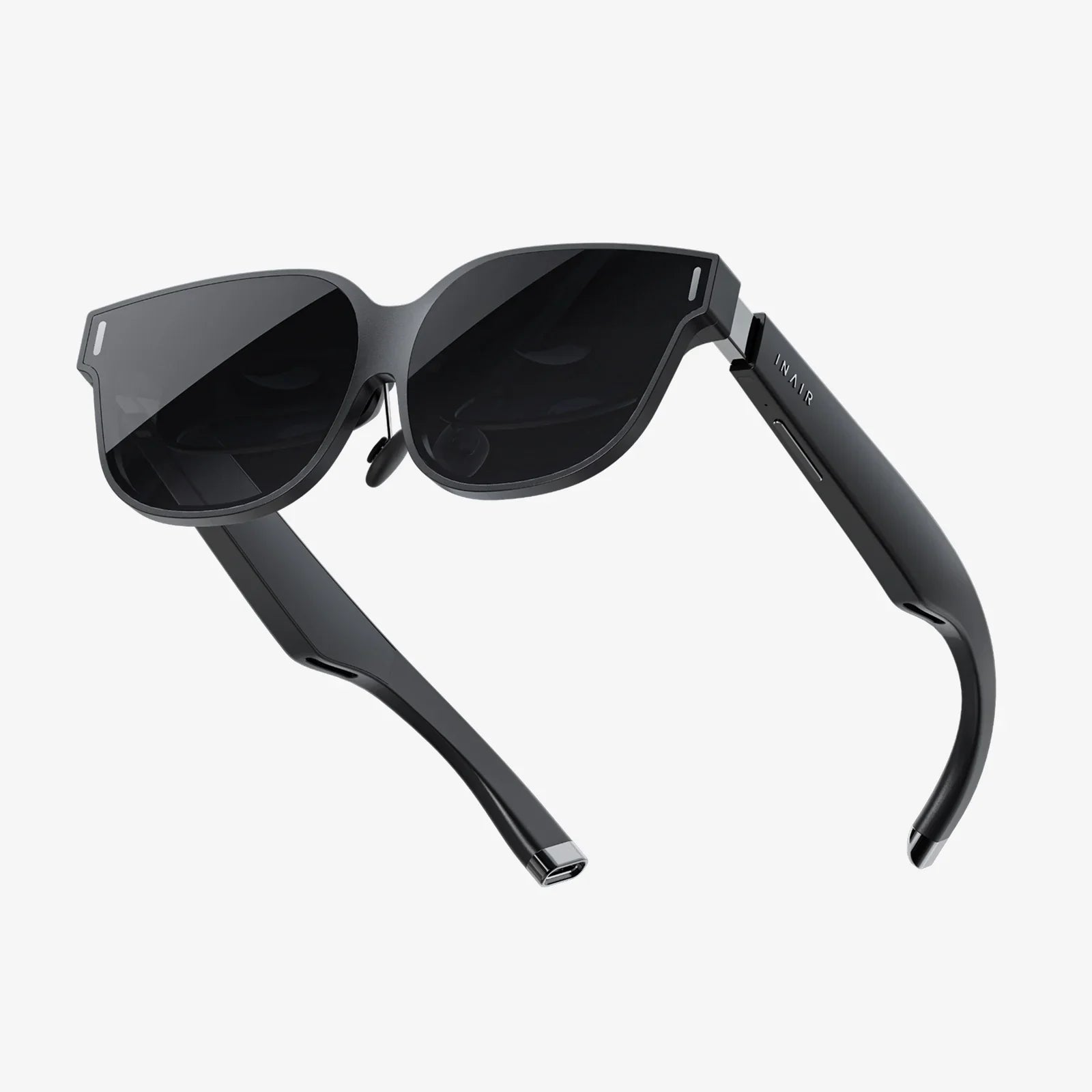
Virtual Reality (VR), in stark contrast, is a simulated digital environment designed primarily for human immersion. Its primary goal is not to replicate a specific existing object, but to create a sense of presence—the convincing feeling of being somewhere else. This experience is typically achieved through a head-mounted display (HMD) that blocks out the physical world and replaces it with a computer-generated one.
The essence of VR is defined by three key characteristics:
-
Immersion: The technical capability of the VR system to faithfully reproduce sensory stimuli—visual, auditory, and sometimes haptic—to create a convincing illusion of a different reality.
-
Interactivity: The user's ability to interact with and manipulate the virtual environment in a meaningful way, often through motion controllers or gloves that track hand movements.
-
Presence: The user's psychological and perceptual response to the immersion—the subjective feeling of "being there" inside the virtual world, a sensation that is the ultimate benchmark for a successful VR experience.
VR is fundamentally anthropocentric. It is built for a human user to experience. While it can be used to view a model of a real object (like a building), its purpose is often training (flight simulators, surgical practice), entertainment (video games, immersive films), or social connection (virtual meetings in a custom space). The environment can be a photorealistic replica of a real place or a completely fantastical realm that could never exist.
The Core Divergence: Purpose and Data Fidelity
The most critical distinction between these two technologies lies in their fundamental purpose and their relationship with data.
Digital Twin: Purpose-Driven by Data
A digital twin's raison d'être is to be a functional, operational tool. It is a system of insight. Its value is directly proportional to the accuracy, completeness, and real-time nature of the data it receives from the physical world. It answers critical questions: Is this bridge structurally sound? How will this manufacturing process change if we adjust parameter X? What is the predicted failure point of this turbine? Its fidelity is measured in data points, mathematical accuracy, and predictive power. It is a practical tool for optimization, maintenance, and forecasting.
Virtual Reality: Experience-Driven by Design
VR's purpose is to generate a human experience. It is a system of engagement. Its value is measured by the quality of the immersion and the sense of presence it evokes. While it can use data, its fidelity is measured in polygons, texture resolution, frame rates, and latency—all technical aspects that serve the human perceptual system. A VR model of a building might prioritize visually stunning textures and realistic lighting to make a sales pitch compelling, even if the underlying data about the building's electrical wiring is absent or simplified. Its goal is to make you feel, not to calculate stress loads.
Overlap and Convergence: Where the Realms Meet
Despite their differences, the lines between digital twin and VR are not impermeable walls but rather a porous border. Their most powerful applications often emerge at this intersection, where the analytical power of one meets the immersive interface of the other.
Imagine an engineer wearing a VR headset to "step inside" a digital twin of a complex machine. They can see real-time sensor data overlaid as holographic readouts, watch the flow of materials, and visually identify a potential problem that might be hidden in a spreadsheet. This is VR acting as the ultimate visualization interface for a digital twin.
This convergence is revolutionizing fields like:
-
Urban Planning and Architecture: Planners can create a digital twin of a city, fed by IoT sensors on traffic, energy, and water. They can then use VR to walk through this dynamic model, experiencing the impact of a new building on sightlines or wind patterns before a single foundation is poured.
-
Advanced Manufacturing: Factory floor managers can monitor the real-time status and efficiency of every machine through its digital twin. By entering a VR representation of the factory, they can train new employees on complex procedures directly on the digital twin of the equipment, without stopping production or risking safety.
-
Healthcare: A surgeon could practice a complex procedure on a VR simulation built from a patient's specific digital twin—a model created from their MRI and CT scan data. This combines the accuracy of the twin with the immersive training value of VR.
In these scenarios, VR becomes the "window" into the digital twin, translating its complex data into an intuitive, spatially aware format that the human brain is exceptionally good at parsing.
Choosing the Right Tool for the Task
Understanding the distinction is crucial for effective implementation. The choice between developing a digital twin or a VR experience is not arbitrary; it is dictated by the core objective.
You need a Digital Twin if:
- Your primary goal is to monitor, analyze, simulate, or optimize a physical asset or process.
- You require real-time, bi-directional data synchronization between the physical and digital worlds.
- You need to run "what-if" scenarios to predict outcomes and prevent failures.
- The value is in the actionable insights derived from data.
You need a Virtual Reality experience if:
- Your primary goal is to train a person in a safe, controlled, and repeatable environment.
- You need to visualize a design, concept, or environment at a human scale for review, collaboration, or presentation.
- You aim to create an emotional response, tell a story, or provide entertainment.
- The value is in the quality of the user's immersive experience and their sense of presence.
Framing the project with these questions ensures that resources are allocated to the technology that truly delivers on the desired outcome, preventing the costly mistake of building a beautiful VR model when what was truly needed was a data-rich digital twin, or vice versa.
The Future: A Symbiotic Relationship
As both technologies mature, their symbiotic relationship will only deepen. The proliferation of IoT sensors and 5G connectivity will make digital twins richer, more detailed, and more pervasive, creating vast digital mirrors of our world. Simultaneously, advancements in VR hardware—higher resolution, wider fields of view, better haptics—will make the interface to these twins more seamless and intuitive.
We are moving towards a future where the boundaries will further blur. The concept of the "metaverse," a persistent network of shared 3D virtual spaces, could be populated with countless digital twins—of products, homes, and entire cities—that we can navigate and interact with using VR and its cousin, Augmented Reality (AR). This will enable unprecedented levels of remote collaboration, design, and management.
Ultimately, the journey is not about digital twin vs. virtual reality as competing forces. It is about understanding that one is the brain—the analytical engine processing the world's data—and the other is the senses and body—the immersive interface through which we experience it. Together, they form a complete system that will allow us to understand, manage, and experience our reality in ways we are only beginning to imagine.
The next time you hear about a digital replica, ask not just what it is, but what it's for. Is it a mirror reflecting the intricate dance of the real world, pulsing with live data and ripe for analysis? Or is it a portal, an invitation to step through the looking glass into an experience designed purely for you? The answer will define its very nature and its immense potential to reshape everything from how we maintain machinery to how we tell stories. The era of digital replication is here, and its twin pillars are more powerful together than apart.