


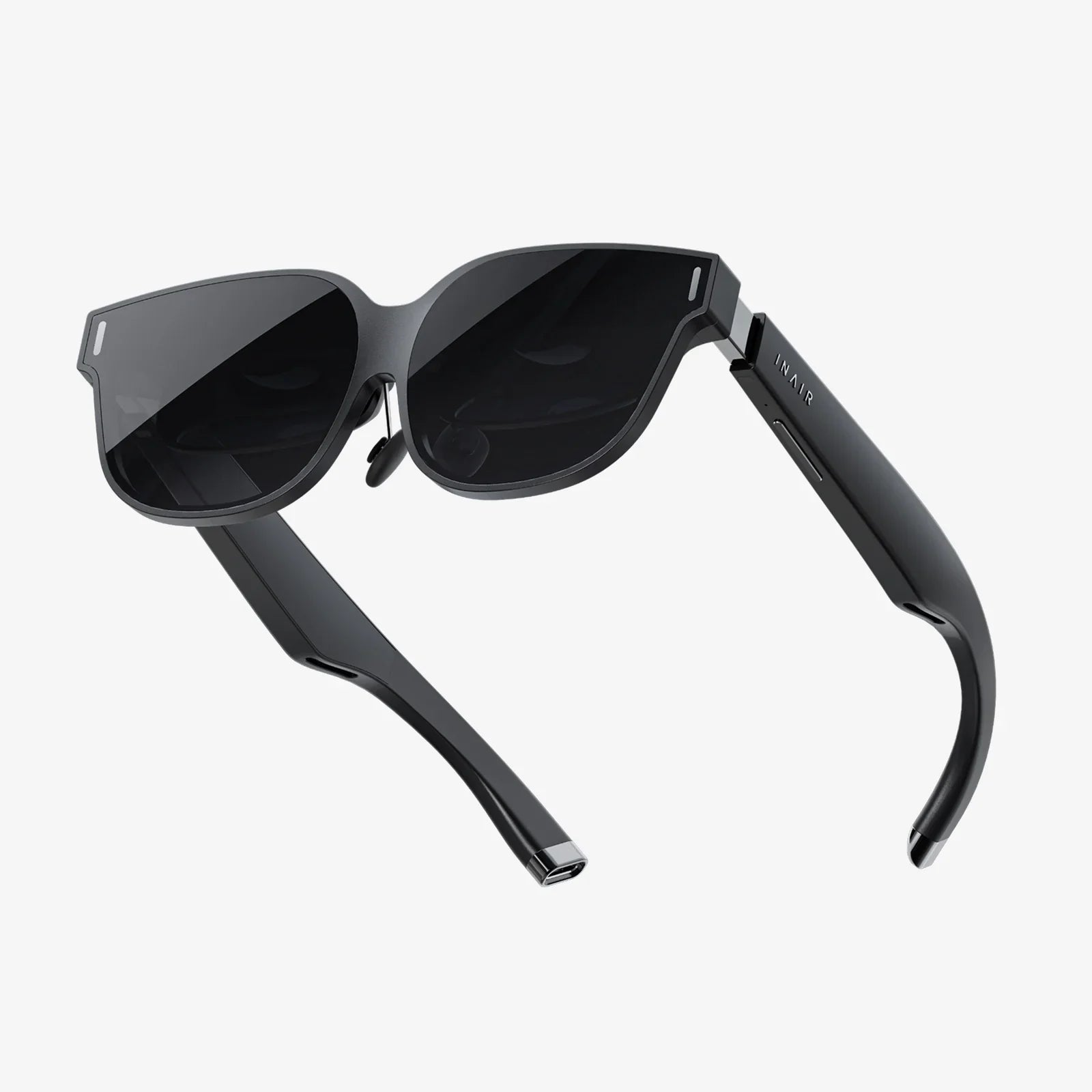
- by wangfred
Display Spectacles: The Future of How We See and Interact With The World
- by wangfred
Imagine a world where information floats effortlessly before your eyes, where digital friends sit on your physical sofa, and where the line between what is real and what is rendered becomes beautifully, thrillingly blurred. This is not a distant science fiction fantasy; it is the imminent future being crafted in research labs and design studios today, all centered on a single, transformative device: display spectacles. This revolutionary wearable technology promises to be the next great leap in personal computing, fundamentally altering our perception of reality and redefining human interaction with both the digital and physical realms. The journey from concept to consumer-ready product is a fascinating tale of technological convergence, ambitious vision, and profound societal questions.
At first glance, a pair of advanced display spectacles might resemble a slightly bulkier version of standard eyewear. However, hidden within their elegant frames is a symphony of cutting-edge components working in perfect harmony to project a convincing digital overlay onto the real world. This feat of optical engineering is what separates mere prototypes from truly immersive experiences.
The core challenge is simple to state but devilishly hard to solve: how do you project a bright, high-resolution, full-color image directly onto the user’s retina without obstructing their view of the real world? The answer lies in advanced optics, specifically technologies like waveguides and holographic optical elements. Think of a waveguide as a piece of transparent glass or plastic that acts like a conduit for light. Tiny patterns etched onto its surface, often smaller than a wavelength of light, bend and redirect light from a micro-projector on the arm of the spectacles directly into the eye. This allows the user to see a vibrant digital display while maintaining a completely clear view of their surroundings, a critical factor for both safety and social acceptance.
The light source itself is another marvel. Micro-LED displays, mere millimeters across, are becoming the gold standard. These panels offer exceptional brightness, crucial for overcoming ambient light, incredible pixel density for sharp text and graphics, and high energy efficiency to preserve battery life. Coupled with these are sophisticated eye-tracking systems that use miniature cameras to precisely monitor the user’s gaze. This enables intuitive interaction—where you look is where you select—and allows the display to dynamically adjust its focus, creating a more natural and comfortable viewing experience that mimics how we focus on objects at different depths in the real world.
A pair of display spectacles is far more than just a screen on your face; it is a powerful sensor-packed computer. An array of outward-facing cameras performs simultaneous localization and mapping (SLAM). This process constantly scans the environment, building a 3D understanding of the room, identifying surfaces, objects, and their spatial relationships. This digital twin of the real world is what allows virtual objects to appear anchored to a physical table or to occlude realistically behind a real-world couch.
All this data—visual, spatial, and auditory—is fused together in real-time by a dedicated processing unit. This requires immense computational power packed into an incredibly small and thermally constrained form factor, a significant engineering hurdle. Furthermore, all this processing must happen with minimal latency; any lag between the user’s head movement and the display updating can lead to disorientation or motion sickness. Overcoming this requires optimized algorithms and custom silicon designed specifically for spatial computing tasks. Finally, powering this mobile supercomputer necessitates advanced battery technology, often distributed throughout the frames for weight balance, offering enough life to be useful throughout a day without becoming uncomfortably heavy.
The true potential of display spectacles is unlocked not by the technology itself, but by its applications. This is a platform that will spawn entirely new industries and redefine existing ones, moving beyond novelty to become an indispensable tool.
In the professional sphere, the impact will be immediate and profound. Imagine a surgeon performing a complex procedure with vital patient statistics, ultrasound data, or a 3D model of the anatomy superimposed directly onto their field of view, their hands remaining sterile and free. Mechanics could see interactive repair manuals and torque specifications overlaid on the engine they are fixing, or even see “X-ray vision” views of wiring hidden behind a panel. Architects and interior designers could walk through a physical construction site and see their digital blueprints perfectly aligned with the unfinished space, allowing them to make real-time decisions and adjustments.
This concept of “augmented instruction” will revolutionize training and remote assistance. A senior engineer located across the globe could see what a local technician sees and literally draw arrows and circles into their reality to guide them through a complex repair, reducing downtime and travel costs exponentially. This hands-free, information-rich paradigm will unlock new levels of efficiency, accuracy, and safety in fields from manufacturing and logistics to healthcare and field service.
On a personal level, display spectacles will redefine how we connect and play. Social interaction could evolve into shared augmented experiences. Friends separated by geography could not just video call, but could appear as realistic avatars in each other’s living rooms, watching a movie together on a virtual big screen or playing a board game on a real table. The spectacles become a window to presence, making digital communication feel more tangible and human.
Entertainment will cease to be confined to rectangles on our walls or desks. Games will spill out into our physical environments, transforming a park into an alien landscape or a living room into a puzzle-filled dungeon. Narratives could unfold around us, with characters interacting with our environment. Watching a sports game could mean having live stats floating around the action, or switching between camera angles with a glance. This medium, often called spatial computing, represents a new art form, blending storytelling with physical space in ways we are only beginning to imagine.
Perhaps the most profound everyday use will be as an ambient, always-available personal assistant. Navigation will become intuitive, with glowing path markers painted onto the sidewalk guiding you to your destination. You could look at a restaurant and instantly see its reviews and menu floating beside it. In a meeting, you could have discreet notes or a translator transcribing a conversation in real-time, displaying subtitles for a foreign language speaker. For those with memory impairments or cognitive disabilities, this technology could act as a powerful prosthetic, recognizing faces and discreetly displaying names or contextual reminders, reducing anxiety and fostering independence.
With such transformative power comes immense responsibility and a host of complex ethical dilemmas that society must confront before this technology becomes ubiquitous.
The most immediate concern is privacy. A device that is always on your face, seeing what you see and hearing what you hear, represents an unprecedented data-collection platform. The potential for constant surveillance, either by corporations or governments, is a terrifying prospect. Clear and stringent rules must be established regarding data ownership, recording permissions, and how this intimate data is stored and used. Features like physical camera shutters, clear recording indicators, and robust on-device processing that anonymizes data before it is sent to the cloud will be non-negotiable for widespread adoption. The question of recording in public and the rights of those inadvertently captured in someone else’s feed is a legal and ethical minefield that remains largely unexplored.
There is a real risk that display spectacles could exacerbate social and economic inequalities. If they become essential for work, education, and social participation, a new “digital divide” could emerge between those who can afford them and those who cannot. Furthermore, their always-on nature challenges social etiquette. How do you know if someone wearing spectacles is listening to you or checking notifications? Will it be considered rude to wear them during a conversation? New social norms will need to evolve to govern when and how it is appropriate to use this technology in shared spaces to prevent further erosion of genuine human connection.
Finally, display spectacles introduce the concept of “reality ownership.” If a company can control what you see and overlay their own advertisements or interpretations onto the world, who owns your perception? The potential for manipulation is staggering, from altering historical monuments in your view to inserting biased political messages into your environment. It could become the ultimate targeted advertising tool, but also a powerful propaganda machine. Ensuring user agency and transparency about what is real and what is augmented will be one of the greatest challenges of this new era.
The path forward for display spectacles is not merely a technical one; it is a societal journey. It requires a collaborative effort between engineers, designers, ethicists, policymakers, and the public. The technology itself is racing ahead, but its successful integration into the fabric of our lives depends on our ability to build a framework of trust, ethics, and thoughtful design around it. We must be active participants in shaping this future, ensuring that these remarkable tools enhance our humanity rather than diminish it, and that the world they help us see is one we actually want to live in.
We stand at the precipice of a new sensory paradigm, one where our eyewear does more than correct vision—it expands it. The spectacles of tomorrow will not just be a device we use; they will become an extension of our minds, our memories, and our means of connection, forever changing our relationship with the vast, invisible digital realm and the tangible world we call home. The future is looking right back at us, and it's wearing a very intelligent pair of glasses.
Share:
Stand Alone VR System: The Ultimate Guide to Untethered Immersion
Headset: The Ultimate Guide to Choosing Your Perfect Audio Companion