


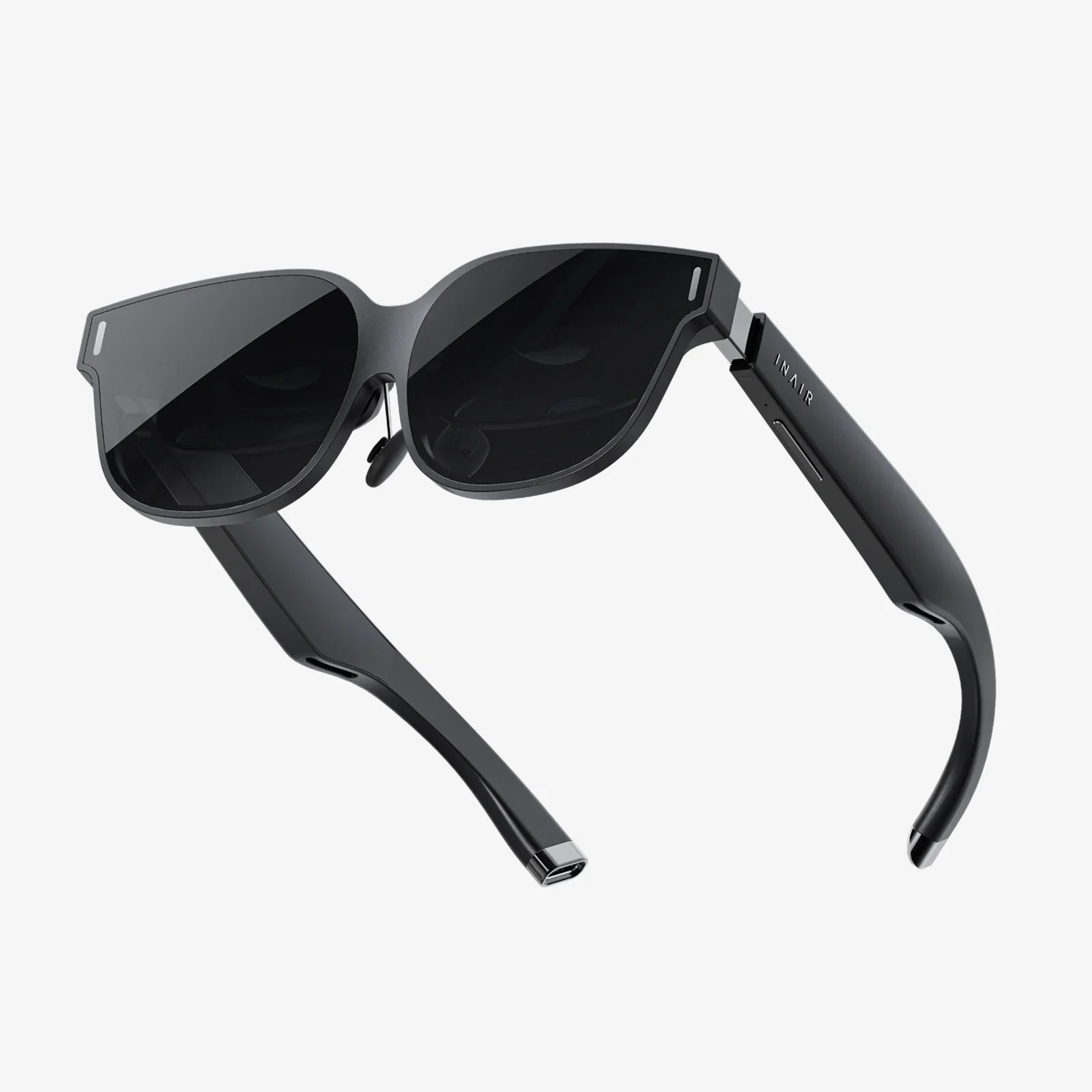
You’ve seen it in sci-fi movies for decades: a character glances at a stranger and instantly sees their bio floating beside their head. They navigate a foreign city with arrows painted onto the pavement only they can see. They repair a complex engine with holographic instructions superimposed directly onto the machinery. This is the promise of augmented reality (AR) glasses—a seamless blending of the digital and physical worlds. But is this still the stuff of science fiction, or is it a reality waiting in your local electronics store? The question isn't as simple as it seems. Do AR glasses exist? The answer is a resounding, fascinating, and complex yes—but not in the way you might immediately imagine.
Defining the Dream: What Are True AR Glasses?
Before we can answer whether they exist, we must define what we're looking for. The term "AR glasses" is often used as a catch-all, but it encompasses a wide spectrum of technology with vastly different capabilities.
At one end, we have Smart Glasses. These are primarily wearable displays for notifications and basic information. They might project a small monochrome feed of text, weather, or calendar alerts into your peripheral vision, but they don't interact deeply with or understand the environment around you. They augment your reality with data, but not with integrated 3D graphics.
Then, we have what the industry terms True AR or Mixed Reality (MR) Glasses. This is the holy grail—the device that matches the sci-fi vision. True AR glasses require a powerful combination of technologies:
- Advanced Display Technology: High-resolution, transparent displays that can project bright, vibrant, and convincing holograms that appear anchored in the real world, even in direct sunlight.
- Precise Spatial Mapping: A suite of sensors (cameras, LiDAR, depth sensors) that constantly scans the environment to understand the geometry of the room, the position of surfaces, and the location of objects.
- Robust Computer Vision: Algorithms that can identify objects (is that a chair, a table, a person?), understand gestures, and enable eye-tracking for intuitive control.
- Powerful, Wearable Computing: Enough processing power to run these complex operations in real-time, all packaged into a form factor that is socially acceptable to wear for extended periods.
The existence of AR glasses depends entirely on which definition you're using. The first category is not only real but has been available for years. The second category is emerging from labs and enterprise settings and is rapidly approaching the consumer market.
The Current Landscape: What Exists Right Now?
Today's AR glasses market is a tale of two worlds: the accessible but limited consumer devices and the powerful, expensive enterprise solutions.
Consumer-Focused Smart Glasses
For the average consumer, several options are available for purchase today. These devices prioritize affordability, style, and battery life over high-end AR capabilities. They are excellent for receiving notifications, listening to music (often with built-in speakers), taking hands-free photos and videos, and getting simple navigation prompts. They connect to your smartphone to handle the heavy computational lifting. Their form factor is often closer to standard eyeglasses or slightly bulkier sunglasses, making them increasingly acceptable to wear in public. They represent the first successful step into the always-on, augmented life, proving that a market exists for this type of wearable technology.
Enterprise and Developer AR Glasses
This is where the true magic of AR is currently happening, albeit behind the scenes for most people. For several years, powerful AR headsets have been deployed in factories, on construction sites, in medical facilities, and in design studios. These devices are bulkier, often featuring a helmet or large headband design, because they pack all the necessary computing power, sensors, and battery life to deliver on the promise of true augmented reality.
In these professional settings, AR glasses are revolutionizing workflows:
- Manufacturing and Repair: Technicians can see digital schematics overlaid on the machinery they are assembling or fixing. Remote experts can see what the on-site worker sees and draw annotations directly into their field of view, guiding them through complex procedures step-by-step.
- Healthcare: Surgeons can visualize patient data, like MRI scans, projected onto the patient's body during procedures. Medical students can learn anatomy through interactive 3D holograms.
- Design and Architecture: Architects and engineers can place full-scale 3D models of their designs into empty physical spaces, allowing them to walk through and interact with a building before a single brick is laid.
- Logistics and Warehousing: Warehouse workers are guided by AR to picking locations with optimal routes, and can see vital information about packages without consulting a handheld scanner, dramatically increasing efficiency.
These enterprise devices are unequivocally "AR glasses" in the truest sense. They exist, they are in use, and they are delivering immense value right now. They are the proving ground for the technologies that will eventually trickle down to consumers.
The Technological Hurdles: Why Don't Everyone Have Them?
If the technology exists for enterprises, why isn't there a sleek, affordable pair of AR glasses next to every smartphone? The challenges to creating a consumer-ready device are immense and span hardware, software, and human factors.
The Form Factor Dilemma
This is perhaps the most significant barrier. Consumers will not adopt a technology that is uncomfortable, looks ridiculous, or has poor battery life. Fitting the necessary processing power, battery, and array of sensors into a frame that looks like a regular pair of glasses is a monumental engineering challenge. It requires breakthroughs in miniaturization, battery technology, and thermal management (preventing the device from overheating). Early attempts often resulted in a device that was too heavy, too hot, or that only worked for an hour or two—a non-starter for all-day use.
The Display and Visual Experience
Creating a transparent display that can project bright, full-color, high-resolution holograms that are visible in all lighting conditions is incredibly difficult. Many current solutions have a limited field of view (the AR "window" you look through is small), making the holograms feel like they are in a small box rather than integrated into your entire world. There's also the challenge of "vergence-accommodation conflict," where your eyes struggle to focus on a hologram that appears at one distance but is actually being projected on a lens much closer to your face, which can cause eye strain and headaches for some users.
The Power and Processing Problem
Real-time spatial mapping, object recognition, and rendering complex 3D graphics require serious computational horsepower. Doing this on-device requires powerful, energy-efficient chips that don't yet exist in a glasses-friendly form factor. One solution is to tether the glasses to a powerful computing pack worn on the body or to a smartphone. Another, more promising long-term solution is to leverage high-speed, low-latency 5G/6G networks to offload processing to the cloud. However, this introduces dependency on network connectivity and raises concerns about latency—any delay between your head moving and the holograms adjusting would be disorienting and unacceptable.
The Social and Privacy Hurdle
Beyond pure technology, there are societal questions. Will people feel comfortable talking to someone wearing cameras on their face? The potential for surreptitious recording raises significant privacy concerns for both wearers and non-wearers. Establishing social norms and ethical guidelines for the use of such pervasive technology will be a critical part of its adoption. Furthermore, what happens when everyone is constantly distracted by a digital overlay? The potential for digital addiction and a further disconnection from the physical present is a real concern that must be addressed.
A Glimpse into the Near Future: What's Coming Next?
The pace of innovation is accelerating. The next few years are poised to be a transformative period for AR glasses, moving them from niche professional tools to mainstream consumer devices.
We are seeing the emergence of a new category of devices that bridge the gap between enterprise and consumer. These devices are more powerful than simple smart glasses but designed with a more consumer-friendly form factor than industrial headsets. They feature color passthrough cameras that blend the real world with digital overlays, offering a high-fidelity mixed reality experience. While still a bit bulky, they represent a massive leap forward and are being targeted at developers, creators, and early adopters to build the ecosystem of apps and experiences that will be necessary for mass adoption.
The real revolution will be driven by advancements in key enabling technologies:
- Waveguide and Holographic Optics: New display technologies are emerging that promise thinner, lighter, and more efficient lenses with a wider field of view.
- AI Co-Processors: Specialized chips designed to handle the immense AI workloads required for computer vision and environmental understanding with extreme power efficiency.
- Contextual and Predictive AI: The software will get smarter, moving from simply displaying information to anticipating your needs. Your glasses could automatically pull up a recipe based on the ingredients you're looking at in your fridge or translate a street sign before you even think to ask.
The goal is clear: a device that you forget you're wearing, that seamlessly integrates useful and delightful information into your perception, and that becomes as indispensable as the smartphone is today.
The Ultimate Potential: Beyond the Smartphone
The long-term vision for AR glasses is not to be an accessory for your phone, but to replace it entirely. Why look down at a small rectangle of glass when you can have a boundless, contextual display all around you?
Imagine:
- Watching a movie on a virtual 100-foot screen against your living room wall.
- Having a video call where your friend appears as a life-sized hologram sitting on your couch.
- Learning to play the piano by following glowing keys and finger placements directly on the instrument.
- Enhancing your memory by recording your entire day and having an AI assistant instantly recall the name of someone you met or the location of a restaurant you passed.
This is the spatial computing revolution. It promises to change how we work, learn, communicate, and play by dissolving the barrier between our digital and physical lives. It's a future where information is not something we seek out on a device, but something that is simply present in the world around us, accessible through a glance.
So, do AR glasses exist? Absolutely. You can buy a simple pair today, and powerful versions are actively transforming industries. The futuristic, all-day consumer device we've been promised is not a myth; it's an inevitability being built piece by piece in labs and on factory floors around the world. The real question is no longer if, but when—and how quickly we can prepare for a world where the digital and physical are forever intertwined. The next time you put on a pair of sunglasses, just imagine what you might see through them in a few short years.
Share:
Artificial Intelligence Inventions Are Reshaping Our World and Redefining the Future
Uses of Artificial Intelligence in Daily Life: The Invisible Revolution Reshaping Our World