


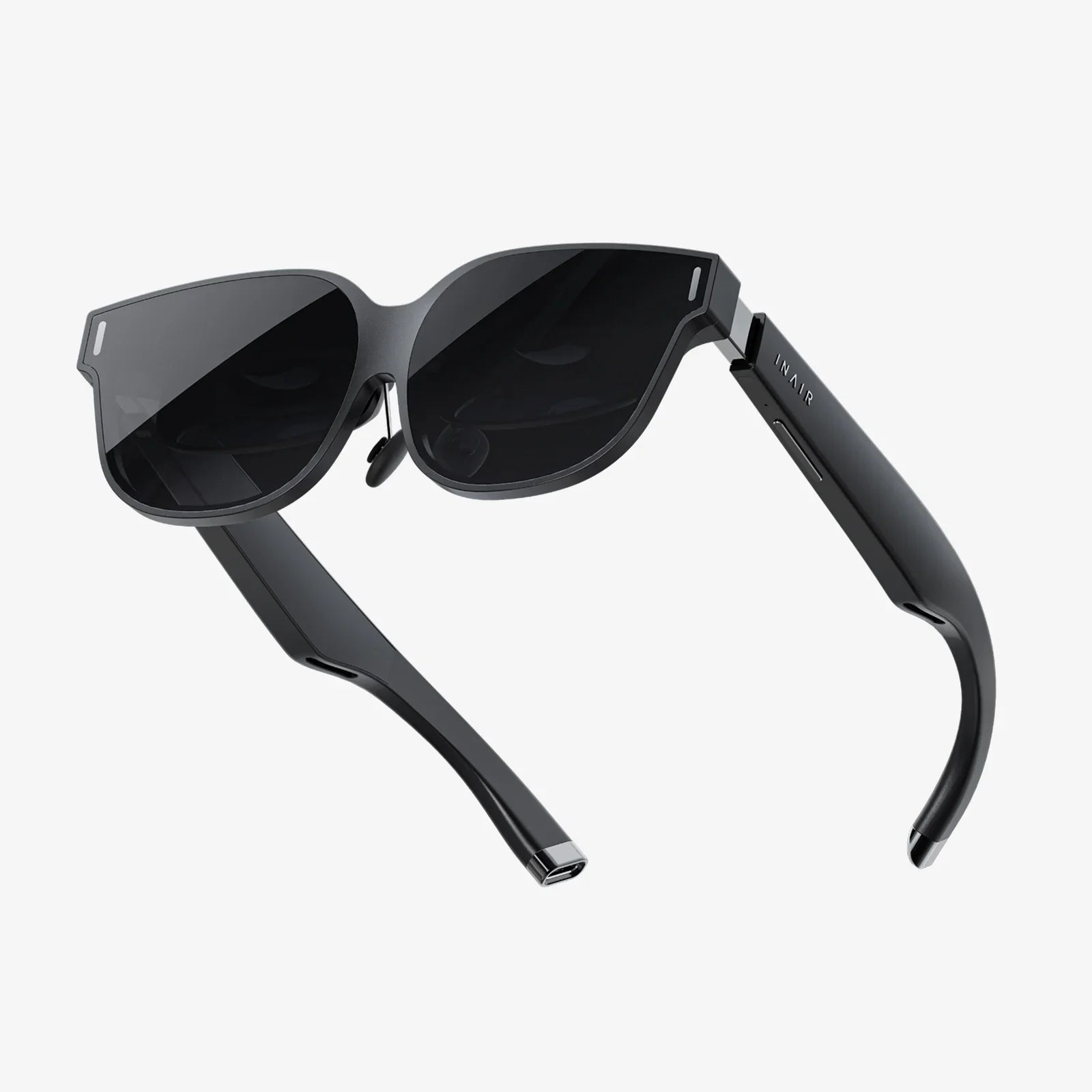
- by wangfred
Do Smart Glasses Come in Prescription? The Ultimate Guide to Vision-Corrective Tech
- by wangfred
Imagine a world where your vision correction does more than just help you see clearly—it becomes a seamless portal to digital information, augmented reality, and hands-free connectivity, all without sacrificing style or comfort. This is the compelling promise of prescription smart glasses, a technological frontier that is rapidly moving from science fiction to mainstream reality. For the billions of people worldwide who rely on corrective lenses, the question isn't just about whether smart glasses are cool, but whether they are genuinely accessible. The intersection of advanced optics and cutting-edge computing is creating a new category of wearable that doesn't force users to choose between 20/20 vision and 21st-century functionality.
At its core, the development of prescription smart glasses represents a fascinating convergence of two highly specialized fields: ophthalmology and consumer electronics. Traditional eyewear is the result of centuries of optical science, precision grinding, and personalized fitting. Smart glasses, on the other hand, are a product of the digital age, packing micro-displays, sensors, batteries, and processors into a lightweight frame. Merging these two requires more than just slapping a microchip onto a lens; it demands a fundamental rethinking of form and function. Engineers and optical experts must work in tandem to ensure that the embedded technology does not interfere with the precise vision correction path of the lenses, all while maintaining a form factor that people will actually want to wear every day.
Understanding the mechanics behind these devices is key to appreciating the engineering marvel they represent. Unlike standard smart glasses that may use a single, non-prescription lens design, prescription models must integrate technology without compromising optical clarity.
Most prescription smart glasses utilize one of two primary display methods: Waveguide or AR projection. Waveguide technology uses microscopic gratings on the lens itself to bounce light from a tiny projector at the temple into the user's eye, creating an overlay of digital information onto the real world. For prescription versions, this waveguide element must be intricately bonded to the curved prescription lens in a way that doesn't create distortion. The other method, projection-based AR, often uses a small, transparent display positioned in the upper part of the lens, projecting information downwards. In both cases, the challenge is to perfectly align the digital display with the user's unique optical center and prescription strength.
The brains and battery of the system are typically housed in the temples of the glasses. This is a strategic design choice to keep weight distribution even and avoid putting pressure on the nose bridge. Despite their small size, these components are powerful enough to handle connectivity features like Bluetooth, voice assistants, and in some cases, standalone processing for more advanced AR applications. The need for daily charging is a current reality, but advancements in battery technology and low-power chipsets are steadily extending usage times.
Acquiring a pair of prescription smart glasses is a more involved process than buying standard frames, but it is designed to be as seamless as possible for the consumer.
The journey begins with your prescription. Just like ordering any other pair of corrective lenses, you will need a valid, up-to-date prescription from an eye care professional. This prescription must include all the necessary parameters: sphere (SPH), cylinder (CYL), axis, and pupillary distance (PD). The PD measurement is especially critical for smart glasses, as it ensures the augmented reality displays are perfectly aligned with your pupils. Some manufacturers have developed online tools using your device's camera to help verify and capture this measurement accurately from home, though an in-person measurement by an optometrist is always the gold standard.
Once your prescription is verified, the next step is selecting a frame style that suits your face and preferences. The available frame choices are continually expanding, ranging from bold, tech-forward designs to more classic and discreet looks that are indistinguishable from traditional eyewear. You will also select the specific tech features you desire, which can include:
After your order is placed, the meticulous process of crafting your lenses begins. Using your exact prescription data, specialized optical labs grind and polish the lenses to your specific needs. The smart technology components are then carefully integrated. This is not a one-size-fits-all assembly line; it's a customized process where the digital display's positioning is calibrated to your unique prescription. Once assembled, the final product is quality-checked to ensure both optical accuracy and technological performance meet strict standards before being shipped to you.
As with any emerging technology, prescription smart glasses present a compelling set of advantages alongside some current limitations that are important to consider.
The most significant benefit is the elimination of compromise. Users no longer have to switch between their regular glasses and a separate wearable device. This integration is a game-changer for productivity, accessibility, and immersion. For individuals who use navigation aids, real-time language translation, or need hands-free access to information for work, having these tools integrated directly into their necessary vision correction is transformative. It also promotes greater social acceptance, as the technology becomes an invisible part of a familiar object rather than a conspicuous gadget.
On the other side of the equation are factors like cost, which is currently higher than for either standard smart glasses or high-end prescription frames alone, given the specialized R&D and manufacturing involved. Battery life, while improving, still requires mindful charging habits. The field of view for the augmented displays, though impressive, is still a focused area within the lens rather than the entire visual spectrum. Finally, the style options, while growing, are not yet as vast as the traditional eyewear market, though this is changing rapidly as the technology matures and gains popularity.
The trajectory of prescription smart glasses points toward a future where they become as commonplace as smartphones. We can anticipate several key developments on the horizon. Advancements in micro-LED and laser projection technology will lead to brighter, fuller, and more energy-efficient displays. Artificial intelligence will become deeply integrated, offering real-time contextual information about your surroundings, from identifying plants on a hike to providing nutritional information about food on your plate. Biometric sensors embedded within the frames will continuously monitor health metrics like blood sugar levels for diabetics or detect early signs of neurological conditions through eye-tracking, transforming them from a communication device into a vital health tool. Furthermore, collaboration between tech companies and major optical retailers will make trying on and purchasing these devices as easy as buying a regular pair of glasses.
The fusion of essential vision correction with the power of augmented intelligence is not merely an incremental upgrade—it's a fundamental shift in how we interact with technology and the world around us. This evolution promises to make digital access more seamless, intuitive, and inclusive, effectively weaving computing into the fabric of our daily perception. For anyone who has ever wondered if they can be part of this future without compromising on clear sight, the answer is now a resounding and exciting yes. The future looks clear, and it's augmented.